
Djavolja Varos sits far enough south that most Serbia itineraries never reach it, and the operator’s own website has not quite kept pace with the seasons since. You can still plan a visit around it, but expect to do more of your own checking here than at almost any other site on this list, because several of the basic details a traveller needs are either undated or contradicted from one page to the next on the operator’s own site.
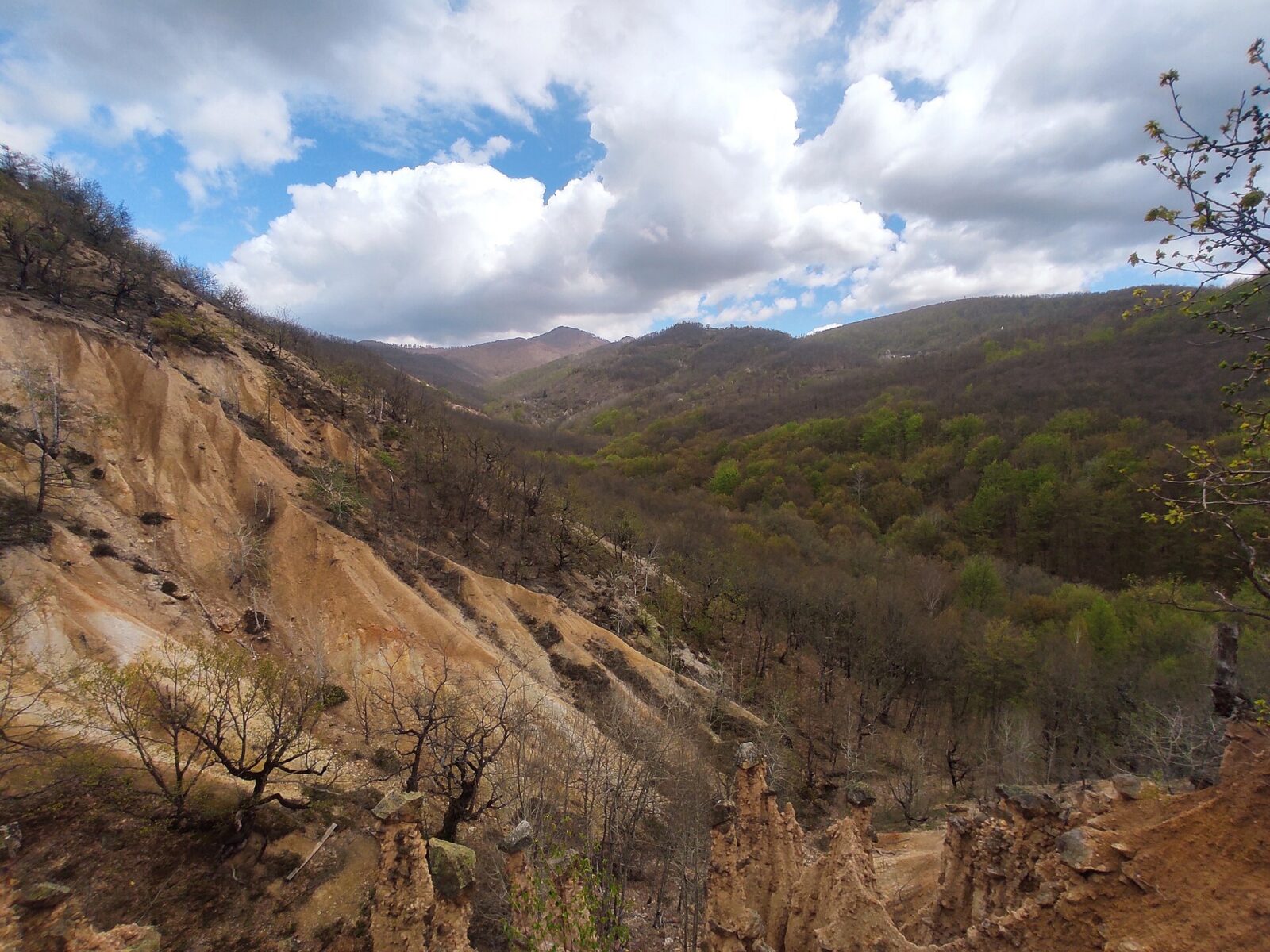
What draws people here is a field of earth-and-rock pillars, carved by erosion into pinnacles across a hillside in southern Serbia, protected as a natural monument since 1959. It is a real place with a real legal protection status, run by a small concession holder rather than a national park authority, and that scale shows in how the practical information is published: no dated pricing page, no clear seasonal calendar, and two contradictory statements about when the site closes for winter. None of it is unusual for a rural natural monument in this part of Serbia, but it changes how you should treat what the operator’s site tells you before you go.
None of this makes the site unworthy of the detour. It means a phone call before you set off is worth more here than it would be at a site run by a national museum, and this page tries to be honest about exactly where that gap sits, rather than smoothing over the parts the operator has not kept up to date. Where a figure is solid, it is stated plainly; where it is not, that is stated plainly too, along with what exactly is missing and why it matters for planning a visit.
The short version. The operator’s site has listed an adult entry price of 350 RSD since at least 2023, though the page carries no date, so treat that figure as indicative rather than confirmed. Published hours read 08:30 to 17:00 every day, but a winter closure of some three to four months also applies, and the site’s own text disagrees with itself on exactly when that closure starts. Djavolja Varos is 288 km from Belgrade, 89 km from Nis and 27 km from Kursumlija. It has been under state protection since 1959 and classed as a Natural Monument since 1995. Call ahead if you are planning a winter visit.
On this page
What it costs to visit
There is a single admission fee rather than a tiered system of adult, child and pensioner rates, which at least keeps the maths simple even where the figure itself carries some uncertainty.
An undated price, held steady for years. The operator’s own site states an adult entry fee of 350 RSD, with a reduced rate of 300 RSD for school excursion groups. There is no separate adult/child or pensioner rate published. The page itself carries no date, no Last-Modified header and no version history, so there is no way to confirm from the page alone how current this figure is. What can be checked is stability: the identical sentence, in the same wording, appears in web archive snapshots of the same page from 2023, 2025 and again in mid-2026, so the price has held for at least three and a half years even though the page cannot be dated. Treat 350 RSD as a reliable estimate rather than a confirmed current price, and budget a small margin for it having changed since.
The 300 RSD school-excursion rate applies specifically to organised school groups, not to individual children travelling with a parent, since no separate child rate is published at all. An independent traveller planning around a family budget will not find a discount to plan around beyond the one adult figure above.
When it’s open, and the season nobody updated
The published hours
The operator’s contact page states daily hours of 08:30 to 17:00, including weekends and public holidays, with no seasonal variation given for those hours on their own. As with the price, this page carries no date, so the same caution applies: workable as a planning figure for a spring, summer or autumn visit, not something to treat as guaranteed on the day. The site never connects this daily range to the separate winter closure below, so it is not established whether 08:30 to 17:00 applies right up to the closure or shortens as the season turns.
The two different closing dates
This is the one to read carefully. The same operator page states, in the text visible to a normal visitor, that the site is “closed to visitors in the period December to March 2025”, a date that has already passed. Buried elsewhere in the same page’s underlying code, invisible unless you inspect the raw source, an older line gives a different window: closed from 1 November to 1 March. The two do not agree on when the closure begins, and the visible sentence names a year that is no longer current. Checking the web archive shows the exact “December to March 2025” wording present unchanged since at least March 2025 and still there in mid-2026, sixteen months without an update, on precisely the kind of detail, a seasonal closure, where a stale page costs a traveller the most. Whether the site is actually closed for the coming winter cannot be established from this page. If you are planning a visit anywhere between late autumn and early spring, call ahead before you commit to the trip.
Getting there
Djavolja Varos is remote by the standards of this site’s other entries, and the operator does not make the journey easier by publishing anything beyond a set of straight-line distances. Plan the drive as its own leg of the trip rather than a quick add-on to something else nearby, and check your fuel and provisions before leaving the last town of any size.
By road
The operator publishes straight-line distances from the nearest towns rather than driving directions, which still gives you a way to judge how far out of the way this is before committing a whole day to it.
| From | Distance |
|---|---|
| Kursumlija | 27 km, southeast |
| Nis | 89 km, southwest |
| Belgrade | 288 km |
No specific road number, driving time or turn-by-turn directions are published on the operator’s site, only these three distances. The operator’s contact address, in Kursumlija itself, is an information point rather than the monument’s own entrance, so treat it as a place to ask for directions rather than the destination on your map.
No public transport option
Neither the operator’s site nor Serbia’s Institute for Nature Protection publishes a bus route, a shuttle, or any other public transport option to the site. Given the distances involved, a private vehicle or an organised tour from Nis is the realistic way to get here for most visitors without their own car. Renting a car for the day, or booking a driver in Nis for the round trip, are both more practical than trying to piece together local buses towards Kursumlija and hoping for a connection onward.
Why it’s protected
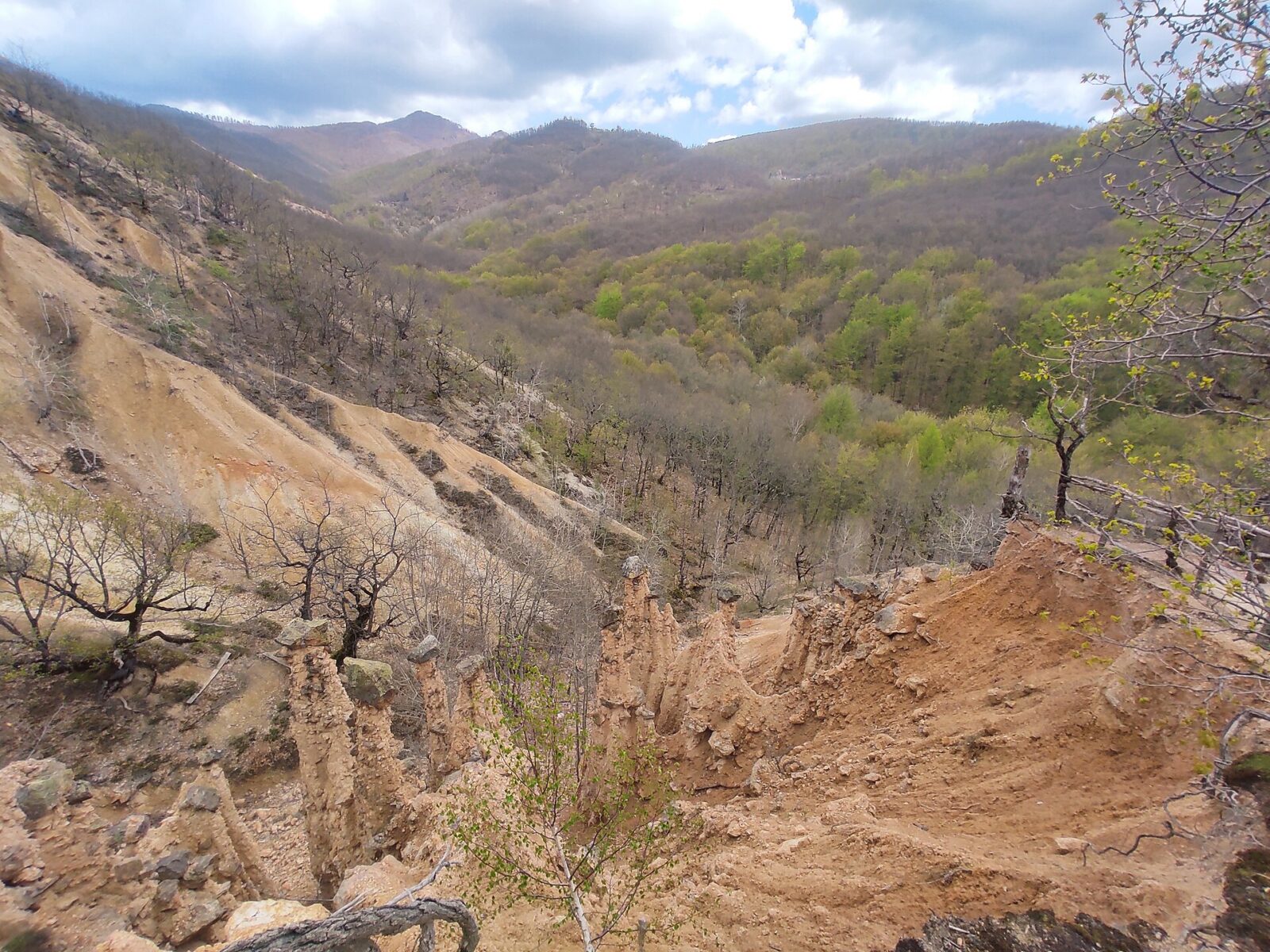
Djavolja Varos was placed under state protection in 1959. In 1995, a decree of the Government of the Republic of Serbia declared it a natural asset of exceptional importance and placed it in the first protection category, Spomenik prirode, Natural Monument. The area currently protected under that category covers 67 hectares. A request to extend protection to a further 1,014 hectares was, at the time the operator’s page was written, still pending before the government, which would considerably enlarge the protected zone around the formations if it goes through, taking in more of the surrounding hillside rather than just the pillars themselves.
This protection status is corroborated independently by Serbia’s Institute for Nature Protection, which lists Djavolja Varos among the sites protected under a specific government decree covering the site, separately from the operator’s own account. Unlike the price and the hours, this part of the record is stable and not something you need to double-check before you go: the site’s legal status does not change from one season to the next.
What you’ll walk among
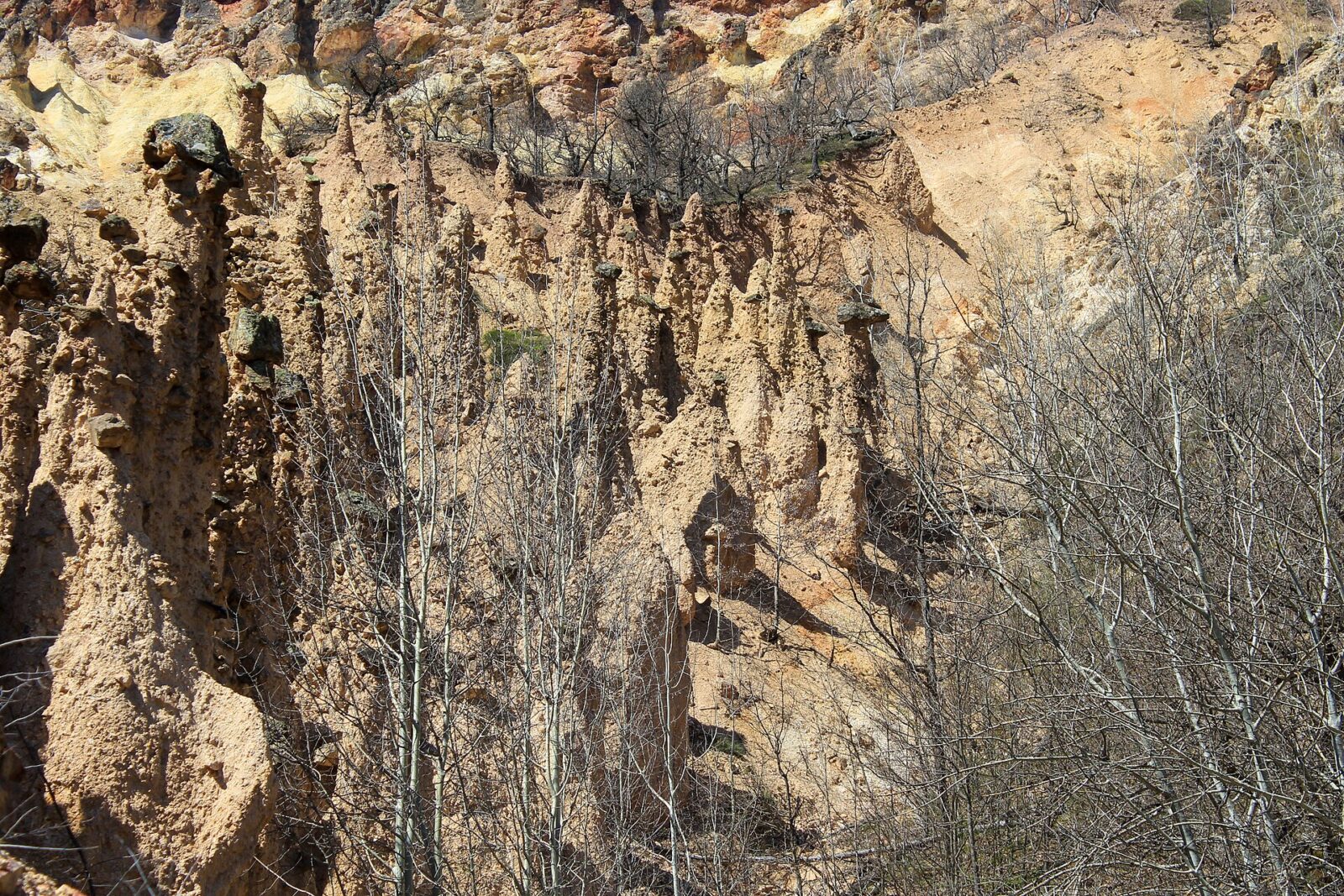
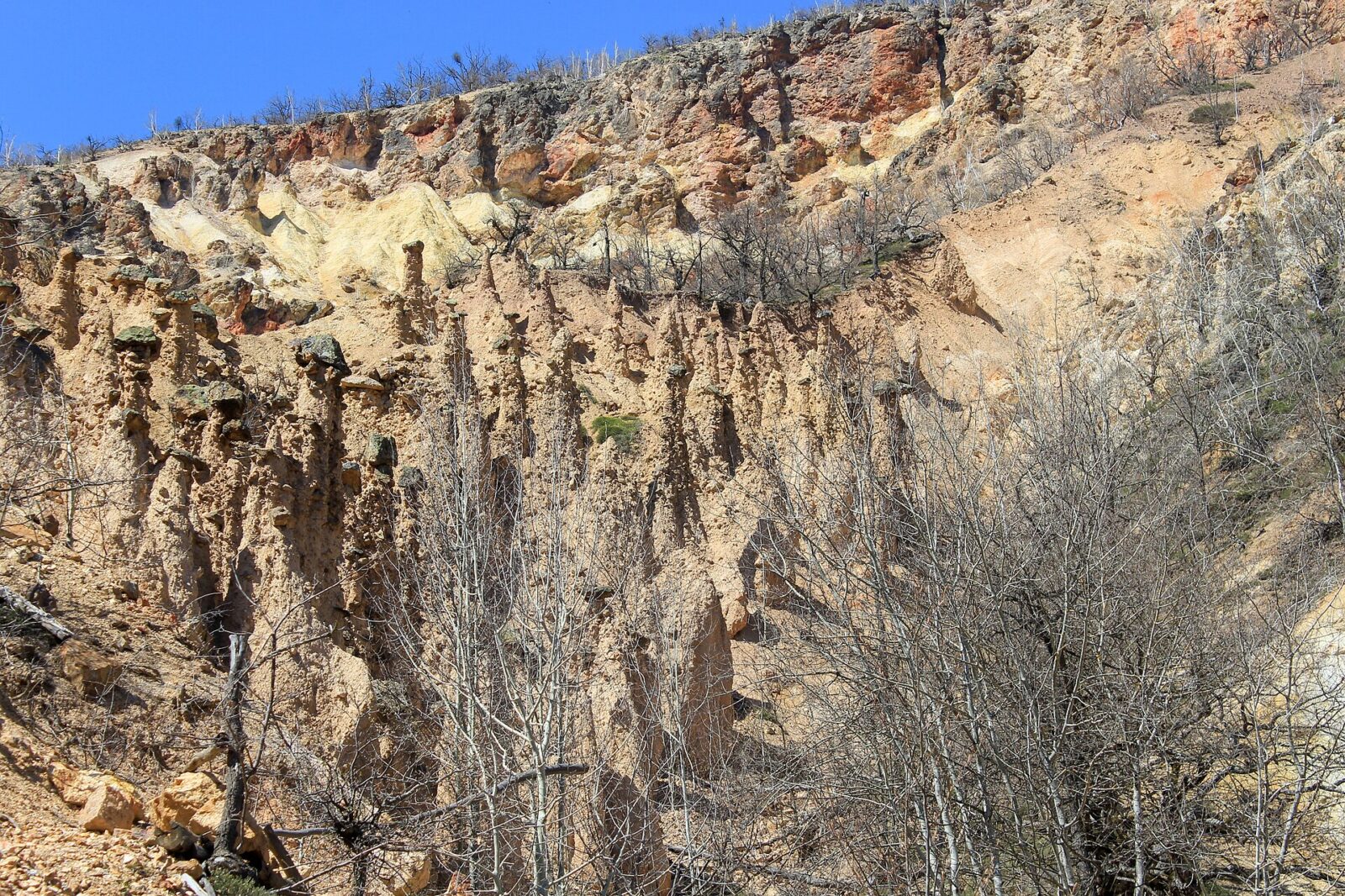
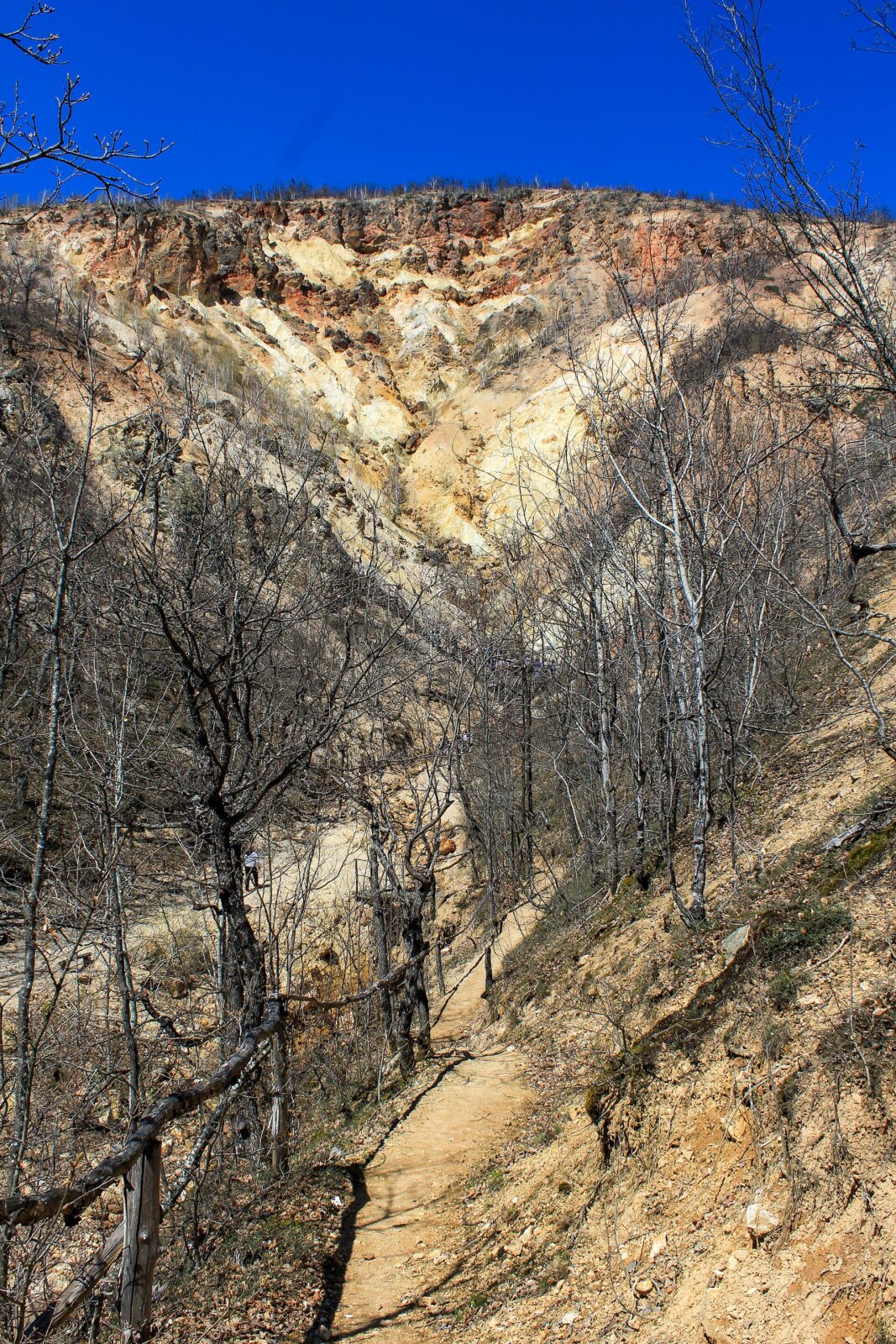
Djavolja Varos is a field of earth pyramids, tall, narrow pillars of soil and soft rock left standing after the ground around them eroded away, many of them capped by a harder boulder that protected the column beneath it from washing away at the same rate as everything else on the slope. Walking among them puts you at the scale the site is actually meant to be seen at: from a distance, the formations read as a strange grey field on the hillside, but up close, each pillar has its own shape and its own leaning angle, and the ground between them is as much a part of the experience as the pillars themselves.
Neither the operator’s site nor the Institute for Nature Protection publishes a length or a difficulty rating for the walking route through the formations. There is a marked path, but budget your visit as a flexible hour or two rather than expecting a signed distance in kilometres, and wear shoes that can handle uneven, sometimes loose ground.
Combining it with the rest of southern Serbia
At 89 km from Nis, Djavolja Varos sits within reach of a day trip if you are based there, though it makes for a long day given the state of the roads and the lack of public transport. It is the southernmost site of its kind covered on this site, and pairing it with a stop in Nis itself, rather than treating it as a stand-alone excursion from Belgrade, is the more realistic way to fit it into a trip. Kursumlija sits closer, at 27 km, but most visitors coming from elsewhere in Serbia will still be routing through Nis to get here in the first place.
Building in a buffer for the drive matters more here than at sites closer to Belgrade. Between the distance itself and a site with no published fallback transport option, this is not a place to arrive at on a tight schedule.
Common questions
How much does it cost to enter?
The operator’s site states 350 RSD for an adult, a figure unchanged since at least 2023 in web archive snapshots, though the page itself carries no date. Treat it as a reliable estimate and budget a small margin for change.
Is it open in winter?
Uncertain. The operator’s own page states two different closure windows in two different places, one of them naming a year that has already passed. Call ahead before planning a visit between late autumn and early spring.
How do I get there without a car?
No public transport route to the site is published by the operator or by Serbia’s Institute for Nature Protection. A private vehicle or an organised tour from Nis is the practical option.
How long does a visit take?
No official walking distance or duration is published. Budget a flexible hour or two for the marked route through the formations, and wear shoes suited to uneven ground.
Why is the site protected?
Djavolja Varos has been under state protection since 1959 and was classified as a Natural Monument, the first protection category, by a 1995 government decree. The protected area covers 67 hectares, with a pending request to extend that to a further 1,014 hectares.
Is it far from Belgrade?
Yes. The operator publishes a distance of 288 km from Belgrade, with no direct train or bus route to the site itself. An overnight stop in Nis on the way down makes more sense than attempting the round trip from Belgrade in a single day.
Nearby
Djavolja Varos is the southernmost stop covered on this site, closest in practice to a day based in Nis, itself reachable from Belgrade via the Belgrade to Nis guide. Within Nis, Skull Tower is the other site anchoring this part of the country on this site, and the two make a natural pairing for anyone building a trip around southern Serbia rather than staying close to the capital.