
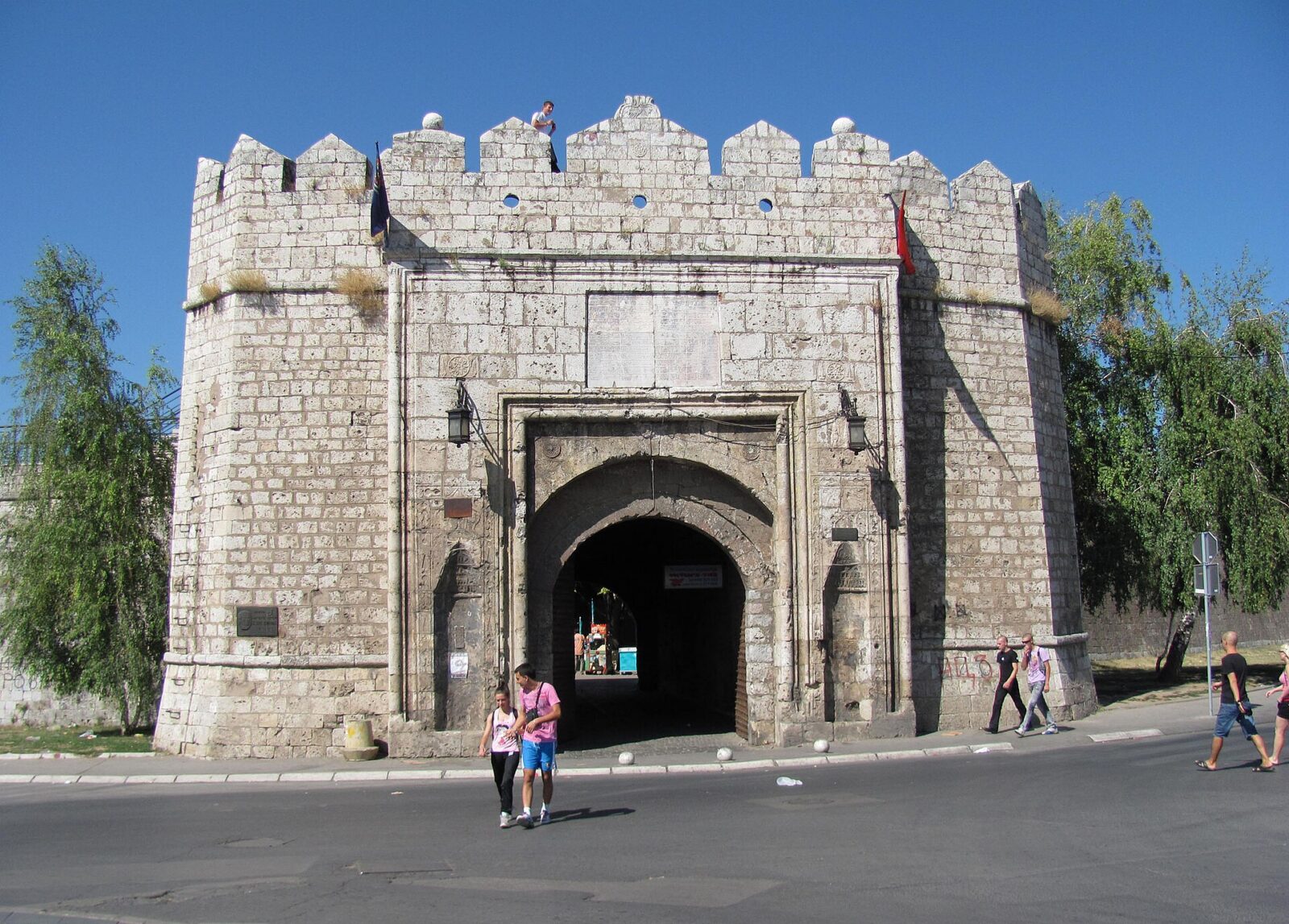
Nis fits into a single day if you accept a trade-off: you will not see the fortress, a Roman imperial estate and a wartime memorial with the depth any one of them could take on its own. Split the day between the fortress grounds in the centre, which cost nothing to enter, and one or two of the ticketed museums around the edges of town, and the pace holds without feeling rushed.
Two museums carry most of the day once you are past the fortress gates. Archaeological Park Mediana, a Roman villa estate a few kilometres east of the centre, and the Memorial Complex “February 12” at Crveni Krst, a wartime camp on the southern edge of town, run on the same hours and the same ticketing, even though the two sites share nothing else beyond that. The Skull Tower, the city’s single best-known monument, sits close enough to add to the same day, and it has its own page on this site rather than a rushed paragraph here.
Nis city transport does not charge a fare, which removes one more decision from the day. What follows covers what each site costs and when it opens, how the booking rule works if you are travelling as a group, and what the fortress itself and the two museums actually hold, before pointing you to the separate page on getting here from Belgrade.
The short version. Nis Fortress is free to enter and, per the city tourist organisation, open every day of the year, 24 hours a day. Archaeological Park Mediana and the Memorial Complex “February 12” both charge 500 RSD and 300 RSD full price (400 RSD and 250 RSD reduced), Tuesday to Sunday, closed Monday, last entry 30 minutes before closing. A combined ticket covering both plus the Skull Tower and the Archaeological Hall costs 1,200 RSD full price, 1,000 RSD reduced. City buses and trolleybuses in Nis carry no fare. Large groups must arrange their visit time in advance; the museum publishes no such requirement for individual visitors.
On this page
What you pay to enter
Nis Fortress itself carries no admission charge. The two museums outside it are ticketed separately, and a combined ticket covers more ground if you are doing both plus the Skull Tower.
| Site | Full | Reduced | Hours |
|---|---|---|---|
| Nis Fortress grounds | No charge | – | Every day, 24 hours |
| Archaeological Park Mediana | 500 RSD | 400 RSD | Tue-Fri 09:00-16:00, Sat-Sun 09:00-15:00, closed Monday |
| Memorial Complex “February 12” (Crveni Krst) | 300 RSD | 250 RSD | Same hours as Mediana |
| All museum sites combined (Mediana, Skull Tower, Crveni Krst, Archaeological Hall) | 1,200 RSD | 1,000 RSD | Same hours |
The reduced rate applies to elementary and high school pupils, students and senior citizens, and to group visits of more than ten people; the museum asks for a student or ISIC card, or an identity card or pension document for seniors. Admission is free for children up to seven years old, for members of ICOM, the Museum Society of Serbia and the Archaeological Society of Serbia, for group visits by the Army of Serbia and the Ministry of Interior, and for members of associations of people with disabilities and their companions. The Synagogue Gallery and the literary exhibition on Sremac and Miljkovic are free regardless of which ticket you hold.
When the sites are open
Mediana and Crveni Krst share one timetable: Tuesday to Friday 09:00 to 16:00, Saturday and Sunday 09:00 to 15:00, and closed on Monday across the whole museum complex. The last entry to either site is 30 minutes before closing time. Unlike Belgrade’s Kalemegdan, which drops to an unpublished winter regime after October, no separate summer or winter schedule has been published for Mediana or Crveni Krst: the hours above appear to run year-round as stated.
The fortress grounds work on a different basis entirely. The city’s own tourist organisation states that entry is free and that the fortress is open all year, 24 hours a day, which covers the walls, gates and open ground rather than any of the ticketed sites inside the wider museum network.
Getting around without paying a fare
City and suburban public transport in Nis carries no fare, according to the operator’s own homepage. That removes bus tickets from the day’s budget entirely, whether you are crossing town to Mediana or heading south to Crveni Krst. No start date for this free-fare policy turned up in the sources checked for this page, which is worth flagging: Belgrade’s equivalent policy is dated to a specific decision from 1 January 2025, and the two should not be assumed to share that date.
If you need route or timetable detail beyond what this page covers, the transport operator runs a call centre on 018/505-656, 018/505-665 or 066/80-60-045, a free number for fine or surcharge complaints on 0800/018-802, and an information counter at Trg Kralja Milana bb, phone 018/410-0833.
Booking ahead only if you are travelling as a group
The National Museum Nis asks large groups to coordinate their visit time in advance and to arrive at least 30 minutes before closing. Bookings for group visits go by email or fax, and if a group visit was prepaid, the guide has to show the payment voucher on arrival. Nothing on the museum’s own pages sets out a separate booking requirement for individual visitors; the rule above is stated for groups specifically, and this page does not extend it further than that.
Contact for bookings and general questions runs through the museum’s central office: 14 Generala Milojka Lesjanina Street, phone +381 18 248189 or +381 18 513 430, fax +381 18 246 622, email [email protected].
Walking into the fortress
Nis Fortress sits on Djuke Dinic bb, right against the city centre, and covers 22.1 hectares behind ramparts that stand 8 metres high and 3 metres wide. That scale is easy to underestimate from any single gate: the walled ground holds enough open space that locals use it as a park as much as a monument, walking the ramparts or crossing the interior on a shortcut between one part of town and another.
Because entry is free and the gates are never locked, there is no ticket desk to plan around here and no opening time to catch. The fortress works as the natural starting or finishing point for a day that also takes in Mediana and Crveni Krst, both of which sit outside the walls and need their own transport. Starting here in the morning, before the museums open at nine, lets you walk the ramparts while the day is still cool and cover open ground that costs nothing whichever hour you arrive.
Address aside, this page does not put a construction date on the fortress: what the sources checked here establish is its footprint, its wall dimensions and its free, round-the-clock access, not which century built the walls you are standing on. Treat the fortress as the anchor point of the day rather than a monument you need to read up on before arriving.
Two sites, two very different centuries
Mediana and Crveni Krst have nothing in common except the ticket desk and the timetable. One is a Roman emperor’s country estate; the other is a camp built to imprison and kill. Seeing both in one day is less a themed itinerary than a practical use of shared hours, and it is worth deciding in advance which one you visit first: most visitors find the camp easier to take in after Mediana than before it.
Mediana, the emperor’s country estate
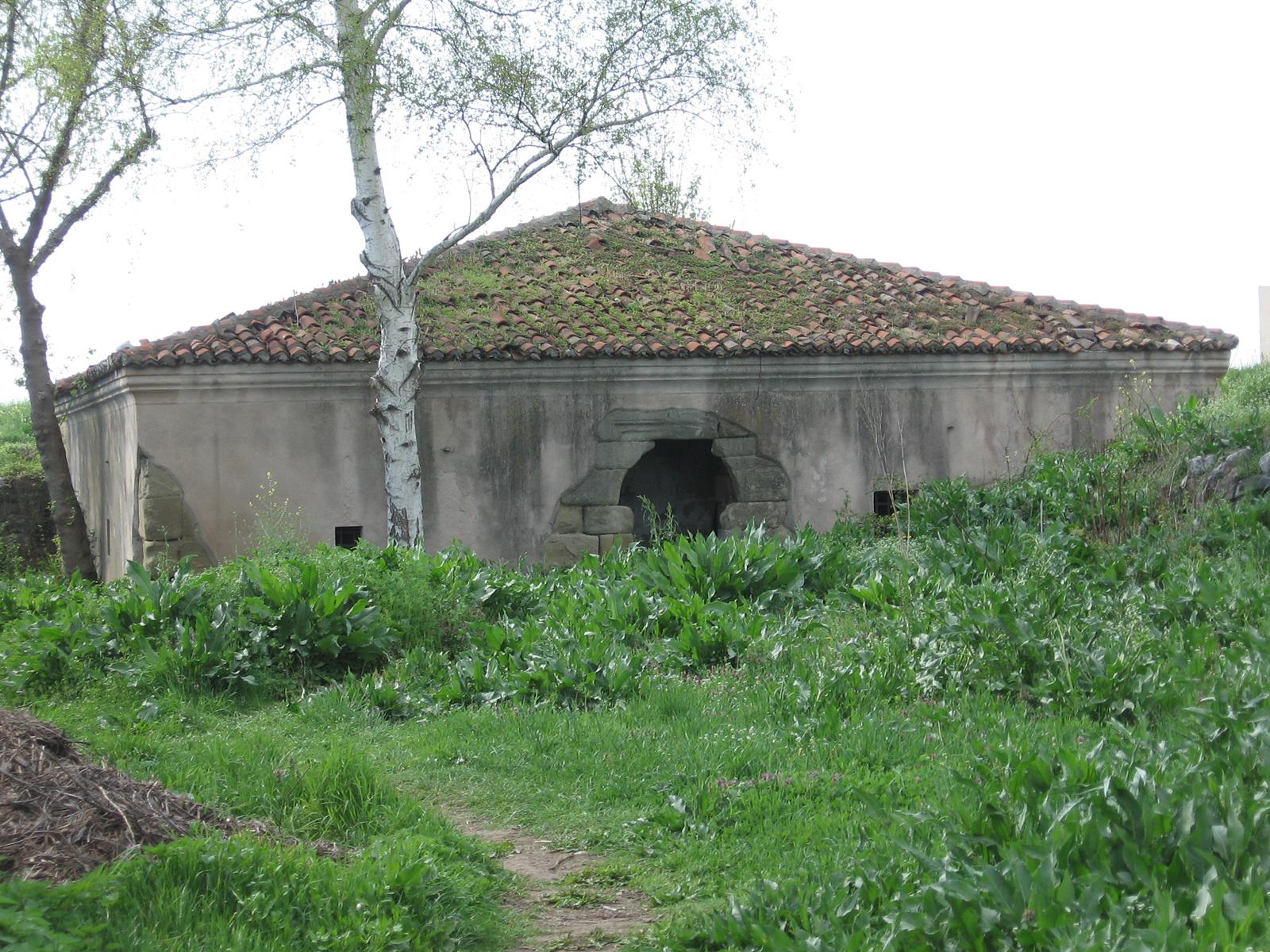
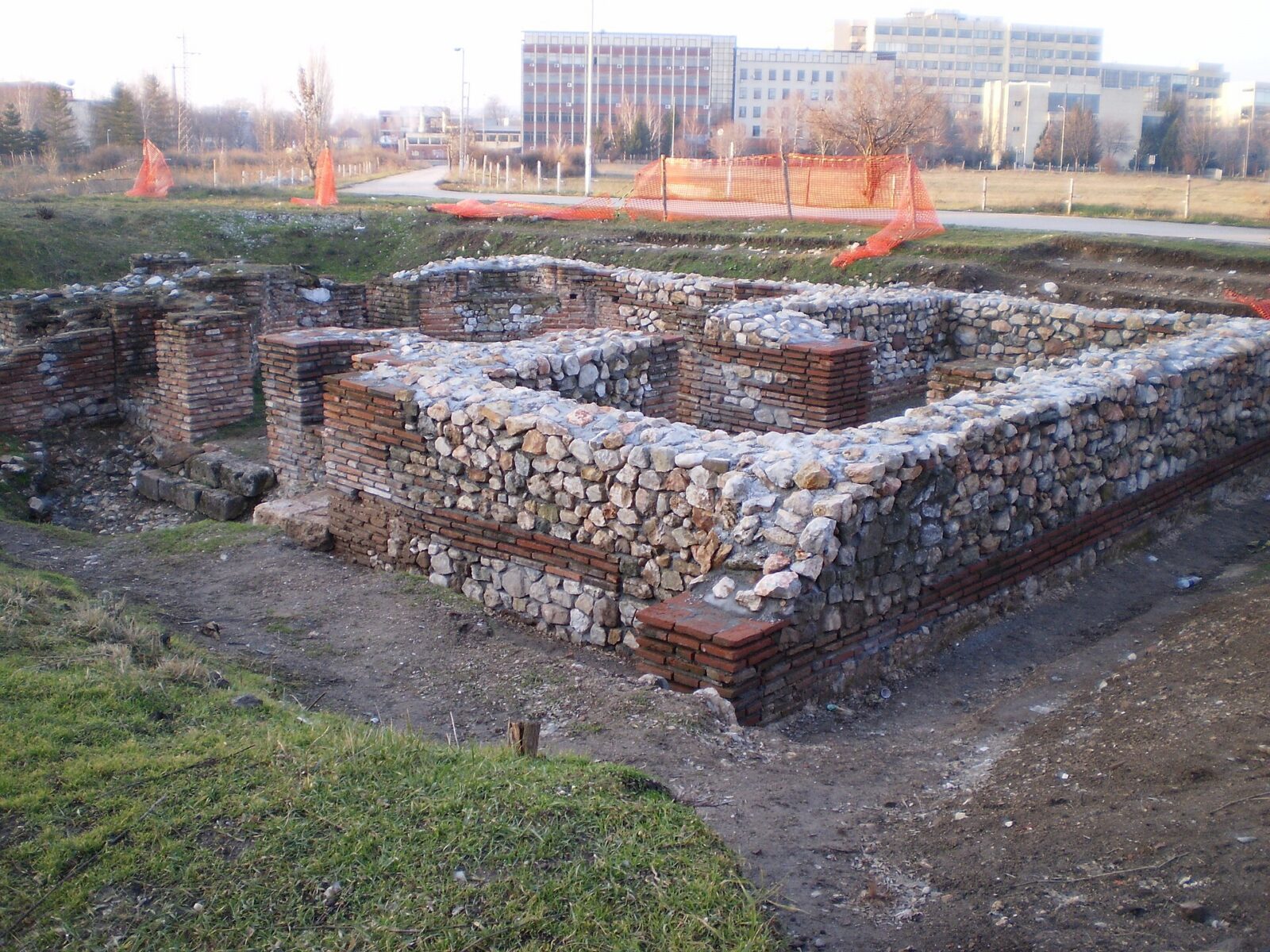
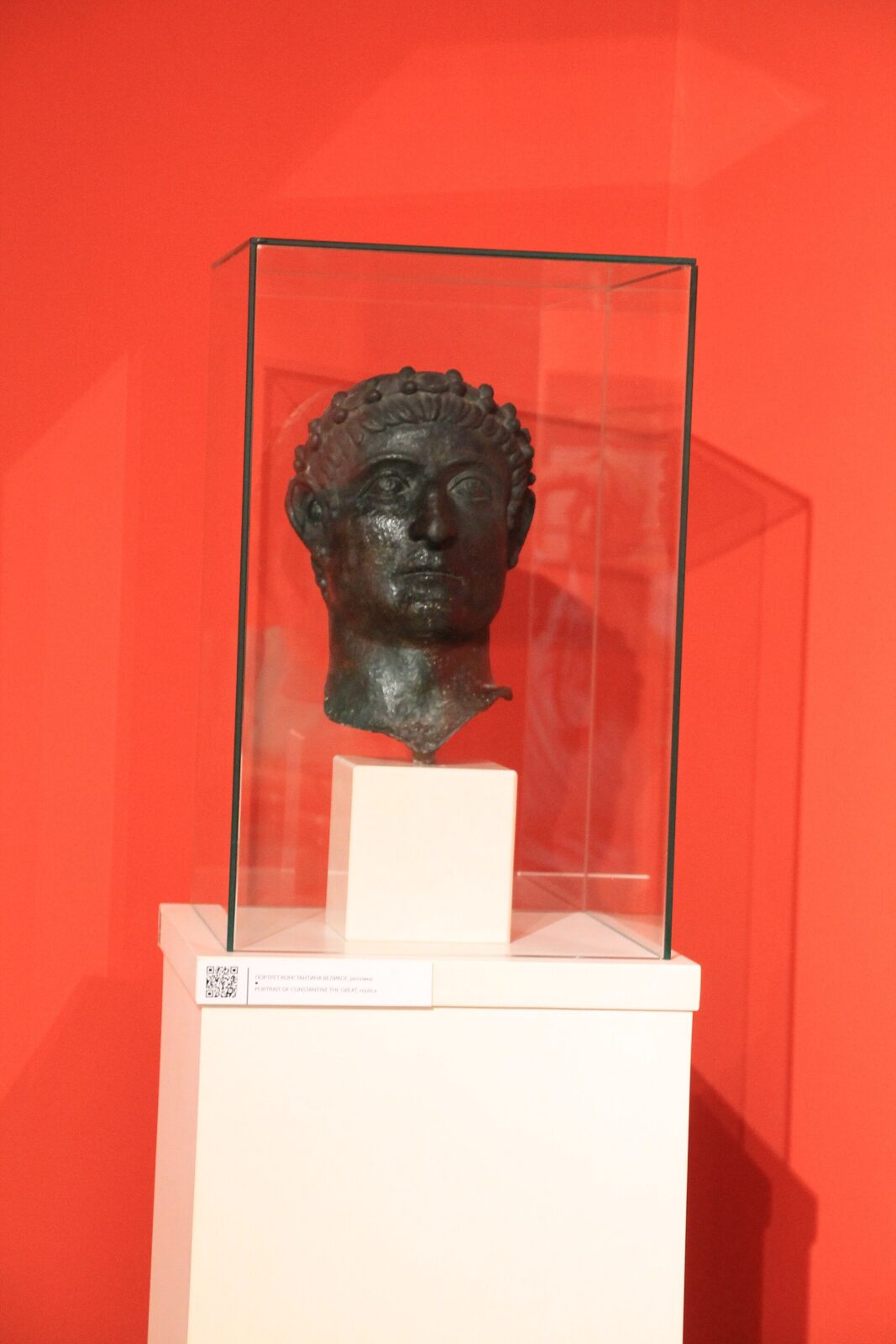
Archaeological Park Mediana sits on Bulevar Cara Konstantina, about 5 kilometres from the city centre. It was built at the end of the third or the beginning of the fourth century as an imperial villa and estate complex on the eastern edge of ancient Naissus, under Constantine the Great and his successors. Excavation recorded around twenty buildings, most of them explored: a villa with a peristyle, thermal baths, a granary and wine cellar, a second villa with an octagonal tower, two early Christian churches and a necropolis.
What you actually walk over is building foundations, floor mosaics recorded at more than 1,000 square metres in total, and sculpture recovered from the site. The scale only really reads once you have crossed from one excavated structure to the next; from the entrance it looks smaller than the twenty-building count suggests.
Crveni Krst, the camp and the breakout
The Memorial Complex “February 12” stands on Bulevar 12. februar bb, on a walled site of about 7 hectares holding the main camp building, two outbuildings, two towers and two watch posts. The Germans formed the camp in the Crveni Krst district in September 1941 and ran it until September 1944. Around 30,000 people were imprisoned there over the course of the war, mostly Serb, Jewish and Roma civilians and political prisoners; more than 10,000 were executed on nearby Bubanj hill, and many others were deported to camps in Austria, Germany, Poland and Norway.
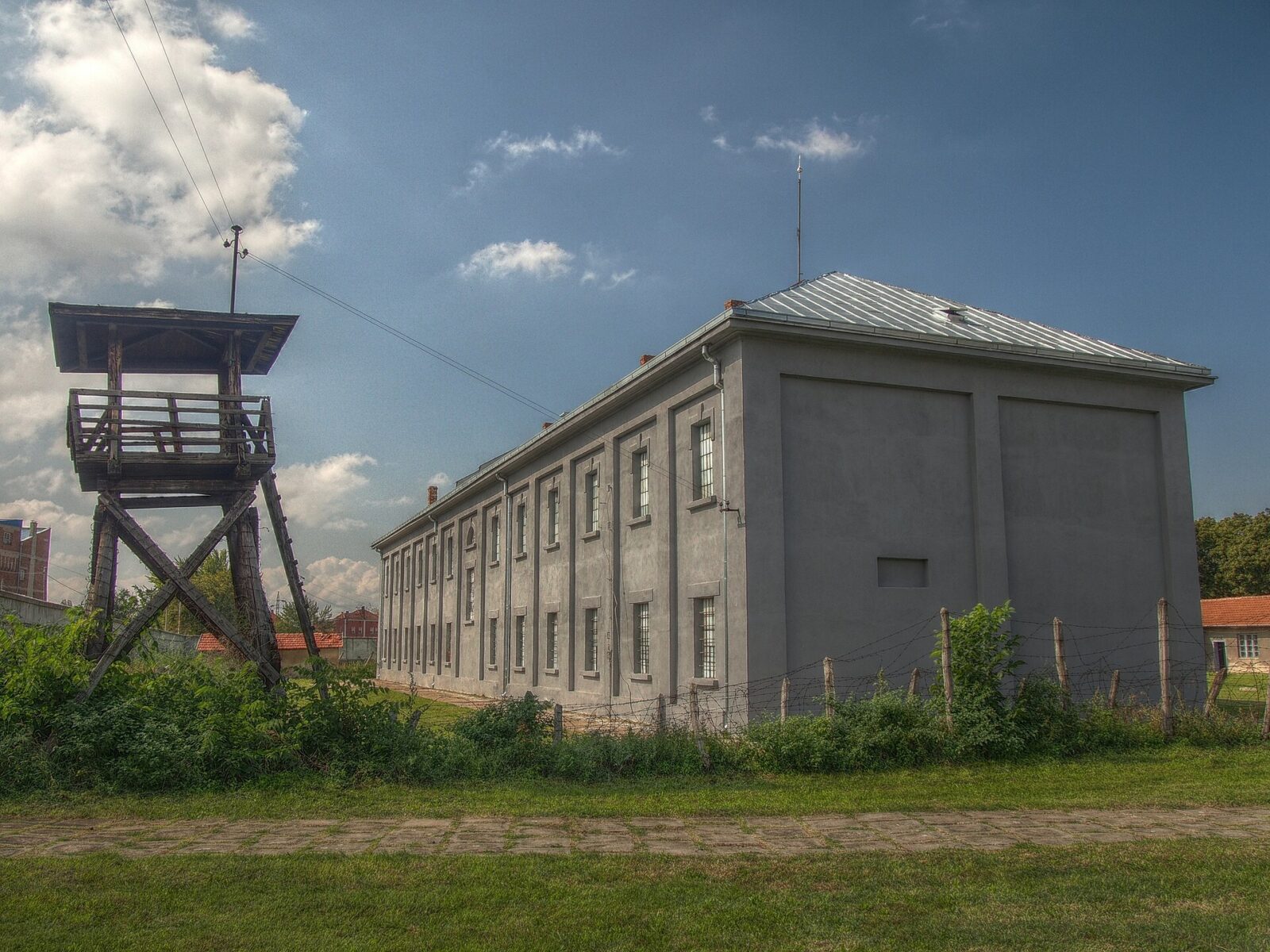
On 12 February 1942, 147 unarmed prisoners attacked the guards and tried to break out. It is described as the first organised camp escape in occupied Europe: 105 of the 147 succeeded, and 42 died on the wire. The former camp building became the Memorial Museum “February 12” in 1967, and the date of the escape gives the museum its name.
Walking the two sites back to back changes register more than it changes pace. Mediana asks you to read building foundations and imagine a villa; Crveni Krst puts you inside the actual walls a camp used, with nothing reconstructed to soften it. Neither visit is long on its own, and the shared hours mean you can fit both into one afternoon without either feeling cut short.
Where the Skull Tower fits
The Skull Tower, Cele Kula, is the third National Museum Nis site and the one most visitors have heard of before arriving. It is included in the combined ticket above, but it earns a page of its own on this site: the Skull Tower guide covers what it costs on its own, when it opens and what it actually holds. Add it to the day if the combined ticket already has you covering all four sites, or treat it as the one stop that justifies the trip on its own.
Getting to Nis from Belgrade
None of this changes how you actually reach Nis. Belgrade to Nis covers the train and coach options and what each operator does and does not publish about timing and fares. If you are flying in instead, Nis airport to the city covers the transfer separately.
Common questions
Is Nis Fortress free to visit?
Yes. The city’s tourist organisation states that entry is free and that the fortress is open all year, 24 hours a day. That covers the walls, gates and open ground, not the separate ticketed museums nearby.
Do I need to book ahead for Mediana or Crveni Krst?
Only if you are part of a large group: the museum asks groups to coordinate their visit time in advance and arrive at least 30 minutes before closing. Nothing is published about individual visitors needing to book.
Which ticket should I buy if I want to see everything?
The combined ticket at 1,200 RSD full price, 1,000 RSD reduced, covers Mediana, the Skull Tower, Crveni Krst and the Archaeological Hall. Buying the two site tickets separately, at 500 and 300 RSD full price, only makes sense if you are skipping the Skull Tower and the Archaeological Hall.
How do I get between the sites without a car?
City and suburban public transport in Nis carries no fare, which covers the trip out to Mediana and the trip south to Crveni Krst. For a specific route or timetable, the transport operator’s call centre and information counter are listed above.
Can this work as a day trip from Belgrade?
It is a long day rather than a relaxed one: you need the journey time each way on top of the hours above. Belgrade to Nis covers the train and coach options so you can judge the timing for yourself before committing to it as a single day.
Nearby
The Skull Tower is the natural addition to this day if you have not seen it already. Belgrade to Nis covers the journey here, and Nis airport to the city covers the transfer if you are flying in instead. For the wider trip, Belgrade in 2 or 3 days covers the city most visitors start from.