
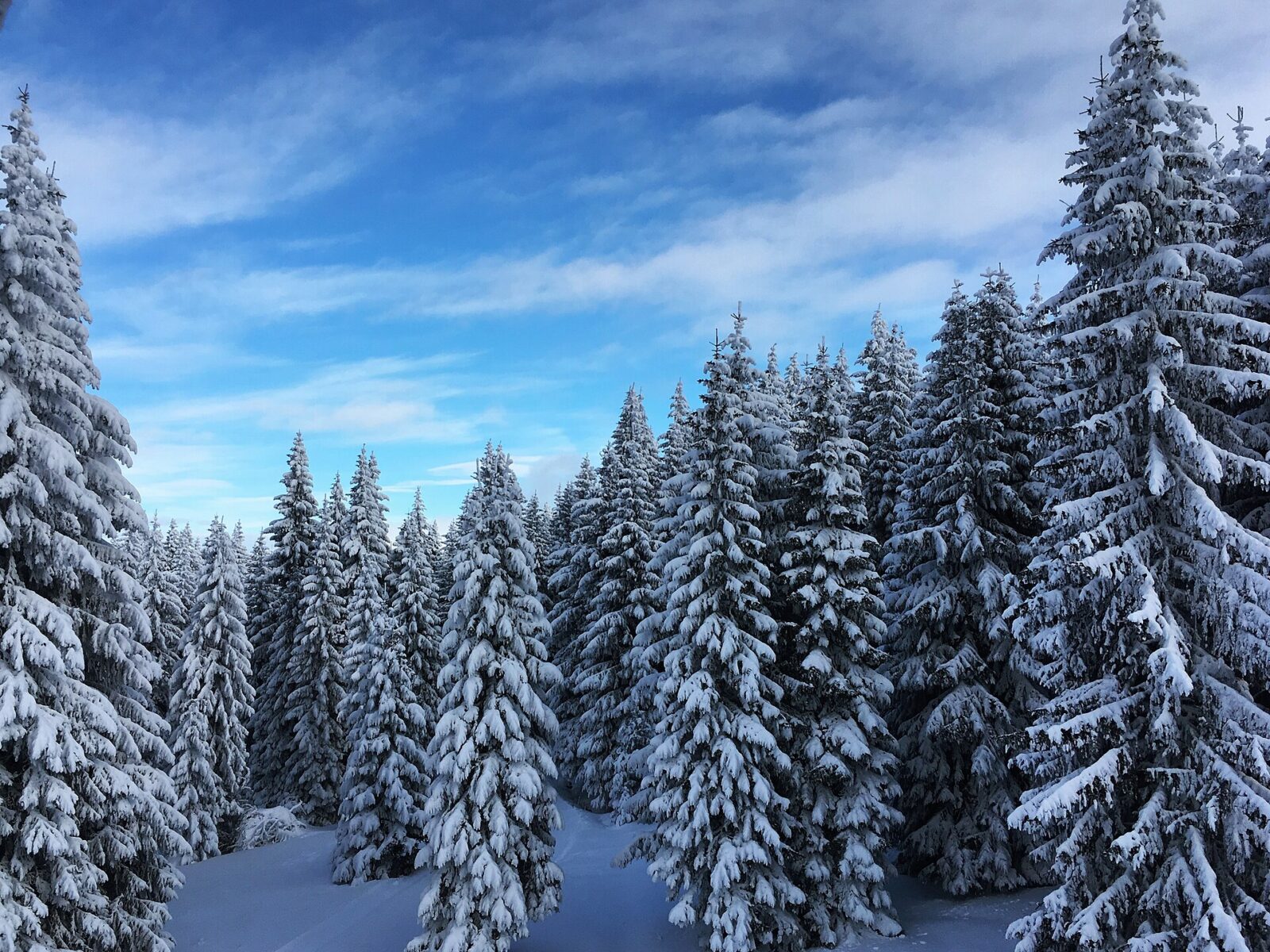
Kopaonik sits at the far southern end of Serbia’s mountains, a long way from Belgrade and close to the border with Kosovo. From December the mountain runs as the country’s biggest ski address; the rest of the year the same ground is a national park, with its own gate, its own fee, and its own rules for what you can and cannot do once you are past it.
Two organisations split the work. JP Nacionalni park Kopaonik manages the protected area: the gate fee, the trails, the conduct rules. The lifts and the pistes belong to a separate operator, Skijalista Srbije, with its own pricing and its own version of how big the ski area actually is. The two sides publish separately, in Serbian and English pages that do not always say the same thing, and there are a few plain questions, like the mountain’s own elevation, that neither one answers anywhere you can read.
The short version. Driving into the park costs 300 RSD a day for an ordinary car, more for larger vehicles, nothing for electric cars that show their registration papers within eight days. A day lift pass ran 5,600 to 6,500 RSD last winter depending on the exact dates; this winter’s price had not been published as of September 2026. Camping, open fires, hunting and fishing all need a permit or the park’s written consent. There is no fuel station on the mountain itself. And nobody publishes a fixed date for when the ski season starts: it follows the snow.
On this page
What Kopaonik actually is
You will hear “Kopaonik” used for two overlapping things, and it is worth keeping them apart before you plan anything. Kopaonik National Park is the protected mountain massif, run by JP Nacionalni park Kopaonik, with entry fees for motor vehicles and a published code of conduct for anyone inside its boundary. The ski resort is the network of lifts and marked runs threaded through part of that same massif, run separately by Skijalista Srbije, which sells its own passes and quotes its own figures for how large the ski area is.
In practice you deal with both. You pay the park to drive in, whatever the season, and you pay the resort separately if you want to ski. Neither operator’s fee covers the other’s.
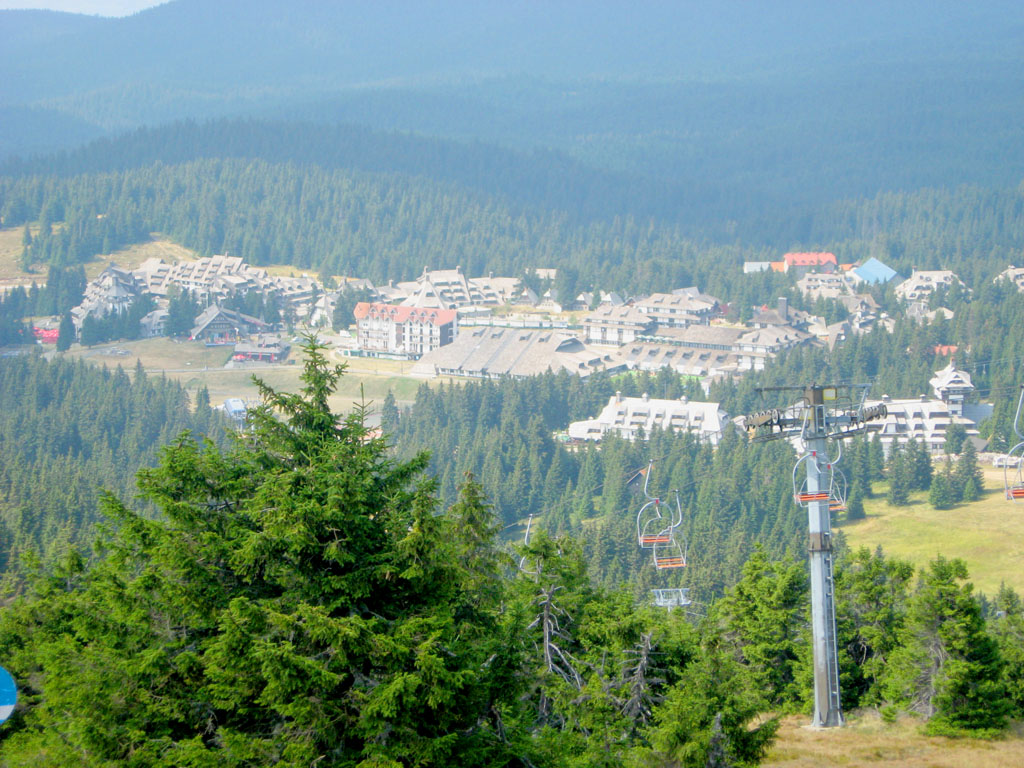
The toll points named on the park’s own fee page, Djorov most, Brzece and Suncana dolina, double as a rough map of how the mountain is approached and used: Brzece and Suncana dolina are both resort areas with lift access, while Djorov most sits on one of the roads in. Knowing the names helps when you are reading a map or a road sign rather than a tourist brochure, since the park’s official information leans on them rather than on distances or driving times.
What driving in costs you
The national park charges a fee to bring a motor vehicle inside, collected at three toll points: Djorov most, Brzece and Suncana dolina. The current tariff was set by the park’s supervisory board in July 2020 and, as far as the park’s own site shows, has not changed since. Prices depend on the vehicle.
| Category | Vehicles | Daily | Weekly | Yearly |
|---|---|---|---|---|
| I | Motorcycles and cars up to 1.3 m at the front axle | 300 RSD | 800 RSD | 2,000 RSD |
| II | Vehicles with a trailer up to 1.3 m, and vans | 500 RSD | 1,300 RSD | 3,300 RSD |
| III | Vehicles over 1.3 m (buses and trucks) | 700 RSD | 1,800 RSD | 4,500 RSD |
| IV | Vehicles over 1.3 m with more than three axles | 1,700 RSD | 4,500 RSD | 22,000 RSD |
| V | Snowmobiles, ATV/UTV/SSV quads, enduro and rally motorcycles, modified tourist-transport vehicles, heavy off-road jeeps | 300 RSD | not published | not published |
Category I, the ordinary car or motorcycle, is what most visitors pay. Electric vehicles are exempt, but only if you produce the vehicle’s registration document within eight days of first entering the park; the park’s own page states this in Serbian without elaborating on how or where to do it, so ask at the toll point when you arrive. The park’s fee table does not mention a walk-in or pedestrian charge anywhere, so this appears to be strictly a charge for driving a motor vehicle in.
What the park expects from you
The park publishes a code of conduct in English, and it reads as a fairly ordinary list of protected-area rules rather than anything specific to skiing. Worth knowing before you set off with a tent, a rod or a drone:
- Dispose of waste only in designated bins, or carry it out if none are available or full
- Stay on marked trails
- Visiting zones under the highest level of protection requires the park’s official guides
- Open fires and camping are only permitted in designated areas, and camping additionally needs a National Park permit
- Hunting and fishing require the consent of park management
- Do not pick or damage protected or unfamiliar plants or mushrooms; harvesting medicinal herbs or other forest products needs a National Park permit
- Do not disturb wildlife you encounter, and avoid making noise
- Filming or photography for commercial purposes requires a National Park permit
- Motor vehicles may only be used on designated trails and with written approval from park management
This is separate from the ski operator’s own on-piste conduct code, which covers behaviour on the slopes: speed, overtaking, helmet use. The park’s list above is about the protected area as a whole, and it applies whether you are there to ski, walk, or just drive through.
The list matters most for anyone planning something beyond a lift-served ski day: a summer walk off the marked paths, a picnic with an open fire, or a photo shoot with a drone. None of those are automatically fine just because nobody is checking at the gate. The park’s own wording does not define where “commercial purposes” begins for the filming permit, so if you are working rather than holidaying, ask the park management before you set up a camera or a drone.
How big the ski area really is
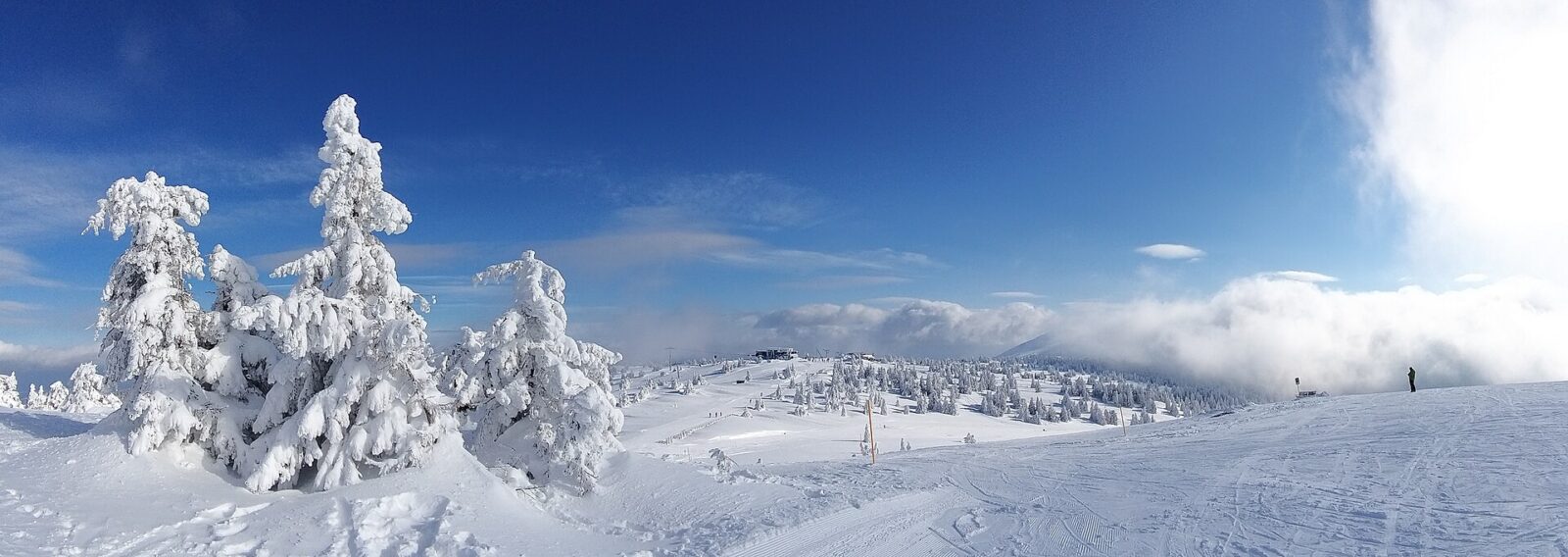
Ask how many kilometres of runs Kopaonik has, and you will get two different answers from the same operator, depending on which language you read.
The two official counts disagree
The Serbian version of the resort’s own “about the centre” page claims more than 64 km of runs, lift capacity above 34,000 skiers an hour, and a list that includes one gondola. The English version of the same page instead gives about 55 km of alpine runs plus 12 km of cross-country trails, capacity above 32,000 skiers an hour, and a lift inventory with no gondola at all. Both pages carry the same publication date on the resort’s own site, despite describing what sounds like a different lift network, and there is a real, separately confirmed gondola linking Brzece with the resort centre that the Serbian text credits to a recent season. That points toward the Serbian figures being the more current ones, but it is not proof, since the 64 km could equally reflect a different way of counting connecting ski roads. We are not picking a winner here: treat the two figures as a live disagreement on the operator’s own site, not as a range to average.
No altitude on record
Neither the ski operator’s pages nor the national park’s own site states an elevation figure, for the resort base, the top of any lift, or Pancicev vrh, the massif’s highest point. The park’s own climate page gives a mean annual temperature of 3.7 degrees Celsius at “Ravni Kopaonik”, more than 200 sunny days a year, and snow cover typically from late November to May, but no height in metres anywhere we could find on an official page. A figure of around 2,017 m circulates elsewhere for the summit, but since no official Kopaonik source states it, this page does not repeat it.
Checking the ski pass price
Last winter, an adult day pass cost 5,600 RSD in the low and standard-season weeks, rising to 5,900 RSD around the holiday shoulders and to 6,500 RSD in the two peak weeks around Christmas/New Year and mid-February. Child and senior rates were lower across the same three bands. That was the price list for the 2025/26 season, published by the operator at the end of October 2025.
Treat last winter’s prices as history, not as a quote. As of September 2026, the resort’s own English homepage still headlines its 2025/26 ski-pass prices, with no 2026/27 list published yet. Operators here have historically posted the coming season’s tariff around mid-October. Check the resort’s own ski-pass page directly before you book, rather than assuming last year’s numbers still hold.
When the season opens and closes
No page on the resort’s own site states a fixed “the season runs from date X to date Y.” Openings and closures are announced piecemeal, through news items tied to actual snow conditions rather than a calendar. As one example, a 2026 announcement extended that season’s operating hours because of fresh snowfall and high demand, running an expanded schedule from 30 March to 13 April, without the same page stating when that season had originally begun. If you are planning a ski trip around a specific week, confirm current conditions and opening status directly with the resort close to your dates rather than assuming a set season.
Getting to the mountain
Most visitors drive up. The park’s own guidance names three approach roads, via Josanicka Banja, via Raska and via Brzece, without giving distances or driving times for any of them. If you are coming from Belgrade and want the fuller picture on routes, buses and what is and is not published about getting there, that is covered separately in the Belgrade to Kopaonik access guide.
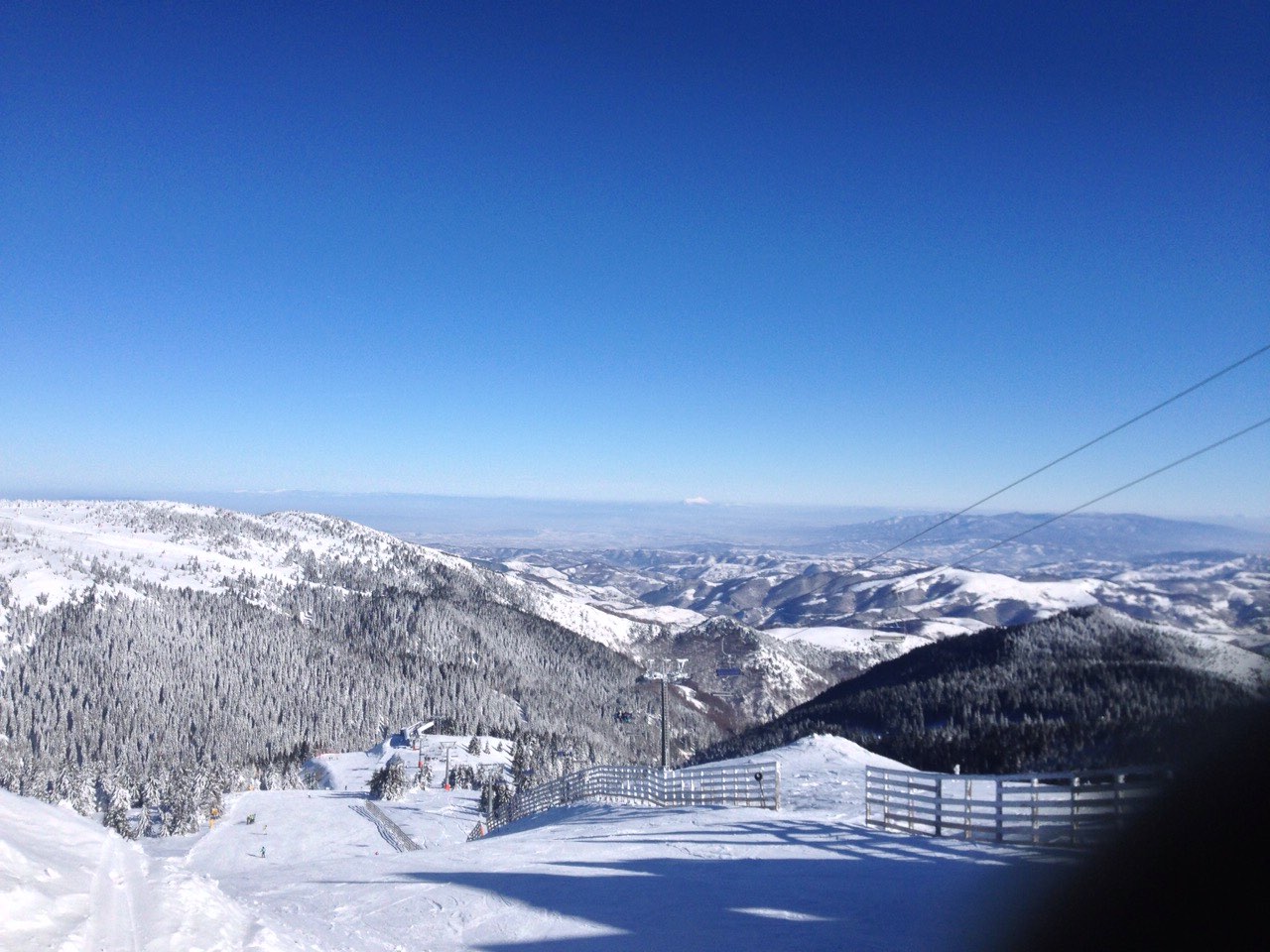
One thing worth planning around if you are driving: there is no fuel station at Kopaonik itself. The park’s own visitor information page is explicit about this and tells drivers to arrive with enough fuel, naming the nearest stations as being in Brzece, Josanicka Banja and Raska. Fill up before the final approach rather than counting on finding a pump once you are on the mountain.
Common questions
Are electric vehicles really free to drive in?
The park’s fee page states that electric vehicles do not pay the entry charge, on production of the vehicle’s registration document within eight days of first entry. It does not explain exactly where or how to present that document, so ask at the toll point when you arrive.
Can I pitch a tent or light a campfire in the park?
Only in designated areas, and camping additionally requires a permit from the National Park. The rules of conduct do not name where those designated areas are, so confirm with the park management before you plan an overnight stay outdoors.
Can I fish or hunt on the mountain?
Both require the consent of park management. The park’s published rules do not go further into how that consent is obtained, so treat it as something to arrange in advance rather than something you can do on arrival.
Is there a fixed date the ski season starts each year?
No. The resort announces openings, closures and extensions as conditions allow rather than publishing a standing calendar date. Check current status close to your travel dates instead of assuming a fixed opening.
So how many kilometres of runs does Kopaonik have?
The resort’s own Serbian and English pages disagree, at more than 64 km against about 55 km of alpine runs plus 12 km of cross-country trails. We report the disagreement rather than choosing a figure or averaging the two.
What’s the resort’s elevation?
Not stated on any official page we found, for the base, the top lift station, or Pancicev vrh. A figure of around 2,017 m circulates elsewhere for the summit, but no Kopaonik source we checked publishes it, so this page does not repeat it as fact.
Nearby
If you are travelling up from the capital, the Belgrade to Kopaonik access guide covers what is and is not published about the road and the bus. Renting and driving a car in Serbia is worth reading first if you plan to drive yourself. For a sense of when Serbian mountains are worth visiting outside ski season, see when to visit Serbia. If Kopaonik does not suit your dates or your group, Zlatibor as a base covers another western Serbian mountain resort with its own gondola and its own access questions.