
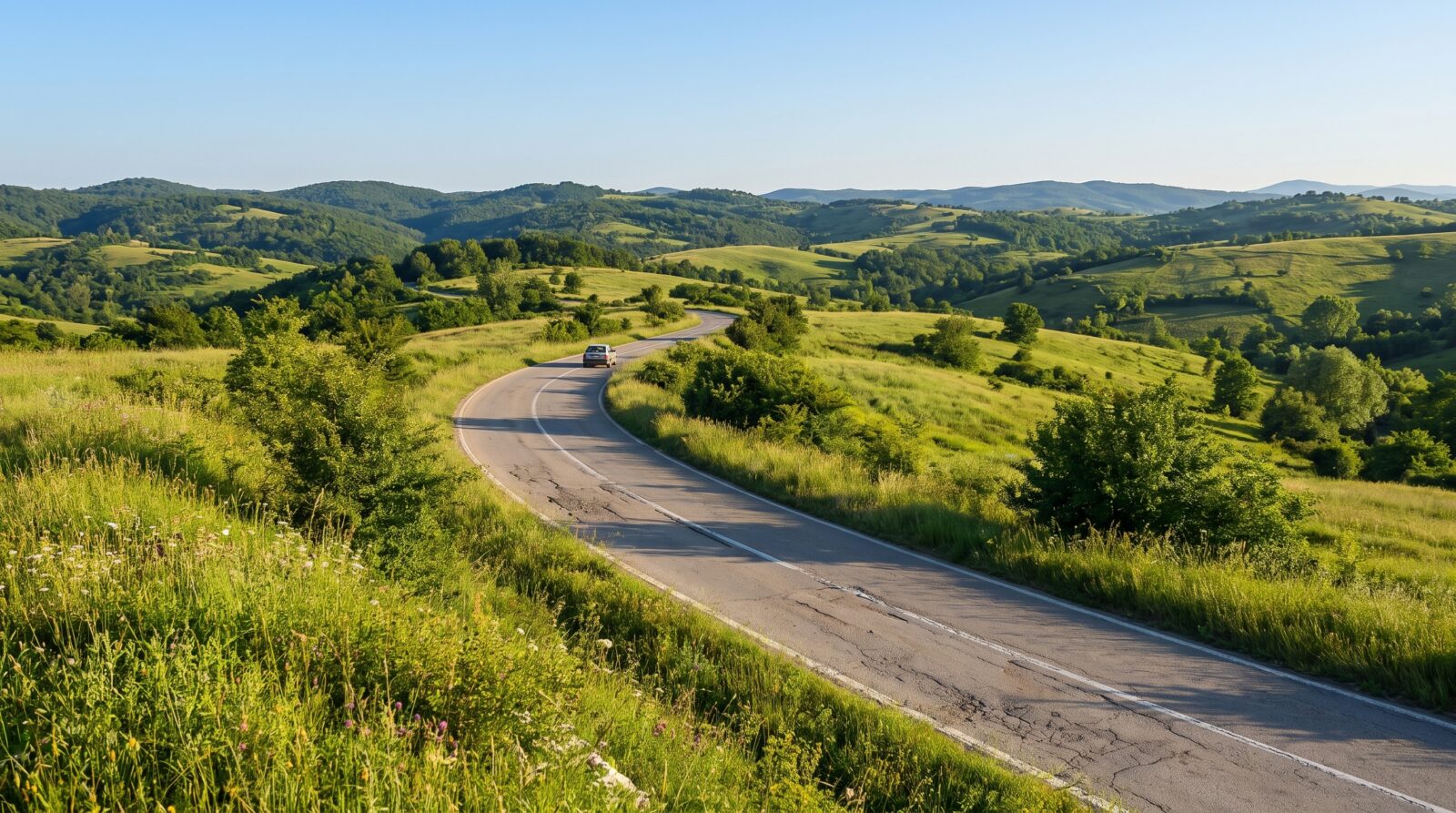
A rented car changes what is reachable in Serbia. The meanders at Uvac, the river country along the Tara and the Drina, the sites east of the Danube: none of them sit on a useful bus line, and a car turns a day you would otherwise spend on connections into a day of driving straight there. Renting the car is the easy part.
What actually needs your attention is everything around the car: which licence gets you across the border, whether your insurance covers Serbian roads, and how the rules of the road differ from what you drive under at home. Most of it is settled and easy to state plainly. A couple of points are genuinely contested between official sources that disagree with each other, and one point, the crossing into Kosovo, is not addressed by any Serbian authority at all. This page sets out what each source actually says, rather than picking a winner where none of them agree.
The short version. Speed limits are 50 km/h in built-up areas, 80 on other roads, 100 on expressways and 130 on motorways, and the blood alcohol limit is 0.2 mg/ml, zero for several categories of driver. A national driving licence is legally sufficient for most visitors under Serbian law, though the U.S. Embassy tells its own citizens that an international permit is compulsory, so carrying one settles the question either way. Cars registered in the EU, the UK, Switzerland and several neighbouring countries no longer need a green card at the Serbian border; most other plates still do, and no authority publishes what the border insurance that replaces it actually costs. Winter tyres are required, only when the road is actually covered in snow or ice, from 1 November to 1 April. Tolls are paid by section with no vignette, and driving into Kosovo needs research of its own before you go: many rental contracts exclude it, and getting back into Serbia afterwards is not guaranteed.
On this page
Do you need an international permit?
Here, Serbian law and foreign government advice pull in different directions, and neither side is simply wrong. They answer slightly different questions, aimed at slightly different readers. Three official positions exist side by side, they do not agree with each other, and this page will not pick one for you. Read all three and decide which governs your own trip.
The Serbian law
Article 178 of Serbia’s road safety law lets a visitor drive on either a national licence or an international driving permit, on condition of reciprocity between Serbia and the country that issued it, for the length of a temporary stay, with proof of that stay producible on request. Serbia’s own Ministry of Foreign Affairs states the identical either-or rule in English, addressed directly to visitors, and the same wording is mirrored on the government’s welcometoserbia.gov.rs. No authority publishes the list of countries that meet the reciprocity condition, so this page cannot tell you whether your own licence qualifies. Check with your own licensing authority before you travel.
The U.S. Embassy view
The U.S. Embassy in Belgrade takes a stricter line for its own citizens. An international driving permit, it says, is required for driving in Serbia, but it is only valid when used together with a valid licence from the traveller’s home country. That is a real disagreement with the Serbian text above, not a softer version of it: one source makes the permit optional, the other makes it compulsory on top of the licence you already carry.
The UK’s middle position
The UK government sits between the two. It tells UK nationals they can drive in Serbia on a UK photocard licence for a series of short visits, and adds that carrying the 1968 version of an international driving permit may be helpful, because Serbian police will recognise it. Useful, in the UK’s own phrasing, rather than required.
Three governments, three different answers, and no fourth authority to arbitrate between them. Serbia’s own automobile association, AMSS, recommends travelling with an international permit regardless of what any of the three says, because Serbian rental agencies expect to see one almost as a rule. An international permit costs little and takes a few minutes to obtain at home. Carrying one alongside your national licence removes the argument at the rental desk and at the border, whichever of the three positions turns out to apply to your own passport.
Sorting out insurance and the green card
Serbian law requires a foreign-registered car to carry a valid international insurance document, commonly called a green card, or to buy insurance at the border instead. Since January 2012, though, cars registered in a long list of countries have been let through without one, under a multilateral agreement Serbia is party to. That agreement, not the wording of the insurance law itself, is what actually decides what happens at most borders: the article of Serbian law that would make the plate alone sufficient is expressly deferred until Serbia joins the EU.
| No longer needs a green card | Still needs one |
|---|---|
| EU member states, Iceland, Liechtenstein, Norway, Switzerland, the UK, Andorra, Bosnia and Herzegovina, Montenegro | Turkey, North Macedonia, Albania, Russia, Belarus, Ukraine, Moldova, Israel, Iran, Tunisia, Morocco |
This list comes from Serbia’s Ministry of Foreign Affairs and is mirrored, entry for entry, on welcometoserbia.gov.rs and on the Serbian automobile association’s own green card page: three sources with matching detail, though none of them carries a publication date. Treat it as reliable but not permanent, and confirm with your own insurer before you cross if your plate is anywhere close to the line.
If your plate is not on the exempt list
A driver whose car is not covered by the agreement has to buy border insurance, called granicno osiguranje in Serbian, from a domestic insurer at the crossing. It covers only the length of your stay in Serbia. No authority publishes what it costs: not the National Bank of Serbia, which oversees the insurance law, not the insurers’ own association. Budget for it as an unknown rather than a fixed line item, since the price presumably depends on the insurer and the vehicle class. None of this applies if you rent a car locally with Serbian plates. It only matters if you plan to drive your own foreign-registered car across the border.
Staying within the speed and alcohol limits
The speed limits change with the type of road, and they are enforced closely enough that assuming the highest number is a mistake.
| Road type | Limit |
|---|---|
| Built-up areas | 50 km/h (may be signed up to 80 in places) |
| Other roads | 80 km/h (also the cap while towing a caravan) |
| Expressways | 100 km/h |
| Motorways | 130 km/h |
The blood alcohol limit is 0.2 mg/ml, low enough that it functions as a near-zero policy for most drivers. It drops to an absolute zero for motorcycle riders, drivers of vehicles over 3,500 kg or with more than eight seats, public transport and dangerous-goods drivers, learner drivers, and probationary licence holders together with whoever is supervising them.
What the law expects at the wheel
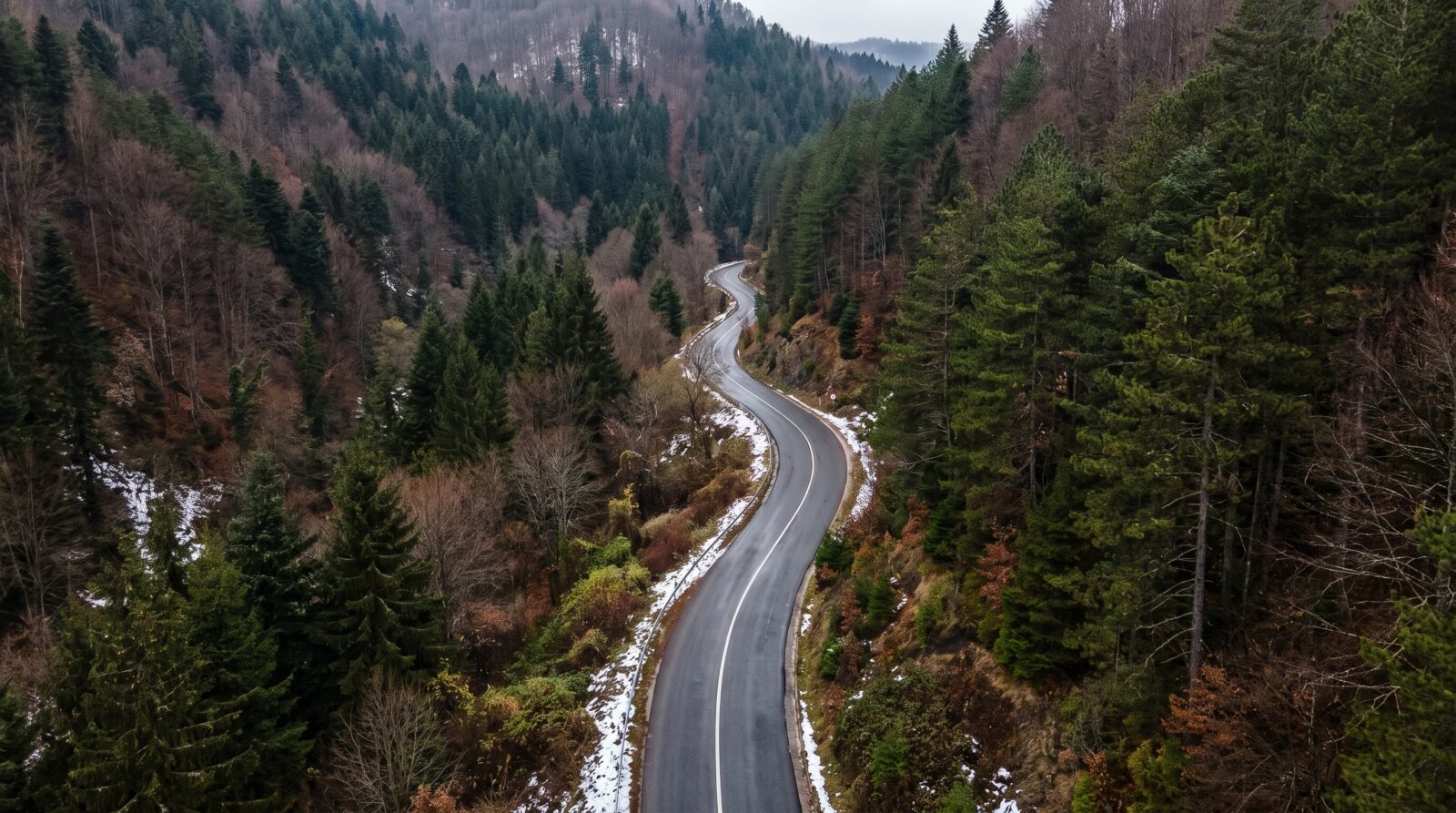
Dipped or daytime running lights have to stay on the whole time you are driving, day and night, with no exception for good weather. At night the default switches to high beams, with a mandatory change to dipped lights whenever you meet oncoming traffic within 200 metres, follow another vehicle closely, drive through a lit street or a tunnel, or come to a stop.
Phones work the way they do in most of Europe: you cannot hold one or operate it while driving unless you have hands-free equipment. The same article of the law separately bans any audio or video loud enough to mask other road users’ signals, and anything else that pulls your attention away from driving.
What you must carry in the car
Serbian regulations require every car to carry:
- A warning triangle
- A first aid kit
- A reflective vest
- A tow rope
- A spare wheel, unless the manufacturer fitted a puncture repair kit or run-flat tyres instead
A fire extinguisher is not required in an ordinary private car, despite being common advice for other countries in the region. Children under 12 cannot ride in the front seat, and anyone under 135 cm needs an approved child seat regardless of where they sit.
Fitting winter tyres, and when
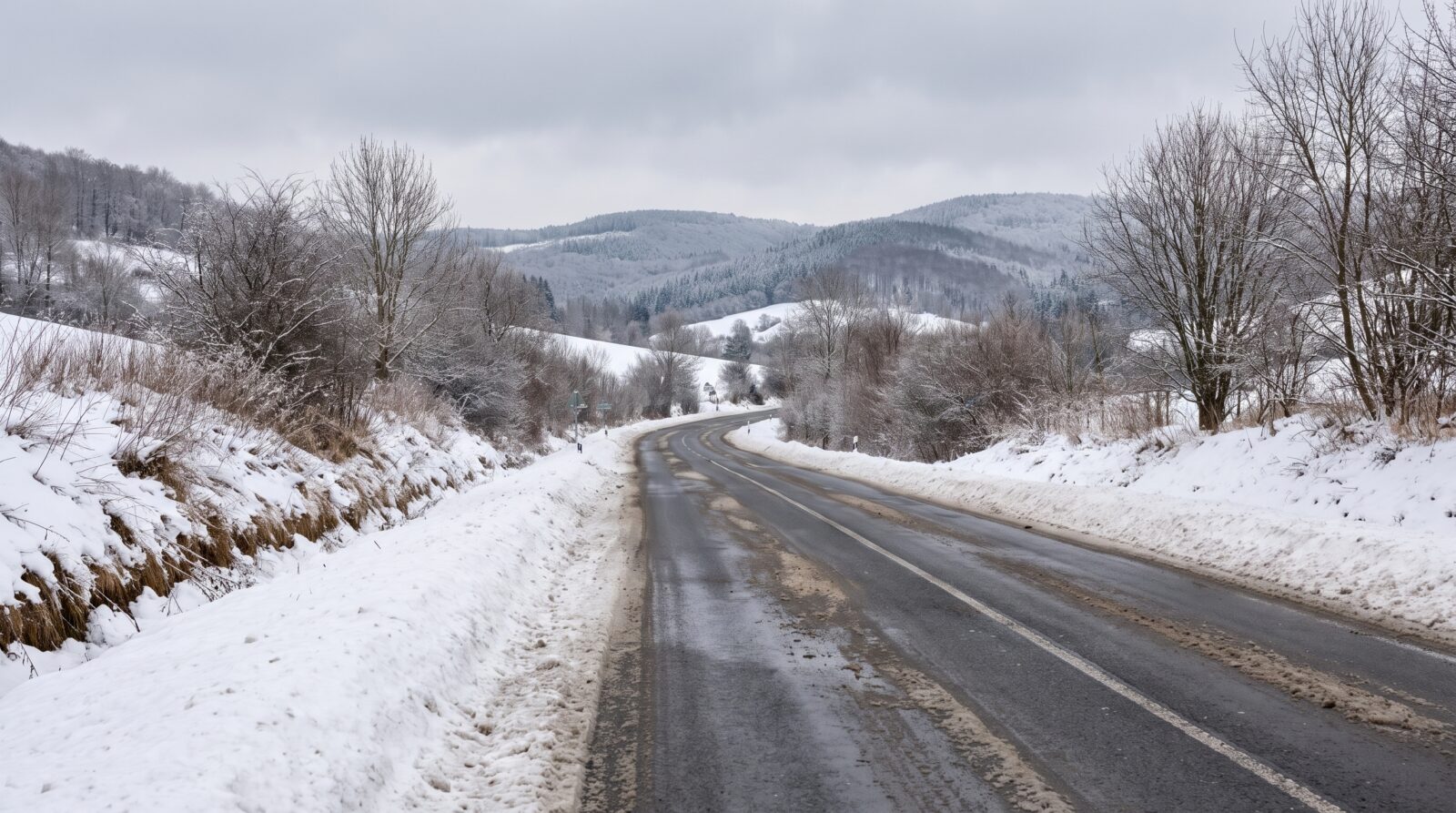
The date range is not the whole rule. Between 1 November and 1 April, Serbian law requires winter tyres, but only when snow, ice or frost is actually covering the road: the dates set the window, not a blanket obligation for those five months. When it applies, all four tyres need at least 4 mm of tread, plus chains or another traction device fitted to at least two driven wheels. Studded tyres are banned outright, and chains are not required inside built-up areas. If you are renting locally in winter, ask the rental company to confirm the car is already fitted rather than assuming it.
Paying the tolls
Serbia has no vignette. You pay for each section of motorway you use, at a barrier, as you go.
| Route | Toll for a car |
|---|---|
| Belgrade to Novi Sad | 340 RSD |
| Belgrade to Nis | 1,180 RSD |
| Belgrade to Presevo | 2,060 RSD |
| Belgrade to Subotica | 850 RSD |
Those rates, from Putevi Srbije, apply to category I cars from 1 July 2026. Cash in dinars and in euros is accepted at the barrier, along with the usual cards, foreign ones included. A TAG transponder, bought locally, cuts the toll by 6 percent and is also read on toll roads in North Macedonia, Montenegro and Republika Srpska, worth having if your route crosses into any of those.
Crossing into Kosovo
Nothing above applies once you are thinking about Kosovo. Serbia does not recognise it as a separate country, so nothing published by a Serbian authority, not the Ministry of Foreign Affairs, not welcometoserbia.gov.rs, addresses the crossing at all. Everything known about it comes from foreign government advisories, and it deserves more caution than any other decision on this page.
Read this before you drive south. The UK government’s advisory states that Serbian authorities do not treat the crossing points with Kosovo as official international borders. To come back into Serbia after visiting Kosovo, you need a Serbian entry stamp obtained through Belgrade, Nis or Kraljevo airport, or through one of Serbia’s land borders with Montenegro, North Macedonia or Bulgaria; travellers without one have reportedly been refused entry. The same advisory describes isolated cases of Serbian authorities cancelling a Kosovo stamp already in a passport, or refusing entry to travellers carrying one. Work out your route and your paperwork before you go, not after you have already crossed.
Separately, according to the same UK government advice, many Serbian car hire firms simply will not let their vehicles cross into Kosovo, Albania or Bulgaria at all, citing security concerns and isolated incidents of Serbian-registered cars being vandalised, or in some cases set on fire, in more isolated parts of Kosovo. No Serbian rental firm or authority states this restriction itself, so treat it as a foreign observation rather than a confirmed local policy, and check your own contract before you plan a route that depends on it. It is exactly the kind of clause a renter discovers at a border rather than at the counter.
Common questions
Does towing a caravan change the speed limit?
Yes. Towing a caravan caps you at 80 km/h even on roads where the ordinary limit would be higher, including expressways and motorways.
Is the 0.2 alcohol limit the same for every driver?
No. It drops to zero for motorcycle riders, drivers of vehicles over 3,500 kg or with more than eight seats, public transport and dangerous-goods drivers, learner drivers, and probationary licence holders together with their supervisors.
What is the difference between a green card and border insurance?
A green card is a document your own insurer issues before you travel, proving your existing policy covers you abroad. Border insurance is what a driver without one, typically from a country outside the exemption list, buys from a domestic insurer at the Serbian crossing instead. No source publishes a price for the second one.
If I rent a car in Serbia, do the green card and permit questions still apply to me?
The green card question does not: a car rented locally already carries Serbian plates and Serbian insurance. The international permit question is about your own licence rather than the car, so it still applies whichever vehicle you end up driving.
Do I need chains inside towns during the winter tyre period?
No. Chains are not required inside built-up areas, even between 1 November and 1 April when the wider winter tyre rule applies elsewhere.
Can I drive a Serbian rental car into Kosovo, Albania or Bulgaria?
Many rental firms exclude some or all of those countries by contract, according to UK government advice, so check your own agreement before planning a route that depends on it. Re-entering Serbia after Kosovo carries a separate stamp requirement of its own, covered above.
Nearby
A car matters most for the parts of Serbia that public transport skips. The meanders at Uvac and the Tara and Drina river country are both built around arriving under your own power, and a day trip through eastern Serbia only really works with a car of your own. Before you book one, the essentials page covers the wider entry formalities, and a week-long itinerary shows where driving actually fits into a trip. If you have not settled on a route yet, start with the planning page.