
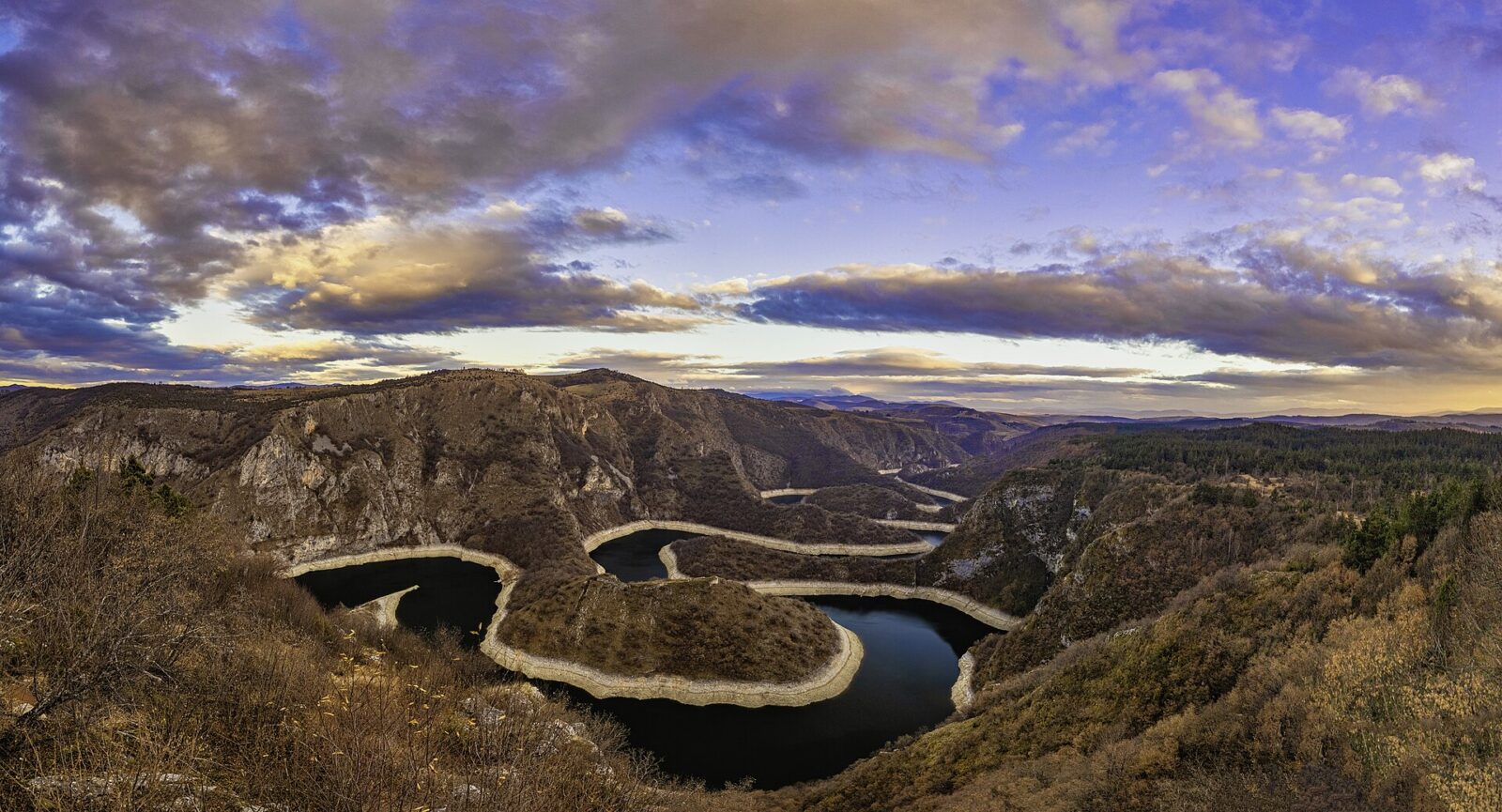
Uvac is the place people mean when they search for river meanders in Serbia, and the picture that keeps coming up is almost always the same: a green ribbon of water folded back on itself in tight loops, seen from directly above. That view comes from a single belvedere, Molitva, on the ridge above Krstac, and it is the reason most visitors plan a trip here in the first place.
Getting the photograph is the easy part. The reserve around it protects a river gorge, a lake, a cave system cut into the limestone, and one of the largest colonies of griffon vultures left in the Balkans. All of that comes with rules: when boats run, how close you can get to a nest, whether you can fly a drone over a cliff full of nesting birds. A 2025-2034 management plan for the reserve, published in February 2025, has also quietly corrected several figures that older pages about Uvac, including the operator’s own, still get wrong.
This page sets out what a visit actually involves: what you pay at the gate, why we are not printing a figure for the boat trip, when boats run at all, and the handful of rules that come with visiting a reserve built around nesting birds of prey.
The short version. Entering the reserve costs 100 RSD for an adult and 50 RSD for ages 8 to 18, free under 8, on the operator’s last published price list. Boat trips run only from 1 May to 15 November, never on a Monday, and only once four people are booked in on 033 64 198. We do not quote a price for the boat trip here: the operator’s own pages disagree with each other on the figure, so call ahead and confirm it. The reserve covers 11,845 hectares and protects around 100 breeding pairs of griffon vulture, which you need to stay at least 250 m away from.
On this page
What you pay to enter
A ticket to enter the reserve is 100 RSD if you are 18 or over, 50 RSD between 8 and 18, and free if you are younger, on the price decision the operator last signed in May 2022. Unlike the boat fares below, this smaller figure still matches what the operator’s current visitor page quotes, which is at least some evidence it has not moved since.
| Age | Reserve entry |
|---|---|
| 18 and over | 100 RSD |
| 8 to 18 | 50 RSD |
| Under 8 | Free |
That figure buys entry to the reserve itself, not a boat seat. Getting onto the water is a separate booking, with a separate price, one we are choosing not to repeat below.
Booking a boat onto the lake
A single company, Rezervat Uvac d.o.o., based in Nova Varos, organises every boat trip on the lake and controls every departure point: Krstac, Markova ravan and Rastoke. There is no walk-up dock and no independent operator running trips alongside it.
Individual travellers can only join a trip once at least four people over 8 years old are booked in, and every trip has to be announced in advance by phone, on 033 64 198, weekdays between 08:00 and 16:00. Two people turning up at Krstac without having called ahead have no guarantee of getting on the water that day.
Why we won’t quote you a price
The reserve’s only signed price decision for the boat trips dates from 4 May 2022, and nothing newer has replaced it: the operator’s news page carries no announcement of an update, and the same document is still served, unchanged, from two different addresses on its site. That alone would be a reasonable basis for a cautious figure.
Two official pages, two different prices. What rules out printing a figure is that the operator’s own visitor page for the boat trips quotes different numbers for the same routes, and lower ones, than its own signed decision. Two pages on the same site disagree with each other, and we have no way to tell you which one a boatman at Krstac will actually charge. Call 033 64 198, weekdays 08:00 to 16:00, before you make the drive, and treat whatever figure you are given on the day as the current one.
When the boats run
Boat trips operate only between 1 May and 15 November. Outside that window, the reserve’s own rules ban tourist boat use on the lakes entirely, whatever the weather is doing. Even within the season, every Monday is a closed day for boats, on top of whatever the operator’s booking calendar shows for that week.
A cancellation is not necessarily a lost trip. Refunds taper from 90 percent of the fare if you cancel ten days out to 30 percent the day before, and a trip called off for weather is refunded in full.
Walking to the Molitva viewpoint
You do not need a boat to see the meanders. The Molitva viewpoint sits above Krstac, and the reserve describes the walk there as about 6 km each way, taking 3.5 to 4 hours for the round trip along the river’s right bank. It is not, in the reserve’s own description, an especially hard path.
It is also not an unannounced walk in the way the phrase “hiking trail” might suggest. Like each of the reserve’s seven published trails, this one has to be announced ahead of time, with a ticket bought from the warden, rather than simply walked onto. Krstac itself sits 5 to 6 km from Sjenica and is reachable by car.
What the reserve won’t let you do
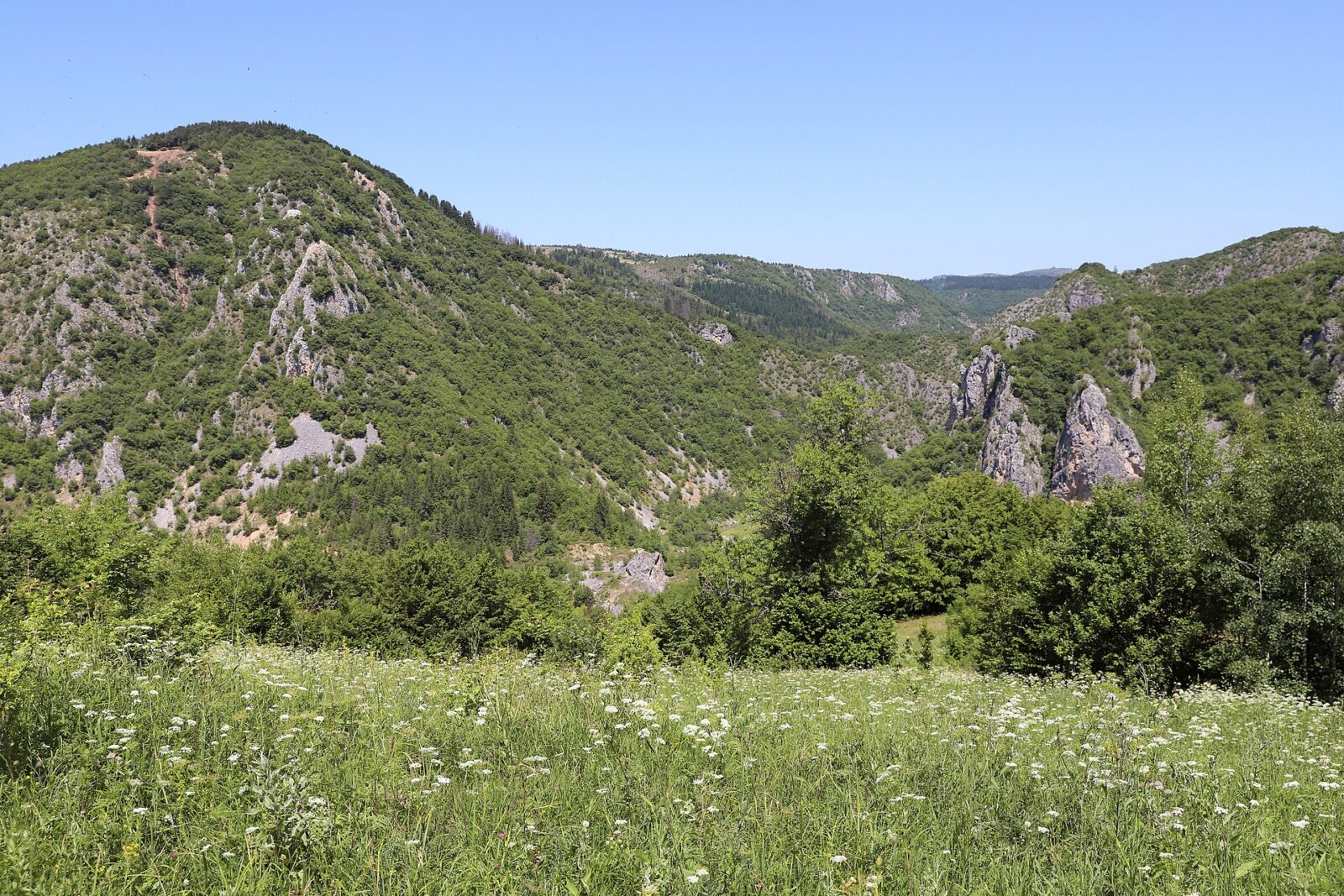
Uvac protects nesting cliffs and a cave system, and several of its rules follow directly from that, rather than from the usual reasons parks post signs.
Drones over a nesting cliff
Flying a drone here is not simply banned, but it is far from free. Unmanned aircraft are confined to a specific restricted zone, LY R10 Uvac, and flying one legally means holding a flight approval from Serbia’s Civil Aviation Directorate and getting the reserve manager’s consent under the nature protection law, not just avoiding a no-fly sign. This detail comes from the reserve’s 2025-2034 management plan rather than a posted visitor notice, so contact the reserve before you fly anything over the vultures’ cliffs.
Open fires are banned across the reserve’s more sensitive zones, except at spots specifically set aside for them, and none are named on the pages we checked. Bring a stove rather than counting on lighting one.
Entering any cave or pit in the reserve, including the Ice Cave, needs both the manager’s approval and an accompanying authorised guide. That is the rule behind why the Ice Cave is only ever seen as part of a guided outing run by Rezervat Uvac d.o.o., never on your own.
There is no organised campsite operating inside the reserve today. Construction is banned outright in its most protected zone, and weekend houses and similar recreational buildings are banned in the next zone out. The management plan lists future campsites at Radoinja, Sipovik and Markova ravan as a goal for the coming decade, not something already built. Around 250 unauthorised structures already stand inside the reserve, and the plan treats them as a problem to correct, not an amenity for you to use.
Watching the vultures
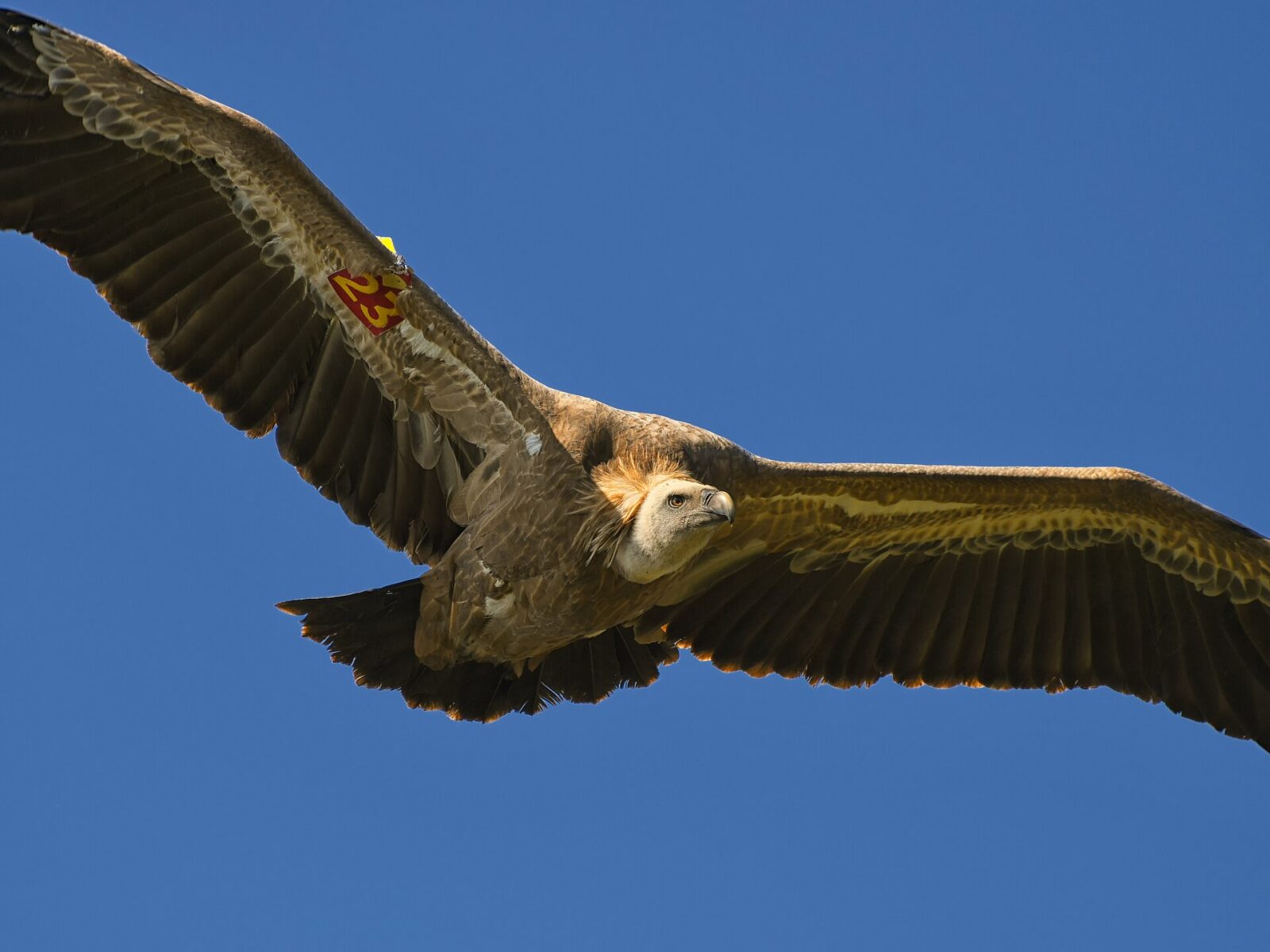
Uvac holds around 100 active nesting pairs of griffon vulture and roughly 170 pairs judged capable of breeding in total, the largest concentration of the species anywhere in the Balkans. The reserve’s most recent count found 270 individual birds, and it estimates the wider population at over 400.
Those numbers matter because older pages, including the operator’s own species page, still quote 450 to 500 birds and about 110 nesting pairs, undated and unchanged for years. The 2025-2034 management plan supersedes that figure, so use the newer count if you are comparing sources.
The colony was down to about 18 birds and 6 pairs in 1992, after decades of decline from an estimated 50 individuals and 25 pairs in 1974. It has grown steadily since a permanent feeding station started operating in 1996.
Whatever the exact number, you are required to stay at least 250 m from a nest or from the feeding station. The reserve also bans setting up hides or viewpoints near the nests of griffon vultures and several other protected birds, including golden eagles and eagle owls. A long lens does more useful work here than getting closer.
What the reserve protects
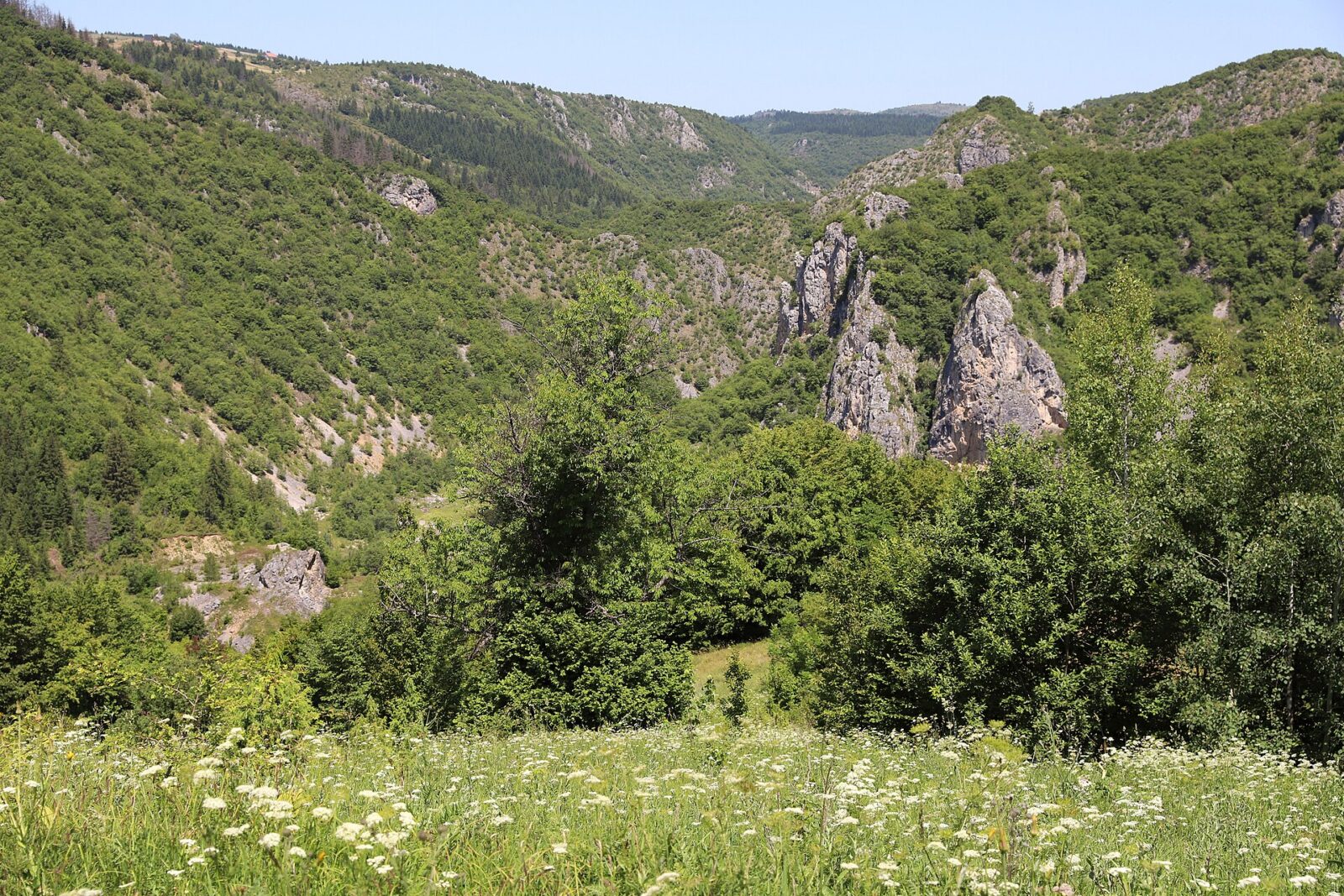
The Special Nature Reserve Uvac currently covers 11,845 hectares, fixed by a decree published in February 2024. That is a meaningful jump from the 7,543 hectares still shown on the operator’s own information page, a figure the decree replaced without the page ever being updated.
The number has moved several times: 267.5 hectares when the area was first protected in 1971, 2,718 in 1995, 7,543 from 2006, briefly 11,750 in April 2023, and 11,845 since February 2024. Three internal protection zones now sit inside that boundary, each with its own list of what is and is not allowed.
The reserve is rated Category I, for exceptional national and international importance, and IUCN category IV, for habitat and species management. It is also listed internationally as an Important Bird Area, under the name Uvac-Mileseva.
Elevation across the reserve runs from about 750 m up to 1,322 m at Procijelj, its highest point. Underground, the connected Usacka and Ledena caves, joined by the Bezdana pit, form a system explored to 6,185 m, once the longest documented in Serbia and now ranked third after newer surveys elsewhere in the country found longer ones. Two smaller caves, Tubica and Bazdarska, add roughly 1,900 m and 600 m more.
Some stretches of water are off-limits to tourist boats altogether: the points where the Tisovica, Veljusnica and Kladnica rivers feed into the lakes, and the meander section of Uvac lake between Druzinici bridge and Banja, reserved for licensed anglers, researchers and the ranger service.
Getting there
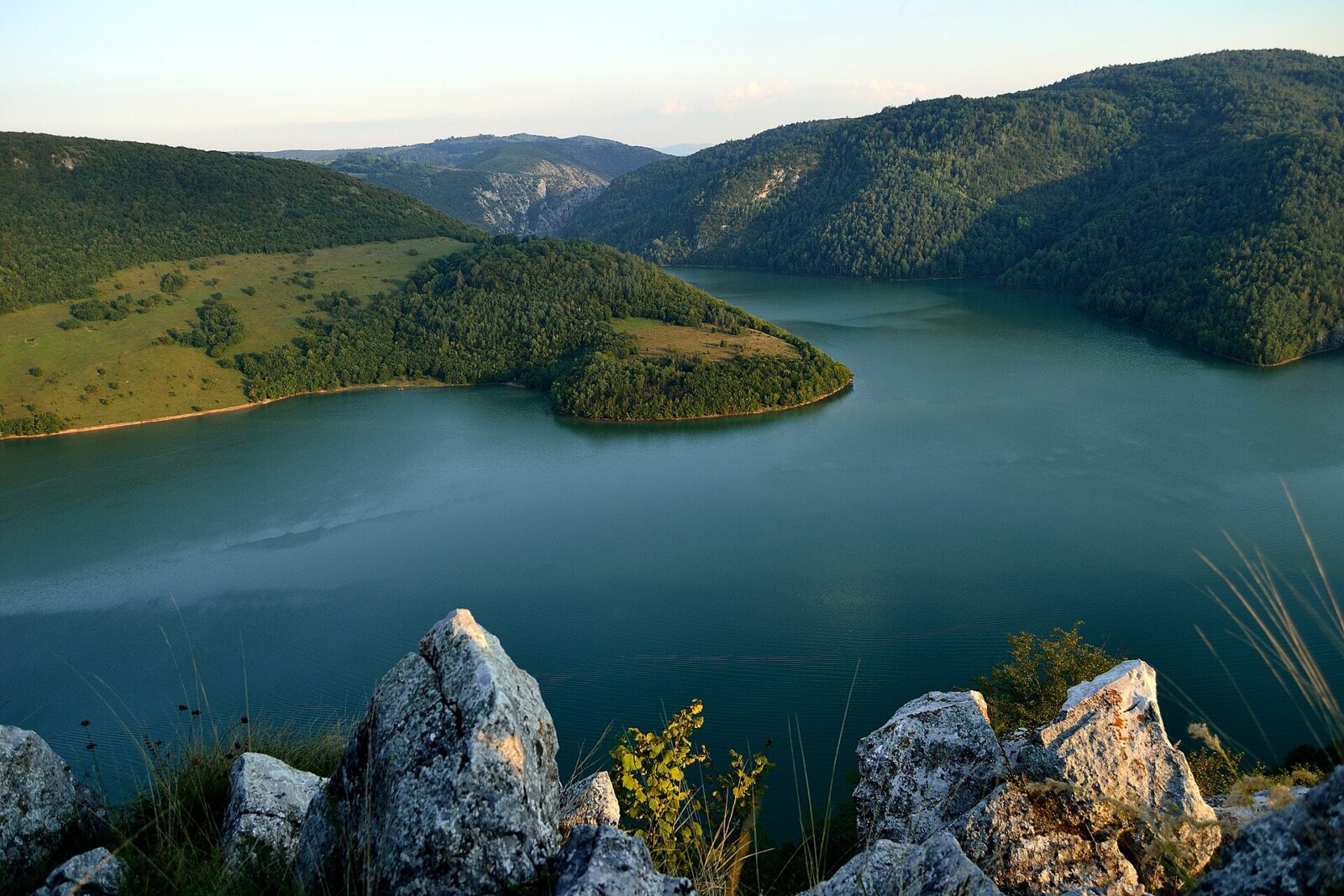
Uvac sits roughly 260 km from Belgrade. The reserve’s own management plan gives that figure without specifying whether it is a driving distance or a straight line, so treat it as approximate. For comparison, the same source puts Novi Sad at about 350 km and Nis at about 500 km.
There is no railway into the reserve. The boat operator’s base in Nova Varos, and the departure points at Krstac, Markova ravan and Rastoke, are only realistically reached by road. If you are driving yourself, the practicalities of renting a car in Serbia are worth reading before you set off, particularly for rural roads far from the highway network.
When to come
The boat season runs from 1 May to 15 November, and every Monday inside it is a closed day regardless of the weather. Outside that window, no amount of planning gets you onto the lake by boat.
Walking to Molitva is not tied to the same calendar. The trail rule is about announcing the outing and buying a ticket from the warden, not about the season, which makes the viewpoint reachable on foot at times of year when the boats are not running at all, weather and road conditions permitting.
Common questions
How much does the boat trip cost?
We are not printing a figure. The operator’s signed 2022 price decision and its own visitor page quote different amounts for the same trips, and nothing newer has replaced either one. Call 033 64 198, weekdays 08:00 to 16:00, and confirm the price before you commit to the drive.
Can I turn up and join a boat trip on the spot?
Not reliably. Individual visitors are only taken once at least four people over 8 are booked in, and every trip needs to be announced ahead of time by phone. Two people arriving unannounced at Krstac have no guarantee of a seat.
What happens if my trip is cancelled for weather?
You get a full refund. Cancelling for other reasons refunds on a sliding scale, from 90 percent ten days out down to 30 percent the day before.
Can I fly a drone over the canyon?
Only within a designated restricted zone, and only with both a flight approval from Serbia’s Civil Aviation Directorate and the reserve manager’s consent. There is no visitor sign spelling this out on site; it comes from the reserve’s own management plan.
Is there anywhere to camp inside the reserve?
Not officially. No organised campsite currently operates inside the boundary, and building even a small recreational structure is banned in large parts of it. The management plan proposes campsites for the future; none exist yet.
How close can I get to the vultures?
At least 250 m from a nest or the feeding station, whether you are on foot or on the water. The reserve also bans setting up hides or viewing platforms near the nests of vultures and several other protected birds.
Nearby
Uvac sits in the same corner of south-west Serbia as several other stops worth combining it with. Zlatibor works well as a base for the wider area, and the ridge country continues into Tara and the Drina and the narrow-gauge line through Mokra Gora. Reaching any of them on your own schedule generally means driving yourself, since none of the three connects easily by public transport.