
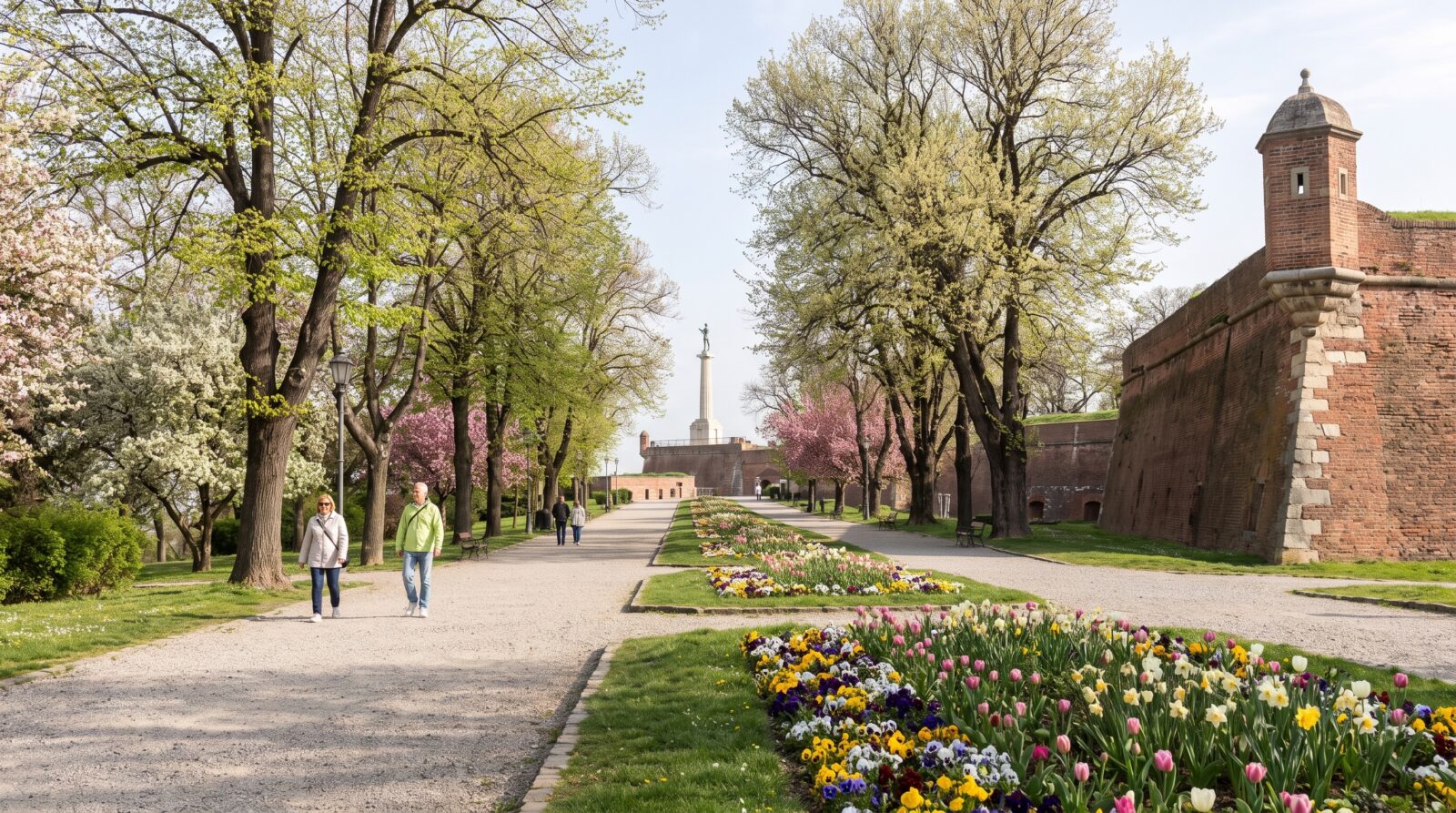
The month you pick changes which Serbia you get, more than any single sight on the itinerary does. Warm lowland cities and a cool, green mountain plateau sit within a few hours of each other, and their calendars do not move together: a week that still feels mild in Belgrade can already be closing in on winter at Zlatibor.
You are really choosing between two different things. Summer gives you long, warm days for walking, riverside afternoons and full opening hours everywhere. Late autumn through winter gives you a quieter capital, shorter queues and lower prices, at the cost of grey skies and early sunsets. Everything below works from that trade-off, plus the small number of fixed dates each year when offices and many businesses close regardless of the weather.
Two things complicate a single answer for the whole country: elevation and the calendar. Belgrade and Novi Sad sit on the plain and run mild for the region; Zlatibor and the western highlands run several degrees cooler at every point in the year. Serbia’s public holidays, meanwhile, fall on fixed or moving dates that reshape opening hours whatever the forecast says.
The short version. May, June and September give you warm days without July’s peak heat: Belgrade’s 1981-2010 normals put their means at 18.1 C, 21.0 C and 18.0 C, against 23.0 C in July. July is also the sunniest month, at 290.8 hours, while December is the dullest, at 64.5 hours. Zlatibor, in the western mountains, runs roughly 5 C cooler than Belgrade year-round and averages below freezing from December to February. Serbia’s public holidays cluster around New Year, Orthodox Christmas on 7 January, mid-February, a moving Easter, and 1-2 May, plus 11 November: plan around them rather than through them. EXIT is not being held at Petrovaradin Fortress in 2026.
On this page
Choose the region before the month
You are not picking one climate. The Belgrade and Novi Sad plain runs warm and comparatively dry by Serbian standards; Zlatibor and the western highlands run several degrees cooler at every point in the year and hold their cold longer into spring. Decide which trip you want before you settle on a month, because lowland timing and mountain timing pull in different directions.
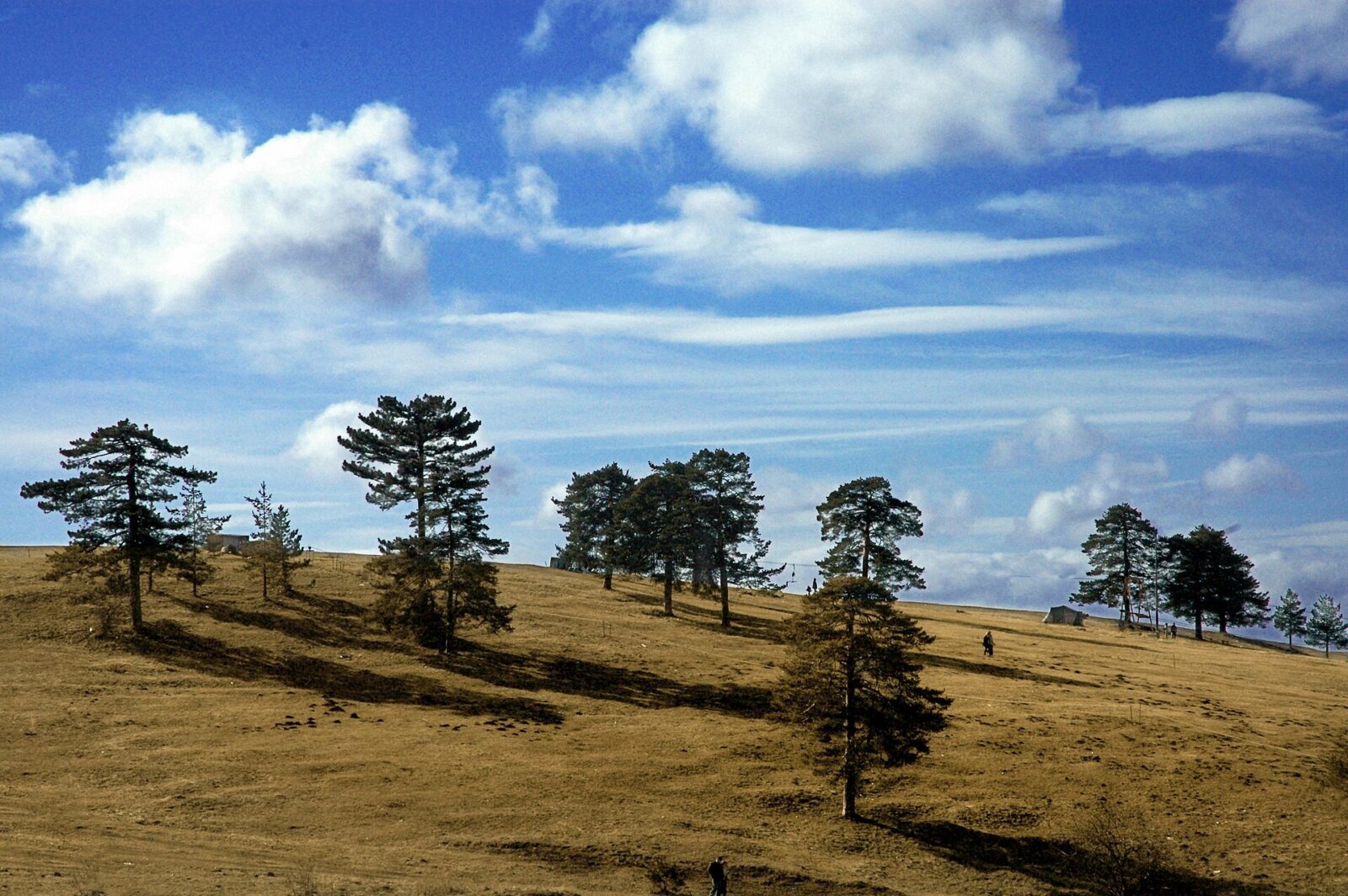
If you are staying on the plain, in Belgrade, Novi Sad or the Danube towns further east, expect both the summer heat and the winter cold to run harder than they do in the hills. If Zlatibor, Tara or the Sargan area are on your route, expect the mountain calendar to run roughly a month ahead of the lowland one: Zlatibor’s November mean of 3.2 C sits close to Belgrade’s December mean of 2.7 C, and its already-negative January and February means, -2.1 C and -1.3 C, put an average day there well below freezing while Belgrade’s equivalent months still average above zero, at 1.4 C and 3.1 C. Zlatibor as a base covers what that shift means for a stay in the mountains specifically.
Work around the public holidays
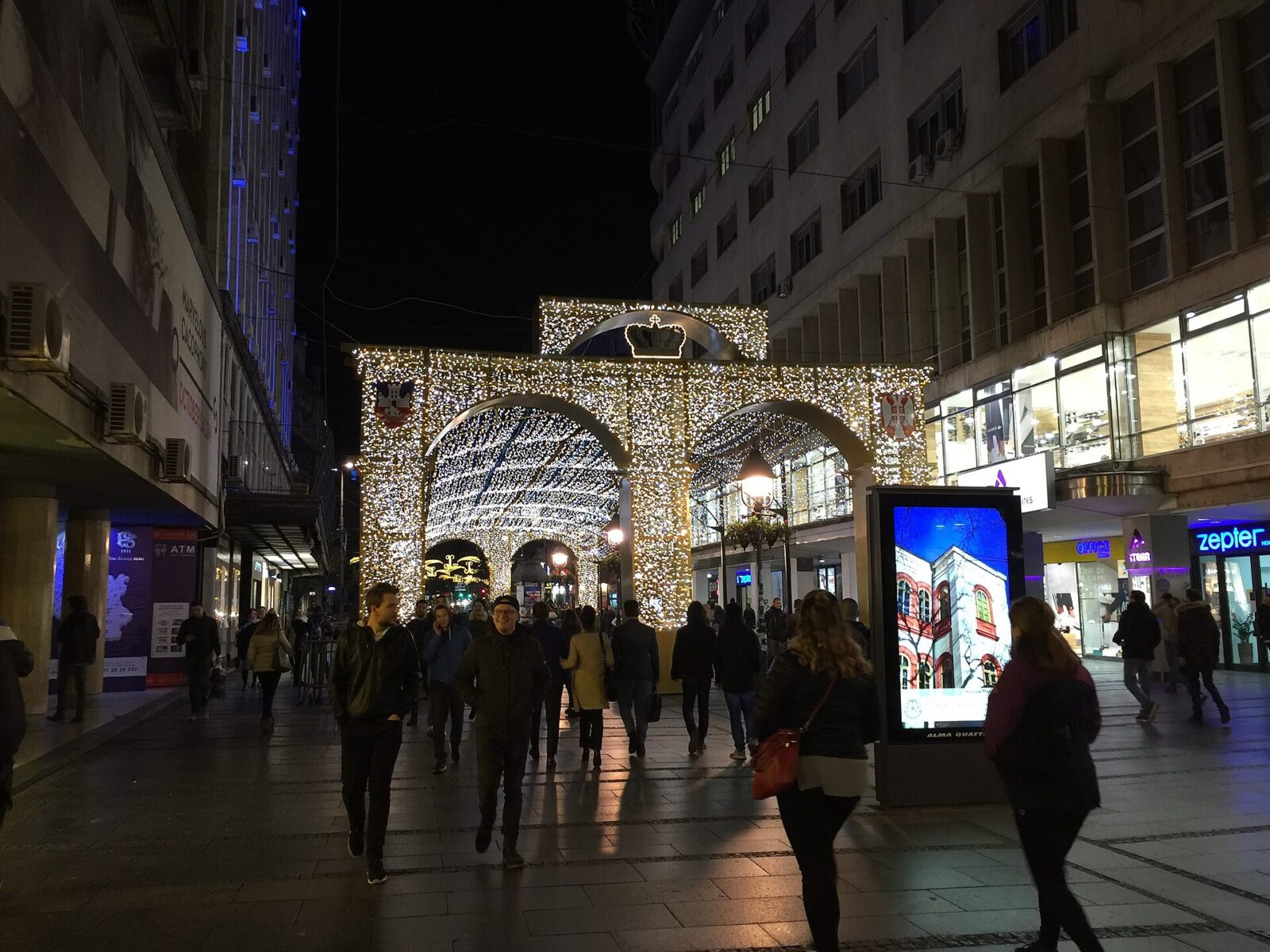
These are non-working days under Serbian law, when government offices close and opening hours across the country change. Build your dates around them if you need an office, a consulate desk or a specific administrative errand done; museums and private businesses set their own hours around the same dates and often announce closures only a few days ahead.
| Holiday | Dates |
|---|---|
| New Year | 1 and 2 January |
| Orthodox Christmas | 7 January |
| Statehood Day | 15 and 16 February |
| Orthodox Easter | Good Friday to Easter Monday, a moving date |
| Labour Day | 1 and 2 May |
| Armistice Day | 11 November |
Notice that Orthodox Christmas falls on 7 January rather than 25 December, and that Orthodox Easter rarely lands on the same weekend as the Western date you might be used to; check both before you book a January or spring trip. When a holiday falls on a Sunday, the following working day is also taken off. Saint Sava on 27 January and Vidovdan on 28 June are marked on the calendar but worked, so neither one closes anything on its own.
Skip EXIT as a reason to visit in 2026
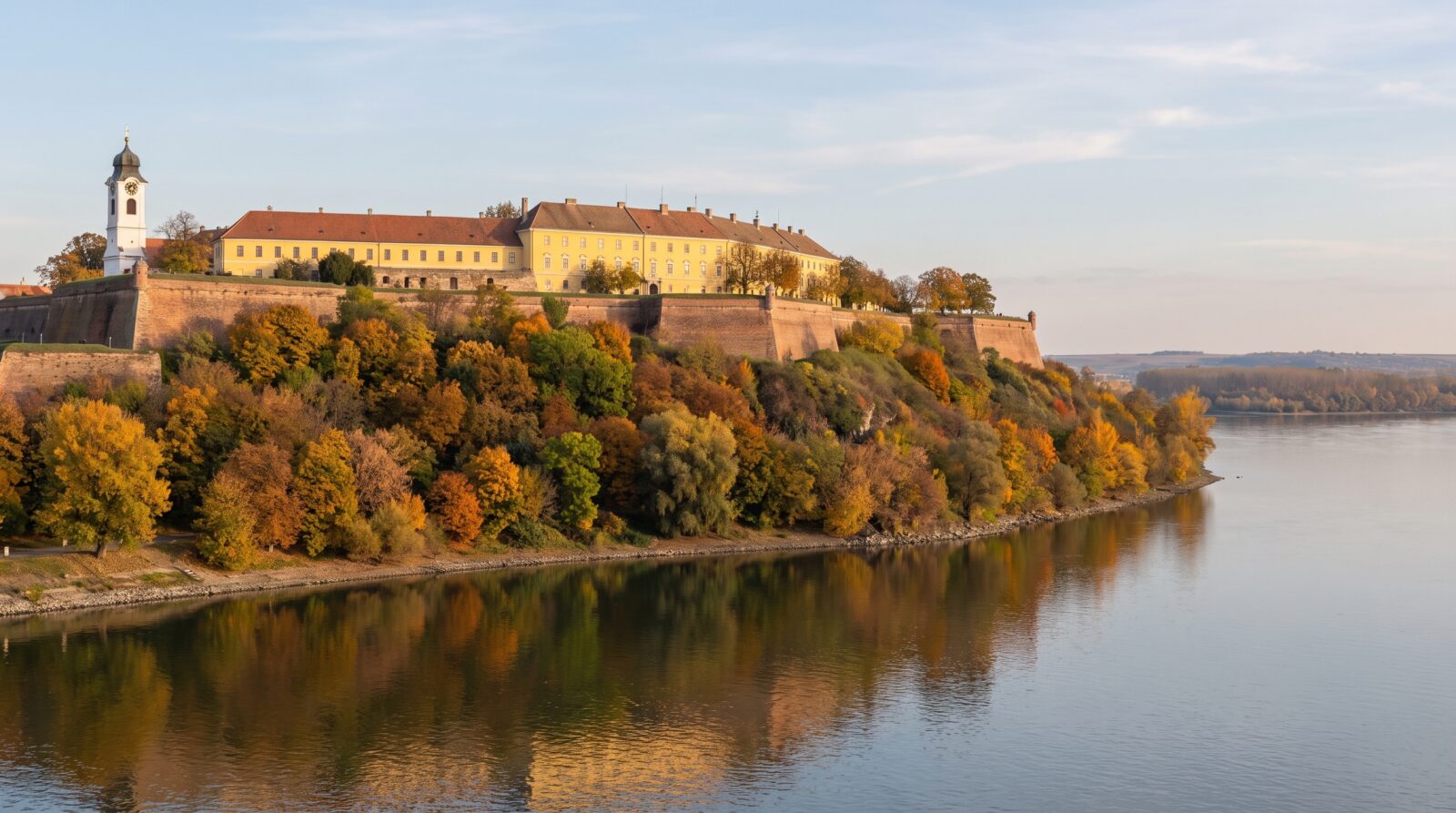
Do not build a 2026 trip around EXIT at Petrovaradin Fortress. The organiser announced on 28 October 2025 that the festival would not take place at the fortress in Novi Sad in 2026, moving instead to an international tour. The last Novi Sad edition ran from 10 to 13 July 2025. The only Serbian date announced for 2026 is a separate event, No Sleep Festival, in Belgrade in November. If you find older guides listing EXIT as an annual Novi Sad fixture, treat that as out of date for this year rather than something you can plan around.
That does not take Petrovaradin off your itinerary; it just changes what you find there. Without festival staging and crowds, the fortress and its old town are a normal day or evening visit rather than a ticketed event. Novi Sad in a day covers what to see there on an ordinary visit, festival or no festival.
Read a climate normal correctly
Everything in the two tables below comes from the Serbian hydrometeorological service’s climate normals for 1981 to 2010, the most recent full set it publishes station by station. A normal describes what a typical month looked like across those thirty years, not what will happen on your dates. A July mean of 23.0 C in Belgrade is entirely compatible with a week that runs closer to 35 C, or with one that stays unusually mild; the normal tells you what to expect on average, nothing more.
Why we name the reference period. The service publishes two complete normal sets, 1961-1990 and 1981-2010, while its current monthly bulletins compare fresh weather against a 1991-2020 baseline that it does not publish as a full table per station. Figures drawn from different periods are not directly comparable, so every number below is tied to the 1981-2010 set rather than left as a bare figure you might mix with another period.
Check Belgrade’s month-by-month normals
Use this table to see how a specific month usually behaves rather than relying on a single seasonal label. Rainfall stays fairly even across the year, so the swing you feel is mostly about temperature and daylight, not rain.
| Month | Mean temperature | Rainfall | Sunshine |
|---|---|---|---|
| January | 1.4 C | 46.9 mm | 72.2 h |
| February | 3.1 C | 40.0 mm | 101.7 h |
| March | 7.6 C | 49.3 mm | 153.2 h |
| April | 12.9 C | 56.1 mm | 188.1 h |
| May | 18.1 C | 58.0 mm | 242.2 h |
| June | 21.0 C | 101.2 mm | 260.9 h |
| July | 23.0 C | 63.0 mm | 290.8 h |
| August | 22.7 C | 58.3 mm | 274.0 h |
| September | 18.0 C | 55.3 mm | 204.3 h |
| October | 12.9 C | 50.2 mm | 163.1 h |
| November | 7.1 C | 55.1 mm | 97.0 h |
| December | 2.7 C | 57.4 mm | 64.5 h |
| Annual | 12.5 C | 690.9 mm | 2,111.9 h |
Notice that June, not July, is the wettest month, at 101.2 mm against July’s 63.0 mm, even though June also runs warm and sunny. February is the driest month, at 40.0 mm. If you want the sunniest stretch, July and August both clear 270 hours; if you want the darkest, December and January both sit under 75 hours, so a winter stay in Belgrade runs on noticeably less daylight than a summer one.
Compare the plain with the mountains
This is the comparison that actually decides a Serbia trip: the lowland cities and the western highlands do not run on the same clock. Novi Sad tracks Belgrade closely, a shade cooler every month; Zlatibor pulls away from both, especially in winter.
| Month | Belgrade | Novi Sad | Zlatibor |
|---|---|---|---|
| January | 1.4 C | 0.2 C | -2.1 C |
| February | 3.1 C | 1.6 C | -1.3 C |
| March | 7.6 C | 6.4 C | 2.4 C |
| April | 12.9 C | 11.8 C | 7.2 C |
| May | 18.1 C | 17.3 C | 12.3 C |
| June | 21.0 C | 20.1 C | 15.4 C |
| July | 23.0 C | 21.9 C | 17.2 C |
| August | 22.7 C | 21.6 C | 17.5 C |
| September | 18.0 C | 16.9 C | 13.1 C |
| October | 12.9 C | 11.8 C | 8.8 C |
| November | 7.1 C | 5.9 C | 3.2 C |
| December | 2.7 C | 1.5 C | -1.2 C |
| Annual | 12.5 C | 11.4 C | 7.7 C |
Zlatibor’s annual mean, 7.7 C, sits nearly 5 C below Belgrade’s 12.5 C, and it is the only one of the three with a negative monthly mean at all: December, January and February all average below freezing there, while the same months stay above zero in both lowland cities. If you are moving between the capital and the mountains on the same trip, pack for two seasons rather than one, whatever month you travel in.
Time a summer trip around the heat
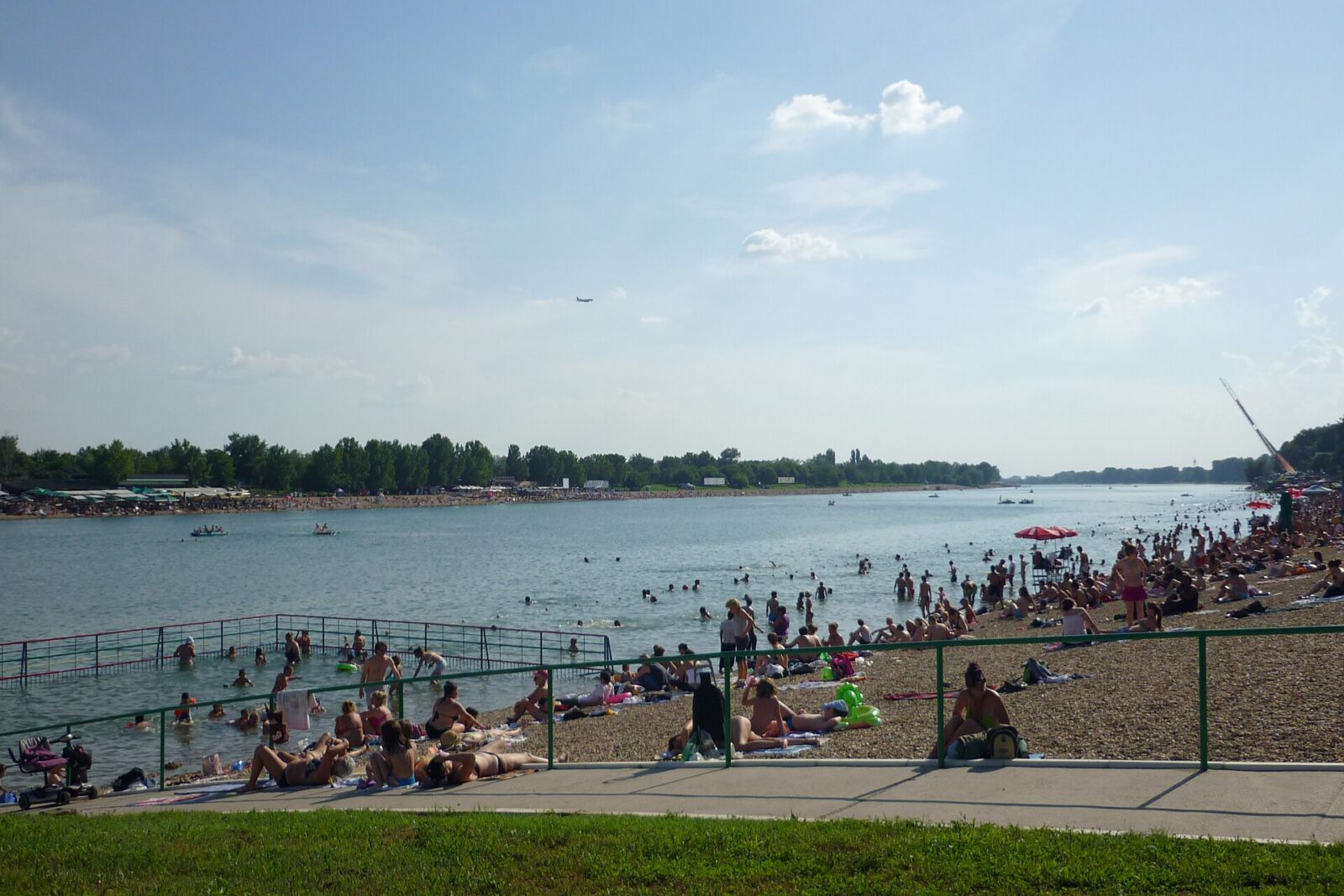
July and August are Belgrade’s hottest months on average, at 23.0 C and 22.7 C, and their daily highs run warmer still: the 1981-2010 normal puts July’s mean maximum at 28.6 C and August’s at 28.7 C. Remember that these are thirty-year averages, so individual days above 35 C are consistent with the same record, not a departure from it.
The same two months are also the sunniest, at 290.8 and 274.0 hours, so you get long daylight alongside the heat rather than one without the other. If you are in Belgrade in July or August, plan outdoor walking for the morning or early evening, and treat the middle of the day as time for a museum, a shaded courtyard or a swim rather than a walking tour. Getting around Belgrade covers how to reach the river without a car.
Consider the shoulder seasons
April-May and September-October are the months that combine milder temperatures with sunshine that is still substantial rather than scarce. May reaches 18.1 C with 242.2 hours of sun; September reaches 18.0 C with 204.3 hours. Neither runs notably wetter than the annual pattern, so you are not trading heat for rain by choosing them.
April and October run cooler again, both averaging 12.9 C, which is enough for comfortable walking without the July crowds or the July heat. If your route includes Zlatibor or the western hills, remember the lag from the comparison table above: an April date on the plain can still feel closer to early spring at altitude, at 7.2 C for that same month. Serbia in 7 days sets out how a shoulder-season route across both regions fits together.
Common questions
What is the best time to visit Serbia?
Based on Belgrade’s 1981-2010 climate normals, May, June and September give you warm days without July’s peak heat: their means run 18.1 C, 21.0 C and 18.0 C, against 23.0 C in July. These are averages over thirty years, not a forecast, so treat them as what a typical trip in that month looks like rather than a guarantee.
What is Belgrade’s weather like month by month?
The month-by-month table above covers all twelve months against the 1981-2010 normal. In short, January is the coldest month at 1.4 C, July the warmest at 23.0 C and the sunniest at 290.8 hours, June the wettest at 101.2 mm, and February the driest at 40.0 mm.
Is it colder in the Serbian mountains than in Belgrade?
Yes, noticeably. Zlatibor’s annual mean, 7.7 C, runs nearly 5 C below Belgrade’s 12.5 C, and it is the only one of the three stations compared here with negative monthly means: December, January and February all average below freezing at Zlatibor, while they stay above zero in Belgrade and Novi Sad.
What are Serbia’s public holidays?
The non-working public holidays are 1-2 January, 7 January (Orthodox Christmas), 15-16 February, Good Friday to Easter Monday, 1-2 May and 11 November. If any of these falls on a Sunday, the next working day is also non-working. Saint Sava on 27 January and Vidovdan on 28 June are marked but worked, so they do not close offices.
Is EXIT festival happening in Novi Sad in 2026?
No. The organiser announced on 28 October 2025 that EXIT would not be held at Petrovaradin Fortress in 2026, moving instead to an international tour. The last Novi Sad edition ran 10-13 July 2025, and the only Serbian date announced for 2026 is a separate event, No Sleep Festival, in Belgrade in November.
Which month has the most rain, and which the most sun, in Belgrade?
June is the wettest month, at a normal 101.2 mm, ahead of July’s 63.0 mm. July is the sunniest, at 290.8 hours, with August close behind at 274.0 hours. December gets the least sun, at 64.5 hours, and February the least rain, at 40.0 mm.
Keep planning your trip
Once you have a month in mind, Serbia in 7 days turns it into a route across both the plain and the mountains. Zlatibor as a base and Novi Sad in a day go into the two side trips this page compares by climate, and Serbia travel essentials covers what else to check before you book.