
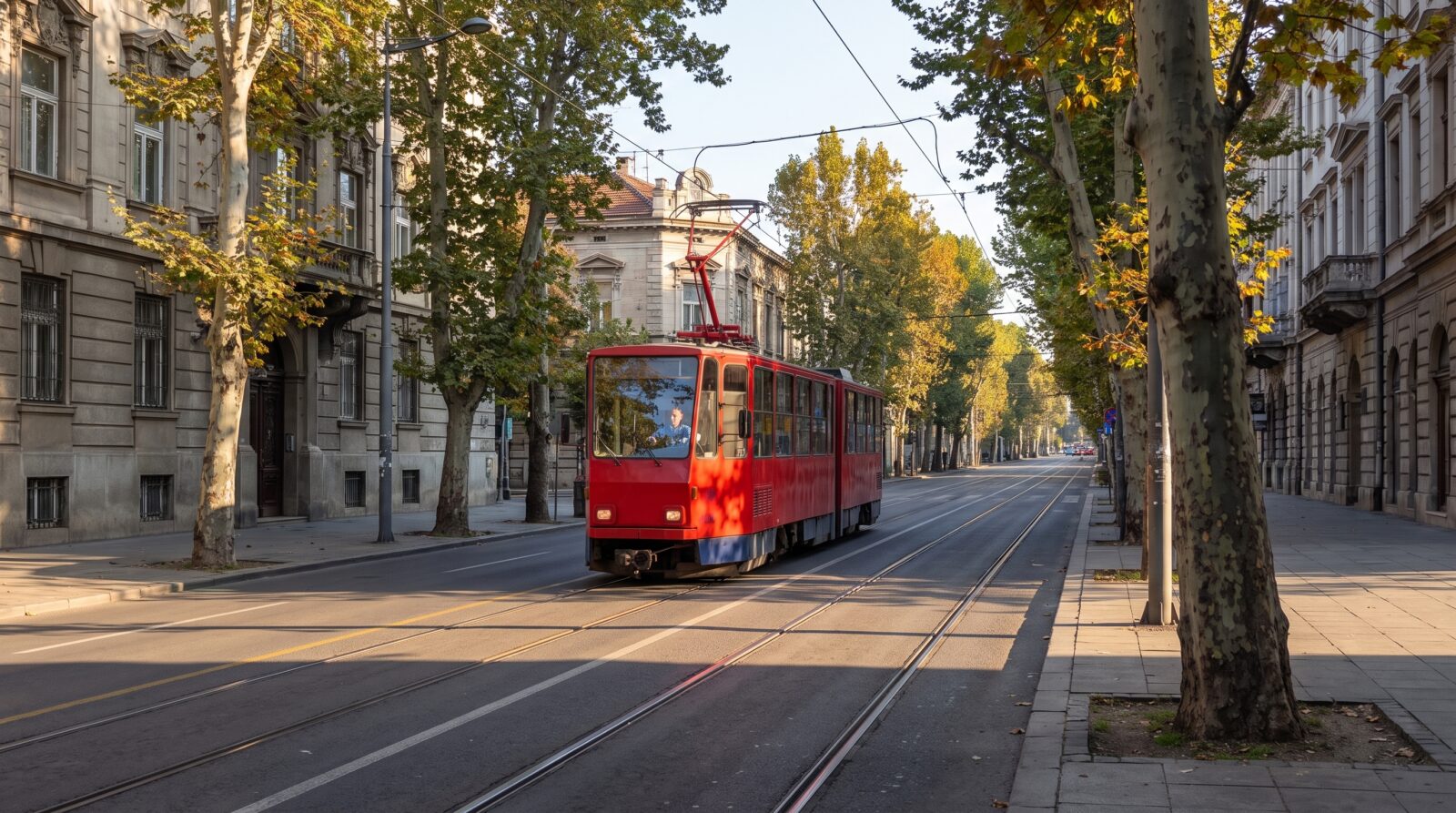
Getting around Belgrade starts with something most first-time visitors do not expect: you do not pay for it. Since the start of 2025, the city’s buses, trams and trolleybuses have carried passengers free of charge, with nothing to buy beforehand and nothing to show once you are on board. Plenty of advice written before that date is simply out of date now, so it helps to know what actually changed.
The free ride has edges worth knowing before you plan a route. A handful of express lines, including the one to the airport, sit outside the free system and still take cash. Taxis were never part of it. And a few corners of the network, like the cross-city train, are described so thinly by the city’s own transport authority that this page flags the gap rather than guessing at an answer.
What follows sets out what actually costs nothing, what still does, and how to move through the city without relying on advice written for a system that no longer applies.
The short version. Belgrade’s regular city and suburban bus, tram and trolleybus network has carried passengers free of charge since 1 January 2025, under a mayoral decree, with the whole ticketing and inspection system suspended for as long as the measure lasts. A group of express minibus lines and the A1 line to the airport sit outside that decree and still charge a paper fare, 400 RSD for the A1. Taxis run on fixed city meter rates, with a separate zone-based fixed fare from the airport. There is still no working metro, and whether the cross-city BG Voz train is covered by the free fare is not something the operator’s own pages confirm either way.
On this page
What free travel actually covers
The decree that ended fares is narrower in its wording than most summaries of it suggest. The mayor’s decision of 30 December 2024, published in the city gazette, grants free travel to everyone using line passenger transport within the integrated tariff system, on the territory of the City of Belgrade. It does not name bus, tram or trolleybus individually; it defines the free ride by which fare system a service belongs to, not by what kind of vehicle you happen to board.
In practice, that wording reaches the ordinary city and suburban network you would use to get around: the numbered bus, tram and trolleybus lines that used to require a paper ticket or a travel card. The same act states just as plainly what falls outside it. Express minibus lines, known as the E lines, and the A1 line to Nikola Tesla Airport are named as sitting outside the integrated tariff system altogether. Taxis were never part of that system in the first place, so their exclusion needs no separate clause.
| Service | Fare |
|---|---|
| Regular city and suburban lines (bus, tram, trolleybus) | Free since 1 January 2025 |
| Night lines | Free, same network |
| Express E lines | Paper ticket on board, not covered by the free fare |
| Line A1 to the airport | 400 RSD, paper ticket on board |
| Taxi | Metered fare in the city, fixed fare from the airport |
| BG Voz cross-city train | Not confirmed either way, see below |
Boarding without a ticket
Boarding is the part visitors find hardest to believe. A separate amendment, passed a few days before the fare itself dropped to zero, suspended the entire apparatus that used to sit around it. The types of travel document, the conditions for using them, the fare collection system, passenger inspection and the sales network are all set aside for as long as the free-travel measure lasts.
That means there is nothing to buy at a kiosk, nothing to validate on board, and nobody checking as you ride. If you have read older advice about buying a travel card, topping it up, or being fined for riding without a valid ticket, it describes a system that has been paused rather than one still in force. You board through any door, take a seat, and get off at your stop.
What still costs something
Two categories of transport sit outside the free network, and it helps to know which one you are looking at before you get on.
Paying for the express lines and the airport
The city’s express minibus lines and the A1 line between Trg Slavija and Nikola Tesla Airport are named explicitly in the same decree that grants free travel. Line passenger transport on these routes does not belong to the integrated tariff system, so the fare-free rule does not reach them. The A1 costs 400 RSD, paid in cash on board with a paper ticket. The E lines take the same kind of paper ticket; this page does not have a verified current price for them, so treat whatever the driver asks as the figure to pay rather than a number quoted in advance.
A fixed taxi fare from the airport is covered in full on the airport transfer guide. The short version is a set price by zone, paid against a voucher issued at the arrivals rank, with a ride into the old centre or Vracar priced at 3,500 RSD.
Taking a taxi
Belgrade’s taxi fares are set by the city and apply identically across every licensed company, so there is officially nothing to negotiate. A ride starts at 320 RSD, then adds a per-kilometre rate that depends on the time and the area: 105 RSD on weekdays and Saturday between 06:00 and 22:00 in the central area, 135 RSD at night, on Sundays and on public holidays. Outside that central area, and outside the built-up centres of six named outlying towns, the rate is 210 RSD at any hour of any day. Waiting time is billed at 1,800 RSD an hour, and personal luggage is included in the fare.
| Charge | Amount | When it applies |
|---|---|---|
| Hiring charge | 320 RSD | Every ride |
| Tariff 1 | 105 RSD per km | Weekdays and Saturday, 06:00 to 22:00, central area |
| Tariff 2 | 135 RSD per km | Nights, Sundays and public holidays, central area |
| Tariff 3 | 210 RSD per km | Outside the central area, at any hour |
| Waiting | 1,800 RSD per hour | Every ride |
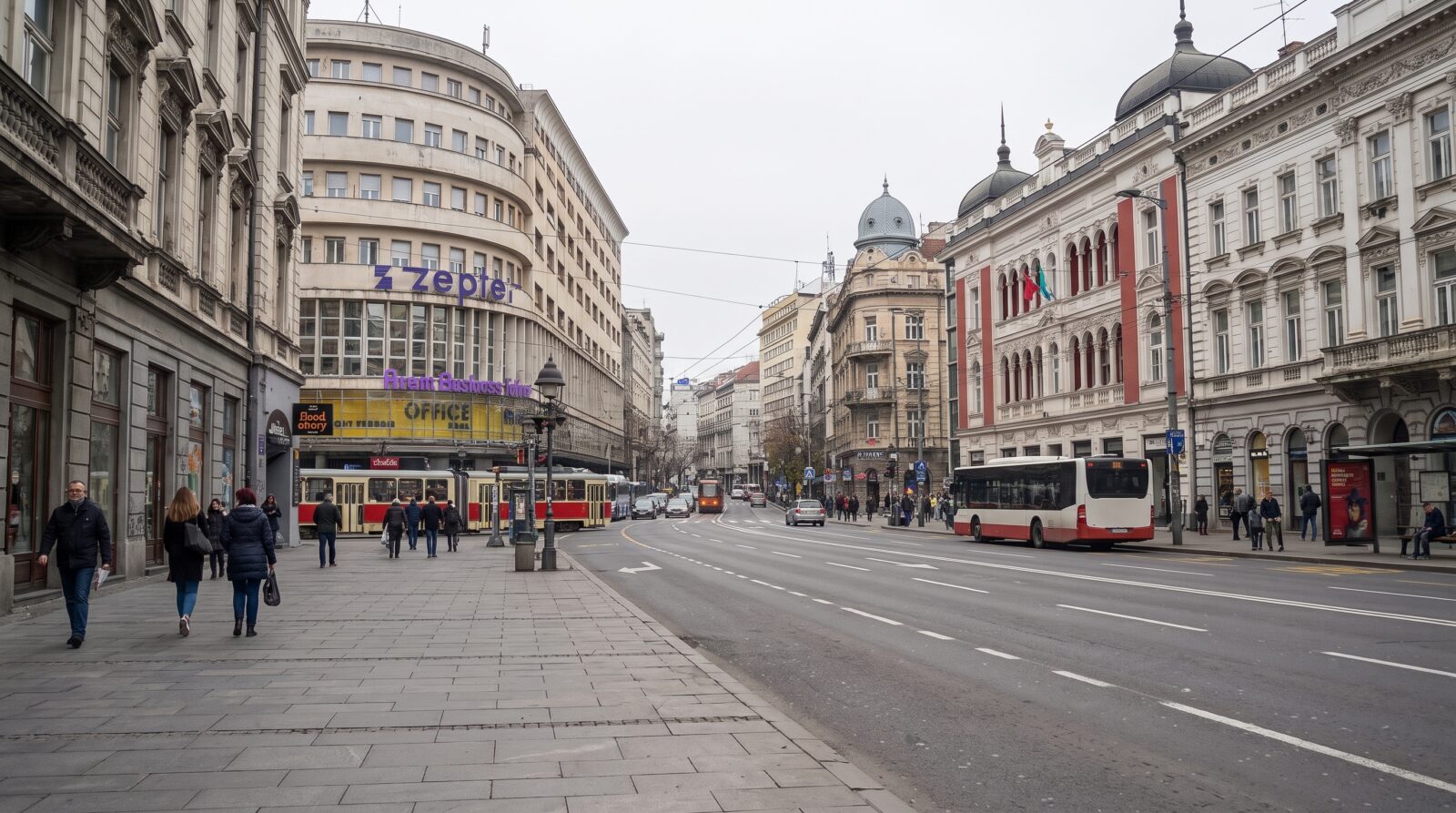
Insist on the meter. Because the rates above are fixed and identical across companies, a driver who proposes a round number instead of switching on the meter is not applying the official tariff, and there is no legitimate reason for it. This is where visitors overpay in Belgrade, not the per-kilometre rate itself. Take a taxi from a marked rank or book one through an app, watch for the meter to start, and treat any offer to skip it as a reason to choose a different car.
Filling in the rest of the network
Beyond the tram and the express lines, Belgrade’s network includes trolleybuses, a small fleet of battery-powered shuttles and a cross-city train. There is no metro to add to that list: a metro company exists and construction is under way, but no line yet carries a passenger, whatever an older guide might tell you.
What the tram map does not tell you
The tram network is the part of the system in the most flux. The operator’s own line list currently shows sixteen tram codes, and seven of them, numbers 2, 3, 3L, 7, 9, 11 and 13, are marked as temporarily not running. That page carries no date, so treat the count as a snapshot taken while researching this page rather than a stable figure to plan a trip around.
One closure behind those suspensions is dated and confirmed. Bridge works on Antifasisticke borbe in Novi Beograd have replaced trams 7L, 9L and 13 with substitute services, 7L1, 9L1 and a bus route numbered 7A, a change the city says will last through the end of 2026. The wider suspended list goes further than that single closure, which suggests more of the network is affected than the bridge works alone explain. If a specific tram line matters to your plans, the transport authority publishes a live list of current service changes, and that is the place to check on the day rather than any guide, including this one.
Trolleybuses, buses and the old-town shuttle
Six trolleybus line codes currently operate, according to the operator’s own page, linking Trg Slavija with several neighbourhoods to the east of the centre. The bus network is larger and harder to pin down. The city’s own tram and bus operator runs 51 bus line codes, but that is its own fleet rather than a total for the city, since a further layer of suburban routes, numbered in the hundreds, is run by other operators under contract to the transport authority. No single official source puts a total figure on the whole bus network.
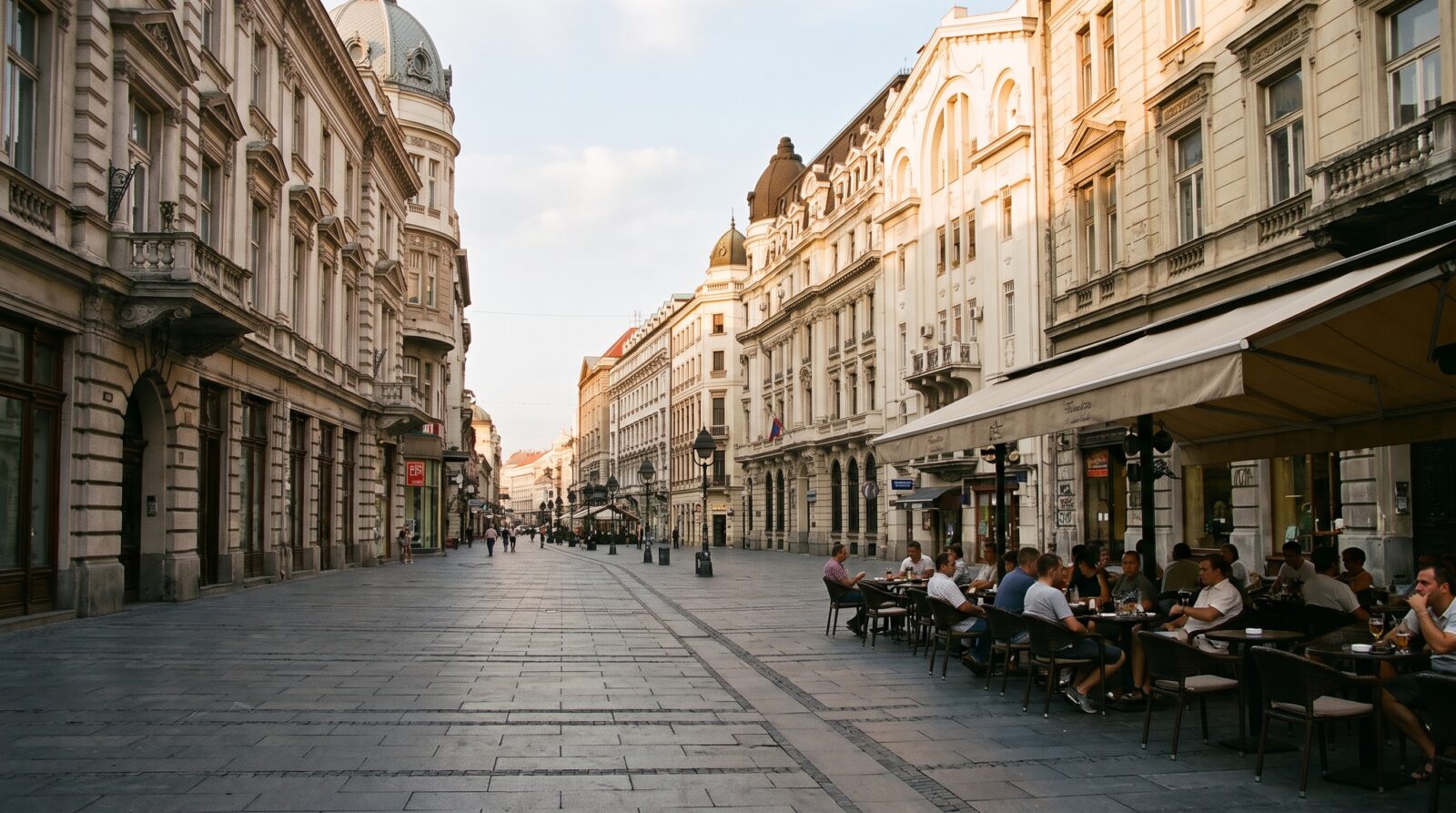
A small battery-powered shuttle, known as Vrabac, loops through the pedestrian streets of the old town, and two further electrobus lines, Eko 1 and Eko 2, connect Vukov spomenik with Belvil and Dorcol with Beograd na vodi. Together they make up three electrobus lines on the operator’s current list, a distinct category from the numbered bus lines above.
Crossing town on BG Voz
An urban rail line, BG Voz, crosses the city on tracks separate from the road network, with fifteen stops between Batajnica and Ovca, including Novi Beograd, Beograd Centar, Vukov spomenik and Karadjordjev park, roughly every thirty to forty minutes at peak. It is a genuinely useful shortcut across town, and one that most first-time visitors never hear about.
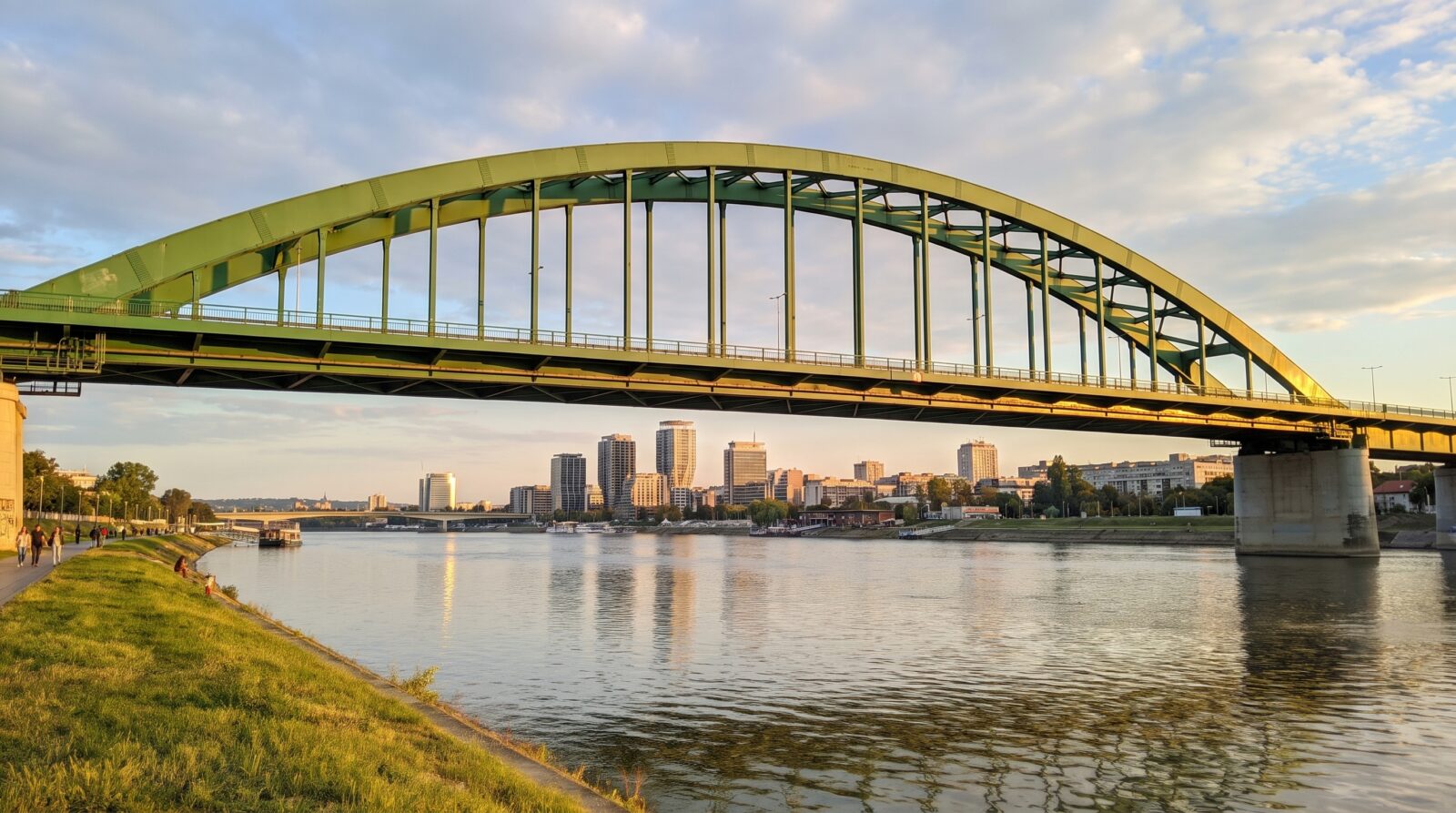
Whether BG Voz is free is not something we can confirm. The transport authority’s own page for this line is an interactive map with no fare information rendered on it. No other official source found for this page states plainly whether BG Voz sits inside the fare-free integrated tariff system or outside it, the way the E lines and the A1 explicitly do. Some summaries describe it as covered by the free-travel measure; none of them point to a source that actually says so. If the fare matters to your trip, ask on board rather than assume either answer.
Riding at night
Belgrade’s daytime network runs from 04:00 to midnight. After that, a separate night network takes over from 00:00 to 04:00, with departures roughly hourly or every half hour rather than continuous, on the same schedule every night of the week, weekday or weekend. Most night departures start from Trg Republike or Studentski trg.
How many night lines exist depends on which of the transport authority’s own pages you read: one page lists thirty, another, run by the tram and bus operator itself, lists twenty-six. Neither page carries a date to settle the difference, so this page reports both rather than picking one. What both agree on is line 72N, which reaches Nikola Tesla Airport at 00:30, 01:30 and 02:30, useful if your flight lands or leaves well outside the hours the daytime network covers.
Travelling with a wheelchair or a pushchair
Belgrade’s transport authority does not publish a share of low-floor vehicles in its fleet, nor does it describe audio or visual next-stop announcements on board. Its public FAQ covers stop damage reports and shelter requests, but nothing about accessibility features, and no accessible-vehicle provision is described on its taxi pages either.
This is a genuine gap, not an oversight on our part. We checked the transport authority’s FAQ, its taxi information and the operator’s own fleet pages, and none of them address accessible travel. If a wheelchair or a pushchair is part of your trip, do not assume either a fully or a poorly accessible network: contact the transport authority directly before you travel.
Common questions
Do I need an app, a card or a ticket of any kind?
No. The regulation that suspended fares also suspended the whole ticketing apparatus around them, including travel cards, validation and inspection. There is nothing to download, buy or show; you simply board and ride.
Does the free fare include the metro?
There is no metro to include. A metro company exists and construction is under way, but no line carries passengers yet. Anything describing a Belgrade metro ride is describing a project, not a service you can use today.
Is BG Voz covered by the free fare?
We could not confirm it either way. The E lines and the A1 are explicitly named as sitting outside the free-fare system, but no official source found for this page makes an equally clear statement about BG Voz. Ask on board if the fare matters to you.
How do I avoid being overcharged in a taxi?
Fares are fixed and identical across every licensed company, so insist the meter is switched on rather than accepting a quoted price. Taking a car from a marked rank or booking through an app lowers the chance of being offered an unofficial fare in the first place.
Does the free fare apply on the airport express line?
No. Line A1 between Trg Slavija and Nikola Tesla Airport is named in the same decree as sitting outside the integrated tariff system, and costs 400 RSD, paid in cash on board. The full range of airport transfer options is covered on a dedicated guide.
Where this takes you
Getting around free changes how you plan the rest of a stay: with no cost attached to moving, distance stops being the deciding factor in your day. A short stay in Belgrade can cover more ground than it would in a city where every ride adds up, and choosing where to stay matters a little less for transport reasons than it once did. Kalemegdan and the fortress and the Temple of Saint Sava are both reachable on the same fare-free network from the old town. For the one route that stays paid either way, see getting to and from the airport.