
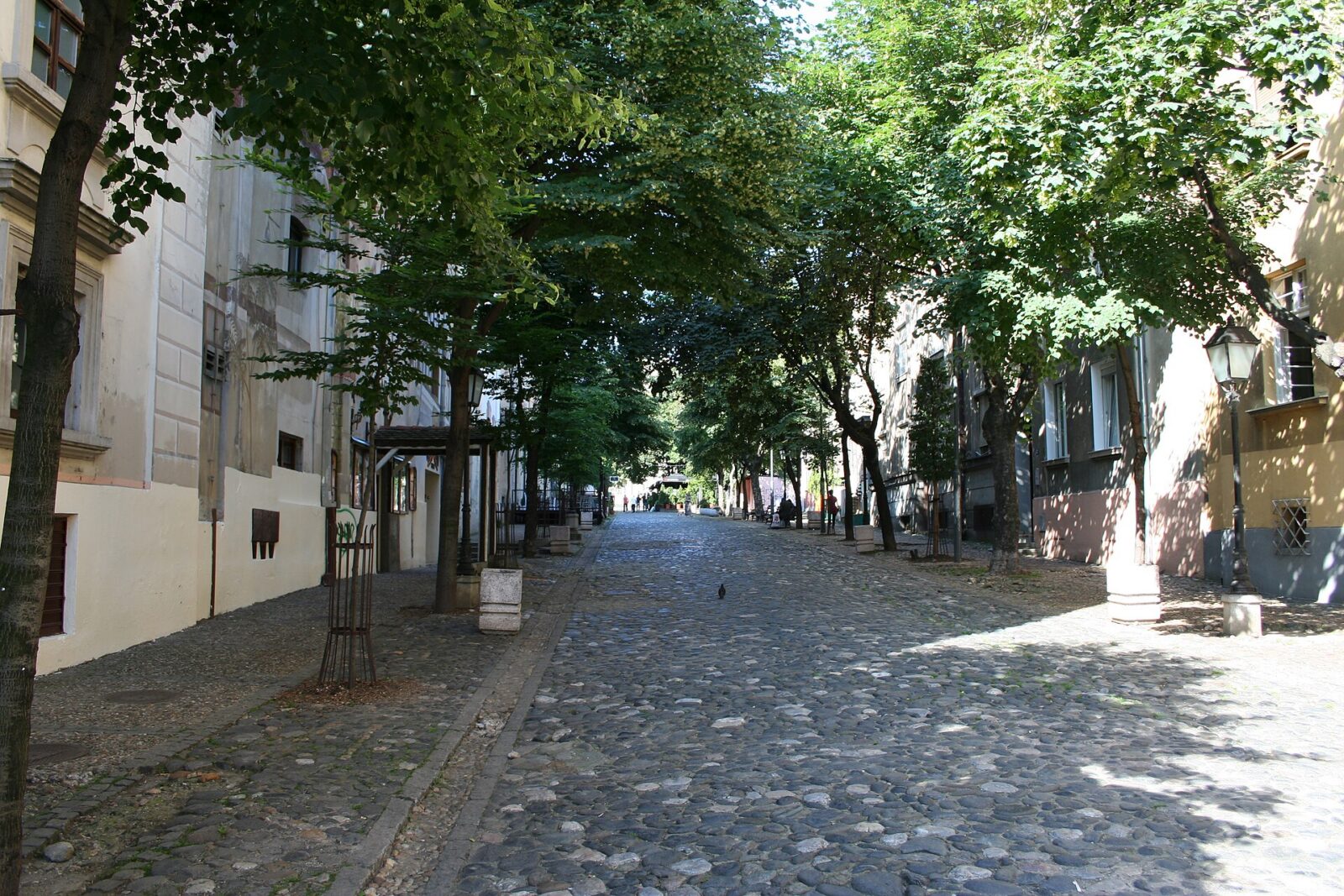
Pick a base in Belgrade and you are choosing a walk to breakfast, not a hotel brand. The city splits into seventeen municipalities, but the names that fill accommodation listings, Dorcol, Savamala, Skadarlija, rarely match any of them, and nobody can hand over a map that draws their edges. That gap between what a listing says and what actually exists is worth sorting out before booking anything.
None of this settles itself from a listing photo. It comes down to a handful of things you can check before arriving: what your host adds to the room rate every night, whether your stay gets registered with the police the way the law requires, and what kind of transport link the district actually has, since the city’s own network changes fast enough that older advice can be wrong within a year.
What follows sets out the administrative geography first, because the marketing names only make sense once the underlying municipality is clear, and then walks through the areas themselves: the old core, the quieter streets around it, the riverbank, and the two districts across the water that many visitors skip past without knowing why they might not want to.
The short version. Belgrade has seventeen municipalities, and the neighbourhood names on listing sites, Dorcol, Savamala, Skadarlija, Gardos, mostly sit inside them without any boundary of their own. Stari Grad is the old centre, Vracar the quiet residential district beside it, Savski Venac and Savamala hold the institutions and the riverbank, Novi Beograd is the modern district across the Sava, and Zemun is a separate old town further along the water. A tourist tax of 160 RSD per person per night is added to every stay regardless of area, and a paid host registers your stay with the police within 24 hours as routine paperwork. Public transport has been free citywide since 2025, which flattens a lot of the usual distance trade-off.
On this page
What you’ll pay beyond the room rate
Every stay in Belgrade carries a tourist tax of 160 RSD per person per night, and it does not change by district. Your accommodation collects it alongside the room price and is required to show it as its own line on the invoice, so it should never turn up folded into a vague service charge. Children aged seven to fifteen pay half that rate, and those under seven pay nothing at all.
Because the tax is flat across the city, it plays no part in choosing between Stari Grad and Zemun, or between an apartment in Vracar and one in Novi Beograd. Where the choice actually bites is registration and transport, covered next.
Registering your stay with the police
Serbia requires every foreign visitor’s place of stay to be registered with the police, and in Belgrade this happens automatically once you are paying for a hotel, a guesthouse or a registered rental. You will typically never see any part of the process happen; the front desk or the host handles it as an ordinary part of check-in.
The detail is worth reading once, not assuming. Serbia’s Aliens Act sets a 24-hour window: a paid host is expected to register you within 24 hours of check-in, a private unpaid host within 24 hours of your arrival, and if neither applies to your stay, you are expected to register yourself. The official pages describing this carry no clear publication date, and getting it wrong can mean a fine ranging from 5,000 to 150,000 RSD, so anyone staying somewhere informal, arranged directly with an owner rather than through a registered platform, should confirm with the host that the step is actually happening rather than assume it. The full formalities, including what happens at the border itself, are covered on Serbia travel essentials.
How the city is actually divided
Belgrade is split into seventeen city municipalities, and ten of them cover the built-up centre and its immediate surroundings: Stari Grad, Vracar, Savski Venac, Novi Beograd, Zemun, Palilula, Zvezdara, Cukarica, Rakovica and Vozdovac. The other seven sit further out and hold wider local powers than a visitor is ever likely to need.
These ten central municipalities are what actually decide where you are for any administrative purpose, even when nobody writing a listing mentions them by name. A booking site may describe a flat as being in Dorcol, or near Skadarlija. What it is actually in, legally and postally, is one of these ten.
What neighbourhood names actually mean
Four names do most of the work in Belgrade property listings: Dorcol, Savamala, Skadarlija and Gardos. None of the four is a municipality, and none has an official boundary anywhere in the city’s own administrative division. They are used constantly, including by the municipalities themselves, but they describe a feel and a general area rather than a line drawn on a map.
Two of the four can be pinned to a municipality with confidence. Dorcol, the riverside grid of streets on the edge of the old town, sits inside Stari Grad; a state museum with a building there gives its own address as Stari Grad on its visitor page. Gardos, the hill above Zemun’s old town, sits inside Zemun municipality itself, named on the municipality’s own tourism page among its attractions.
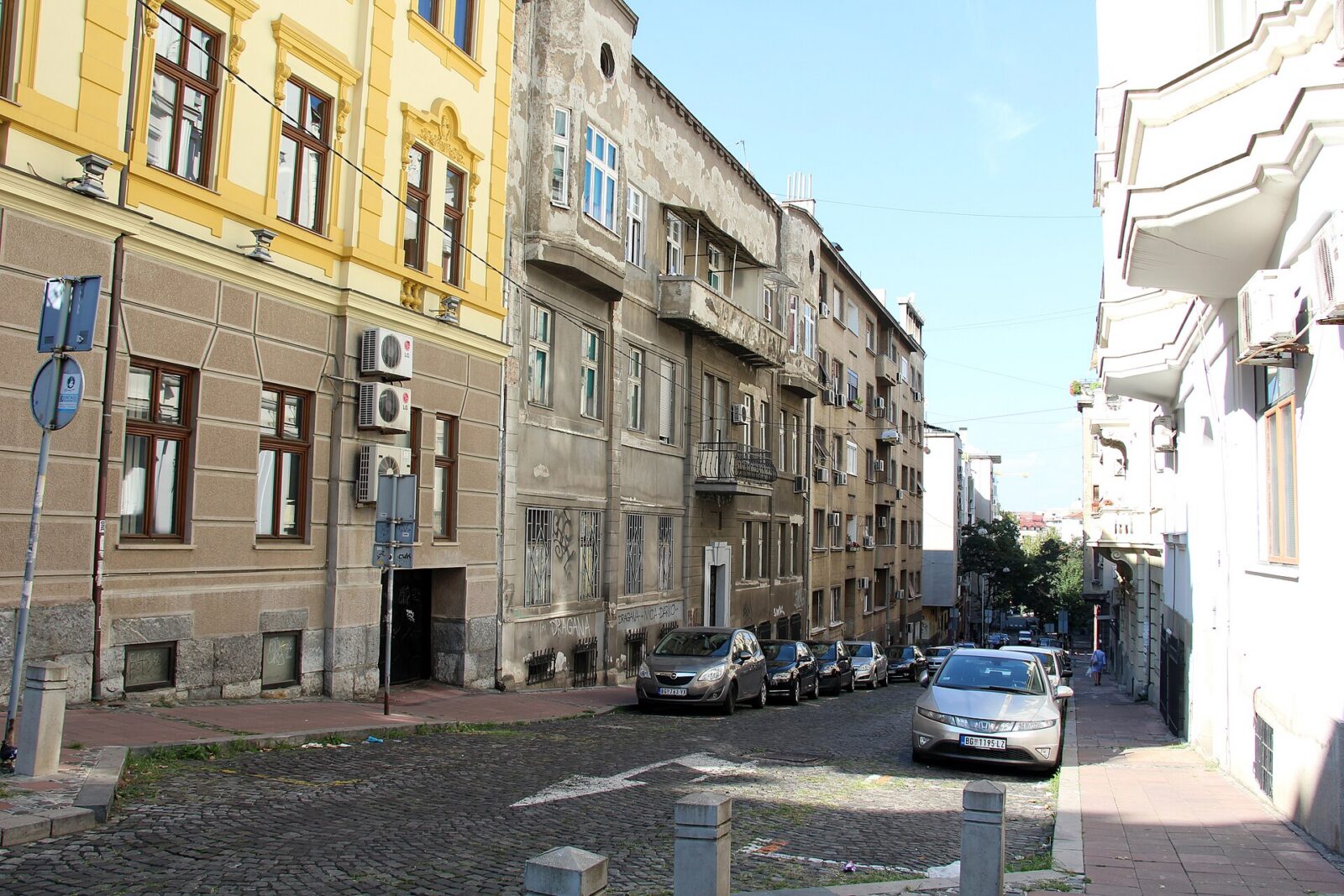
Skadarlija, the cobbled restaurant street near the old town, works the same way: widely used, administratively nonexistent, and close enough to Dorcol and Stari Grad that the distinction rarely matters. Choosing where to sleep rather than where to eat means treating any of these four names as a description of atmosphere, not a legal address.
Savamala’s own boundary is not something we could confirm. The one description found for this page, an unreferenced Wikipedia article rather than an official municipal source, states that Savamala’s northern section falls under Stari Grad while its central and southern section falls under Savski Venac. No city or municipal page found for this guide describes Savamala’s boundary at all, so treat that split as unconfirmed rather than settled, and do not expect a listing labelled Savamala to tell you which municipality actually administers it.
Picking the right area for your trip
With the tax flat and the boundaries sorted, the areas below break down mostly by distance from the old centre and by how much noise you want outside your window. One thing worth factoring in regardless of which you pick: most night transport starts from Trg Republike or Studentski trg, both inside Stari Grad, so a late finish anywhere else usually means a metered taxi home rather than a night bus. Belgrade’s taxi fares are fixed and identical across every licensed company, starting at 320 RSD and adding a per-kilometre rate that depends on the time and the zone, a detail covered in full on getting around Belgrade.
| Area | Character | Suits |
|---|---|---|
| Stari Grad | The old centre, dense and walkable | A short stay built around sightseeing on foot |
| Vracar | Quiet and residential, right beside the centre | Wanting distance from the busiest streets without losing the centre |
| Savski Venac and Savamala | Institutions, embassies and a rebuilt riverside | A stay near the river or the diplomatic quarter |
| Novi Beograd | Modern blocks across the Sava | A longer stay, more space, apartment-style stays |
| Zemun | A separate old town further along the river | A quieter, self-contained base with a longer trip in |
Sleeping in Stari Grad, the old town core
Stari Grad is the compact core most first-time visitors picture when they think of Belgrade: Kalemegdan at one edge, Knez Mihailova running through the middle, and the streets around Dorcol and Skadarlija filling in the rest. Two tram lines, 5 and 10, terminate right at Kalemegdan, so even the far edge of the district connects easily into the wider network. Staying here means you can cover most of a short visit on foot, at the cost of the noise that comes with the busiest part of the city after dark.
Staying in Vracar, quiet and close by
Vracar sits immediately south of the old town, and it reads as residential rather than touristic: quieter streets, local markets, and fewer late-night terraces than Stari Grad. The Temple of Saint Sava stands at Krusedolska 2a here, and the stops around it give a sense of how well served the district actually is: Karadjordjev park on the west side serves trams 8, 10 and 14 plus several bus routes, and Macvanska on the east side serves trolleybuses 19, 21, 22 and 29.
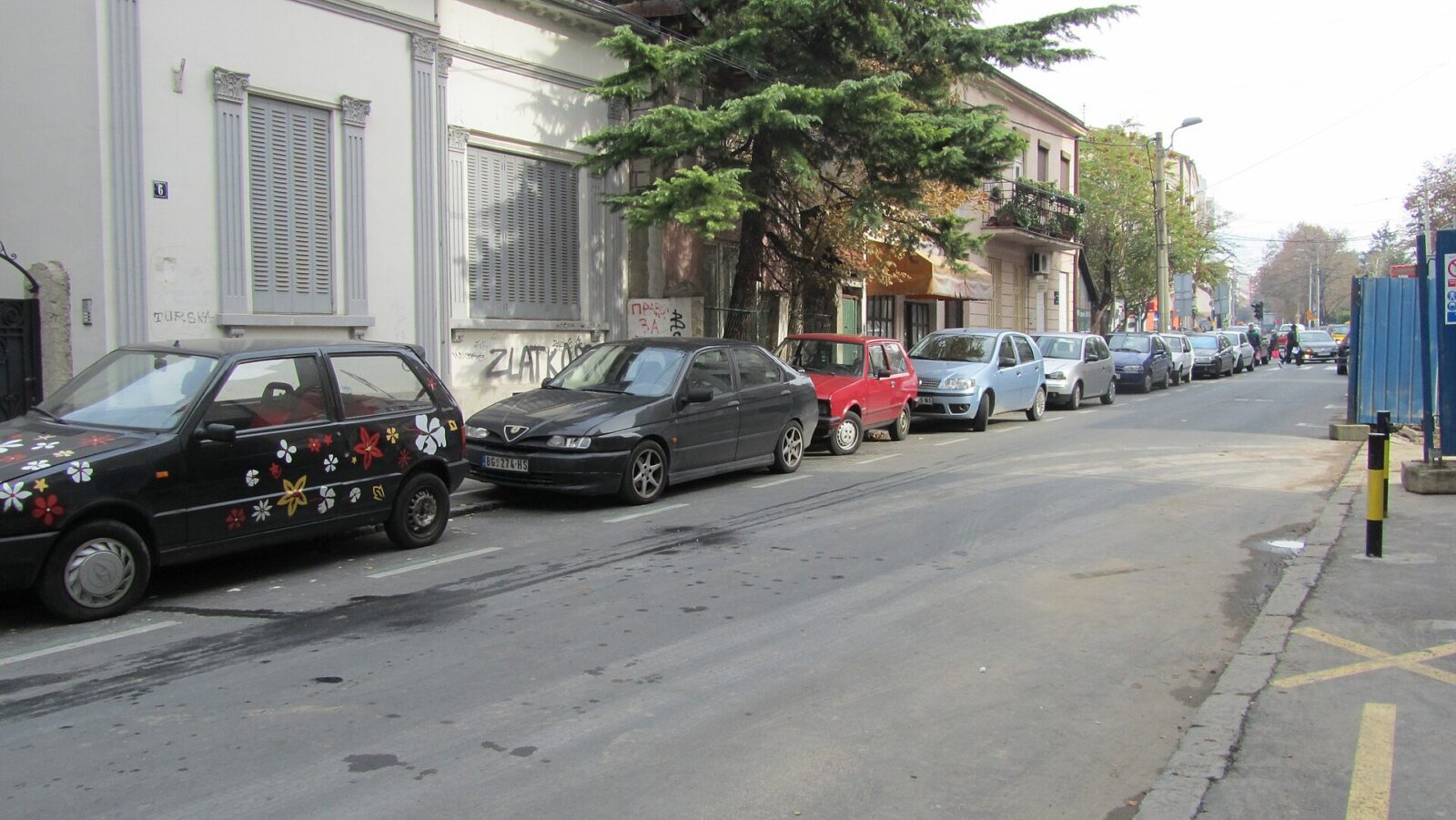
This suits a traveller who wants some distance from the busiest streets without losing an easy walk, or a short tram ride, back into the centre. A fixed taxi fare from Nikola Tesla Airport into this zone runs 3,500 RSD, covered in full on the airport transfer guide.
Basing yourself in Savski Venac and Savamala
Savski Venac holds much of the city’s institutional weight, government buildings and embassies among quieter residential streets closer to the centre. Savamala, the riverside district bordering it, has been rebuilt around the Beograd na Vodi development and a run of galleries and clubs in former warehouses, though as covered above, nobody can currently say with certainty which side of the Stari Grad and Savski Venac line a given Savamala address actually falls.
Staying in this stretch suits a trip built around the river, business near the institutions, or simply wanting some distance from the densest tourist streets while remaining an easy walk from them.
Crossing to Novi Beograd
Novi Beograd sits across the Sava from the historic centre, and it reads as a different city: wide boulevards, large-scale blocks, and the Usce park and riverside along the water. There is no metro to shorten that crossing yet; a metro company exists and construction is under way, but no line carries passengers. The BG Voz urban rail line, which is free like the rest of the regular network, stops here on its route between Batajnica and Ovca, giving you a run into Beograd Centar or on to Vukov spomenik without touching the road network at all.
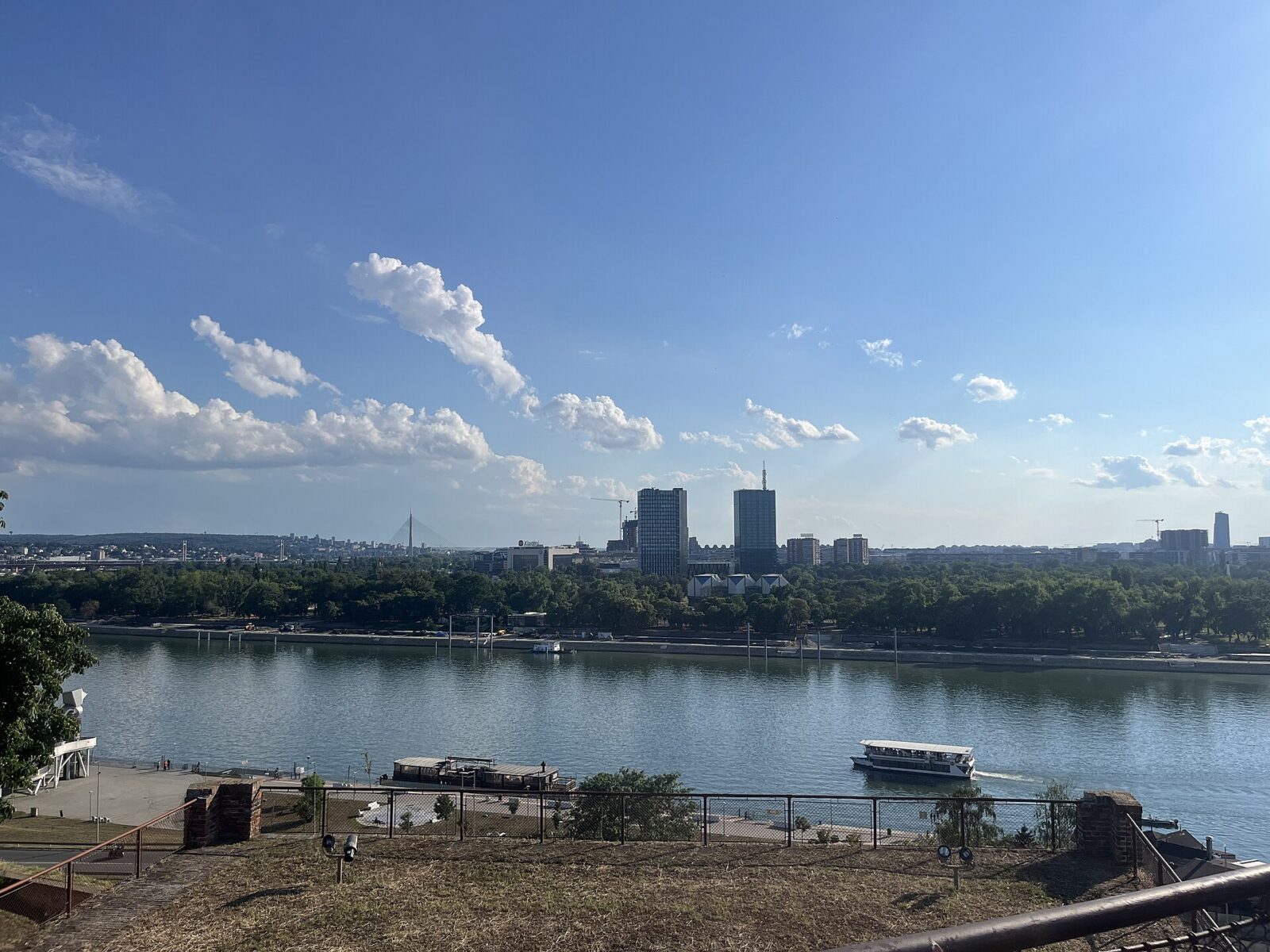
Because public transport across the whole city has been free since 2025, the distance that once made Novi Beograd feel remote from the sights matters less than it did. It still suits a longer stay and more space more than it suits a traveller with two nights and a fixed list of monuments to see.
Choosing Zemun’s separate old town
Zemun keeps its own identity more than any other district on this list, closer in feel to a separate town joined to a larger city than to one of its central neighbourhoods. A quay runs along the Danube, the old core is compact, and Gardos hill rises above both, the same Gardos named earlier as a neighbourhood with no boundary of its own but very much inside Zemun municipality.
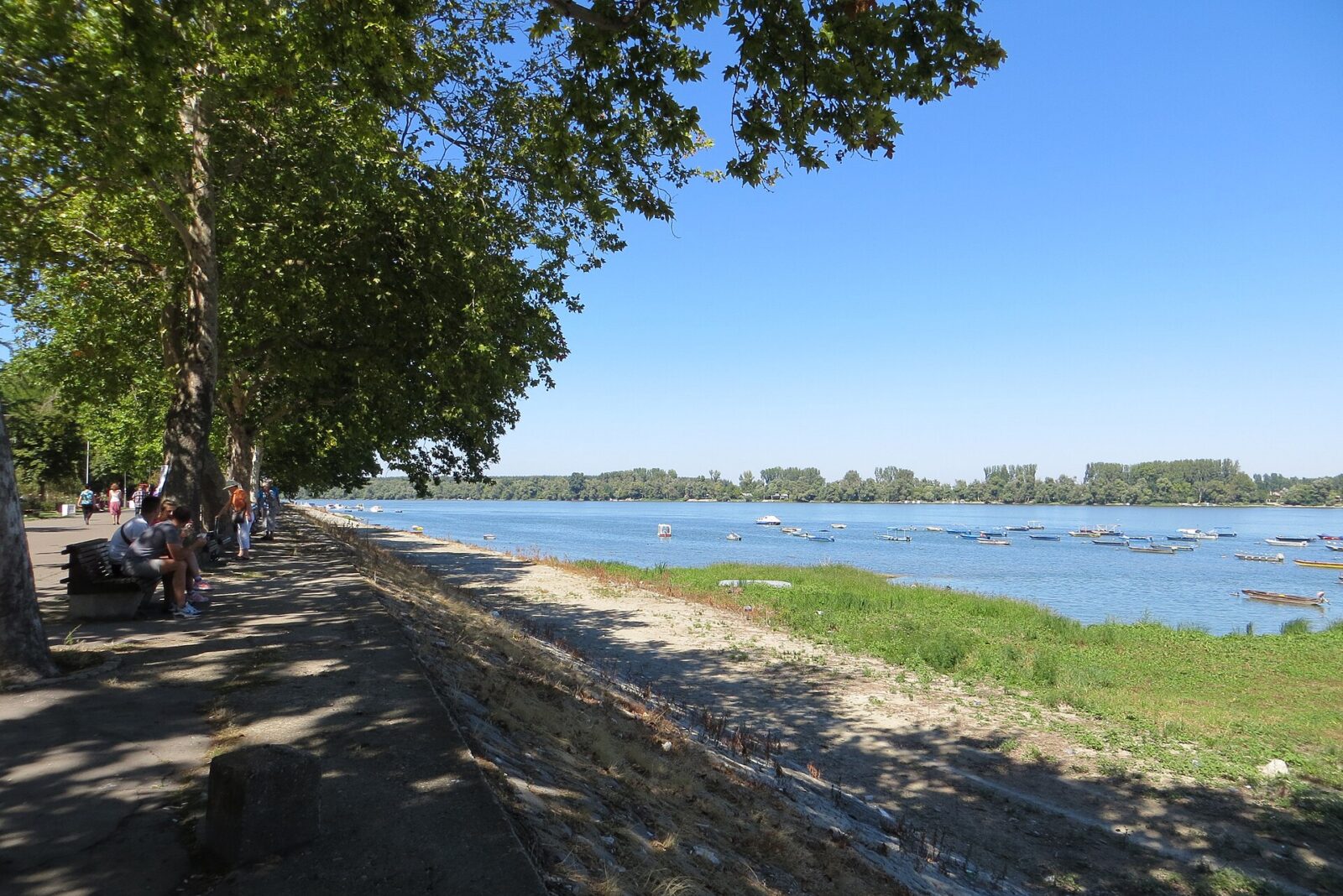
Staying here means a longer trip into the centre than Stari Grad or Vracar offers, offset by a quieter, more self-contained base and a stretch of riverfront that has little to do with the rest of the city’s tourist geography.
Common questions
Does the tourist tax apply to apartments as well as hotels?
Yes. The tax of 160 RSD per person per night is collected by whatever accommodation provider hosts you, hotel, guesthouse or registered apartment, and it must appear as its own line on the invoice rather than folded into another charge.
Who registers my stay if I book directly with a private owner?
Under Serbia’s Aliens Act, a private host who isn’t charging for the stay is expected to register a guest within 24 hours of arrival. If nobody else does it, self-registration is expected within 24 hours of entering the country. The official pages describing this carry no clear date, so when in doubt, confirm directly with the host or see Serbia travel essentials.
Does staying further out, like Zemun or Novi Beograd, cost more to reach things?
Not in ticket price. The same free public transport network covers the whole city, Zemun and Novi Beograd included, so the real difference is time rather than money. Cost only shows up if you take a taxi instead, and Belgrade’s metered taxi rates are fixed everywhere in the city.
What’s the safest way to get home late at night?
A metered taxi from a marked rank, or booked through an app. Belgrade’s night transport network runs roughly hourly through the night, mostly from Trg Republike and Studentski trg, which works well for a stay inside Stari Grad but means a longer wait, or a taxi, from anywhere else.
Is Skadarlija a good place to actually sleep, not just eat?
It depends on how much quiet matters compared with proximity. Skadarlija has no official boundary of its own and sits right against Stari Grad and Dorcol, so if the restaurant street’s evening crowds are not what you want outside your window, Vracar or the quieter parts of Stari Grad sit close by without the walk getting much longer.
Where this takes you
Choosing a base is only the first practical decision of a Belgrade trip. Getting around Belgrade covers the free public transport network and taxi rates in full, useful wherever a stay ends up. Belgrade in two or three days lays out an itinerary that works from any of the central districts above. If food matters as much as location, eating in Belgrade covers where the city actually eats, including the streets around Skadarlija. And before booking anything, Serbia travel essentials covers the entry formalities that apply regardless of municipality, alongside the airport transfer guide for getting from Nikola Tesla to whichever district you choose.