
The two things worth knowing before you order in Belgrade rarely make it onto a menu: whether the price list is the one the law actually requires, and whether the dish on it carries any formal recognition at all. Most food writing about the city skips straight to a name instead, a kafana somebody liked, a grill stand somebody swears by. This page does the opposite.
None of what follows names a restaurant, and that omission is deliberate rather than lazy. We checked Belgrade’s own tourist board and Serbia’s national heritage and trademark registers for anything specific enough to recommend, and the official record simply does not go there. What it does cover, in detail, is the law that governs what you’re charged, the products that carry real protection, and the markets the food itself comes from.
Serbian food turns out to have sharper edges than the usual list of dishes suggests. A handful of products carry formal recognition and most don’t, the rules on what a venue must show you turn out to be more specific than expected, and Skadarlija is protected for reasons that have nothing to do with its restaurants. Here is what actually holds up.
The short version. Serbian law requires every food-and-drink venue to post a price list at the entrance and to show or hand it over again at payment, so ask for it if it is not offered. Only one Belgrade-area food carries a protected geographical indication: ajvar from Leskovac, not cevapi, pljeskavica, kajmak or burek. Sljivovica, the plum spirit, made UNESCO’s intangible heritage list in 2022. Belgrade’s four central markets, including Skadarlija’s own market square, open early and are worth building a morning around, though the operator does not date the hours it publishes. Skadarlija itself is a protected historic quarter dating to the 1700s, not a themed restaurant street, and this page names none of the restaurants on it.
On this page
Know the rules before you sit down
Three rules shape what happens at the table in Belgrade, whichever kafana you pick. They come from consumer-protection and public-health law rather than custom, so they apply everywhere, from a market-side grill to a Skadarlija terrace.
The price list you’re owed
Serbia’s Consumer Protection Law requires any hospitality venue serving food and drink at tables to post its price list at the entrance and to show or hand a copy to every customer before they order, and again at the bill on request. A venue that has not put a list where it can be read on the way in is worth noticing before you sit down.
The age check you might get
The same law sets the minimum age to be served alcohol or tobacco at 18, and it lets a venue withhold service until a customer produces ID, a card, passport or driving licence, if there is any doubt. Carry one if you look younger than your age suggests; it is not an unusual request.
The smoking rule that is not fully enforced
Serbia’s tobacco-control law does not ban smoking indoors outright: it lets a venue set aside a smoking area under conditions, rather than requiring the whole room to be smoke-free. Belgrade’s own public health institute describes enforcement of even that partial rule as inconsistent, citing a survey, undated on its own page, in which two thirds of the city’s adults reported breathing tobacco smoke indoors. Ask before you sit down if clean air matters, and assume nothing either way.
Find the markets, not a restaurant list
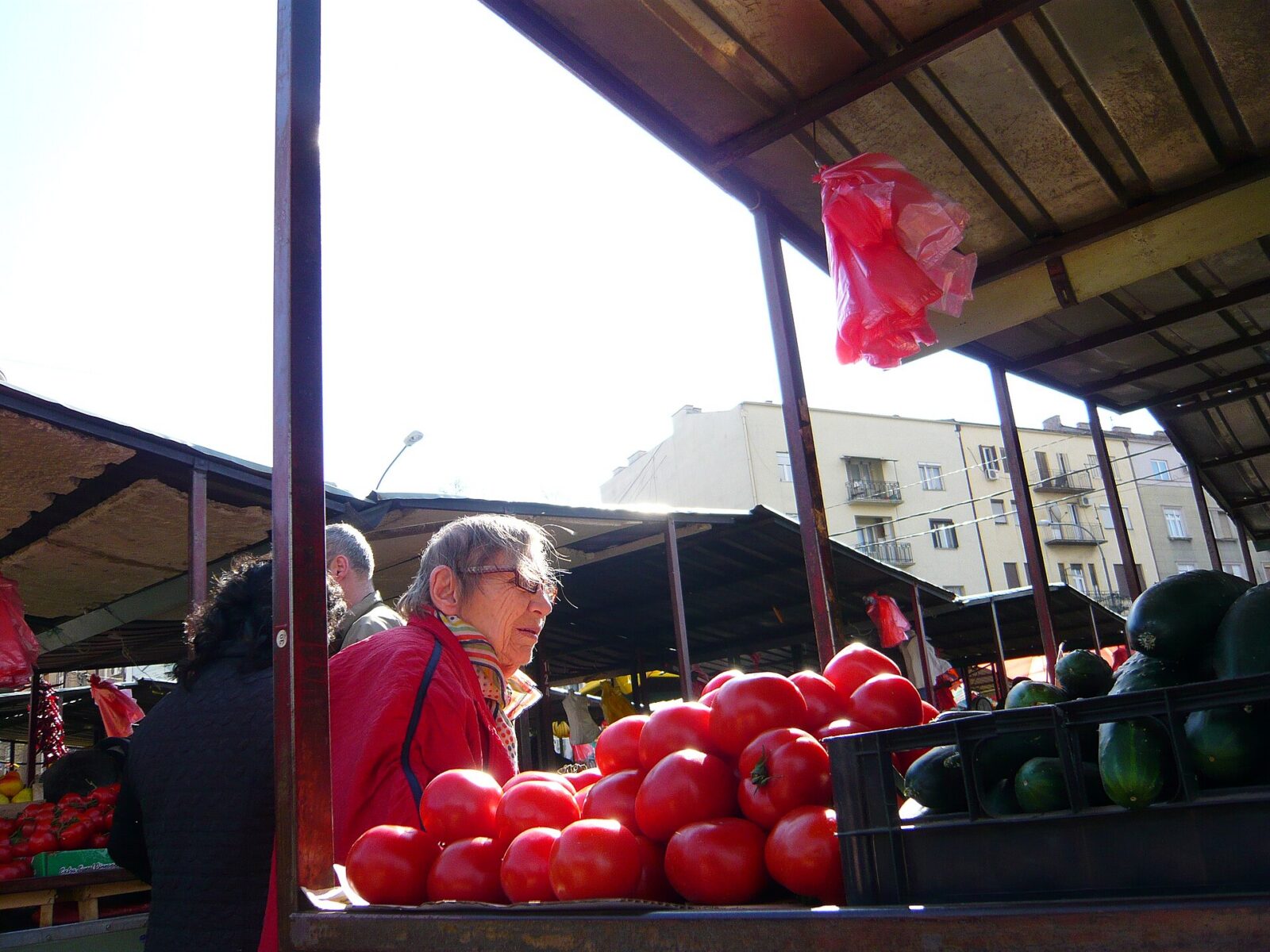
Belgrade’s produce markets are run by a single public company, JKP Beogradske pijace, across a network of green markets throughout the city. They are the most reliable place to see what Belgrade actually cooks with, and no menu or price list is required to look. Walking one is a better introduction to Serbian food than a restaurant meal, since what is piled on the stalls in the morning is what ends up on the table that evening.
| Market | Address | Municipality |
|---|---|---|
| Kalenic | Maksima Gorkog 2B | Vracar |
| Zeleni Venac | Zeleni venac 2 | Savski venac |
| Skadarlija, often called Bajloni | Dzordza Vasingtona 1B | Stari Grad |
| Zemun | Masarikov trg 17 | Zemun |
Each one sits in a different part of the city, so which is closest to a morning walk depends on where you are staying rather than which is objectively best.
The market operator publishes opening hours on its own site: 06:00 to 19:00 every day for the green markets in general, with Palilula market listed separately at 07:00 to 21:00 and the Miljakovac open-air centre at 08:00 to 19:00, closed Mondays. That page carries no date of publication or revision, so treat the hours as what the operator currently states rather than a schedule confirmed as current. If the timing matters to your plans, a little slack costs nothing.
Why this page names no restaurant
We looked. The Tourist Organization of Belgrade runs its own culinary guide, and it names dishes without naming a single place to eat them: proja, a warm cornmeal bread, pihtije, prebranac, stuffed vegetables, gibanica and zeljanica pastries, fried veal legs and mushrooms. Not one restaurant, cafe or kafana appears anywhere on that page. Belgrade’s own city site does not name one either. If the official Belgrade voice on food will not recommend an address, we are not going to borrow one from a review site and present it as tested.
That is the honest limit of what a page like this can verify. A kafana’s kitchen changes hands, a grill stand’s quality holds or slips within a season, and no official register tracks either one. What we can check, and what makes up the rest of this page, is the law that governs how you are charged and the handful of foods that carry formal recognition.
What you’ll actually be served first
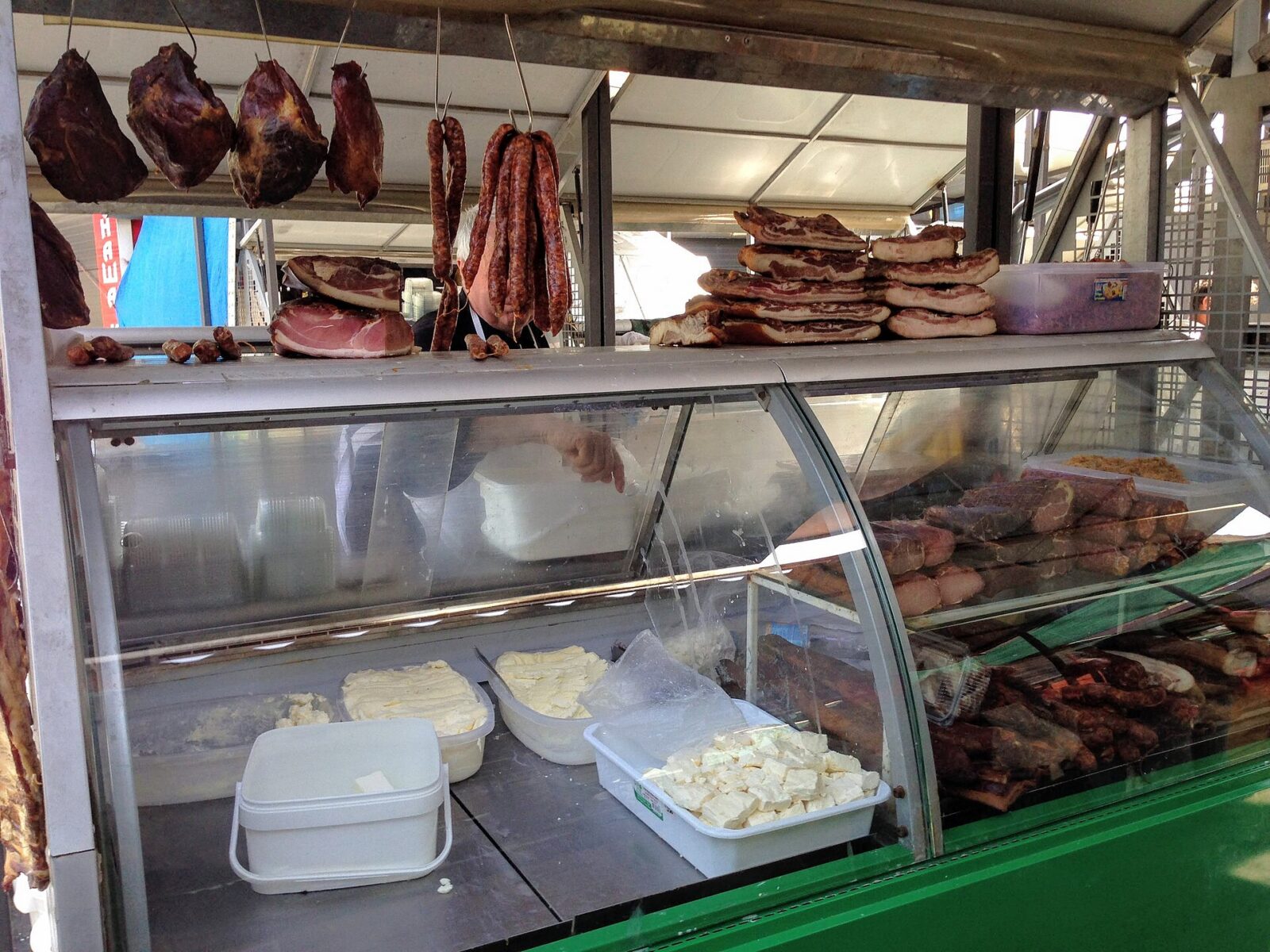
Belgrade’s own tourist board frames a traditional meal as starting with sljivovica, a cold plum spirit of around 45 to 50 percent, followed by proja, a warm cornmeal bread served with cheese and kajmak. After that comes pihtije, a jellied dish, prebranac, baked beans, stuffed vegetables, gibanica and zeljanica pastries, with a pickled cabbage salad in winter and a seasonal one in summer.
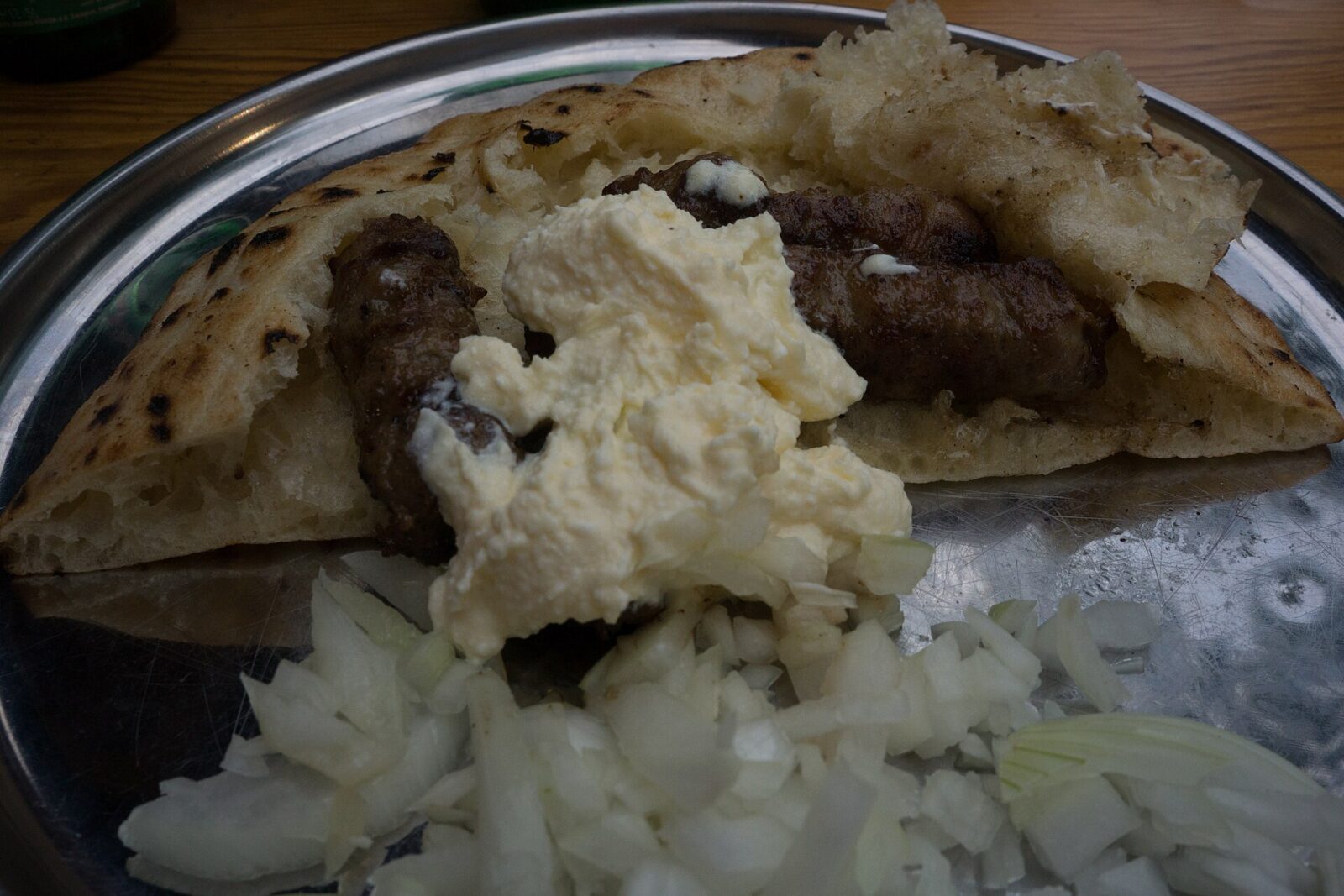
Notice what is missing from that official account: cevapi, pljeskavica and burek do not appear in it at all. They are what most visitors actually eat, sold from grills and bakery counters across the city, but the tourist board presents them as street food rather than as the table Belgrade serves as its own. Both are worth your time regardless; they simply belong to a different category from what the city’s own guide leads with.
What actually carries protection
Serbia keeps a formal register of geographical indications, and it is more revealing than any list of national dishes. Eighty-seven entries sit on it: twelve cheeses, fourteen cured meats and nine honeys among them, weighted heavily toward pantry staples rather than the restaurant food most visitors ask about.
| Food | Formal status |
|---|---|
| Sljivovica, plum spirit | UNESCO intangible cultural heritage since 2022 |
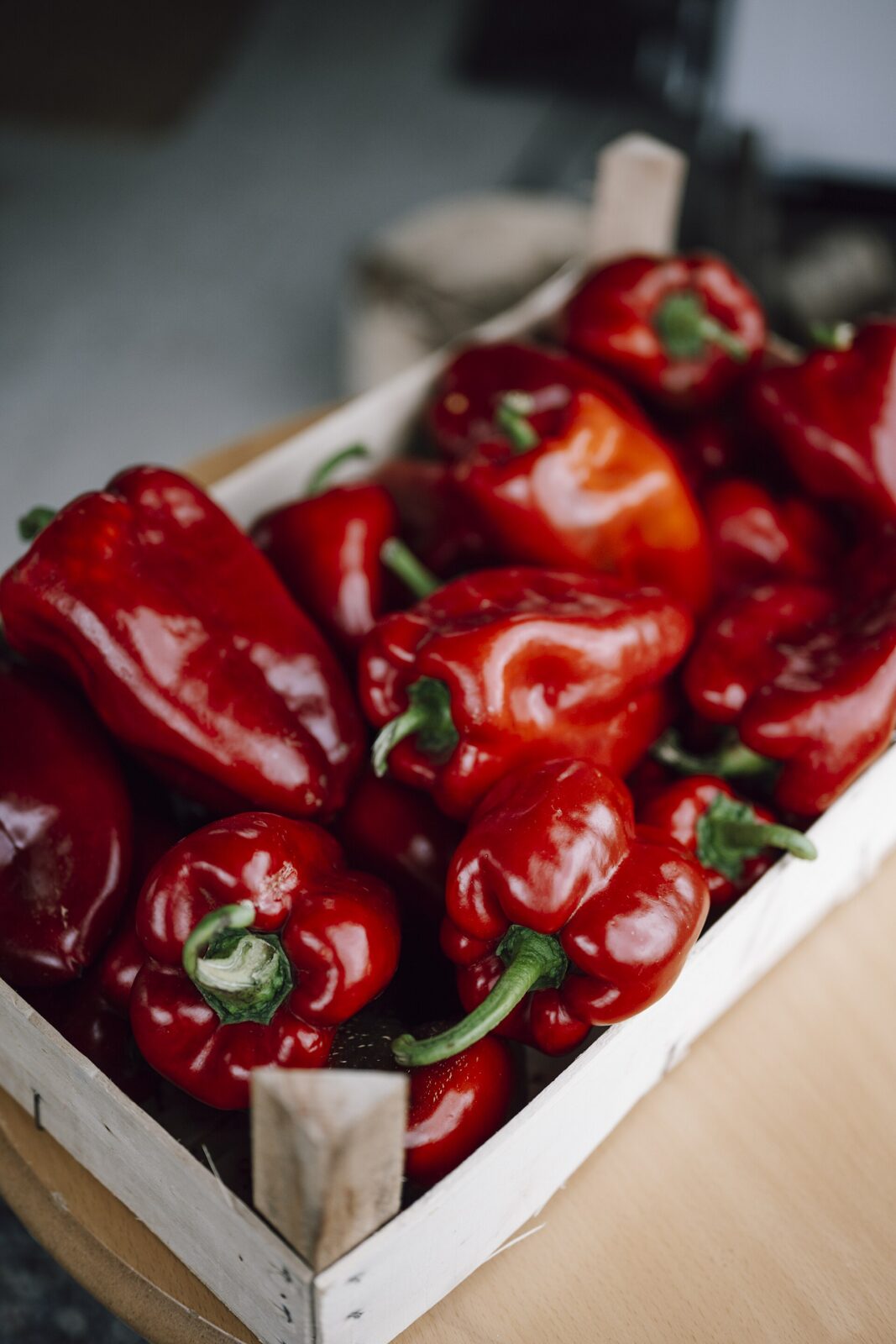
| Ajvar | Protected origin, but only for Leskovac ajvar specifically |
| Cevapi and pljeskavica | No indication of their own; only the Leskovac grilling meat is registered |
| Kajmak | No geographical indication; the making of it is on Serbia’s national heritage inventory instead |
| Burek | No Serbian geographical indication of any kind |
There is a legal wrinkle behind the plum spirit specifically. A 2015 law let anyone distilling rakija for their own household sell the surplus without registering as a commercial producer, something the previous 2009 law had required. That same law opened a path to register a protected name for a strong spirit, but Serbia’s geographical-indication register still lists no entry for rakija itself: from the food and drink side, only Leskovac’s ajvar and its grilling meat have made it onto that list. Press reports describe a newer law meant to align Serbia’s spirit categories with EU rules, but no dated official text confirming it has replaced the 2015 law turned up while researching this page, so treat the older law as the one in force unless a local source tells you otherwise.
None of this changes what tastes good. It only tells you which label is backed by a register and which one, however widely used, is just a name everyone recognises.
Walking into Skadarlija
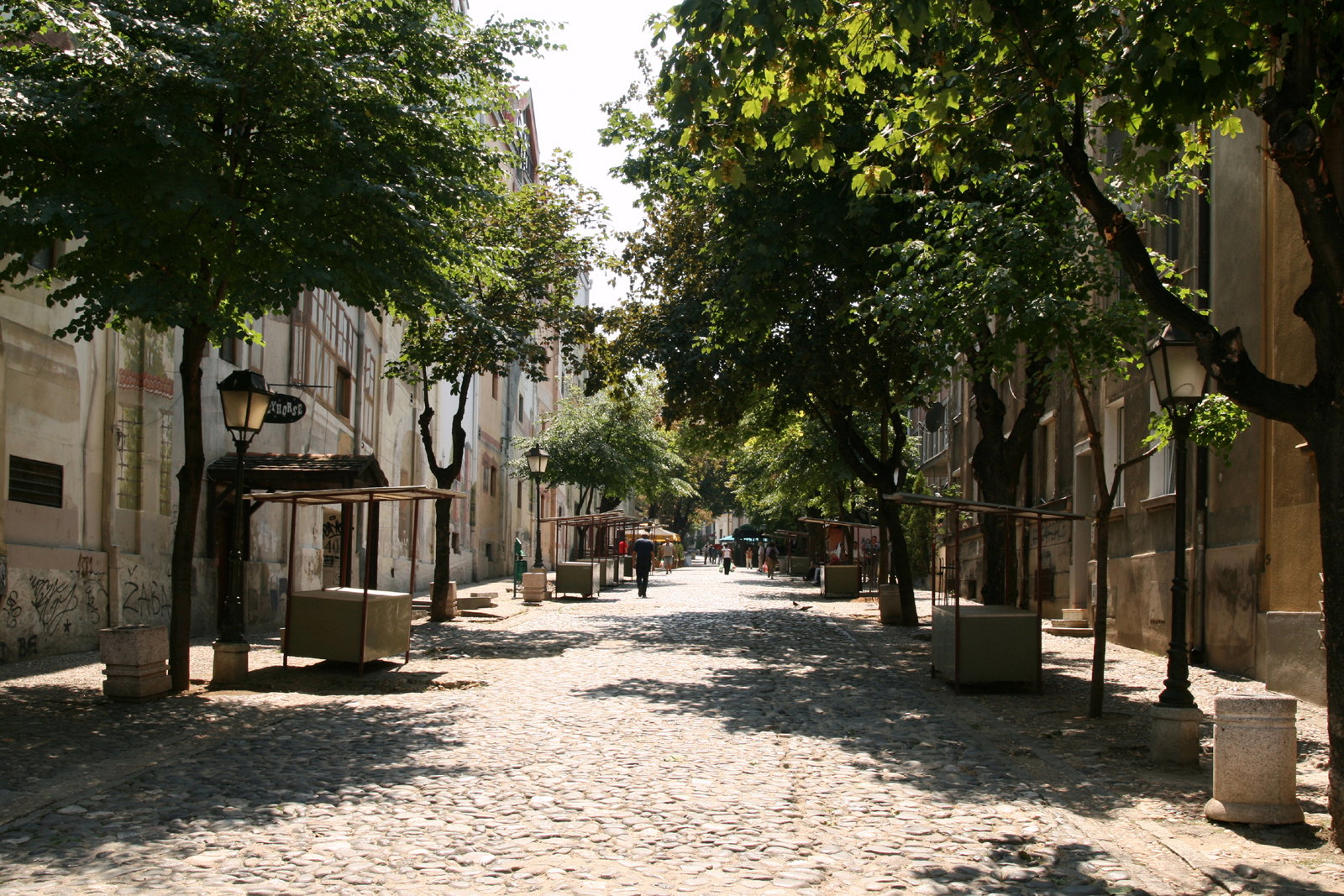
The cobbled street most visitors picture as Belgrade’s restaurant row carries formal legal protection that has nothing to do with its restaurants. Skadarlija is registered as a protected spatial cultural and historical entity, proclaimed by the city’s heritage institute in 1967 and entered into the national register in 1981. Its oldest buildings date from between 1717 and 1739, well before the small kafanas that made the street famous; those opened in the 1860s, when writers and painters started gathering there.
That status protects the street itself, its buildings and its layout, not any specific business on it. Knowing the difference matters: Skadarlija today is also the most touristed place to eat in the city, with prices and live music pitched accordingly. In the same Stari Grad municipality sits the market most people still call by its old name, Bajloni, officially renamed Skadarlija in 1946; if you would rather shop for ingredients than pay for the atmosphere, that is where to go instead.
When the calendar closes the kitchen
Serbia observes a fixed set of non-working public holidays: 1 and 2 January, Orthodox Christmas on 7 January, 15 and 16 February, the four days from Good Friday to Easter Monday, 1 and 2 May, and 11 November. When a holiday falls on a Sunday, the following working day is also non-working. Markets and many family-run places close or run reduced hours on these dates, even where no schedule says so in advance, so it is worth building a holiday into your plans before travelling rather than finding a shutter down once there.
Common questions
Why doesn’t this page name any restaurants?
Because no official Belgrade source does either. We checked the city’s tourist board, its culinary guide and its heritage register for a specific place to recommend, and none of them name one. A list borrowed from reviews would be exactly the kind of claim this page cannot stand behind.
Is ajvar protected everywhere in Serbia?
No. The protected geographical indication covers Leskovacki domaci ajvar specifically, made in and around Leskovac. Ajvar made anywhere else, including in Belgrade, carries no such protection, whatever the label implies.
Can a venue refuse to show me a price list?
No. The Consumer Protection Law requires a food-and-drink venue to post its price list at the entrance and to show or hand over a copy before you order, and again at payment on request. If it is not offered, you’re entitled to ask for it.
Is Skadarlija a restaurant or a neighbourhood?
Neither, officially. It is a single protected street registered as a historic and cultural entity since 1981, with kafanas dating mostly from the 1860s. It functions as a restaurant row today, but the protection covers the street and its buildings, not any business on it.
Can I trust the market opening hours I find online?
Treat them as a starting point rather than a guarantee. The market operator publishes hours, currently 06:00 to 19:00 for most green markets, but the page carries no date, so there is no way to confirm the figures are current rather than simply the last ones posted.
What’s the one dish with real legal protection?
Ajvar from Leskovac is the only food on Serbia’s geographical-indication register among the dishes visitors typically eat in Belgrade. Sljivovica, the plum spirit, is not a geographical indication but does carry UNESCO intangible-heritage status, recognised in 2022.
Where next
Belgrade rewards eating your way through more than one part of town, and where you stay shapes how far a market run will be. Choosing a neighbourhood is worth sorting out before the markets, since Kalenic, Zeleni Venac and Skadarlija’s own market square each sit closer to a different part of the city. Since getting around Belgrade costs nothing on the regular network, a market on the far side of town is no further away than one nearby. For a full itinerary that fits eating in around everything else, see Belgrade in two or three days, and Kalemegdan and the fortress sit an easy walk from the old town’s markets. Money mechanics generally are covered in the budget guide.