
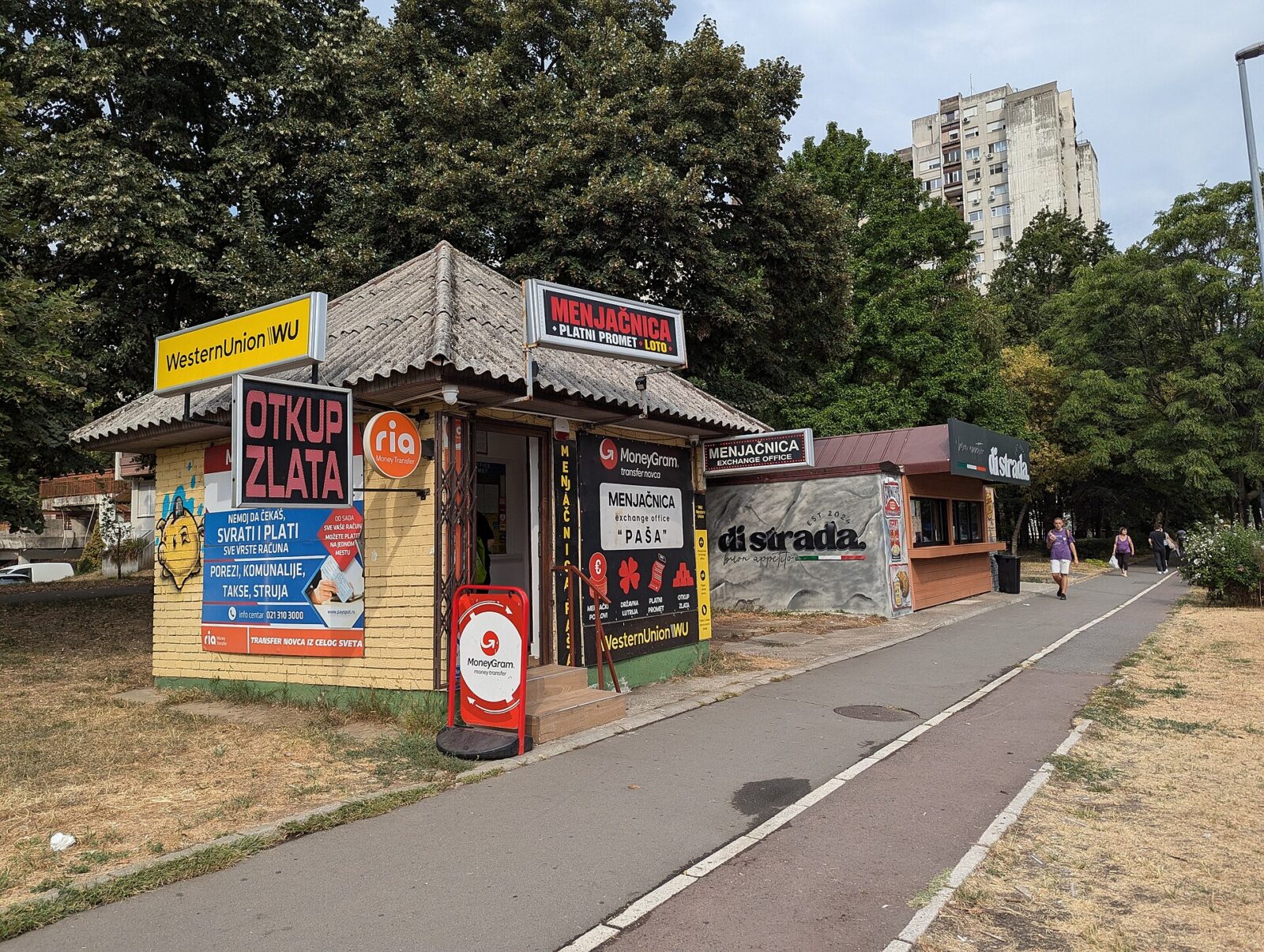
Bring euros to Serbia and they still have to become dinars before dinner gets paid for, because the law leaves no other option. That single rule settles most of the practical questions you bring to a trip like this: what you carry, where you change it, and whether a card lets you skip the whole exercise.
This page sticks to what a public source actually states. That means the currency rule itself, where the National Bank publishes its own exchange rate, what a licensed exchange office owes a customer, the threshold for a VAT refund, and two wage figures that work better than a guess when judging whether a price is high or ordinary for someone living here. It also names what could not be confirmed anywhere official, including the current minimum wage and any blanket rule on card acceptance, rather than filling either gap with a plausible number.
Formalities at the border, including entry documents, sit on a separate page: Serbia travel essentials covers that ground. This one stays with the money you spend once you’re already inside the country.
The short version. Dinars are the only currency that works here: Serbian law requires it, and the exceptions are narrow ones that don’t cover ordinary tourist spending. Change cash at a bank or a licensed exchange office, which must issue a receipt, and check the rate offered against the National Bank’s own daily figure rather than trust a board on the street. VAT is 20 percent standard and 10 percent reduced, and a traveller who spends at least 6,000 RSD with one seller can reclaim it on goods taken home. As a yardstick for what counts as expensive locally, the median net salary in June 2026 was 94,281 RSD a month; the minimum wage and any general rule on card acceptance could not be confirmed, so neither is guessed at here.
On this page
Why dinars are the only currency that works
This isn’t shop policy or a matter of convenience. Serbia’s foreign exchange law states plainly that payment, collection and transfer inside the country are made in dinars. A contract can be written in another currency, but it is settled in dinars regardless. Ten exceptions exist in the law, and they are narrow and technical: none of them describes a visitor paying for dinner, a hotel room or a museum ticket.
Cash collection in a foreign currency is allowed only in a short list of specific situations, such as sales inside international airports. A shop or a driver quietly taking your euros anyway isn’t doing you a favour: you get no receipt, and the rate applied is whatever they decide, not what a proper exchange would give.
Checking the official exchange rate before converting
The National Bank of Serbia publishes a daily middle rate for the dinar against major currencies, and it’s the one number any offer can be measured against. It’s formed from spot sales concluded up to 12:30, published by 18:00 each working day, and it applies from 08:00 the following working day. No documented public tool pulls that rate automatically, so checking the National Bank’s own page directly beats expecting an app to do it for you.
Nobody is obliged to give that exact rate. It’s a reference, not a guaranteed price. What it’s good for is showing how far a bank, an exchange office or a card terminal’s own conversion has strayed before you commit to it.
Changing cash without losing on the rate
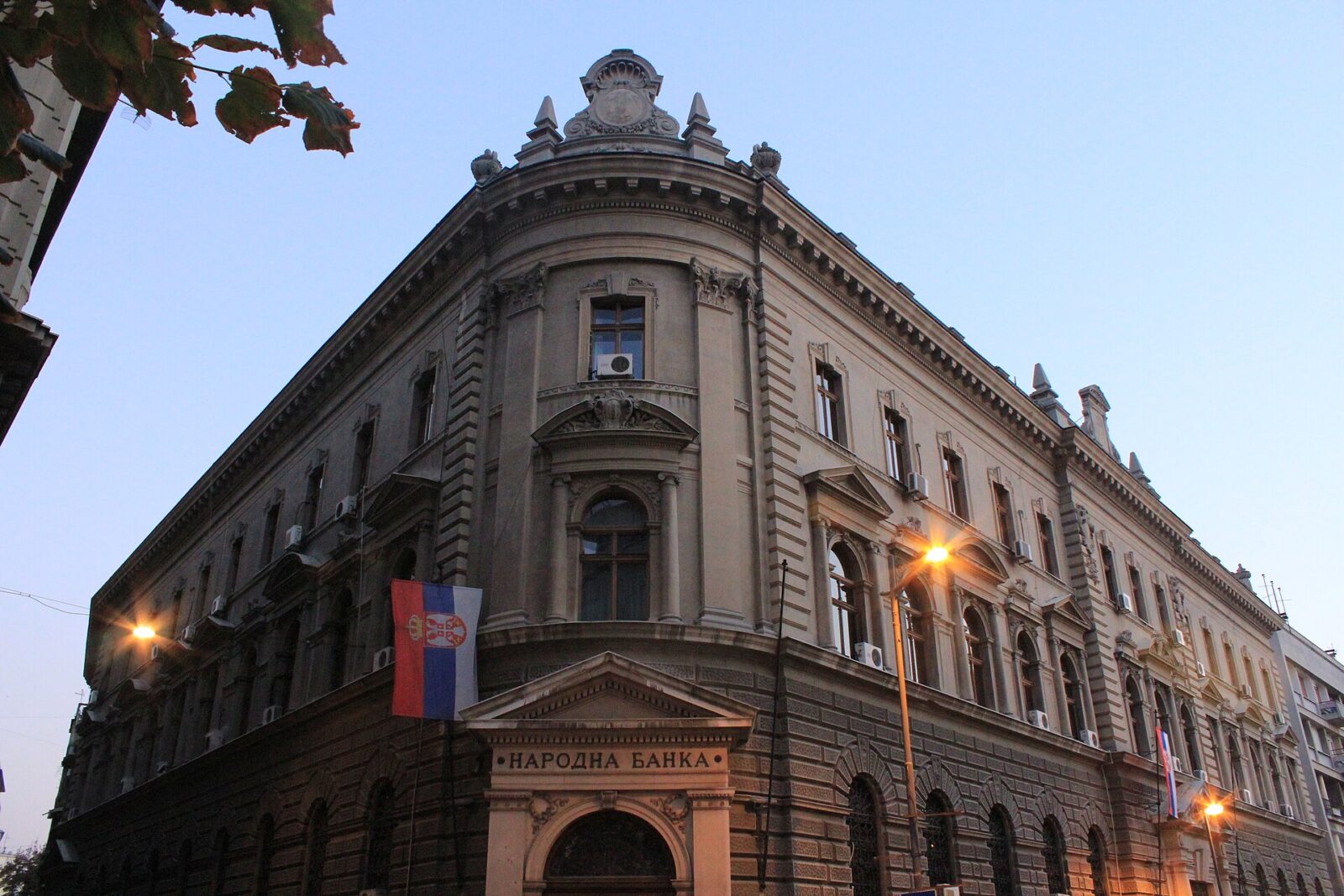
Currency exchange is a licensed activity in Serbia, not something any shop can offer. Only banks, the public postal operator and holders of a National Bank licence may do it, and the National Bank has supervised that licensing since 1 January 2019 and keeps a public register of who is authorised. That register stands behind every receipt a licensed office hands over.
- Look up the National Bank’s daily middle rate before heading out, to have a number for comparison.
- Use a bank, the post office or a licensed exchange office, not someone offering a better rate on the street.
- Take the receipt. It isn’t optional: a licensed office must issue one for every transaction, and it’s proof of what was actually handed over.
- Keep that receipt if there’s any chance of changing money back before leaving.
This site doesn’t publish converted prices. A figure quoted in euros or dollars would only reflect one day’s rate, and it would go stale on the page without anyone noticing. Where an amount matters, it’s given in dinars as the seller sets it, leaving you to apply the day’s rate against the National Bank’s own figure.
Judging what counts as expensive here
A price in dinars means little on its own without something to measure it against. The Statistical Office of Serbia publishes monthly earnings data, and the most recent release at the time of writing, dated 25 August 2026, covers June 2026. It gives a real number for what a typical wage looks like here, which says more about whether something is expensive than a converted euro figure ever could.
The average
The average gross salary per employee in June 2026 was 166,123 RSD a month. After tax and contributions, the average net figure was 120,401 RSD. Net earnings for the first half of 2026 rose 11.5 percent compared with the same period the year before in nominal terms, or 8.4 percent once inflation is accounted for.
The median, a better yardstick
An average can be pulled upward by a small number of high earners, so the Statistical Office also publishes a median: for June 2026, that median net salary was 94,281 RSD a month, meaning half of employees earned up to that amount and half earned more. When a menu, a room rate or a taxi fare looks steep, compare it against the median rather than against what you would pay at home.
| Wage benchmark, June 2026 | Amount | What it tells you |
|---|---|---|
| Average gross salary | 166,123 RSD/month | Before tax and contributions |
| Average net salary | 120,401 RSD/month | After deductions; up 11.5% year-on-year nominally |
| Median net salary | 94,281 RSD/month | Half of employees earn up to this amount |
No current minimum wage figure could be confirmed. Serbia sets a statutory minimum wage by government decision each year, on a separate track from the monthly earnings release above, and no official source available stated the current amount clearly enough to print here. The median salary above is a sounder benchmark than a minimum-wage figure this page can’t stand behind.
Reading a price before paying it
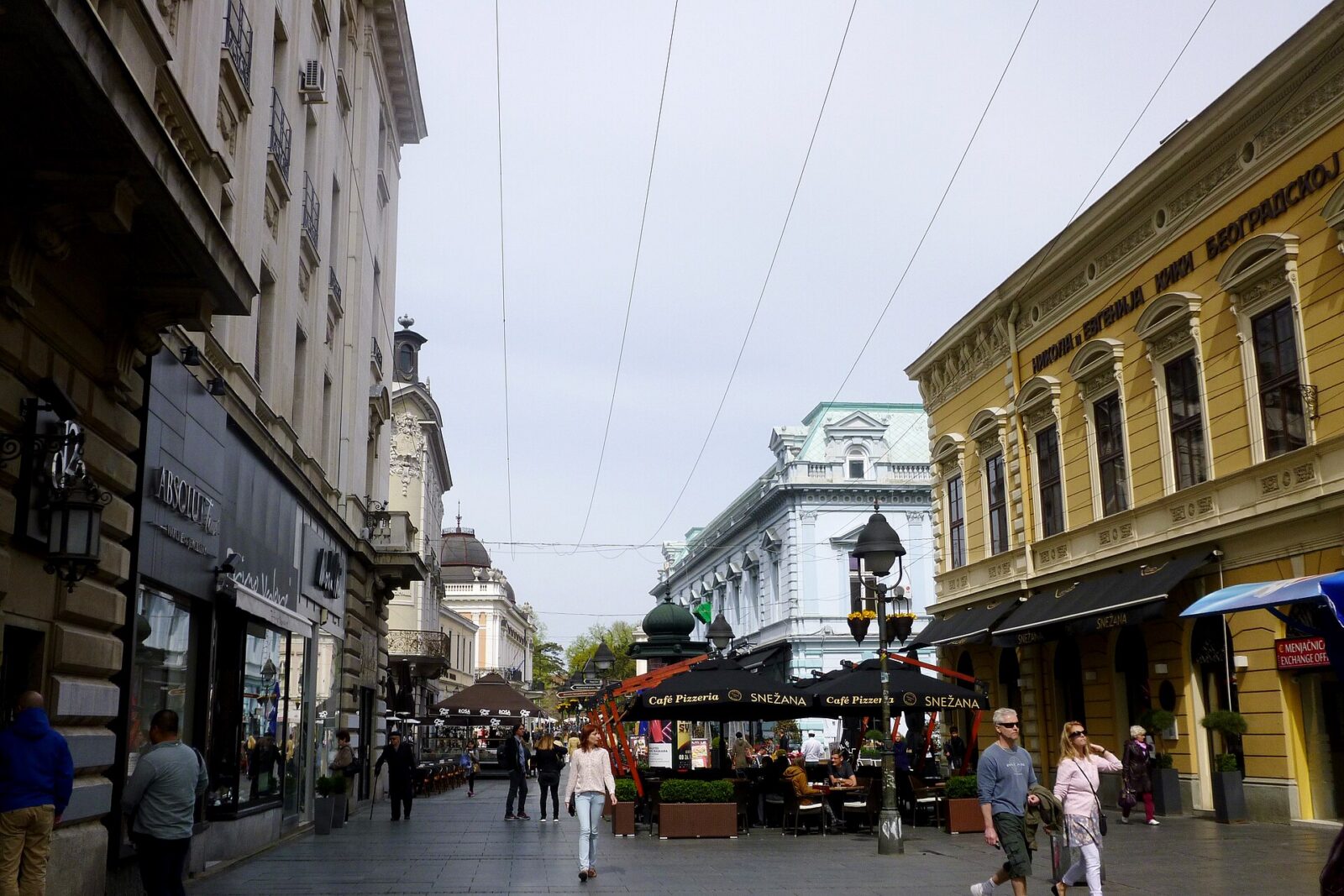
Serbian consumer protection law puts the burden of showing a price on the seller, not on a customer asking for one. Traders have to display the selling price and the unit price of goods and services in a way that’s unambiguous, legible and easy to notice, and a price list or tariff for services has to be posted in the shop window, on the premises, or in the specific department offering it.
What the law requires sellers to show. Fuel stations must display their unit fuel prices legibly from the road, and car parks must post their tariff at the entrance, worth knowing before renting a car in Serbia. Restaurants and cafes must display or hand over a price list before taking an order, and post one at the entrance, a rule that applies wherever a visit ends up eating in Belgrade. Hotels, guesthouses and other accommodation have to display the room or board price, and the tourist tax on top of it, somewhere visible in every room and at reception, which matters when comparing options for where to stay in Belgrade.
None of this settles what a fair price actually is. It does mean you can ask for one before ordering or parking, rather than discover it at the till, if it isn’t posted where the law says it should be.
What’s confirmed on cards, and what isn’t
No legal requirement for merchants to accept cards could be confirmed. Some countries have introduced rules forcing traders to offer a non-cash option alongside cash. Nothing found in Serbia’s own fiscalisation rules states such a mandate, so this page won’t claim cards are always accepted, and it won’t claim the opposite either. Carry some cash, particularly for markets, small kafanas away from the centre, and rural stops: don’t count on a card terminal being there when you need one.
One thing worth watching for at the terminal itself: if it offers to charge you in your home currency instead of dinars, decline it. That conversion is set by the terminal’s own operator, at its own rate, and it’s rarely the better deal.
Getting part of a VAT payment back
Anyone with neither domicile nor residence in Serbia can reclaim VAT on goods they take out of the country; worth knowing before you buy something substantial rather than after. The scheme covers goods carried out personally; it doesn’t extend to a meal or a hotel stay, since nothing there leaves the country in luggage for customs to check.
- Spend at least 6,000 RSD, including VAT, with a single seller. Invoices from that same seller within a three-month window can be added together to reach the threshold.
- Ask for form ZPPPDV at the time of purchase, and keep the invoice.
- Take the goods out of Serbia in personal luggage within three calendar months of the month they were bought.
- Have customs stamp the ZPPPDV form on the way out. They need to see the goods as well as the paperwork, so don’t pack them somewhere inaccessible.
- File the claim within twelve months of the date of export.
What free transport buys already
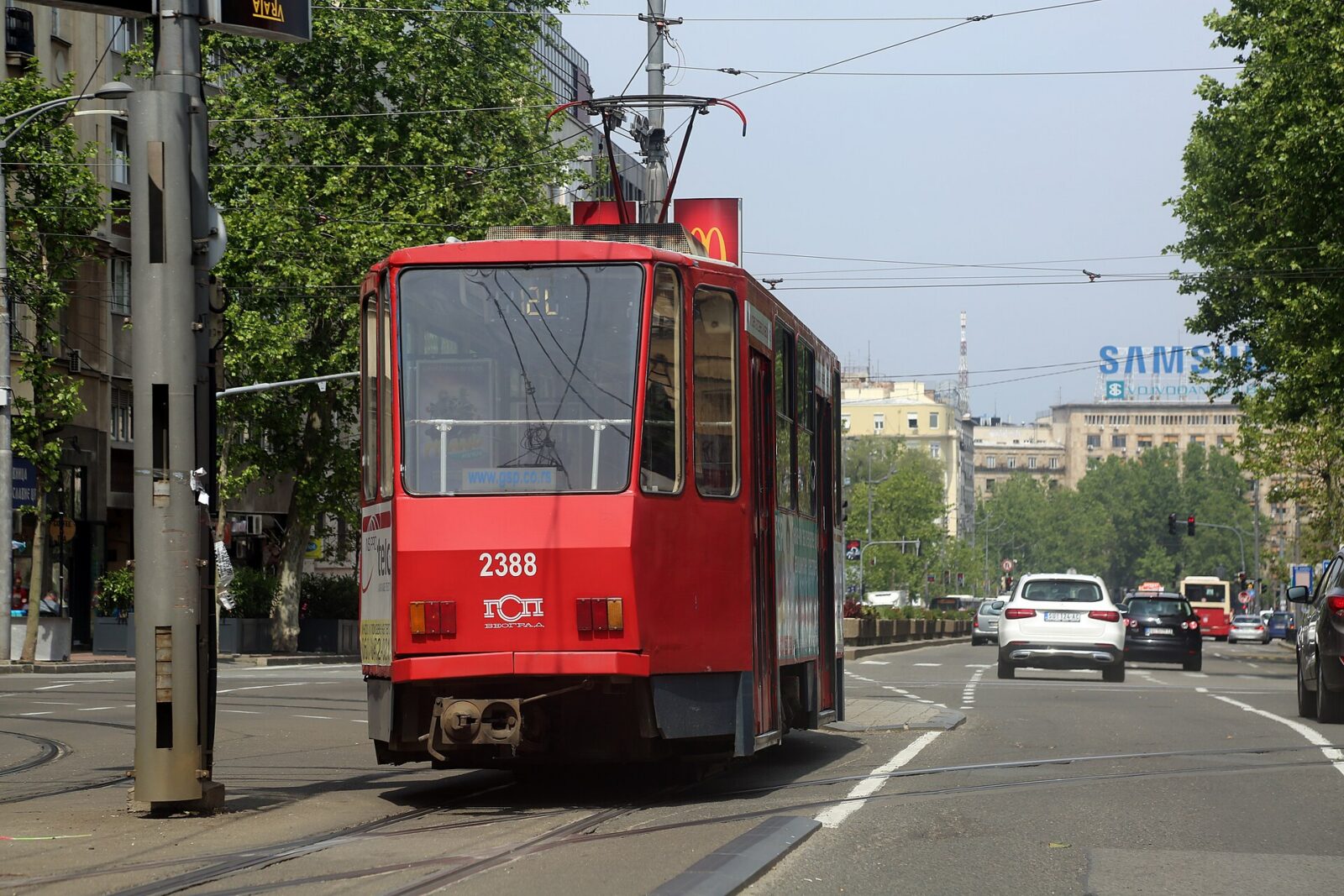
One line item that can be planned around with total confidence: public transport on Belgrade’s integrated city and suburban network has been free for every passenger since 1 January 2025, under a decision of the city authorities. That covers the regular bus, tram and trolleybus lines you use to get around day to day; the express E lines sit in a separate category and aren’t part of this. Getting around Belgrade covers how the network works in practice.
It’s a genuine saving worth building into your daily budget, and one of the few numbers on this page you don’t need to check against a live source first, because the number is zero.
| Money essentials at a glance | What applies |
|---|---|
| Currency | Dinar (RSD) only; narrow legal exceptions, none for ordinary tourist spending |
| VAT, standard rate | 20 percent |
| VAT, reduced rate | 10 percent, on a set list of goods and services |
| VAT refund threshold | 6,000 RSD including VAT, with one seller |
| Belgrade public transport, regular lines | Free since 1 January 2025 |
Common questions
Can I pay in euros anywhere in Serbia?
Not for ordinary spending. The law requires payments inside Serbia to be settled in dinars, with only a short list of narrow exceptions, such as sales inside international airports. A shop or driver taking euros anyway is outside the rules, and there’s no proper receipt for it.
Is a card enough, or is cash needed too?
No blanket rule requiring merchants to accept cards could be confirmed, so carry some cash for markets, small kafanas outside the centre and rural stops rather than relying on a card everywhere. If a terminal offers to charge you in your home currency, decline it and pay in dinars instead.
Does the minimum wage tell me anything useful about prices?
A current minimum wage figure could not be confirmed from an official source. The median net salary for June 2026, 94,281 RSD a month, is the more useful benchmark for judging whether a price is ordinary or steep for someone living in Serbia.
What if an exchange office won’t give a receipt?
A licensed exchange office is required to issue one for every transaction. A place that won’t isn’t operating within the rules the National Bank sets for licensed banks, the postal operator and exchange offices, so you should take your money elsewhere.
Does the VAT refund cover restaurants and hotels?
No. The refund applies to goods carried out of Serbia in personal luggage within three calendar months of purchase, stamped by customs on a ZPPPDV form. A meal or a hotel stay isn’t something exported, so neither qualifies.
Why doesn’t this page list prices for meals, rooms or taxis?
Because no source solid enough to stand behind publishes them, and a converted euro figure would only reflect one day’s exchange rate before going stale. Sellers are legally required to display their own prices, in dinars, at the point of sale, which is where to read them.
Nearby
Serbia travel essentials covers entry formalities and documents before arrival. Getting around Belgrade goes into the free public transport network in more detail. Where to stay in Belgrade and eating in Belgrade both feed into the price-display rules covered above, and renting and driving a car in Serbia covers what else changes when paying for fuel and parking rather than a tram ticket.