
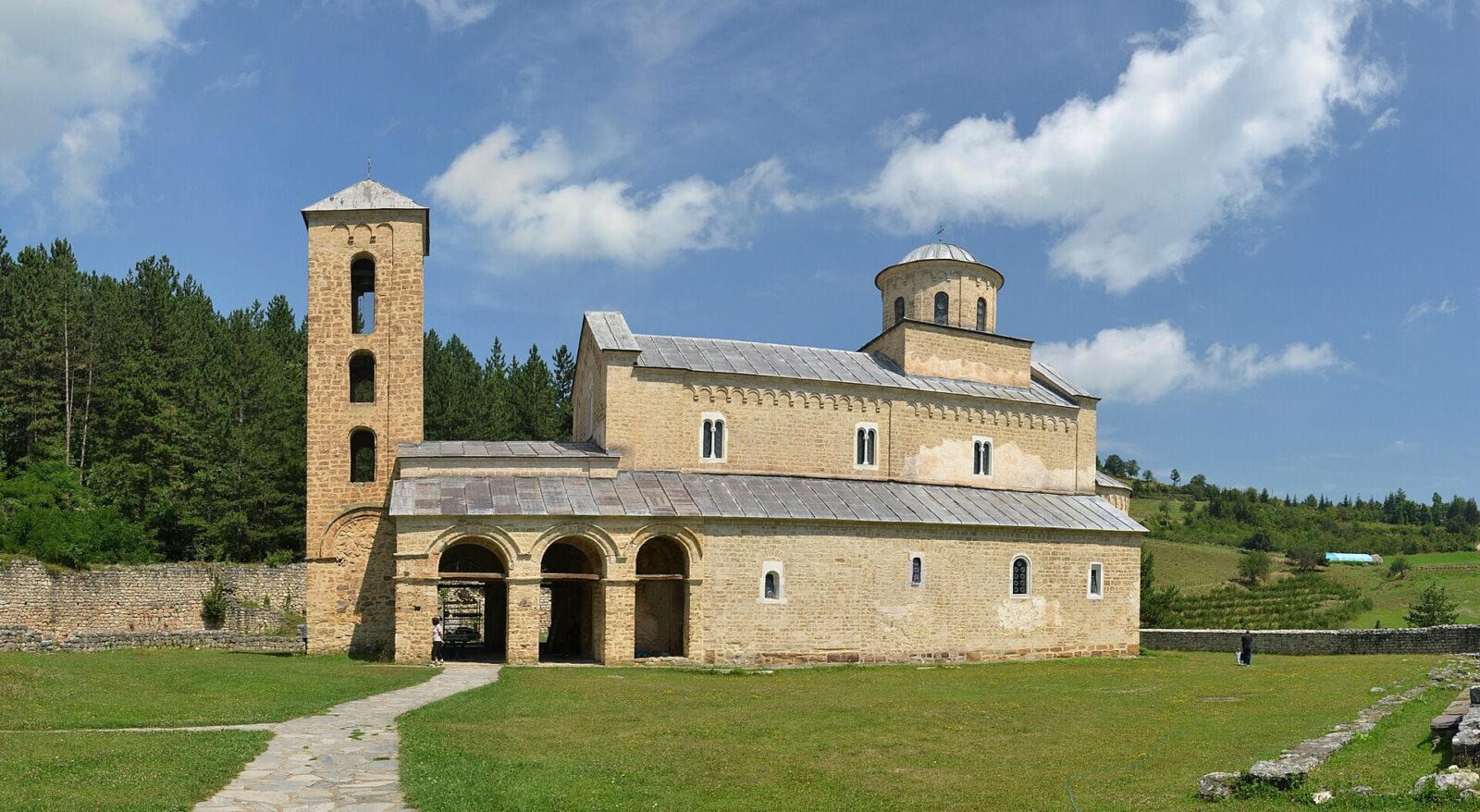
Sopocani sits near Novi Pazar, in the same cluster of medieval Serbian monasteries as Studenica, but it carries a harder history and a much thinner paper trail online. The monastery’s own former website no longer answers, so almost everything checkable about it today comes from two institutional sources instead: the Eparchy of Raska-Prizren, which administers it, and UNESCO’s own documentation of the World Heritage property it belongs to. Between them, those two sources cover the monastery’s founding, its architecture and its long survival in convincing detail; neither one is built to answer the questions a visitor actually shows up with.
That gap matters for anyone planning to visit. The history is well documented and worth knowing before you go; the practical details, hours, dress code, whether you can stay nearby, are not published anywhere this project could reach. This page says so plainly rather than guessing, and it treats that silence the same way it treats a printed tariff: as something to report rather than to fill in with a plausible-sounding number.
The short version. Sopocani was built in the mid-thirteenth century as the endowment and burial place of Serbian King Stefan Uros I. Left without a roof from 1689 to 1926, it survived that period well enough that its frescoes, dated to about 1270-1276, are counted among the finest in Byzantine and Serbian medieval art. It has been part of the UNESCO World Heritage property “Stari Ras and Sopocani” since 1979. No visiting hours, dress code, photography rules or nearby accommodation are published anywhere we could find; contact the Eparchy of Raska-Prizren or ask locally in Novi Pazar before you plan a visit around a specific time.
On this page
What we could not find out before you go
Four ordinary visitor questions go unanswered across every source we could reach for Sopocani: when it is open, what to wear, whether photography is allowed, and where to stay nearby. That is a longer list of gaps than most pages on this site carry, and it follows directly from the monastery’s own website being offline, covered below. None of these gaps are reasons to skip the site; they are reasons to build in a phone call or a question asked in Novi Pazar before you commit to a fixed schedule around it.
Visiting hours
Nothing reachable states opening hours or a closing day for Sopocani. The Eparchy of Raska-Prizren’s own page on the monastery is a historical account with no practical-visit section, and the national tourism organisation’s pages that should cover it both returned a “page not found” error when checked, including what looks like a retired page format from an older version of that site. The Novi Pazar municipal tourist organisation’s own site also failed to load when checked. Absence of a published closed day does not establish free or unrestricted access, so treat this as genuinely unknown rather than assume the monastery is always open.
Dress code and photography
No official or institutional source mentions a dress code or a photography policy for Sopocani, in either direction. This mirrors what we found at Studenica, so it looks like a wider pattern for Serbian Orthodox monasteries rather than a gap specific to this one site. The safe approach is the same one that applies at any working Orthodox monastery: dress modestly, covered shoulders and knees, and ask before photographing inside the church rather than assuming it is allowed, especially given the frescoes are the entire reason the site holds World Heritage status. A flash or a tripod would be the first thing to leave behind or ask about, given how fragile a seven-and-a-half-century-old painted surface already is.
Overnight accommodation
Unlike Studenica, whose own site advertises a pilgrim guest house, no source found for Sopocani mentions any on-site or monastery-run accommodation. Studenica’s pilgrimage agency does organise combined tours that pass through Sopocani, but that describes a day visit arranged from elsewhere, not a place to stay at Sopocani itself. Novi Pazar, a few kilometres away, is the practical overnight base, though no official source specifically ties lodging there to a Sopocani visit; treat that as a reasonable inference rather than a confirmed arrangement. If an overnight stay closer to the monastery matters to your plans, that is a question worth putting directly to the Eparchy, since nothing published settles it either way.
Why so little is confirmed
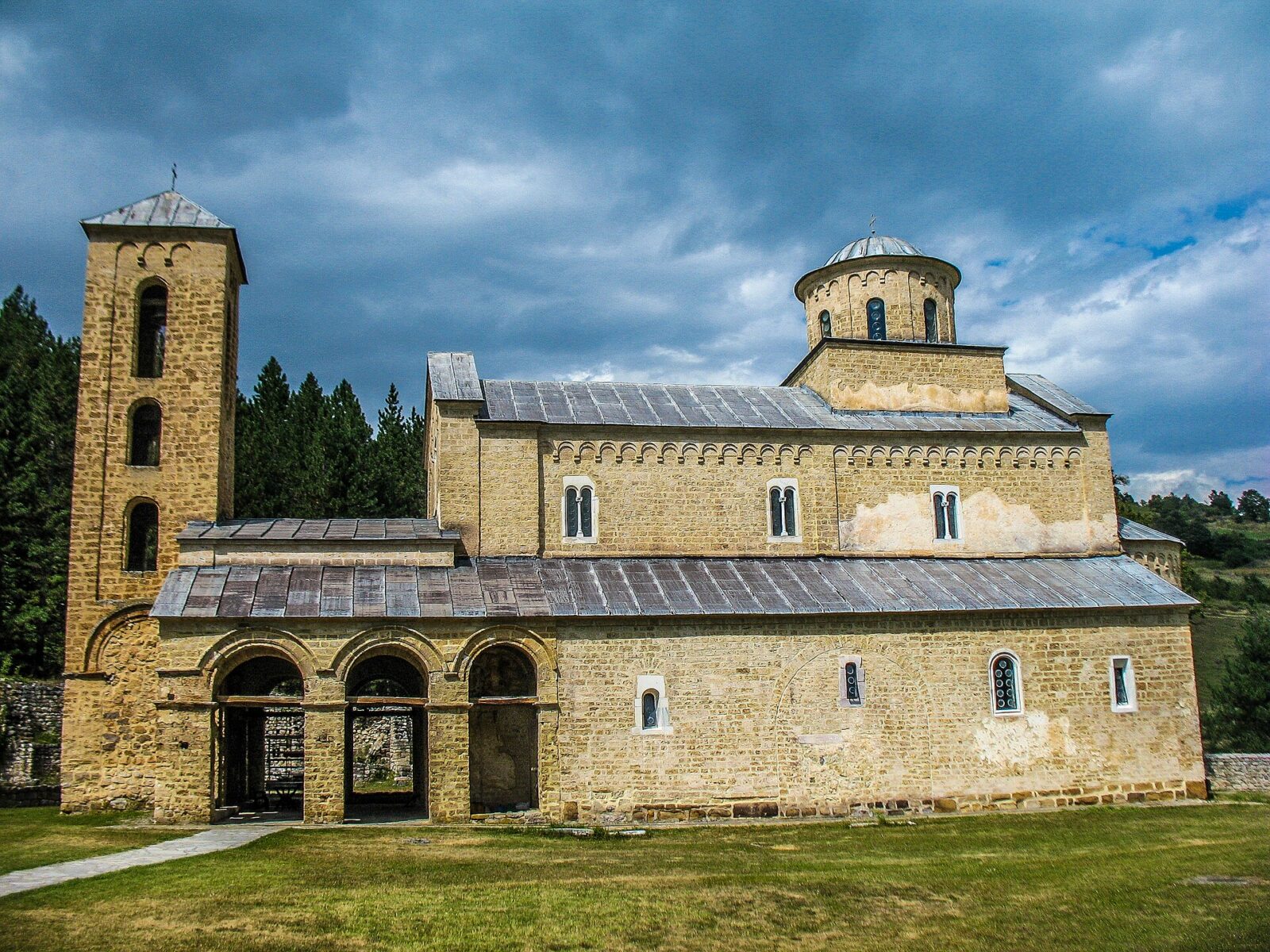
Sopocani’s own former website, listed elsewhere as the monastery’s official site and archived as recently as 2007, does not resolve: a direct connection attempt returns “connection refused,” and every variant of the domain we tried, with and without “www”, the .org and a .rs version, failed the same way, returning an error rather than a page. There is no working replacement site run by the monastery itself, and none appears through the Eparchy’s own pages or UNESCO’s documentation either.
That is why every fact on this page traces back to the Eparchy of Raska-Prizren or to UNESCO rather than to the monastery directly, unlike Studenica, where the monastery’s own site is live and answers most of these same questions. If the monastery’s site comes back online, the gaps above are the first things worth checking again.
Getting there
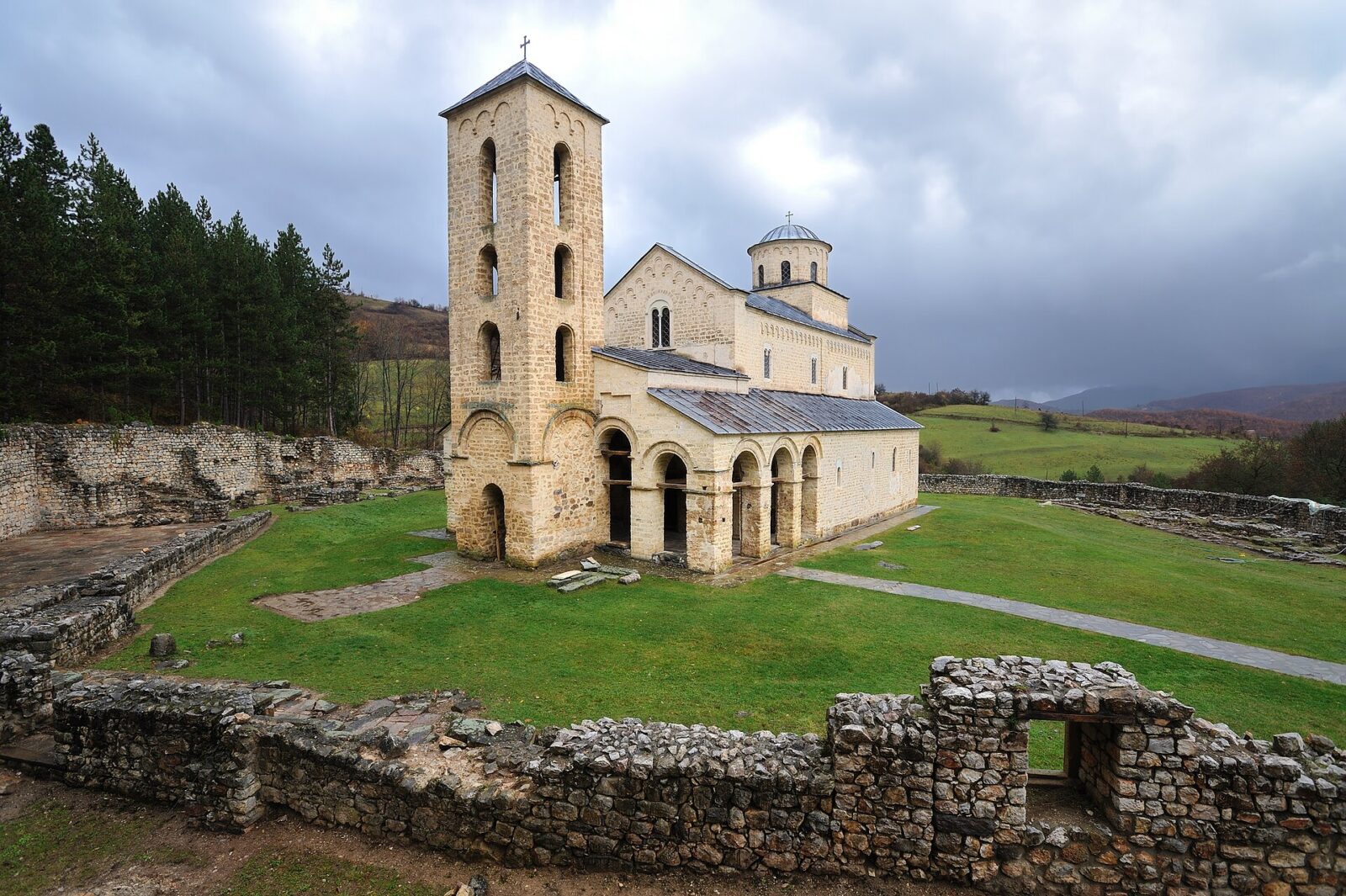
No official source we could reach for this page gives road directions, a distance or a driving time to Sopocani specifically. Novi Pazar, the nearest town, is the practical base for reaching it, and Studenica, in the same wider region, gives a sense of the kind of road network this part of Serbia relies on, via Kraljevo and the Ibar valley. Neither page substitutes for a direct route to Sopocani itself, so confirm the final approach locally, in Novi Pazar, before you set off.
With no distance figure, no route description and no confirmed lodging at the site itself, a self-driven day trip from Novi Pazar, or a longer loop that also takes in Studenica, is the most workable plan on the evidence gathered for this page.
How Stefan Uros I built it
Sopocani was built in the middle of the thirteenth century as the endowment and eventual burial place of King Stefan Uros I, and dedicated to the Holy Trinity. That places it a generation or two after Studenica, part of the same royal building tradition, on the same broad stretch of land near what was then the medieval Serbian heartland around Ras.
Ras itself, the medieval town that gives the wider UNESCO property its name, sits nearby as an archaeological site rather than a standing building, one of the four components covered further down this page. Sopocani’s own role in that cluster is as the burial monastery: a king’s endowment built to outlast him, in an area already dense with the institutions of the young Serbian state.
Surviving two centuries without a roof
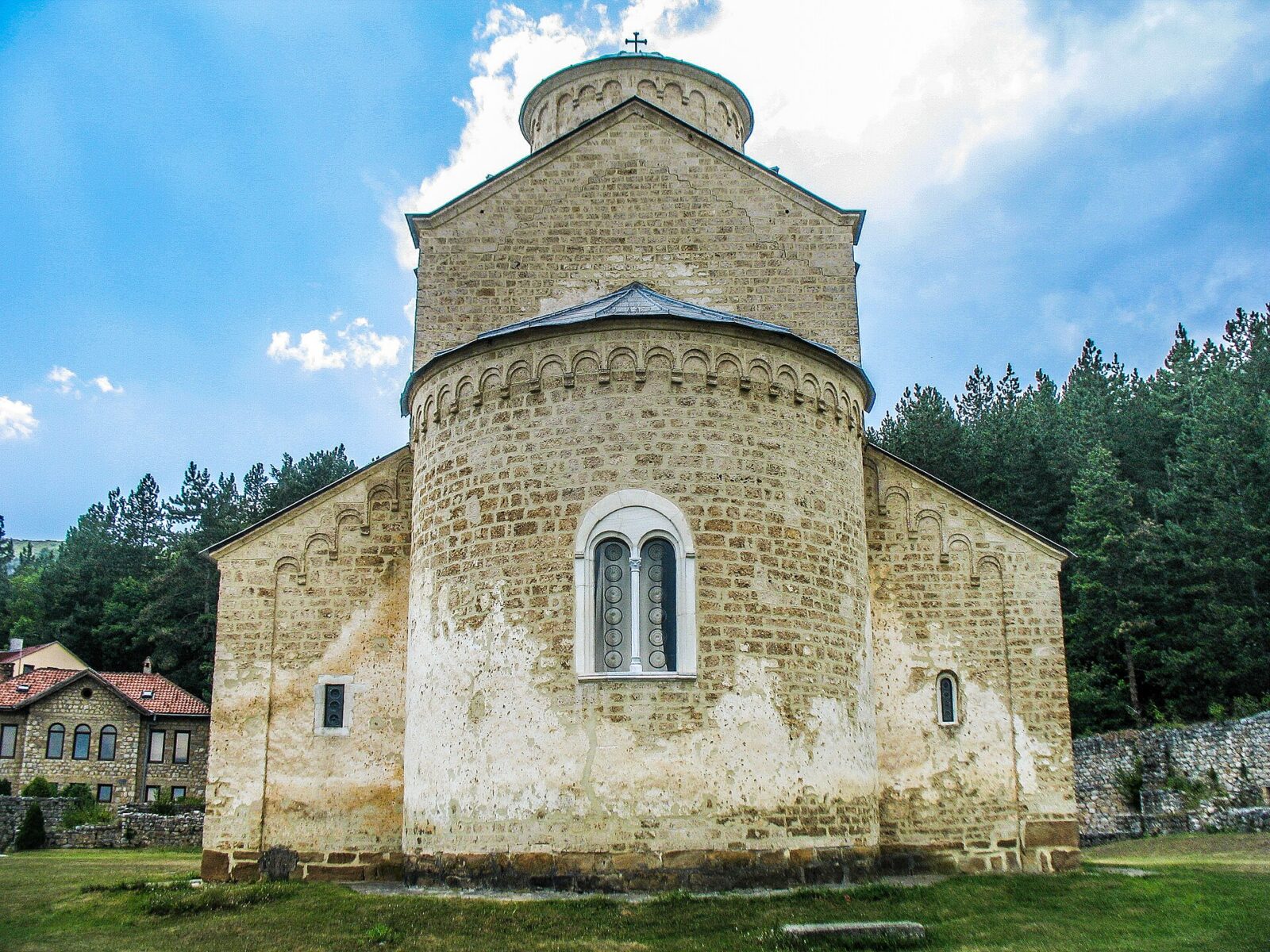
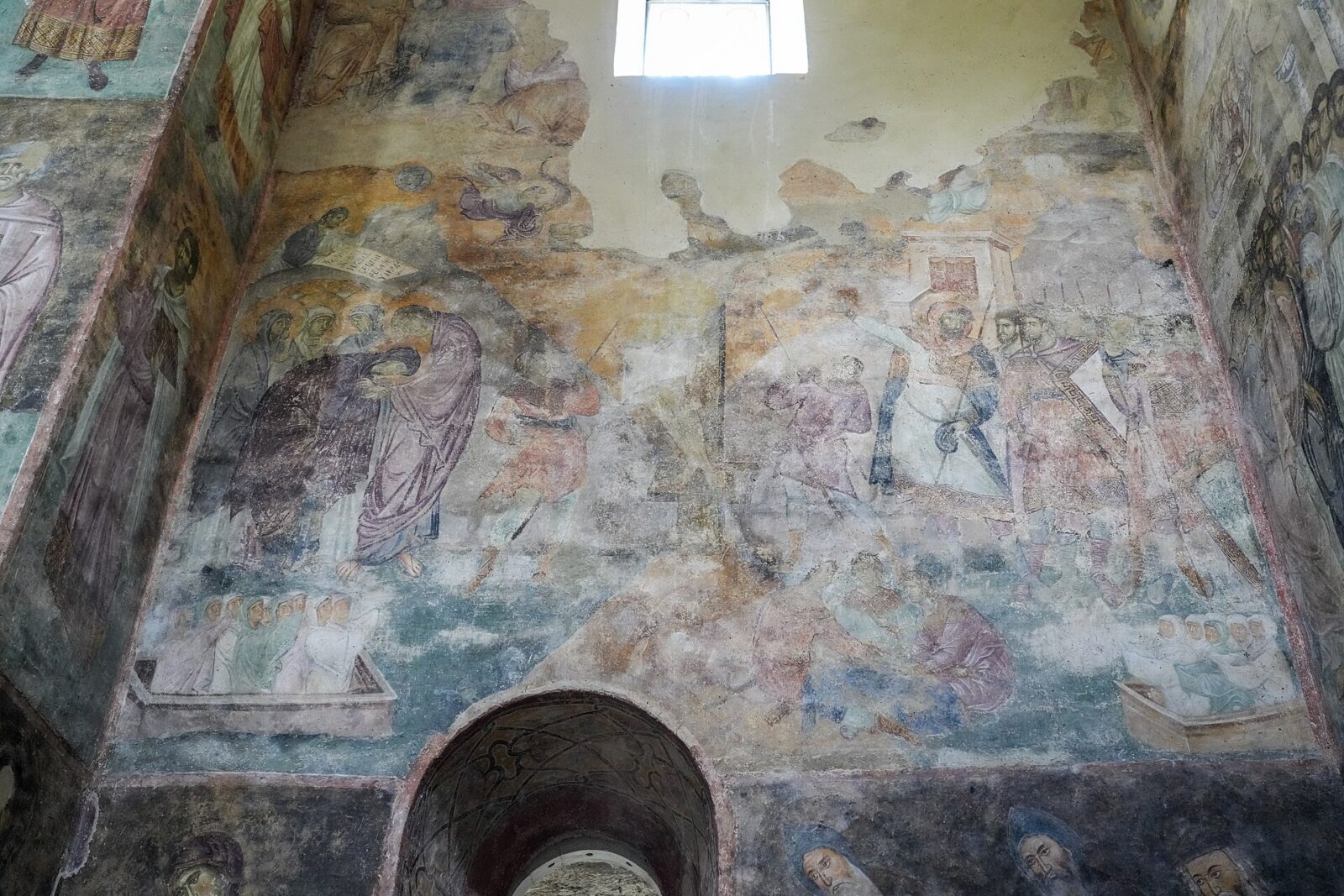
Sopocani’s history took a harder turn than Studenica’s. The monastery was destroyed repeatedly and left without a roof from 1689 until 1926, more than two centuries exposed to the weather. What makes the site remarkable is what survived that period anyway: the church’s frescoes, painted around 1270 to 1276, are counted among the finest examples of Byzantine and Serbian medieval painting, despite the building around them standing open to the sky for so long.
The roof was eventually restored in 1926, closing a gap of more than two centuries during which the frescoes stood exposed to rain, frost and sun. Whatever the precise reasons the paintings survived that period well enough to still be ranked among the finest of their era, the outcome is on record: UNESCO’s own dossier treats them as some of the best surviving examples of thirteenth-century Byzantine and Serbian painting anywhere.
What the UNESCO listing actually covers
Sopocani is not its own separate UNESCO entry. It is one of four components making up a single serial property, “Stari Ras and Sopocani,” inscribed in 1979. The other three are Djurdjevi Stupovi Monastery, the Holy Apostles St Peter and St Paul Church, and the archaeological site of the Medieval Town of Ras, all in the same Raska region of southern Serbia. Together the property covers 198.72 hectares, with a buffer zone of nearly 9,936 hectares around it, far larger than the monastery grounds themselves.
The inscription rests on two of UNESCO’s ten possible criteria, (i) and (iii). In UNESCO’s general framework, criterion (i) recognises a masterpiece of human creative genius, and criterion (iii) recognises a site that bears exceptional testimony to a cultural tradition or civilisation, living or vanished. For a serial property spanning a monastery, a church and a ruined medieval town, that combination points to both the artistic weight of Sopocani’s frescoes and the wider evidence the whole group leaves of medieval Serbian civilisation, rather than to any single building on its own.
This is a distinct listing from Studenica’s, which was inscribed separately in 1986, under a different set of criteria and with its own, much smaller buffer zone. The two sit in the same region and are often visited together, but they are not part of the same World Heritage property, and this page does not blend the two or treat one inscription as covering both.
Who protects the site today
The three ecclesiastical components of the serial property, Sopocani among them, belong to the Serbian Orthodox Church; the state owns the Stari Ras archaeological site separately. All of them carry the highest level of legal protection available under Serbia’s 1994 Law on Cultural Heritage. The surrounding countryside adds a further layer, protected since 1995 as the Ras-Sopocani Landscape of Outstanding Interest, and covered by the national Spatial Plan of the Republic of Serbia.
None of these layers of protection translate into a visitor centre, a published fee, or a set of opening hours, which is the pattern running through this whole page: the site is legally well protected and academically well documented, and operationally almost silent.
Common questions
What are Sopocani’s visiting hours?
Not published anywhere we could reach, including the Eparchy’s own page, the national tourism organisation’s site and the Novi Pazar municipal tourist site. Contact the Eparchy of Raska-Prizren or ask locally in Novi Pazar before planning a visit around a specific time.
Is there a dress code?
None is published for Sopocani specifically. Dress modestly, covering shoulders and knees, as you would at any working Orthodox monastery.
Can I stay overnight near the monastery?
No monastery-run accommodation is documented at Sopocani itself, unlike Studenica, which advertises its own guest house. Novi Pazar, nearby, is the practical base, though no official source specifically confirms lodging arrangements tied to a Sopocani visit; ask locally or through the Eparchy if you want that confirmed before you travel.
Why is there so little information about Sopocani online?
The monastery’s own former website is offline, and no replacement appears through the Eparchy or UNESCO. That is why this page relies on those two institutional sources rather than the monastery’s own words, unlike our Studenica page, where the monastery speaks for itself on hours, contacts and accommodation.
Is Sopocani part of the same UNESCO listing as Studenica?
No. Sopocani is one of four components of the “Stari Ras and Sopocani” property, inscribed in 1979. Studenica holds its own separate listing, from 1986. The two are in the same region but are not the same World Heritage property.
Nearby
Studenica Monastery is the better-documented member of this same medieval cluster, with its own published visiting hours and a guest house you can actually book; reading that page alongside this one gives a fuller picture of what to expect from the region’s monasteries generally, and where the two differ. Novi Pazar is the town base for reaching both Sopocani and the wider area, and the place to ask the questions this page could not answer from official sources alone. For the broader formalities of travelling in Serbia, see Serbia travel essentials.