
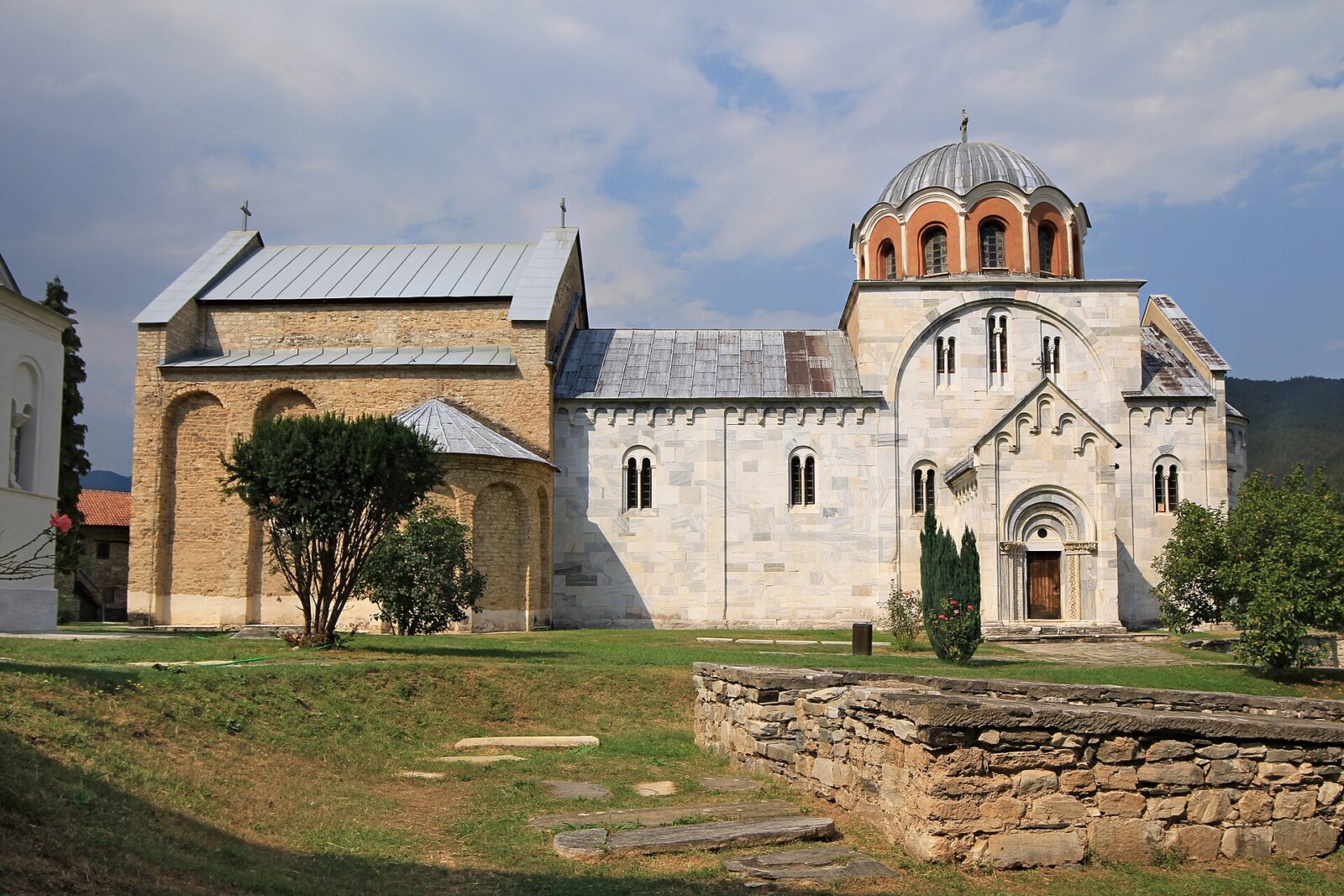
Studenica sits deep in a river valley in central Serbia, well off the routes most short trips through the country follow, and that distance is part of what kept it intact. Stefan Nemanja chose this ground for his monastery shortly after stepping down as ruler of the medieval Serbian state, and what he built here became the burial place of his own dynasty and, in time, one of the most protected pieces of ground in the country.
The monastery is still an active religious community, run by the Serbian Orthodox Church rather than a museum service, and that shapes almost everything about visiting it: the hours are set for prayer and pilgrimage first, several ordinary visitor questions go unanswered on its own site, and getting there is a matter of following a monastery’s own directions rather than a tourist board’s.
The setting is part of the protection Studenica carries today. The surrounding countryside falls under the Golija Nature Park’s own spatial plan, and a wider area around the monastery is designated the Golija-Studenica UNESCO Biosphere Reserve, on top of the World Heritage listing that covers the monastery buildings themselves. Three separate layers of protection over one valley says something about how seriously the site is treated on paper, whatever the gaps in its day-to-day visitor information.
The short version. Studenica is open to visitors from 8am to 5pm, with no seasonal variation or weekly closure published. Dress code and photography rules are not published, so modest dress and asking before you photograph the frescoes are the safe defaults. From Belgrade, the fastest of four official routes runs via the Milos Veliki motorway to Preljina, then the Ibar road to Usce; no public transport link is named anywhere on the monastery’s own pages. A pilgrim guest house exists, but you book it by phone or e-mail, not online.
On this page
What visiting hours actually are
Both the Serbian and English versions of the monastery’s own visits page agree on the same window: visits are allowed from 8am to 5pm. Neither page mentions a different winter schedule, and neither names a day the monastery closes to visitors. That does not mean the hours never change; it means the monastery has not published a variation, so treat the 8-to-5 window as the only one on record rather than as a guarantee that holds every day of the year.
Group visits are announced in advance, by phone or e-mail, on both language versions of the page. Individual visitors are not asked to announce themselves in the same way, though arriving inside the published hours is still the safer plan for a working monastery. Nothing on the visits page distinguishes a summer schedule from a winter one, which is worth remembering if you are planning a visit around the shorter days of a Serbian winter: the published hours are what you have to work with, not necessarily what holds in every season.
What the monastery doesn’t publish
Two ordinary visitor questions go unanswered across every page we checked, including the visits pages in both languages, a 2023 visitor notice, the contact page, the Eparchy of Zica’s own site and a pilgrimage agency’s site: whether there is a dress code, and whether photography is allowed inside the churches.
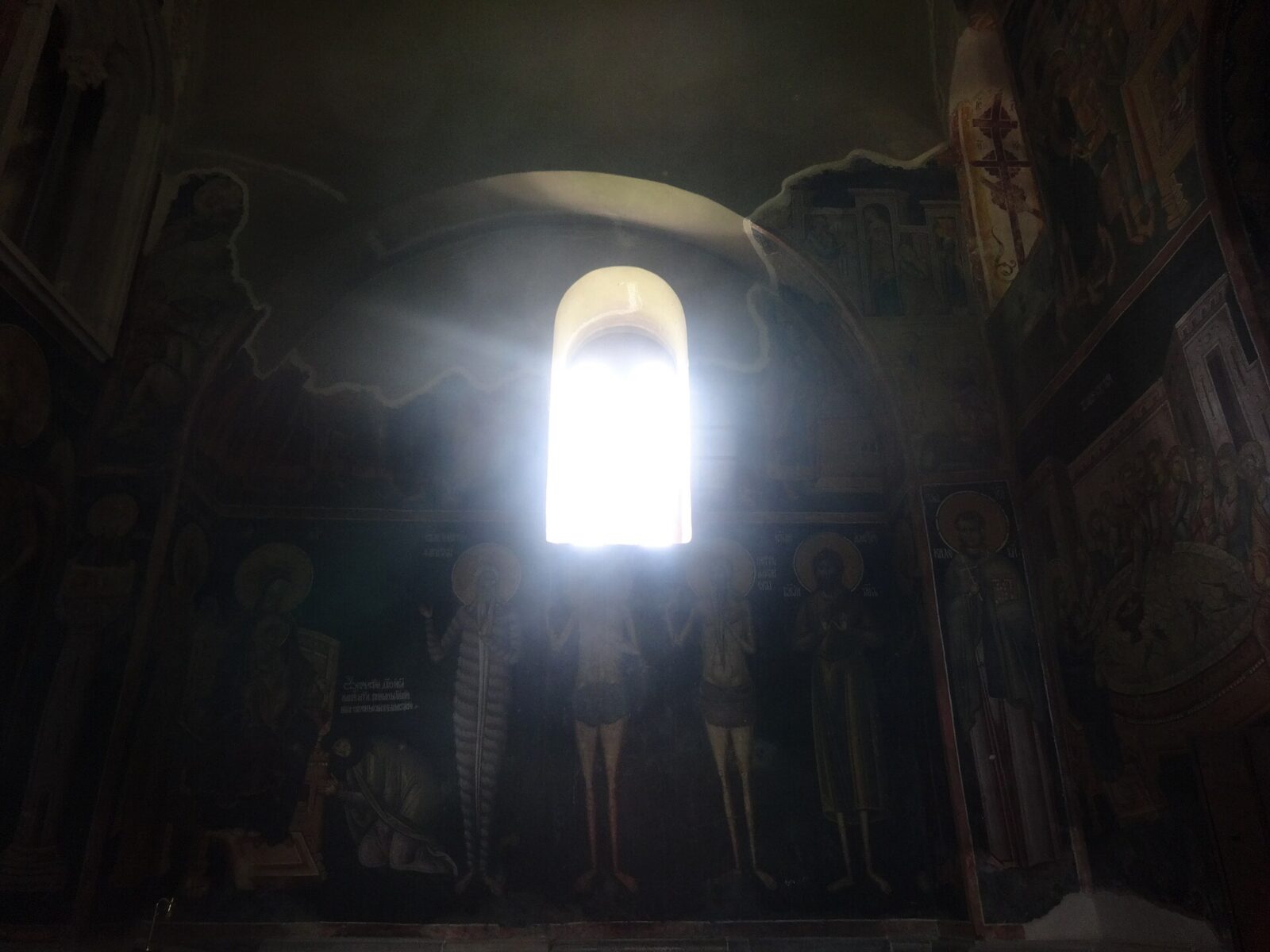
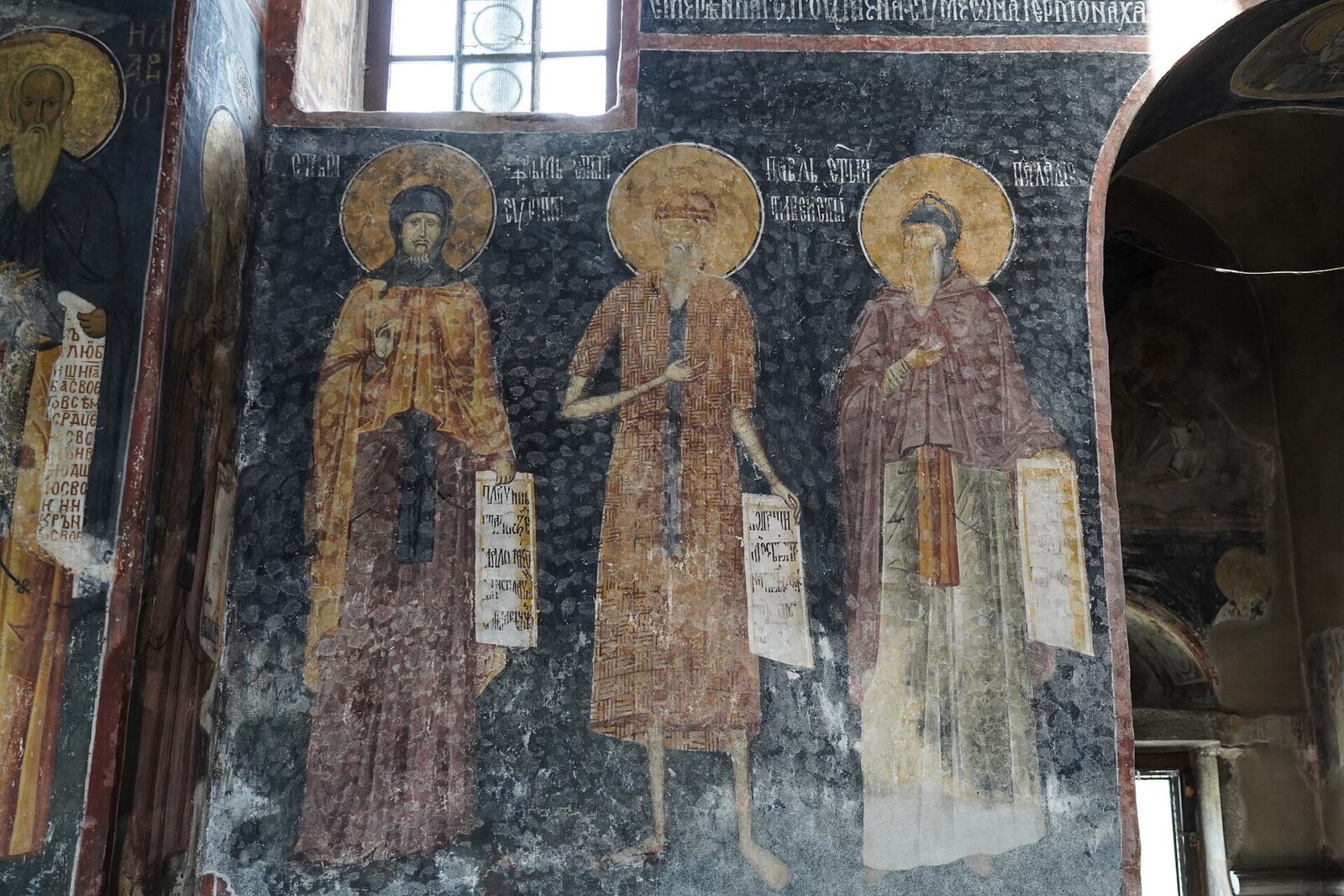
Serbian Orthodox monasteries commonly expect modest dress, covered shoulders and knees, a headscarf for women, but that is a general convention, not something Studenica’s own site states as its rule, so this page does not present it as Studenica’s requirement. The safe approach is to dress modestly anyway and ask on arrival if anything more specific applies. The same logic holds for photography: the monastery’s frescoes are exactly the kind of fragile, light-sensitive interior where a no-flash or no-photography rule would be unsurprising, but nothing on the monastery’s own site says so in either direction, so ask before you take a photograph inside a church rather than assuming it is fine.
Getting there from Belgrade
The monastery’s own site lists four alternative road routes from Belgrade, in matching detail on both its Serbian and English pages. The fastest, in the monastery’s own words, runs along the Milos Veliki motorway to the Preljina exit, then follows the Ibar main road towards Usce and on to Studenica. The three alternatives run via Kragujevac and Kraljevo, via Topola, Gornji Milanovac and Kraljevo, or along the Ibar main road via Ljig and Gornji Milanovac. The site also gives routes from Nis, Pristina, Podgorica and Sarajevo, for visitors approaching from those directions instead.
What none of these routes come with is a distance or a driving time; the monastery names towns along the way rather than kilometres. No bus or train service to Studenica or to the nearby town of Usce is mentioned anywhere on the monastery’s own site either, and this page does not attempt to establish one from a transport operator’s page instead. If you are travelling without a car, plan on reaching Studenica through a tour, a taxi from Kraljevo or Usce, or the pilgrimage agency mentioned below. Kraljevo and Usce, the two towns the monastery’s own directions return to most often, are the natural places to base that last leg of the journey from.
Booking a guided visit or a room
The monastery operates a guest house, a konak, for pilgrims and visitors who want to stay overnight. There is no online booking system and no room rate published anywhere we checked; you reserve by contacting the monastery directly, and the one contact detail that stays identical across both language versions of the visits page is an e-mail address: [email protected]. Neither capacity nor a minimum stay is mentioned either, so treat the guest house as something you request and wait to have confirmed rather than something you can count on booking at short notice.
Which phone number should you call? The monastery’s own site gives at least five different phone numbers across three pages, none marked as current and none explained. The Serbian visits page lists two numbers for group visits and guest-house reservations; the English version of the same page gives a third, different number for the identical purpose; the separate contact page lists two more, with no stated purpose at all. Rather than guess which one is live, lead with the e-mail address above, which is consistent everywhere it appears, and treat the phone numbers as alternatives worth trying rather than a single guaranteed line.
The Eparchy of Zica’s own pilgrimage agency can also help organise a visit, according to the monastery’s own visits page, including combined tours that take in other medieval monasteries in the area such as Zica and Gradac, and Sopocani further south. That is a real option for anyone who would rather book a single organised trip than coordinate transport and a room separately.
Why Stefan Nemanja built here
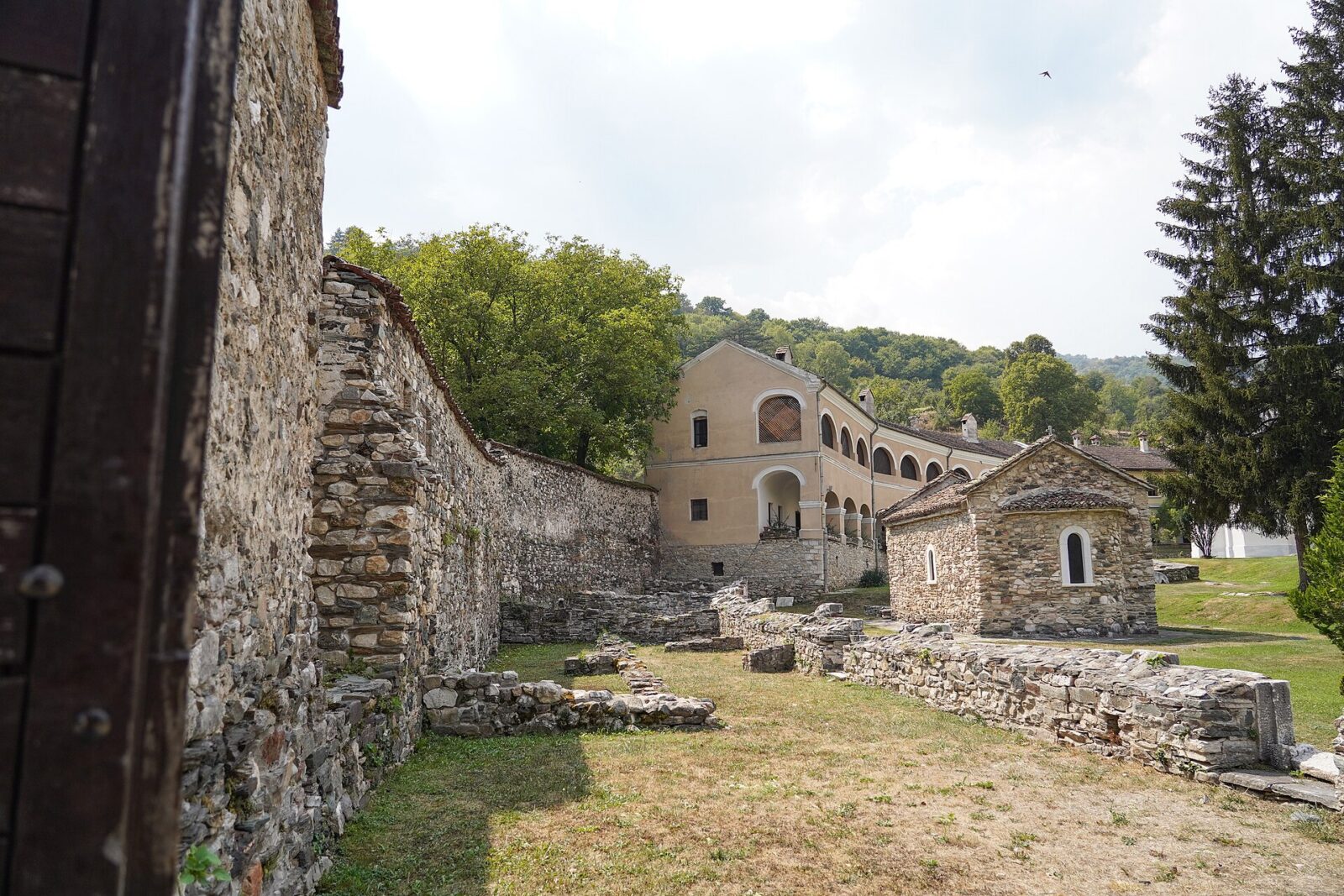
Stefan Nemanja founded Studenica in the late twelfth century, shortly after he abdicated as ruler of the medieval Serbian state he had built. He took monastic vows and the name Simeon, and the monastery he endowed became more than a retirement project: it holds his own tomb, his wife Anastasia’s, and that of Stefan the First-Crowned, the first king of Serbia.
Nemanja’s youngest son took the family’s involvement further still. At Studenica, Sava founded the independent Serbian Orthodox Church in 1219 and wrote what is recorded as the first literary work composed in the Serbian language, on the same site. Between a state-founder, a canonised monk and a first king, Studenica sits at the point where Serbia’s political and religious histories were the same history. That density of history in one small walled complex is part of why the monastery still functions as an active place of pilgrimage rather than as a heritage site with a ticket desk.
The monastery holds the tombs of Nemanja, of his wife Anastasia, and of Stefan the First-Crowned, though the founding record does not specify inside which of the two churches described below each tomb sits.
What the two churches hold
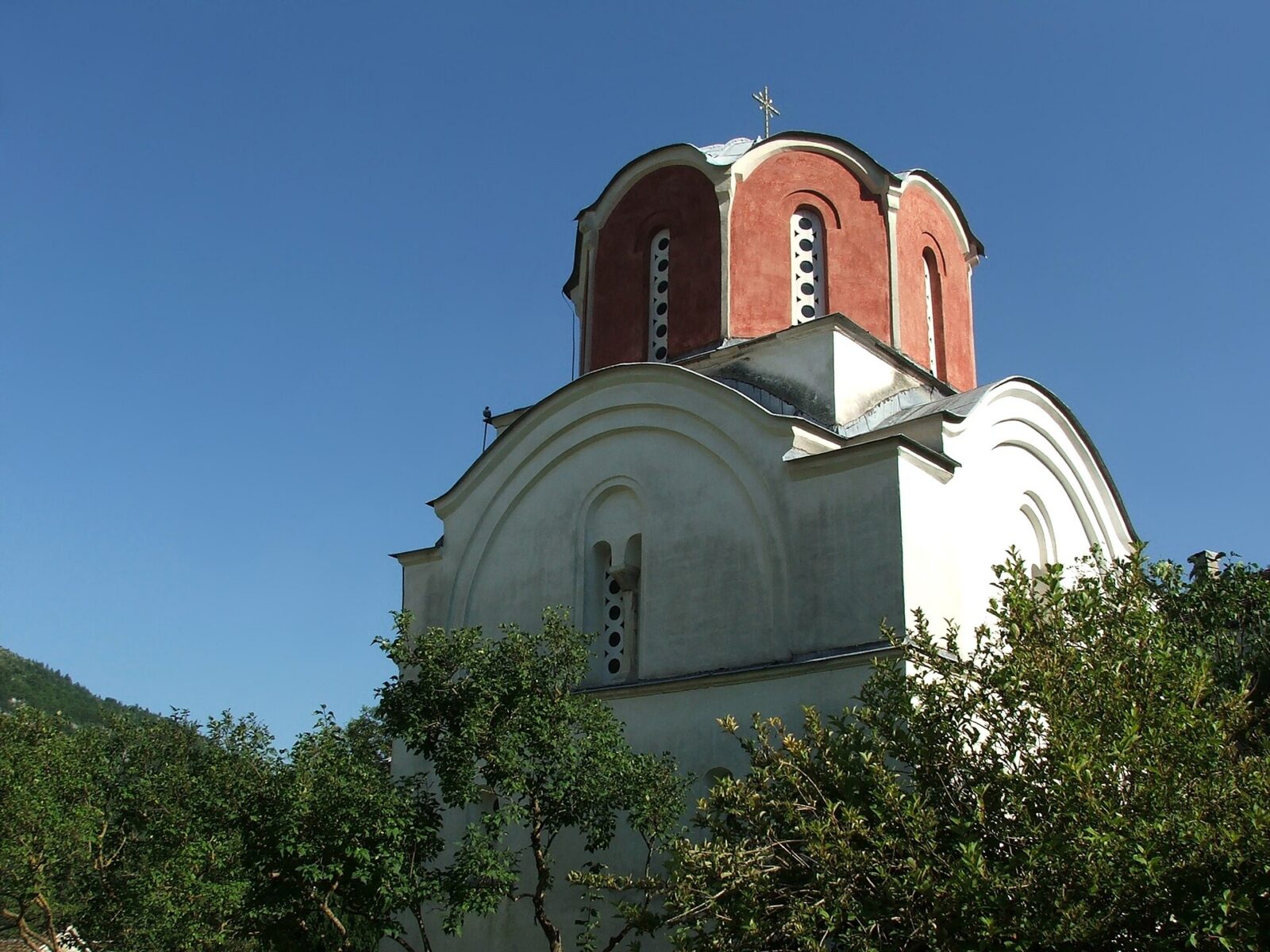
Two principal churches stand within the monastery walls: the Church of the Virgin and the King’s Church. Both are built of white marble, and both hold frescoes painted in the thirteenth and fourteenth centuries in the Byzantine tradition. The founding record we could verify names the two churches and their shared building material and fresco period without further distinguishing one from the other in size, age or contents, so this page does not invent a distinction that its sources do not make.
Together, the two churches and their frescoes are the reason the site draws visitors well beyond its role as a working monastery, and the reason it carries the international recognition described below.
How Studenica earned its protected status
Two separate layers of protection sit over Studenica, one international and one domestic, and they were established under different processes at different times.
The UNESCO listing
Studenica was inscribed on the UNESCO World Heritage List in 1986, under four criteria covering its artistic and historical significance. The listed property covers 1.16 hectares, with a much larger buffer zone of 269 hectares around it.
Domestic legal protection
Ownership and legal protection sit on top of that international status. The monastery belongs to the Serbian Orthodox Church and carries the highest level of legal protection available under Serbia’s 1994 Law on Cultural Heritage. The surrounding countryside adds two further layers: the Special Purpose Spatial Plan of the Golija Nature Park, and the Golija-Studenica UNESCO Biosphere Reserve, a separate designation from the World Heritage listing itself. Day-to-day responsibility for conservation, restoration and archaeology is split, per UNESCO’s own documentation, between the national Institute for the Protection of Cultural Monuments of Serbia and its regional branch in Kraljevo, the nearest larger town.
Common questions
Is there a dress code?
Not one the monastery publishes. Modest dress, covered shoulders and knees, is the general convention at Serbian Orthodox monasteries, and a safe default here, but Studenica’s own site does not state it as a rule.
Can I take photographs inside the churches?
Nothing on the monastery’s own site says either way. Given the frescoes are the reason the site holds World Heritage status, ask before you photograph inside rather than assuming it is allowed.
What time is the Liturgy?
Sunday and feast-day Liturgy is at 8am, consistent on both language versions of the monastery’s homepage. The working-day time is disputed: the Serbian text gives 6:30, conventionally understood as morning for a monastic service, while the site’s own English translation of the same line renders it as 6:30pm. The two versions of the same official page disagree, and we are not choosing between them; if attending a weekday service matters to your plans, confirm the time directly with the monastery rather than trusting either printed version alone.
Which phone number is actually current?
We could not establish that from five different numbers spread across three pages of the monastery’s own site. Use the e-mail address, [email protected], which is identical on every page it appears on, and treat any phone number as worth trying rather than guaranteed.
Can I stay overnight at the monastery?
Yes, in the pilgrim guest house, but only by advance reservation through the monastery directly. There is no online booking and no published room rate, so contact the monastery by e-mail before you plan on a bed there.
Is there a bus to Studenica?
Not one the monastery names. Its own site gives only road routes, with no bus or train mentioned for reaching Studenica or the nearby town of Usce.
Nearby
Studenica belongs to a wider cluster of medieval monasteries in this part of Serbia. Sopocani Monastery, part of the separate “Stari Ras and Sopocani” World Heritage property, sits further south and is one of the destinations the Eparchy of Zica’s pilgrimage agency includes in a combined tour from here. Novi Pazar is the practical town base for reaching that cluster, and the more realistic overnight option if the monastery’s own guest house does not work out for your dates. For the wider formalities of a Serbia trip, see Serbia travel essentials.