
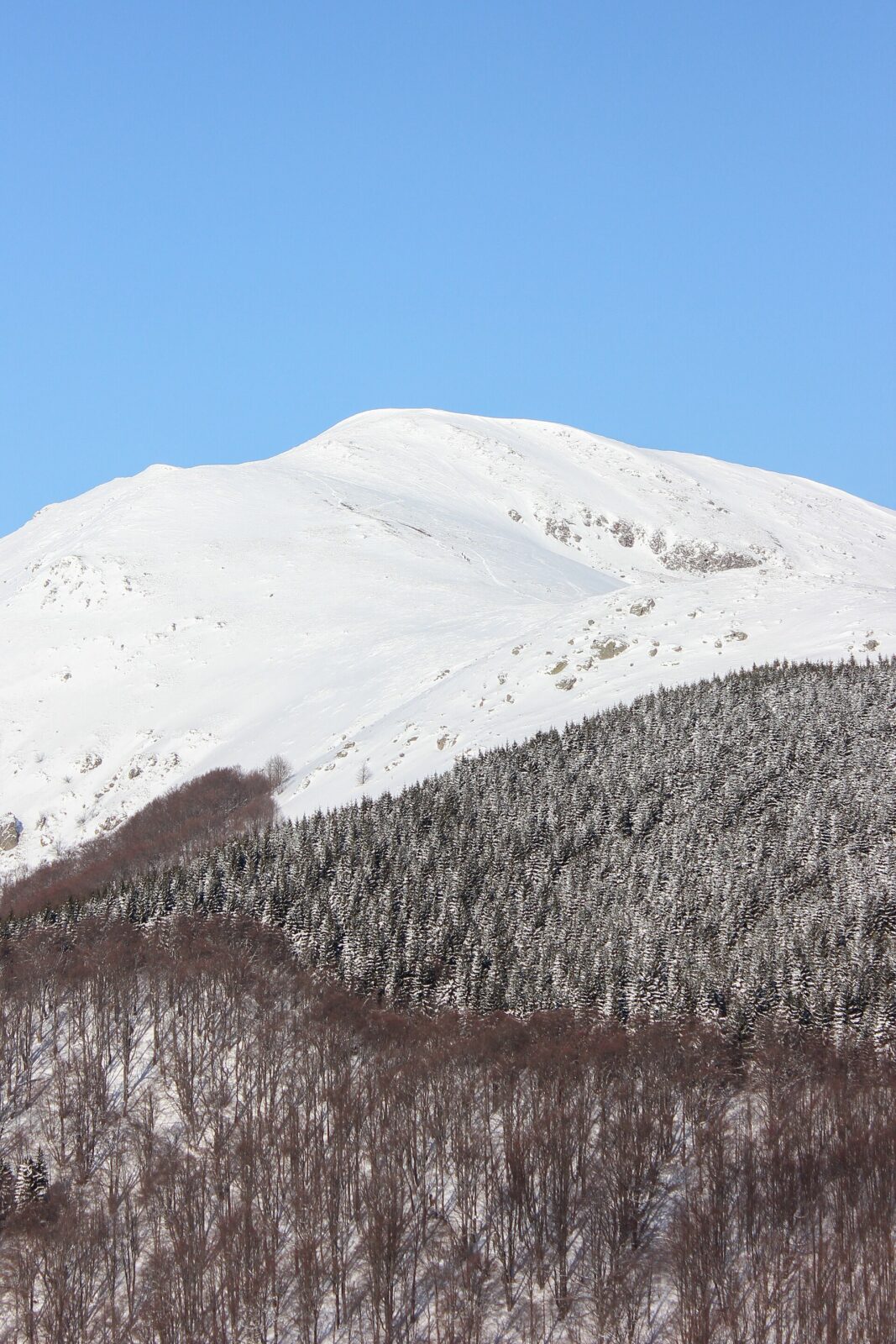
Stara Planina is where Serbia’s skiing gets serious without getting crowded. The range runs along the border with Bulgaria in the country’s far east, and its resort, split across two connected sectors, runs up to 1,900 m with snow cover the operator states lasts close to five months of a typical year.
At 330 km from Belgrade, it’s also a longer drive than a quick weekend impulse, which is part of why reaching it takes planning rather than a spontaneous decision.
What you’re paying for is lift access, not a package: the resort sells day tickets, multi-day tickets and season passes on a published, dated price list, split into three seasonal bands. Getting there is a road trip rather than a train ride, and no scheduled public transport currently reaches the resort itself.
The surrounding land is also a protected nature park, which is worth knowing before you go, even though the rulebook behind that protection is itself in the middle of being rewritten, as the section below explains.
The short version. An adult day pass costs 3,450 RSD in low season, rising to 3,600 RSD in mid season and 3,750 RSD at peak, for the 2025/26 season. The resort has two connected sectors, Jabucko Ravniste and Babin Zub, with more than 13 km of prepared runs between roughly 1,100 m and 1,900 m. The road distance to the resort is 330 km from Belgrade and 90 km from Nis; no organised public transport currently runs there, so you’re looking at a car, a transfer or a private ski-bus. The surrounding land carries the country’s top-tier nature-park protection, though its exact rulebook is currently in flux.
On this page
What a lift pass costs
The resort’s own price list for the 2025/26 season, published as a dated PDF, splits every ticket into three seasonal bands. VAT is included throughout.
| Season | Dates | Adult daily | Child daily | Senior daily |
|---|---|---|---|---|
| Low | 15 Nov-16 Dec, and from 24 Mar | 3,450 RSD | 2,550 RSD | 3,000 RSD |
| Mid | 17-24 Dec, 8 Jan-10 Feb, 18 Feb-23 Mar | 3,600 RSD | 2,850 RSD | 3,150 RSD |
| Peak | 25 Dec-7 Jan, 11-17 Feb | 3,750 RSD | 3,000 RSD | 3,300 RSD |
A single ski-lift ride is a flat rate regardless of season: 800 RSD for an adult, 550 RSD for a child, 650 RSD for a senior. Adults are classed as ages 12 to 65 on this price list; ages outside that band fall into the child or senior categories instead. A single ride makes sense mainly for a quick trip up to Babin Zub’s viewpoint rather than for a day of actual skiing, where a daily or multi-day pass works out cheaper per run.
Season and multi-day passes
Multi-day tickets, from two days up to a full ten-day block, are tiered by the same three seasonal bands as the daily rate. There’s also a 5-day and a 7-day ticket priced for Stara Planina specifically, alongside a version valid for ten days across a full season rather than consecutively. A full personal season ticket, valid across all three bands, costs 71,100 RSD for an adult, 32,600 RSD for a child, and 60,500 RSD for a senior. For a single week’s holiday, the daily or multi-day rates are the ones that matter; the season ticket only pays off across repeat visits.
Riding the two sectors
The resort operates as two connected sectors rather than one continuous ski area, and the lifts in each work differently. Jabucko Ravniste sits lower, around the hotel base, while Babin Zub holds most of the runs skiers come here for, including the beginners’ slope.
Jabucko Ravniste
This sector holds Serbia’s first eight-seat gondola lift, which carries skiers up from the hotel area to a further set of chairlifts and runs. It also has its own four-seat chairlift and a separate ski lift for shorter runs closer to the base. The operator describes the two sectors as connected rather than as separate resorts sharing a name, so a single lift pass covers both.
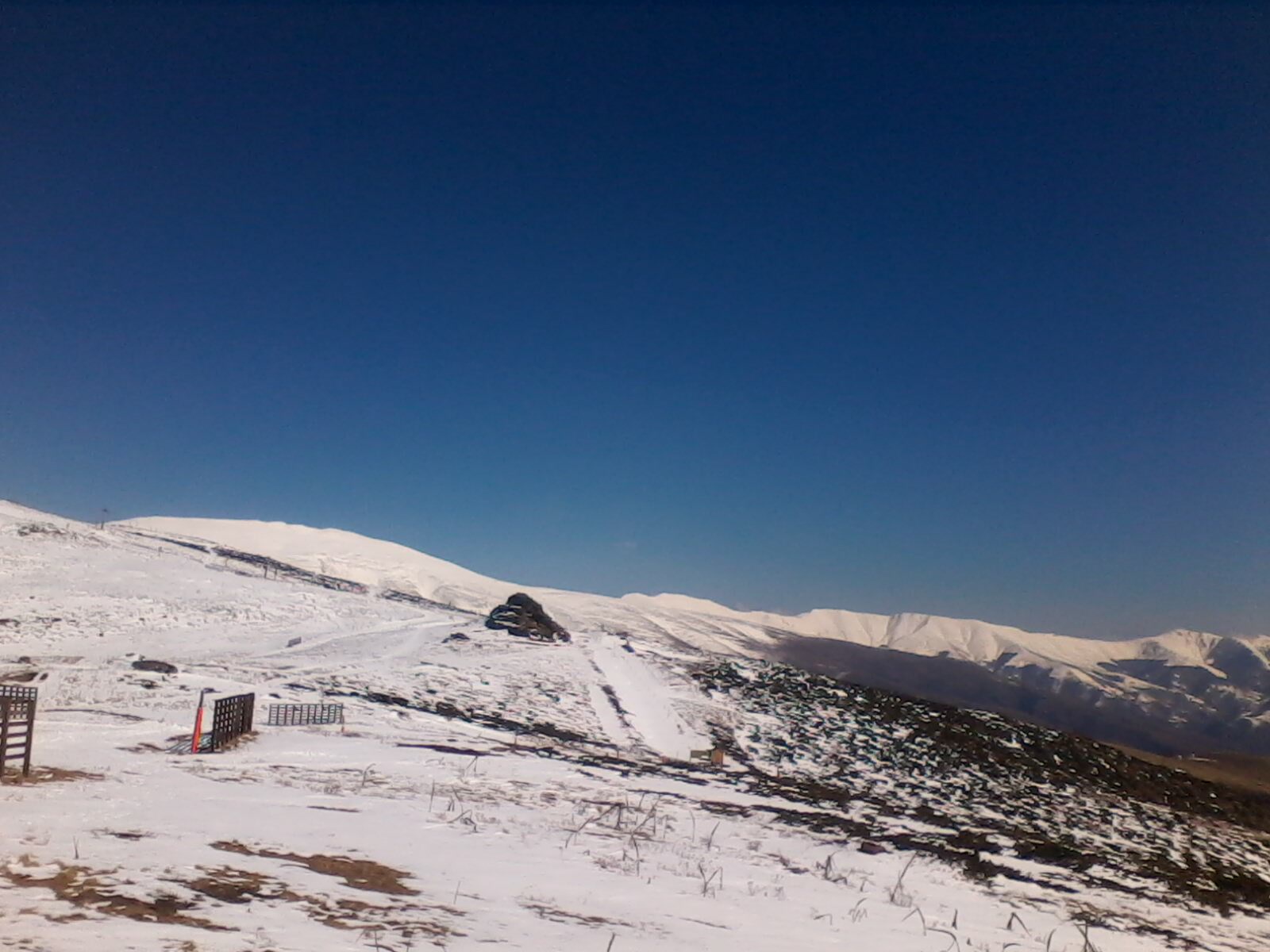
Babin Zub
Named after the resort’s signature viewpoint, this sector has runs at Konjarnik, Suncana Dolina and Markova Livada. A four-seat chairlift with a loading conveyor belt serves Konjarnik, rated by the operator at 1,400 skiers an hour, and a T-bar lift serves Suncana Dolina at 1,200 skiers an hour. Markova Livada is the beginners’ area, with a magic carpet lift for children and first-timers, which makes this the sector to head for if you’re skiing with a family rather than looking for the steeper runs.
Across both sectors, the operator states more than 13 km of prepared runs at various difficulty levels, backed by an artificial snowmaking system covering the resort, which fills in when natural snowfall alone falls short.
How high you’ll be
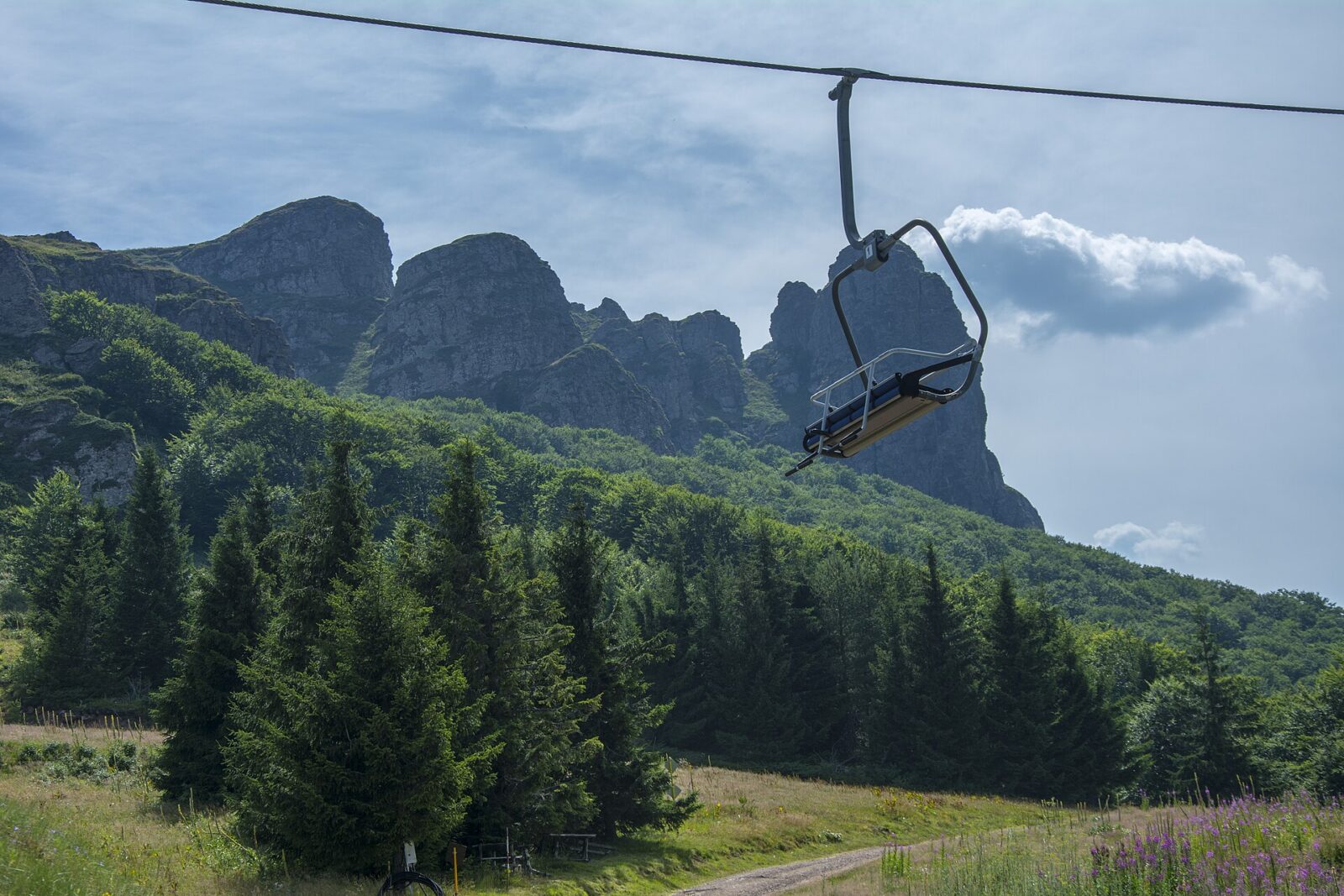
The resort operator describes the range as running between about 1,100 m and 1,900 m, snow-covered for close to five months of a typical year. That’s a vertical span of roughly 800 metres across the ski area, arithmetic from the two published bounds rather than a single figure the operator states outright. Babin Zub, the sector’s signature viewpoint and lift base, sits at 1,758 m.
Midzor, to the north-west of Babin Zub, is the range’s summit at 2,169 m. An on-site hotel calls it the highest peak of central Serbia, a more careful phrasing than the resort’s own page, which calls it the highest peak of Stara Planina and of Serbia outright. That claim overlooks Djeravica, at 2,656 m, in Kosovo, whose status Serbia disputes; the more cautious “central Serbia” wording is worth keeping in mind if you see the bigger claim repeated elsewhere.
Getting to the resort
The resort sits at Jabucko Ravniste, roughly 330 km from Belgrade, 90 km from Nis, 100 km from Zajecar, 50 km from Knjazevac and 55 km from Pirot, all figures from a hotel based on-site rather than from a road authority. The recommended route from Belgrade or Nis follows the highway to Nis, then the exit toward Knjazevac, Zajecar and Svrljig, branching in Svrljig onto regional road 222 to the resort. Coming from Knjazevac or Pirot instead, regional road 221 runs to the village of Kalna, where the same road 222 picks up the last stretch. Brown tourist signage marks the turns from every direction.
From Belgrade, that’s a drive of several hours rather than a same-morning trip, so most visitors either stay overnight near the resort or build the drive into a longer eastern Serbia itinerary rather than a single-day outing. Winter driving on the final stretch of regional roads is worth planning for, since these aren’t the same standard as the highway that covers most of the distance.
If you’re relying on public transport
There’s no scheduled service to the resort. The resort operator’s own site publishes no access or transport page at all for Stara Planina. A locally run information site for the area states plainly that no organised transport currently reaches the ski centre, and offers to arrange a private car, minibus or coach transfer on request instead. Reader comments on that same information site, going back several years, ask essentially the same question, which suggests the situation has held steady rather than being a temporary gap. A separate commercial operator advertises a seasonal ski-bus, but its schedule wasn’t something we could confirm as current. If you don’t have a car, budget for a private transfer rather than assume a bus will get you there.
Why the park’s status isn’t settled
The mountain and its surroundings carry protection as the Nature Park “Stara Planina”, running from the Vidlic ridge in the south to the Kadibogaz pass in the north, first declared in 1997. It’s classed at the top tier of the country’s three-level protection scale, “of exceptional significance”, a heavier designation than, for example, the lake at Palic, which sits at the lightest of the three tiers. The park covers 114,332 hectares across the city of Zajecar and the municipalities of Knjazevac, Pirot and Dimitrovgrad, most of it state-owned land with the remainder in private or other ownership. The state forestry company Srbijasume manages the park through a dedicated unit, run jointly by its Timocke sume and Pirot forest estates.
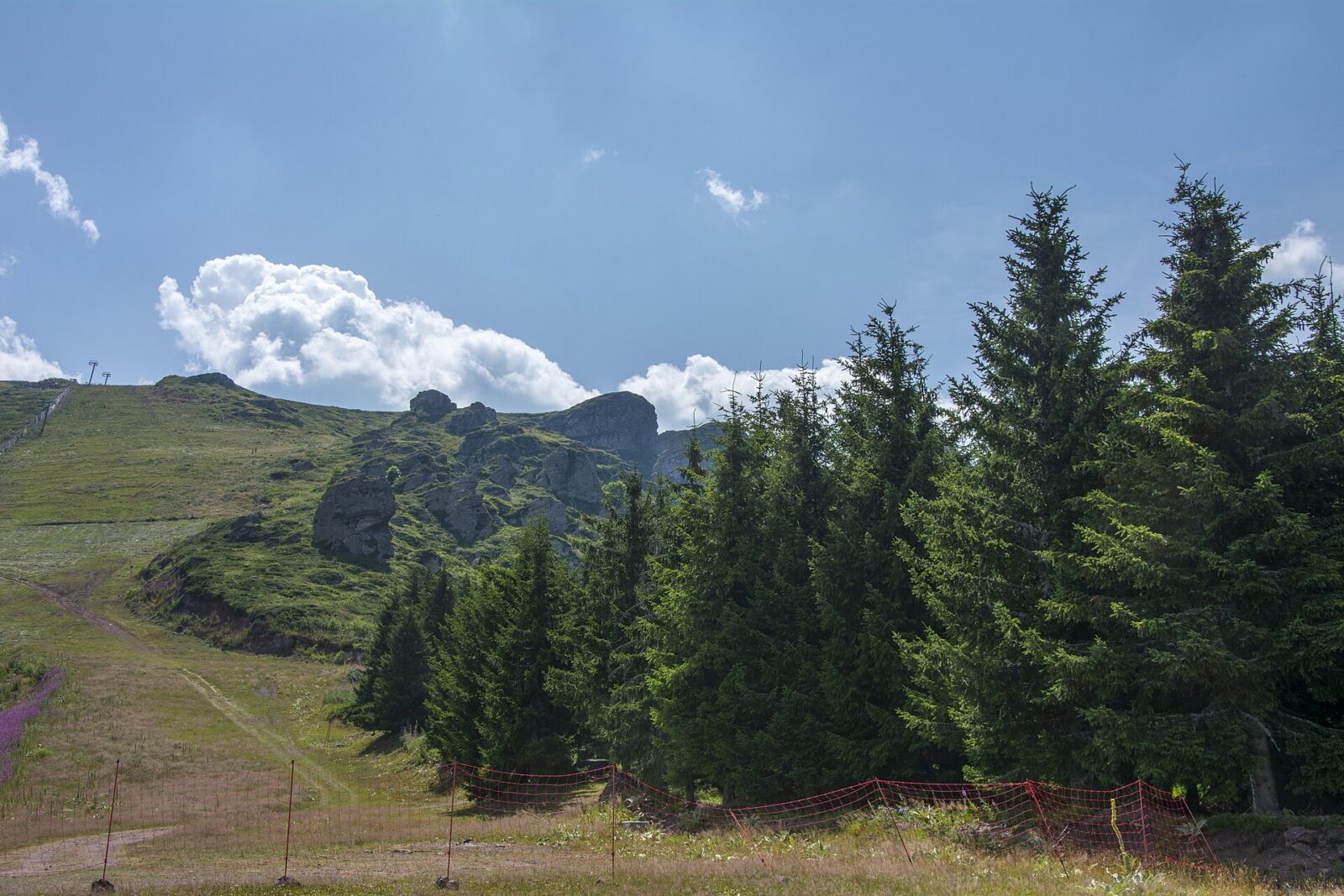
What’s less settled is the exact rulebook behind that status. A government decree from 2009 sets out detailed protection zones and restrictions for the park, and it’s the version currently published by the Ministry of Environmental Protection. But the ministry’s own file is internally titled “Predlog”, meaning proposal or draft, which sits oddly against a text that reads as an already-enacted regulation from 2009. A civil-society report from late 2025 also describes an active, ongoing process toward upgrading part of the area to a full national park, which would come with its own management plan and, presumably, its own rules.
Between the draft label on the decree and a live reclassification process, we can’t tell you with confidence which specific rules currently bind a visitor, so specific prohibitions aren’t listed here as settled fact. Treat the park as seriously protected in principle, and check locally, with Srbijasume or the park administration, before assuming a specific activity, like camping or lighting a fire, is or isn’t permitted.
Common questions
Is Stara Planina cheaper than Kopaonik?
The resort’s own price list is sold alongside identical-format lists for Kopaonik and Tornik at Zlatibor, on the same operator’s site, which makes a direct comparison possible if you’re weighing where to ski. Check the current lists for all three before deciding, since prices are set per season and can move from one year to the next.
Can I camp or light a fire in the nature park?
This isn’t something we can state with confidence either way. A 2009 government decree lists detailed restrictions for the park, but the document itself is labelled a draft, and a reclassification of part of the area to national park status is reportedly under way, which could bring a different set of rules with it. Check with the park authority or Srbijasume directly before planning anything that depends on the answer, rather than rely on a copy of the decree found online.
Do I need a car to get here?
Effectively, yes, or a booked private transfer. No organised public transport currently reaches the resort, per both the operator’s own site and a local information source for the area. Build the transfer into your budget and your schedule before you commit to dates, rather than assume a bus will be waiting when you get to the nearest town.
How does the snow compare to other Serbian resorts?
The operator states the range stays snow-covered for close to five months in a typical year, with an artificial snowmaking system backing up the natural cover across the resort. Runs sit between roughly 1,100 m and 1,900 m.
Is there a hotel right at the resort?
At least one hotel operates directly at the base, in Jabucko Ravniste; it’s also where the road-distance figures above come from, since the resort operator’s own site doesn’t publish directions of its own. Booking somewhere at the base rather than further out cuts the private-transfer question down to a single trip in and one back out.
Is Midzor really the highest peak in Serbia?
Some sources say so outright. Others, more carefully, call it the highest peak of central Serbia specifically, since Djeravica in Kosovo is higher and Kosovo’s status is disputed. Both figures for Midzor’s own height, 2,169 m, agree; it’s the wording around “Serbia” that varies by source, and the more careful phrasing is the one worth repeating if the point comes up.
Nearby
If you’re comparing mountain bases, Kopaonik is Serbia’s largest ski area and the natural point of comparison on price and scale, and Zlatibor as a base covers the country’s other well-established mountain resort. Eastern Serbia from Belgrade covers the wider region Stara Planina sits within, for a trip that isn’t built around skiing at all.
None of these three pages assumes you’re choosing only one: a longer eastern Serbia trip can combine a Stara Planina stop with the Danube sites further north, if the driving distances work for your schedule rather than trying to fit both into a single weekend.