
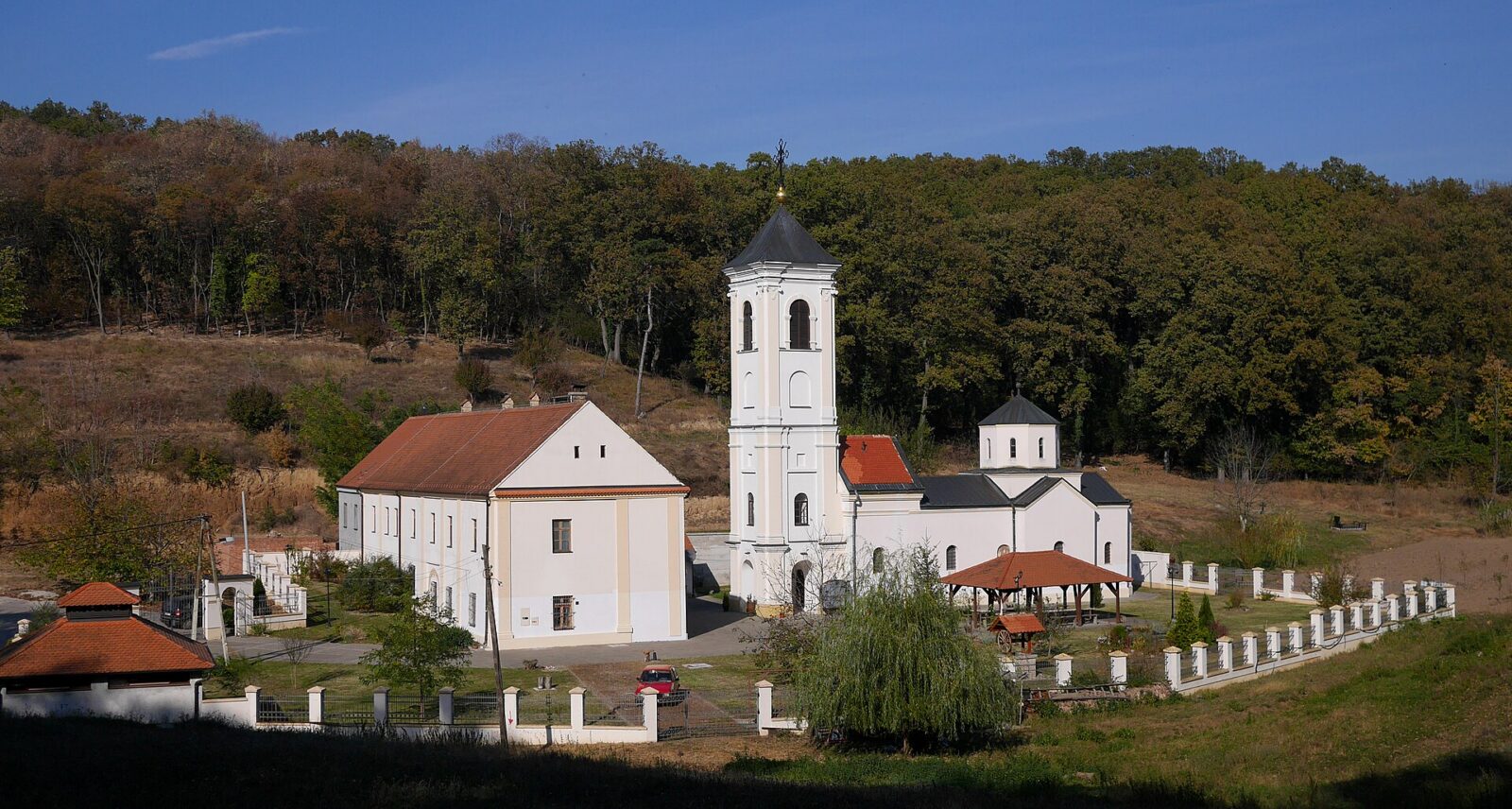
Fruska Gora rises as the wooded ridge you can see from both Novi Sad and Karlovci, and it holds two things that rarely sit on the same list: Serbia’s oldest national park, proclaimed in 1960, and a scatter of Orthodox monasteries that neither the park nor the church will tell you how to visit.
The park covers 26,672 hectares, most of it forest, climbing to 539 metres at its highest point, Crveni Cot. Twenty-three marked circular trails cross it, several running past a monastery directly, and a single daily fee gets you into all of it.
What follows sorts the park into what you can plan around and what you cannot: the entry fee and where to actually find it, which trail needs no notice at all, and the monastery count the park’s own sources cannot agree on. It also covers what neither the park’s regulations nor its guard service say a word about: drones and dogs.
The short version. Entering Fruska Gora National Park costs 100 RSD per person per day, 50 RSD for a child, with 300 RSD added for a car and 800 RSD for a coach; the park’s own /cenovnik/ page shows nothing but “in preparation”, so the real list sits in a PDF linked from its information centre page instead. Twenty-three marked circular trails cross the park, from about 3.5 to 14 km, with no official public transport route confirmed from Belgrade or Novi Sad beyond a general mention of suburban bus lines serving some trailheads. The park’s own page counts sixteen of the original thirty-five monasteries as still standing; the national nature-conservation institute counts seventeen, and no source is recent enough to settle which is right. Camping is allowed in exactly one spot in the whole park, next to Strazilovo picnic area, and the park’s full internal regulation says nothing at all about drones or dogs.
On this page
Paying to enter, and what that includes
A day in Fruska Gora National Park costs 100 RSD per person, or 50 RSD for a child. Add 300 RSD if you bring a car or motorcycle, 800 RSD for a coach, and 600 RSD buys an annual visitor card instead of paying by the day. A guide is not included in any of those figures and is arranged separately.
| Ticket | Price |
|---|---|
| Entry, adult | 100 RSD per day |
| Entry, child | 50 RSD per day |
| Car or motorcycle | +300 RSD |
| Coach | +800 RSD |
| Annual visitor card | 600 RSD |
The obvious price page is the wrong one. These figures come from a PDF dated 29 January 2026, linked from the information centre’s own page. The park’s dedicated /cenovnik/ page shows only “u pripremi”, in preparation, and no prices at all. If a link labelled prices takes you nowhere, this is why; the working document sits one click further, at the information centre.
Groups planning an organised visit need to announce it by email at least three days ahead, giving the number of participants and where you plan to go, addressed to the information centre covered below.
Getting to the park’s information centre
The park’s information centre sits at Iriski venac, at the junction of the M-21 highway and the Grebenski, or Partizanski, road: about 80 km from Belgrade, 20 km from Novi Sad, at 450 metres of elevation. The same spot holds a freedom monument, an 850-metre educational loop, and the Crni cot lookout point nearby, which makes it worth building a stop into your day even if the visitor centre itself is not your destination.
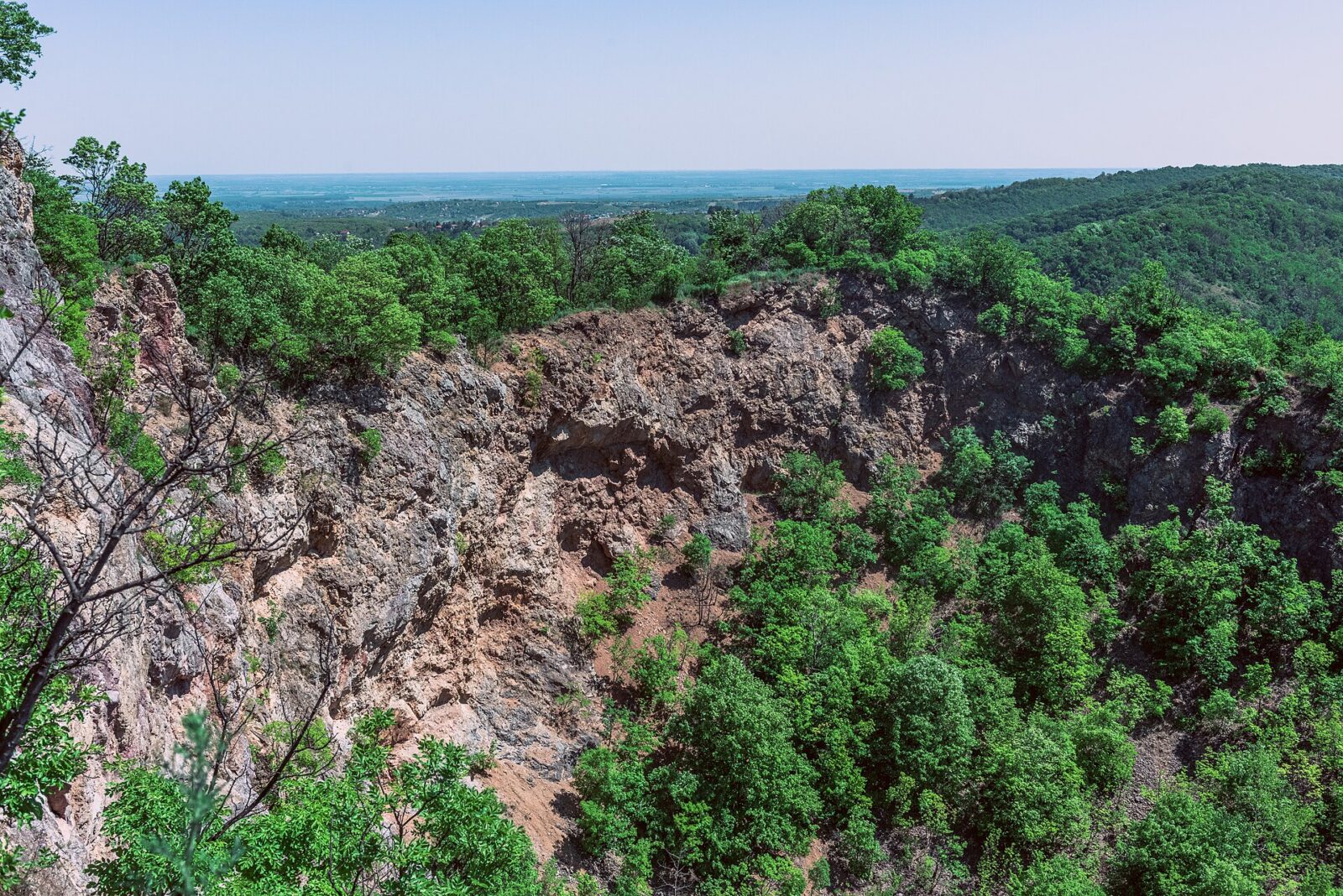
No official source gives a direct public transport route to the park itself. Neither the information centre’s page nor any other page on the park’s own site names a bus route, a stop or a timetable running from Belgrade or Novi Sad to Iriski venac or to any other entrance. The only public-transport detail found anywhere on the park’s site is a general statement, on the marked-trails page, that trailheads are reachable by one of JGSP Novi Sad’s suburban bus lines, without saying which line serves which trailhead or how often it runs. If you are travelling without a car, treat that as a starting point for your own research, not as a route you can print and follow.
The information centre itself opens 07:00 to 15:00 on weekdays and 08:00 to 16:00 on weekends, and takes calls on 022/463-023.
Choosing a trail that matches your day
Twenty-three official circular hiking routes cross the park, defined jointly with the Mountaineering Association of Vojvodina. They range from about 3.5 km to 14 km, each walkable in either direction, and most have more than one usable starting point. Every route comes with a downloadable map and GPX and KMZ tracks from the park’s own site.
Several routes are built around a monastery rather than around scenery alone. Route 3 runs from Norcev past the Grgeteg and Velika Remeta monasteries over 14 km; route 12 links the Ravanica Vrdnik monastery to the Vrdnicka kula tower over 13.5 km. If a monastery is the point of your walk rather than a stop along the way, picking the route matters more than picking the trailhead.
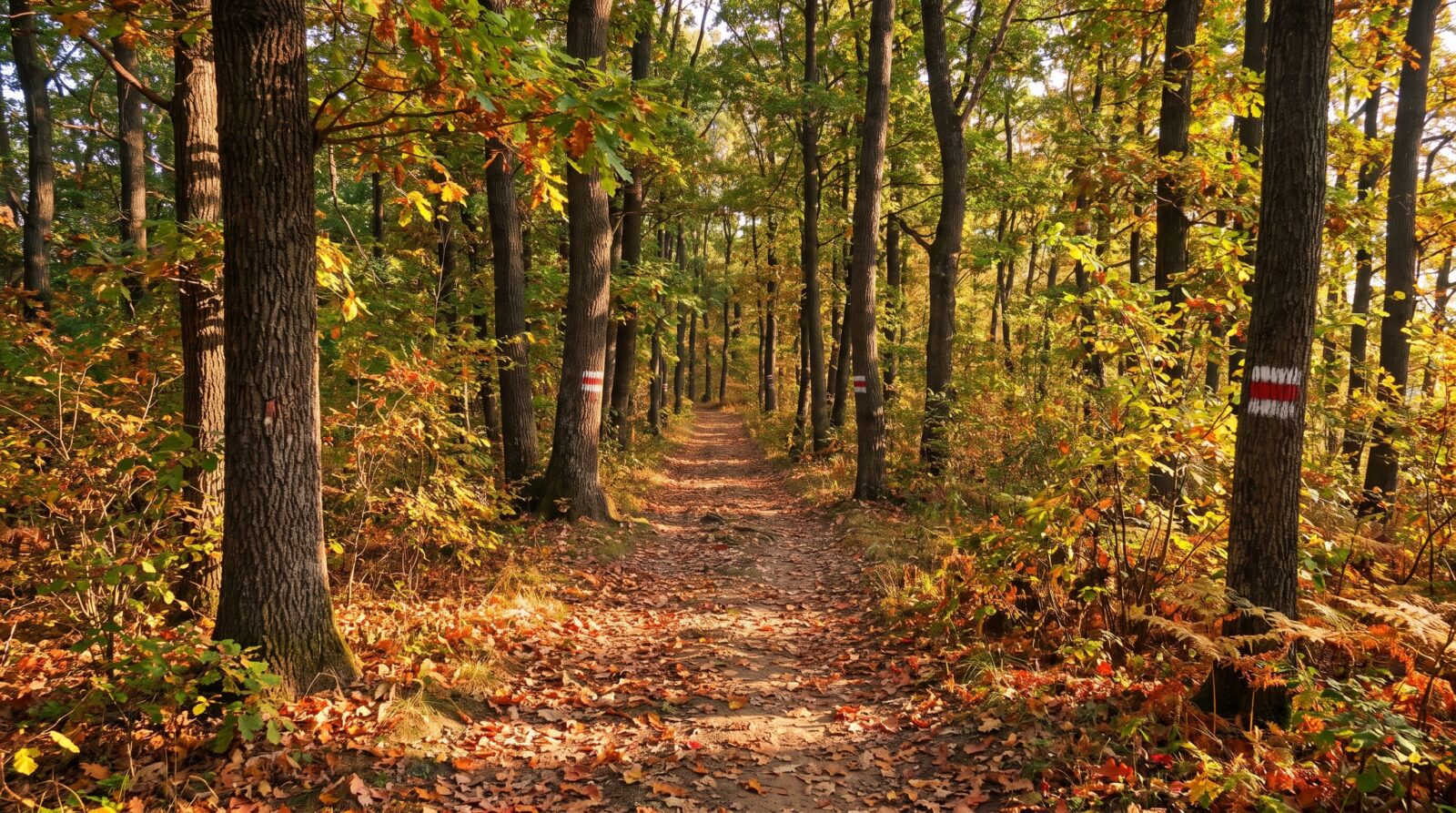
The park’s own trails page also names one recurring event without describing it: the Fruskogorski maraton, held every year with a start at the Popovica picnic area, the closest picnic ground to Novi Sad. No date, distance or organiser is published anywhere on the park’s site, and no official event website could be found under any of the plausible domain names tried. Treat it as a real, annual event, and nothing more specific than that, until you find an organiser who can confirm the rest.
Deciding which monastery to see, since nobody can tell you the exact count
Fruska Gora’s monasteries spread across an area about 50 km long and 10 km wide, most of them founded in the first half of the sixteenth century. Six still carry visible damage from the 1999 bombing. Neither the park nor the church that runs them publishes visiting hours, admission conditions, or a price for any single one, so there is no official schedule to plan a monastery day around.
The two official counts of surviving monasteries disagree, and neither one settles it. The park’s own page states that sixteen of the original thirty-five monasteries survive, fifteen of them still active. Serbia’s Institute for Nature Conservation instead counts seventeen, without naming them or saying whether ruins are included. Neither page is meaningfully more recent than the other, and no third official source was found to arbitrate. This page reports both figures rather than picking one.
With no visiting hours published anywhere, the practical way to see a monastery is on foot: five of the park’s marked circuits pass directly by one, as listed in the trail section above. Building a day around a route, rather than around a monastery’s opening time nobody publishes, is the approach that actually works here.
Understanding why these monasteries are here
The park authority’s own history traces the monasteries back to the Treaty of Karlowitz, signed in 1699 after Eugene of Savoy’s victory over the Ottomans at Senta two years earlier. After the peace, populations further south stayed under Ottoman rule while Christian communities moved north into Habsburg territory, settling on Fruska Gora’s slopes and repopulating the monasteries already there. Sremski Karlovci, downhill from the park, marks the negotiation itself: its Chapel of Peace stands on the site of the hall where the treaty was signed, though only the year, not the day or month, is established by any institutional source checked for either page.
The park itself dates from later: proclaimed in 1960, no month or day recorded, making it the oldest national park in Serbia. It now covers 26,672 hectares, most in state ownership, and reaches 539 metres at its high point, Crveni Cot, on a massif Serbia’s nature-conservation institute puts at roughly 78 km long and 15 km wide; the park’s own geography page rounds that slightly differently, to about 80 km, a small gap between two official sources rather than a real disagreement. Three protection zones divide it: zone I, the strictest, covers about 3 percent of the park; zone II, 67 percent; zone III, the least restricted, the remaining 30 percent. Even the park’s own internal regulation does not restate that total: it only tabulates individual zone-I sections one by one, such as Strazilovo at 15.15 hectares or Kaljin potok at 82.66, figures that do not add up to the whole park on their own.
Knowing the rules before you camp, forage or fly a drone
Camping in exactly one place
Camping or bivouacking anywhere in Fruska Gora needs the park manager’s specific designation of that spot in advance; doing it anywhere else is expressly prohibited under the park’s internal regulation. In practice, the park’s own material names a single example: the Eko-kamp odmoriste, just before the Strazilovo picnic area, described on the park’s own page as the only place in the whole national park where camping is allowed.
Picking plants, fungi and anything wild
Collecting wild plants, fungi or animals is generally restricted across the park and never allowed at all inside its strictest zone. Where a specific rule does permit collection, you have to notify the park manager at least 72 hours ahead, naming the locality, and present a ministry permit plus a professional certificate on arrival. This is not a casual foraging allowance for a day walker; it describes a regulated activity for people who already hold the paperwork.
Flying a drone or bringing a dog
The park’s full internal-order regulation, all 22 pages of it, and its separate guard-service page were both read in full for this page. Neither says a word about drones, unmanned aircraft, dogs or leashes, in either direction. A general rule requiring the manager’s approval or a guard escort to leave marked routes or enter the strictest zone might plausibly extend to an unaccompanied drone or an off-leash dog, but that is an inference, not a stated rule. Treat the silence as a genuine gap in what the park publishes, not as permission.
Common questions
How much does it cost to enter Fruska Gora National Park?
100 RSD per person per day, 50 RSD for a child, with 300 RSD added for a car or motorcycle and 800 RSD for a coach. A 600 RSD annual card covers repeat visits. The figures come from a PDF linked off the information centre’s page, not the park’s own /cenovnik/ page, which publishes nothing.
How many monasteries are still standing on Fruska Gora?
Officials disagree. The park’s own page counts sixteen of the original thirty-five; Serbia’s Institute for Nature Conservation counts seventeen. Neither source is more recent than the other, so this page reports both rather than choosing one.
Is there public transport from Belgrade or Novi Sad to the park?
No confirmed route is published. The only mention anywhere on the park’s site is a general statement that trailheads are reachable by suburban bus lines from Novi Sad, without naming which line or its schedule. Plan on driving or an organised trip.
Can I camp anywhere in the park?
No. The park’s own material names one designated spot, next to Strazilovo picnic area, as the only place camping is allowed. Everywhere else needs the manager’s specific written approval in advance.
Are drones or dogs allowed in the park?
The park’s rules do not say, in either direction. Its full internal regulation and guard-service page were both checked, and neither mentions drones or dogs at all, which this page treats as a documented gap rather than a green light.
Is the Fruskogorski maraton something I can plan a trip around?
Only loosely. The park confirms it happens every year, starting from the Popovica picnic area, but publishes no date, distance or organiser, and no official event website could be found. Treat it as a real event that needs further research, not one you can plan against yet.
Nearby
Sremski Karlovci sits at the foot of the mountain and shares this park’s history directly: its Chapel of Peace marks the 1699 treaty that sent the settlers who repopulated these monasteries, and its own museums and monuments make a natural pairing with a park day if you are staying in the area longer than an afternoon. Novi Sad in a day and Belgrade to Novi Sad cover the city most routes into the park pass through, and renting a car in Serbia is worth reading given how thin public transport into the park actually is. Day trips from Belgrade lists the other routes built the same way.