
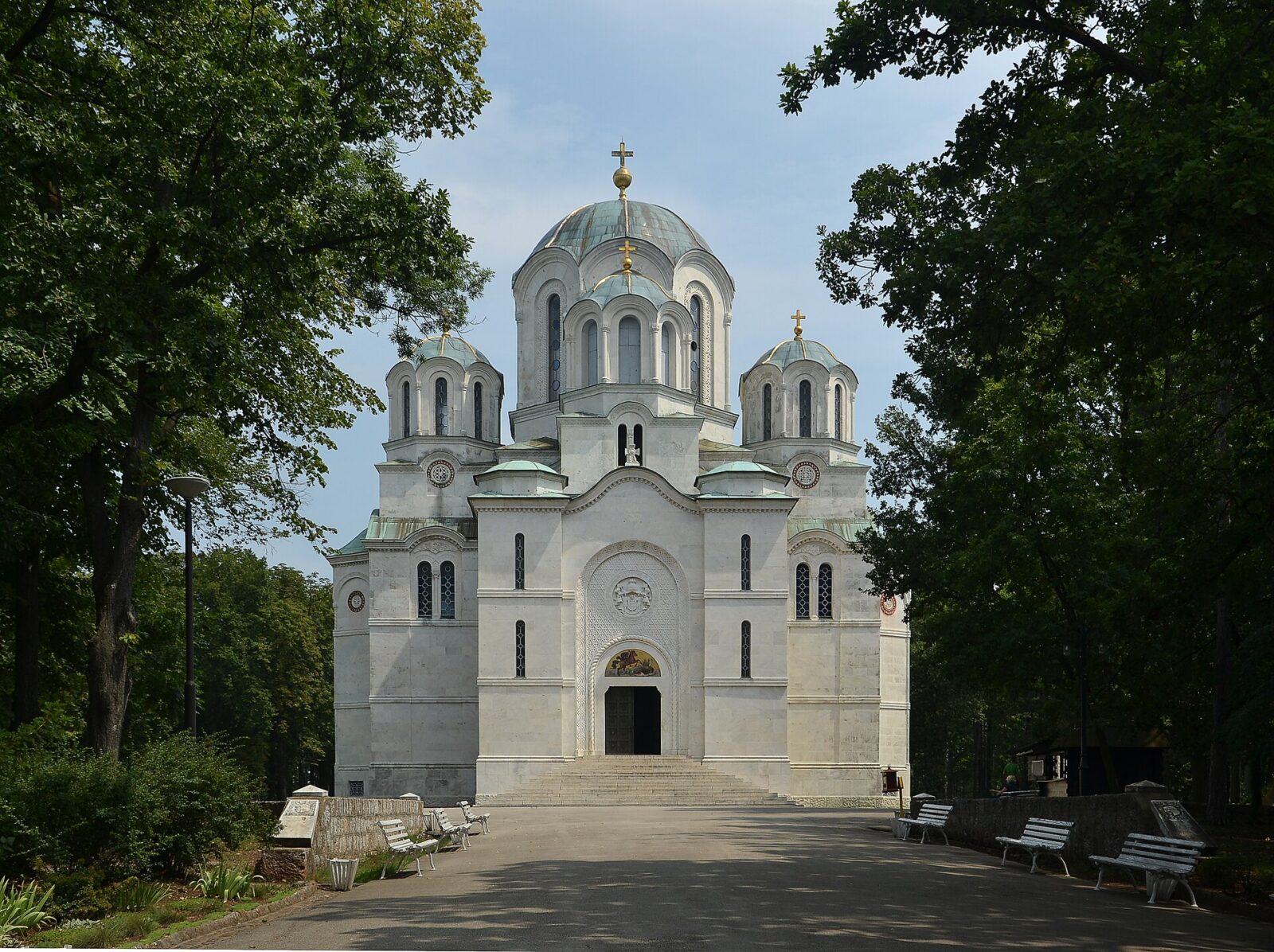
Oplenac is a hill outside the town of Topola, and the white marble church on top of it holds the Serbian royal family’s mausoleum. That much is straightforward. What’s less straightforward is deciding when to go and what it will cost, because Oplenac’s own administration doesn’t publish either answer anywhere we could find.
This page leads with that gap rather than filling it in with numbers borrowed from somewhere else. What follows is what the site’s own pages do say, about the church, the crypt, and four other buildings on the hill, which turns out to be a good deal more than the visiting details it leaves out.
Karadjordje, whose remains lie in the crypt below the church, founded the Karadjordjevic dynasty by leading the First Serbian Uprising against Ottoman rule in 1804. That’s why a Serbian king a century later chose this hill to build a family mausoleum: it commemorates the dynasty he started, not just the individuals buried inside it.
The short version. Oplenac’s own website, run by the Karadjordjevic royal foundations rather than the local diocese, publishes no opening hours, no admission price and no address or driving directions for the site, on any page we checked. What it does publish in detail is the church’s construction history, from 1910 to 1912, the crypt holding King Peter I, Karadjordje and around thirty of their relations, and three further buildings, King Peter’s House, the King’s Winery and the Vineyard Keeper’s House, each now used for its own exhibition. Topola sits on the same Belgrade-Mladenovac-Kragujevac road documented by Kragujevac’s tourist office, though that source doesn’t cover Oplenac itself.
On this page
What Oplenac does not publish
Two practical questions have no answer on oplenac.rs, and none on the Diocese of Sumadija’s site either, the other body sometimes credited with running the site. If you’ve read a guidebook or a forum post that names a time or a price for Oplenac, know that it isn’t coming from either of those two sources, since neither publishes one.
Opening hours
No page on oplenac.rs, covering the church, the crypt, King Peter’s House, the King’s Winery, the Vineyard Keeper’s House or the Royal Family Mausoleum landing page, states an opening or closing time. The site’s Contact page carries only a name, email, subject and message form, no phone number and no stated hours for a reply.
Admission
No page states an admission fee, a suggested donation, or free entry. An absence of a posted price isn’t the same as free entry, so this page isn’t claiming the church is free to visit. It’s reporting that nothing published settles the question either way.
Don’t plan around a schedule that isn’t there. Nothing on oplenac.rs states when the church, the crypt or the other buildings are open, or what a visit costs. The site’s own web form is the only contact channel it publishes; there’s no phone number to give you here, because the administration doesn’t list one anywhere on its site.
Getting to Topola, since Oplenac itself does not say
oplenac.rs publishes no postal address, map or public-transport information anywhere on the site, including its Contact page. So if you’re mapping the route yourself, you won’t find a starting point on the administration’s own pages. The only officially published route touching the area comes from a different institution: Kragujevac’s tourist office names a state road, IB-class road 16, running from Belgrade via Mladenovac and Topola to Kragujevac. That source places the road through Topola but gives no distance or stop specific to Topola or Oplenac itself, and it was written to describe the route to Kragujevac, not to Oplenac. Treat it as the road to look for, not as Oplenac’s own directions, and expect to navigate the last stretch into Topola and up to the hill by other means, a map app or a local sign, rather than anything the church’s own administration has published.
Who administers the site
Oplenac’s own branding points to the Karadjordjevic royal-family foundations, not the Diocese of Sumadija, which is sometimes suggested as the operator. The homepage subtitle reads “Mauzolej kraljevske porodice,” Mausoleum of the Royal Family. King Peter’s House hosts the offices of the “Endowment of King Peter I Karadjordjevic.” And every page footer links to three related bodies: the Royal Family of Serbia, the HRH Crown Prince Alexander Foundation for Education and Culture, and the HRH Crown Princess Katherine Foundation.
The Diocese of Sumadija’s own site answers a direct request with an access error and has to be read through a text-extraction tool. What comes back is an administrative list of the diocese’s deaneries, including one named for Oplenac, but no content about visiting the church. A plausible alternate domain for the royal foundations, karadjordjevic.rs, redirects to an unrelated site. oplenac.rs appears to be the only dedicated site for the compound’s own administration, which may go some way to explaining why practical visitor information is missing rather than simply hard to find elsewhere.
How the church came to be built
King Peter I commissioned the church from 1903, on Mali Oplenac hill, 337 metres up. A first competition in 1907 went to architect Nikola Nestorovic, but that plan was set aside; a second competition chose Kosta J. Jovanovic instead, and his design is what stands today, white Vencac marble on a five-domed, cross-shaped Serbian-Byzantine plan. Construction ran from 1910 to 1912, and the church was first consecrated on 23 September 1912.
Austro-Hungarian occupiers looted and damaged the church in 1915. It was restored under King Alexander I and re-consecrated on 8 September 1930, when Karadjordje’s remains were moved there from the old church in Topola. In 1979 it was listed as a Monument of Culture of Exceptional Importance, Serbia’s own heritage register rather than a UNESCO designation.
Who is buried in the crypt
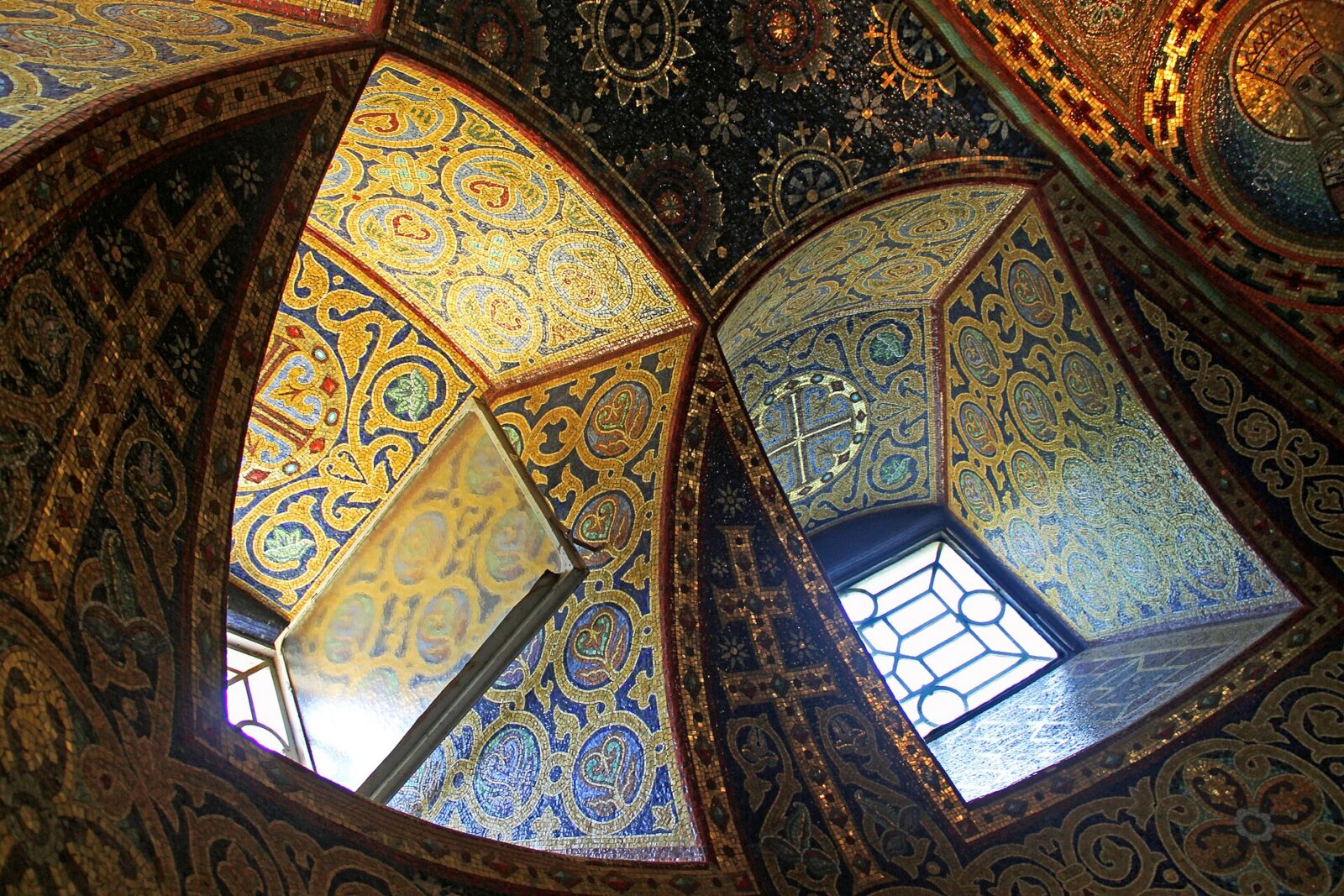
The crypt holds King Peter I and Karadjordje, plus roughly thirty further members of the Karadjordjevic dynasty and their relations, according to the church’s own numbered plan of the tombs. Among them are King Alexander I, Queen Marija, Prince Paul the Regent, and King Peter II with Queen Aleksandra. It’s a genealogical record rather than a museum display, useful if you’re trying to work out who’s actually there before you go rather than reading it off a plaque once you arrive.
What else stands on the hill
Three further buildings share the Oplenac compound with the church, each converted to a different use over the past century. None of the five has a published visiting schedule, but each has a documented construction date and current purpose, which is more than the site says about visiting any of them.
| Building | Built | Used today for |
|---|---|---|
| The church | 1910-1912 | Active place of worship, with the royal crypt below |
| King Peter’s House | 1910 | Art gallery and Endowment offices |
| The King’s Winery | 1931 | Wine museum, 99 barrels including 3 on display |
| The Vineyard Keeper’s House | 1911 | Permanent art exhibition since 2005 |
King Peter’s House
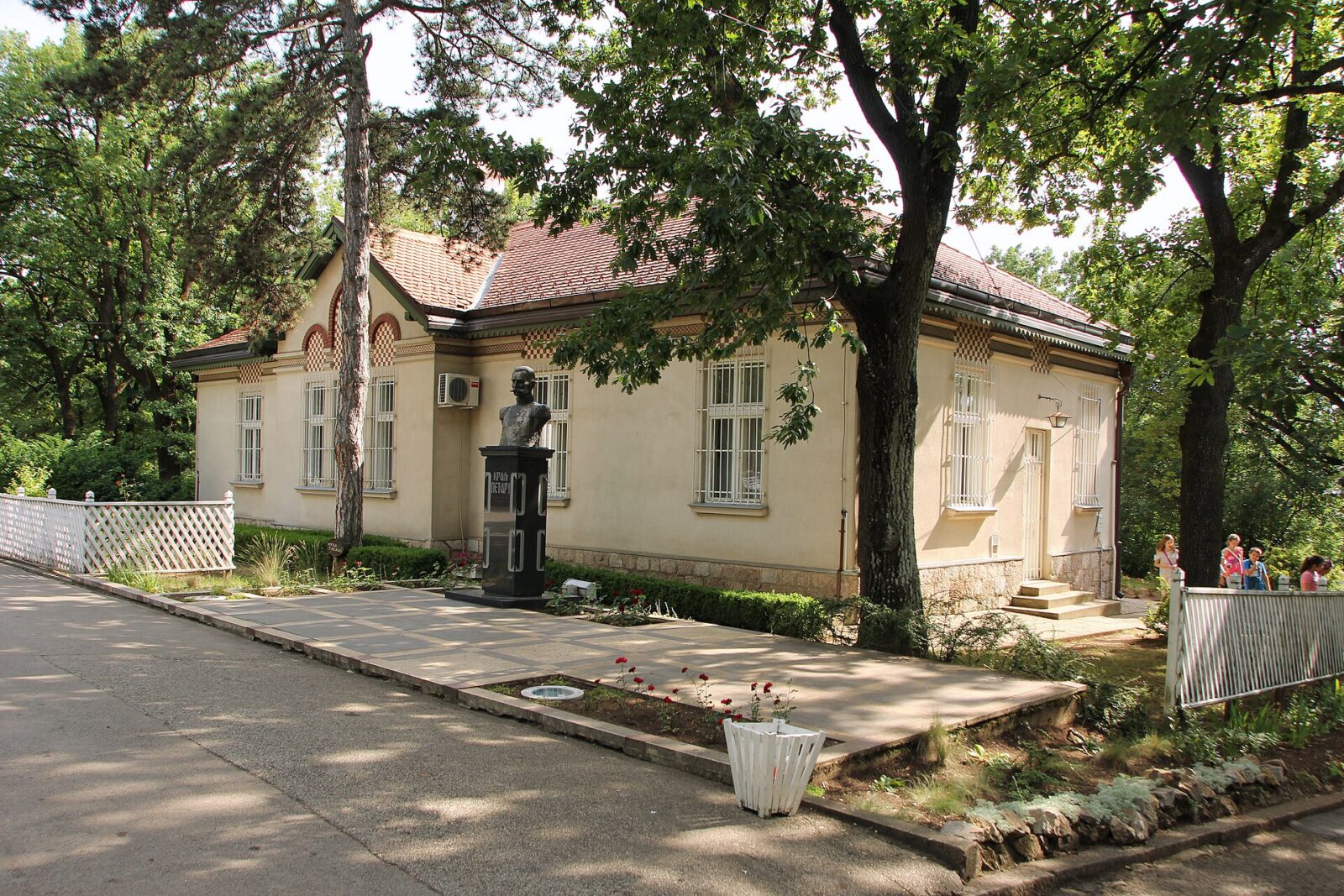
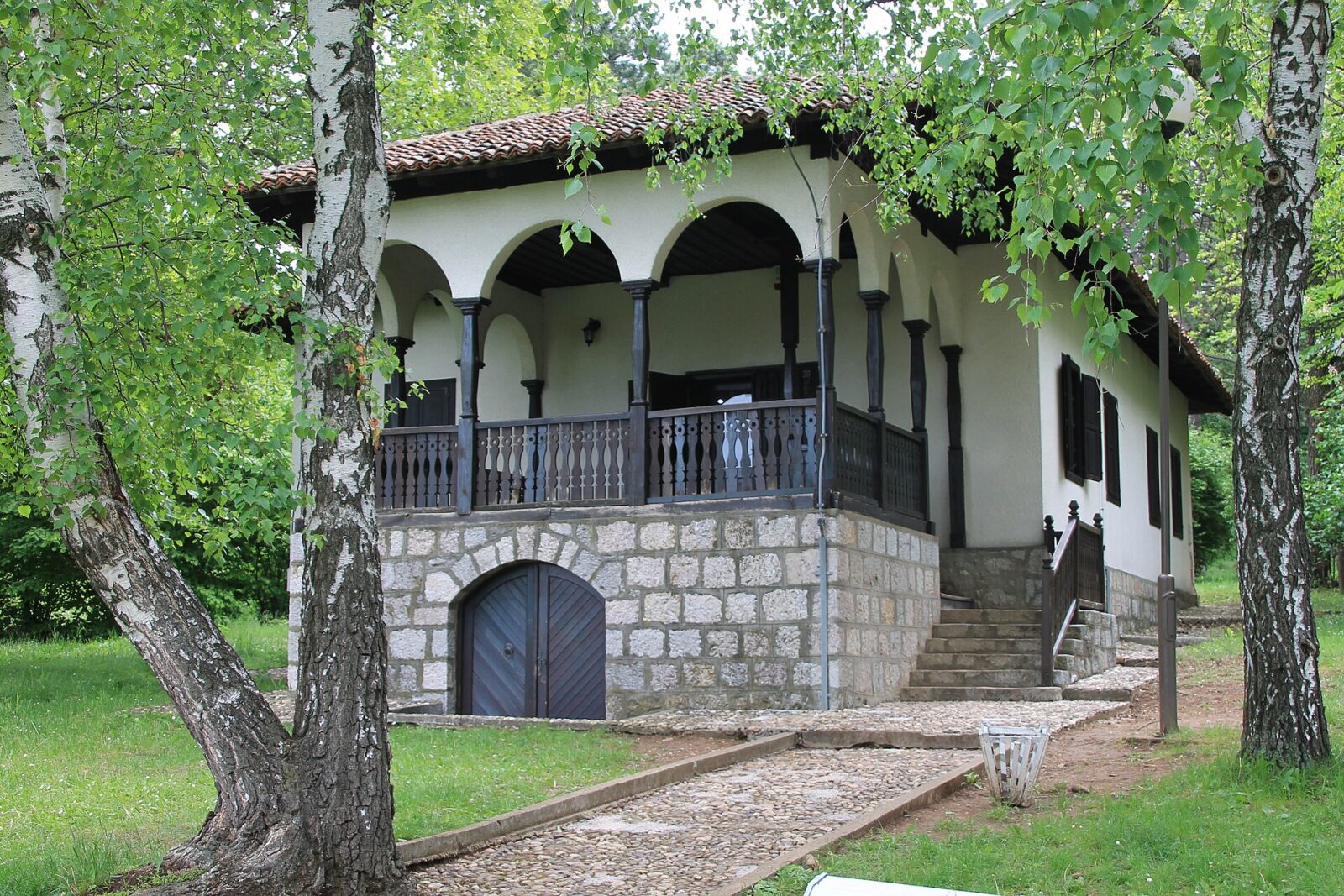
Built in 1910 as temporary quarters from which King Peter I supervised construction of the church, hence the name, the building today houses an art gallery and the offices of the Endowment of King Peter I Karadjordjevic. It’s used for exhibitions on the Karadjordjevic family and for events at the wider Endowment compound. An earlier exhibition here, of wreaths and relics, disappeared without trace sometime between 1947 and 1948, according to the site’s own account, and was never replaced with anything comparable.
The King’s Winery
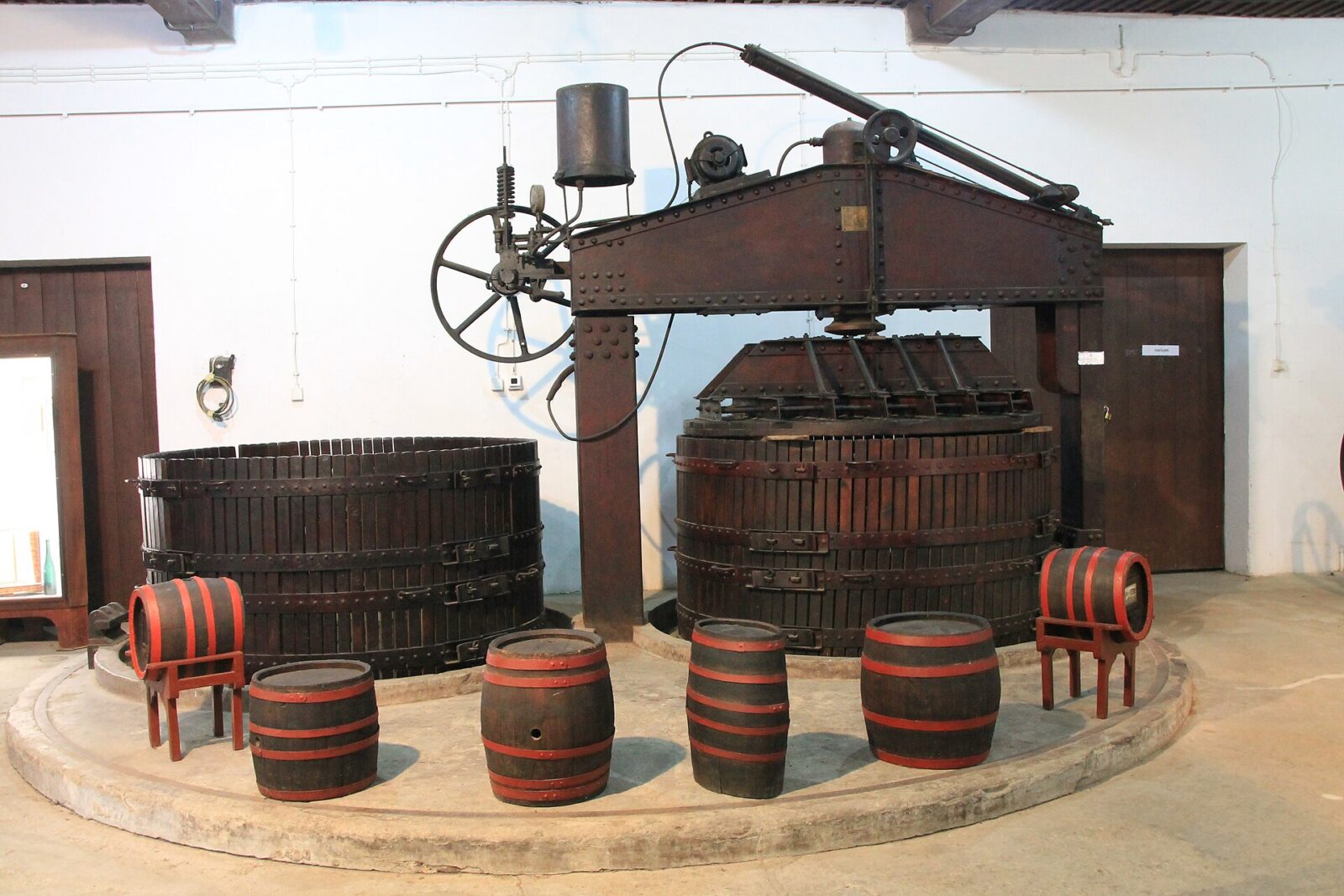
Built in 1931 at the foot of the Oplenac slope on a French model, the winery measures 45 by 15 metres, with a ground floor and two underground levels held at a constant 8 degrees Celsius, and holds 99 oak barrels. Three of them, a 1922 wedding gift to King Alexander I from the peoples of the Kingdom of Serbs, Croats and Slovenes, form a ground-floor museum display alongside archive wines from 1931 and period bottling equipment. What the site doesn’t say is whether the winery or its museum display can be visited independently, on a scheduled tour, or not at all without prior arrangement, which puts it in the same unanswered category as the church’s own hours. The vineyards themselves were neglected after the Second World War until a replanting in 2000, with the first harvest from the renewed vines coming in 2006, so the wine on display predates the vineyard you’d actually be looking at today.
The Vineyard Keeper’s House
Built in 1911 and given its present look in the 1970s, the Vineyard Keeper’s House has hosted a permanent exhibition since August 2005, “The Legacy of Nikola Graovac,” 38 oil paintings and 15 applied-art pieces donated by the painter’s family. Before that it had two other lives: a gendarmerie post during the Second World War, and, from 1975 to 1994, a Museum of the National War of Liberation. If you’re keeping track, that makes it the one building on the hill whose current use is its third, not its first.
Common questions
Can I visit the crypt separately from the church?
Not established. Oplenac’s own site describes the crypt on its own page but doesn’t say whether it’s reached on a separate ticket, through a separate entrance, or as part of the same visit as the church.
Can you go inside King Peter’s House, the King’s Winery and the Vineyard Keeper’s House?
The site describes what each building holds today, an art gallery, a wine museum, a painting exhibition, but not the terms of visiting them: no hours, no price, and no statement of whether they’re open to casual visitors or only by arrangement. If seeing inside all three matters to your plans, that’s a question for whoever answers the site’s contact form, not something this page can settle for you.
Is Oplenac a UNESCO World Heritage Site?
No. The church is listed as a Monument of Culture of Exceptional Importance, a national designation from 1979, not a UNESCO listing. Some other monasteries covered on this site do carry UNESCO status; Oplenac doesn’t.
Is there a phone number to call ahead?
None published. oplenac.rs’s Contact page offers only a name, email, subject and message web form, no telephone number and no stated turnaround time for a reply.
Can I combine Oplenac with a visit to Kragujevac?
Yes, geographically: the state road that reaches Kragujevac from Belgrade via Mladenovac also passes through Topola. Whether that makes for one day or two depends on how long you spend at each, which this page can’t tell you given how little Oplenac’s own site publishes about visiting.
Nearby
Oplenac sits closest to Kragujevac, reachable from Belgrade by the same road through Mladenovac and Topola. Manasija monastery, another royal-era foundation, lies further east in the same Sumadija region. For what a Serbian visit costs more generally, see our guide to dinars, cards and costs.