
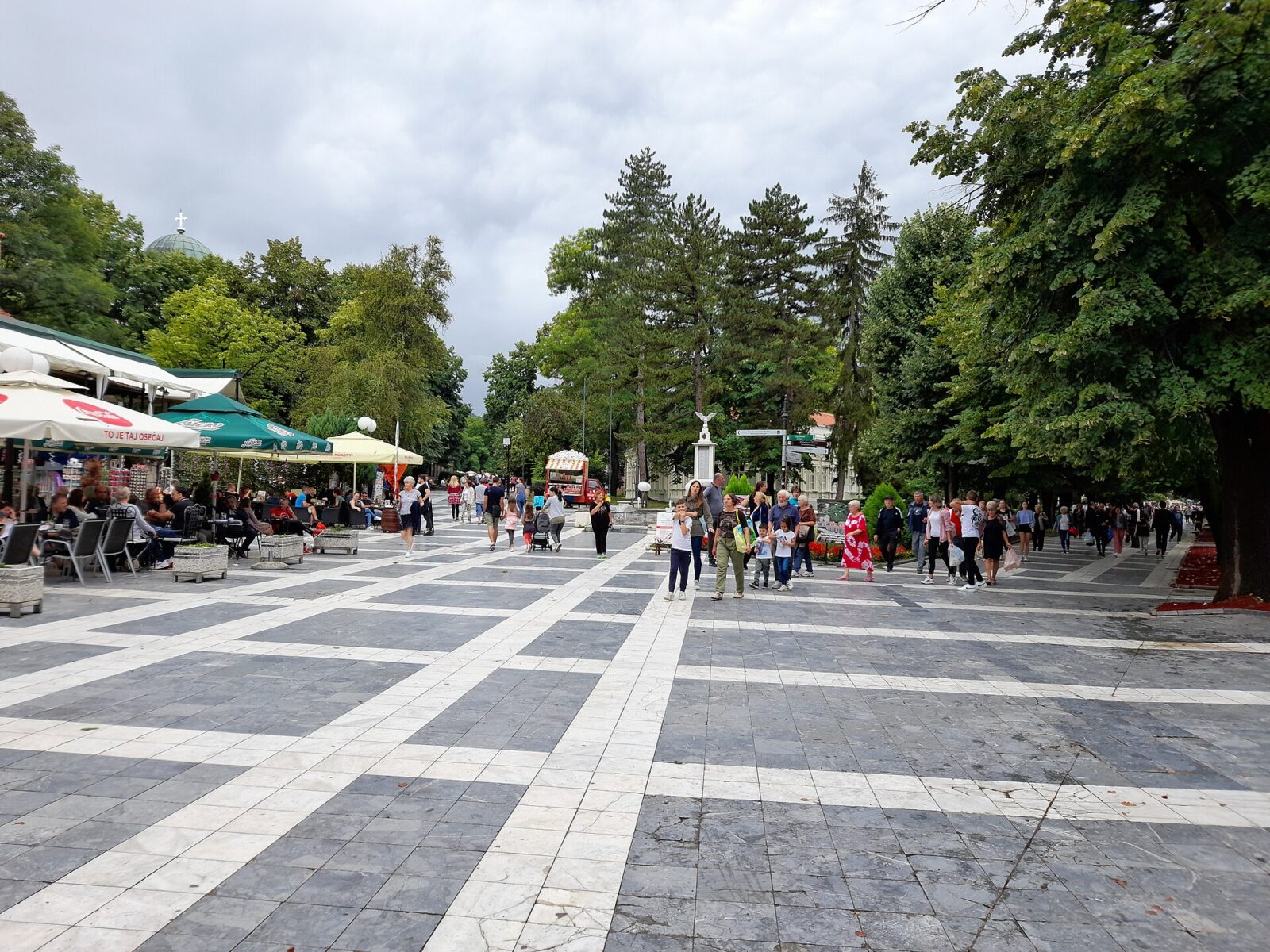
Sokobanja treats its hot springs as medicine first and a spa experience second. The special hospital that runs the town’s baths publishes water composition, therapeutic indications and prices with the flat tone of a clinic rather than a resort, which is unusual among Serbia’s spa towns and makes it easier to check exactly what’s on offer before you commit to a visit.
That clinical framing shapes almost everything published about the baths: prices come as a medical price list, not a leisure one, and the therapeutic claims come with qualifiers rather than marketing language. It also means some ordinary visitor questions, like opening hours, simply aren’t answered on the hospital’s own site the way they would be for a standard tourist attraction.
You don’t need a doctor’s referral to use the baths, though having one gets you a lower price. What the hospital doesn’t publish is a set of opening hours, so a phone call before you turn up matters more in Sokobanja than it would somewhere with a printed timetable.
The referral system, called a banjska lista in Serbian, is a standing feature of the country’s spa towns rather than something specific to Sokobanja: a doctor issues it as part of a longer treatment programme, and it unlocks a subsidised price at the baths. None of that stops a visitor without one from paying the standard rate and using the same facilities.
The short version. A single 30-minute pool treatment at the Novi Zavod or Banjica pool costs 500 RSD without a doctor’s referral, or 400 RSD with one. The hospital doesn’t publish opening hours for its baths, so call ahead: 018/830-150 reaches the Banjica facility. The springs run from about 31 degrees Celsius to 43 degrees Celsius, oligomineral water used for a defined list of respiratory, rheumatological and post-operative conditions. Sokobanja is 249 km from Belgrade, about three hours by road, and 57 km from Nis, the nearest larger city. No source confirms the local tourist tax rate.
On this page
What a soak actually costs
The hospital’s own price list, current as of January 2026, prices every pool and bath twice wherever a distinction applies: a standard rate without a spa referral (banjska lista), and a lower, subsidised rate with one.
| Treatment | Without referral | With referral |
|---|---|---|
| Novi Zavod pool, 30 min | 500 RSD | – |
| Banjica pool, 30 min | 500 RSD | 400 RSD |
| Amam pool, 30 min | 900 RSD | 650 RSD |
| Miloseva kada (Amam) | 800 RSD | – |
| Underwater massage | 2,000 RSD | – |
| Amam for two, 1 hour | 3,000 RSD | – |
| Jacuzzi | 700 RSD | – |
| Pearl bath | 1,000 RSD | – |
| Sauna | 700 RSD | – |
Where the table shows no separate referral price, the hospital’s list doesn’t publish one, so treat the single figure as the price for everyone rather than assume a hidden discount exists. A separate “therapeutic bathing” section of the same list does repeat some of these treatments at lower, referral-only prices, which is where the discounted figures above actually come from.
The Amam, the Banjica, and the Novi Zavod pool
These are three separate facilities rather than three names for the same pool. The Amam is the Turkish-style bath, priced highest and with the biggest gap between the referral and non-referral rate. Banjica and Novi Zavod are more straightforward pools, both landing at the same 500 RSD walk-in rate. Underwater massage, the jacuzzi, the pearl bath and the sauna are add-ons priced separately again, all without a referral discount on this list.
If you’re weighing which single treatment to try, the Amam’s 900 RSD walk-in rate buys the most distinctive experience of the group; the 500 RSD pools are the more straightforward, functional soak. Add the underwater massage or the pearl bath on top if you’re staying long enough to justify more than one treatment in a day.
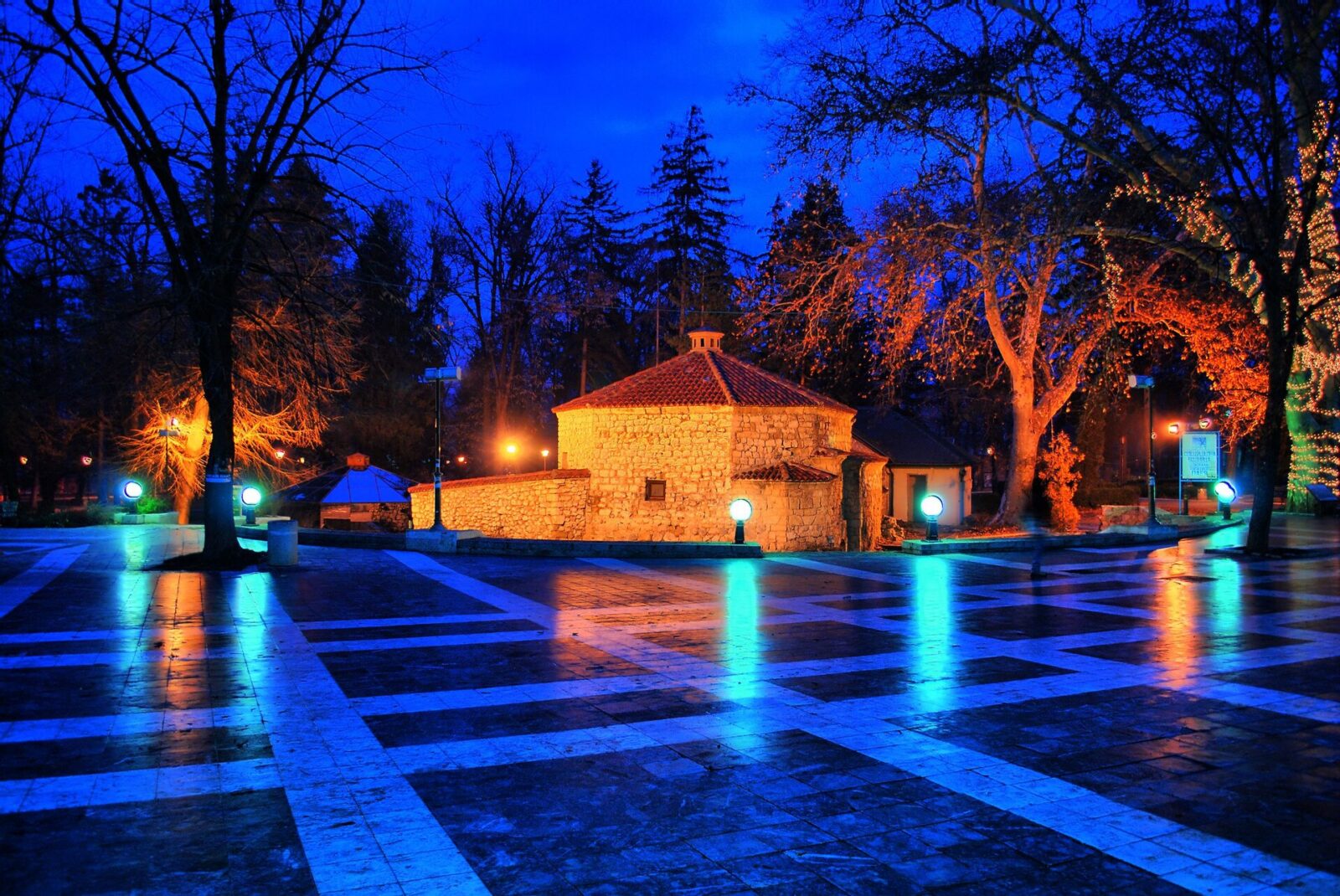
The tourist tax nobody documents
Serbian municipalities set their own tourist tax by local decree, and Sokobanja’s isn’t published anywhere we could find: not on the municipality’s own tax-decisions page, and not on the tourist office’s visitor-information pages. Belgrade’s rate doesn’t apply here, since it’s a City of Belgrade decision specific to the capital, and the same is true of any other town’s published figure you might come across while researching. Budget for the possibility of a small nightly charge added at your accommodation, and confirm the exact figure with your accommodation on arrival rather than assume a rate.
Do you need a doctor’s referral?
No. The hospital’s own price list structures every pairable treatment around two prices, one without a spa referral and one with, which only makes sense if walk-in use is an accepted, priced option rather than an edge case. Nothing on the hospital’s site restricts any of its bathing facilities to referred patients only. Where a treatment carries a single price rather than two, that figure is simply the price for everyone, referral or not.
What isn’t stated anywhere is a minimum age, an ID requirement, or whether you need to book a slot ahead of turning up. None of that is confirmed either way, so ask when you call to check the hours below. Bring the questions together into a single phone call rather than assuming an answer to any of them, since the hospital’s published pages are simply silent on all three.
When the baths are open
No opening hours are published. Every page on the hospital’s own site that describes the Banjica bath, the Amam and the Novi Zavod pool was checked for a working-hours statement, and none carries one. That’s not the same as the baths being open around the clock: it simply means the information isn’t public. Call ahead before planning a visit around a specific time of day, and if you’re staying in Sokobanja for more than a night or two, ask about the hours for the whole length of your stay rather than just the day you arrive. The number printed for the Banjica facility is 018/830-150.
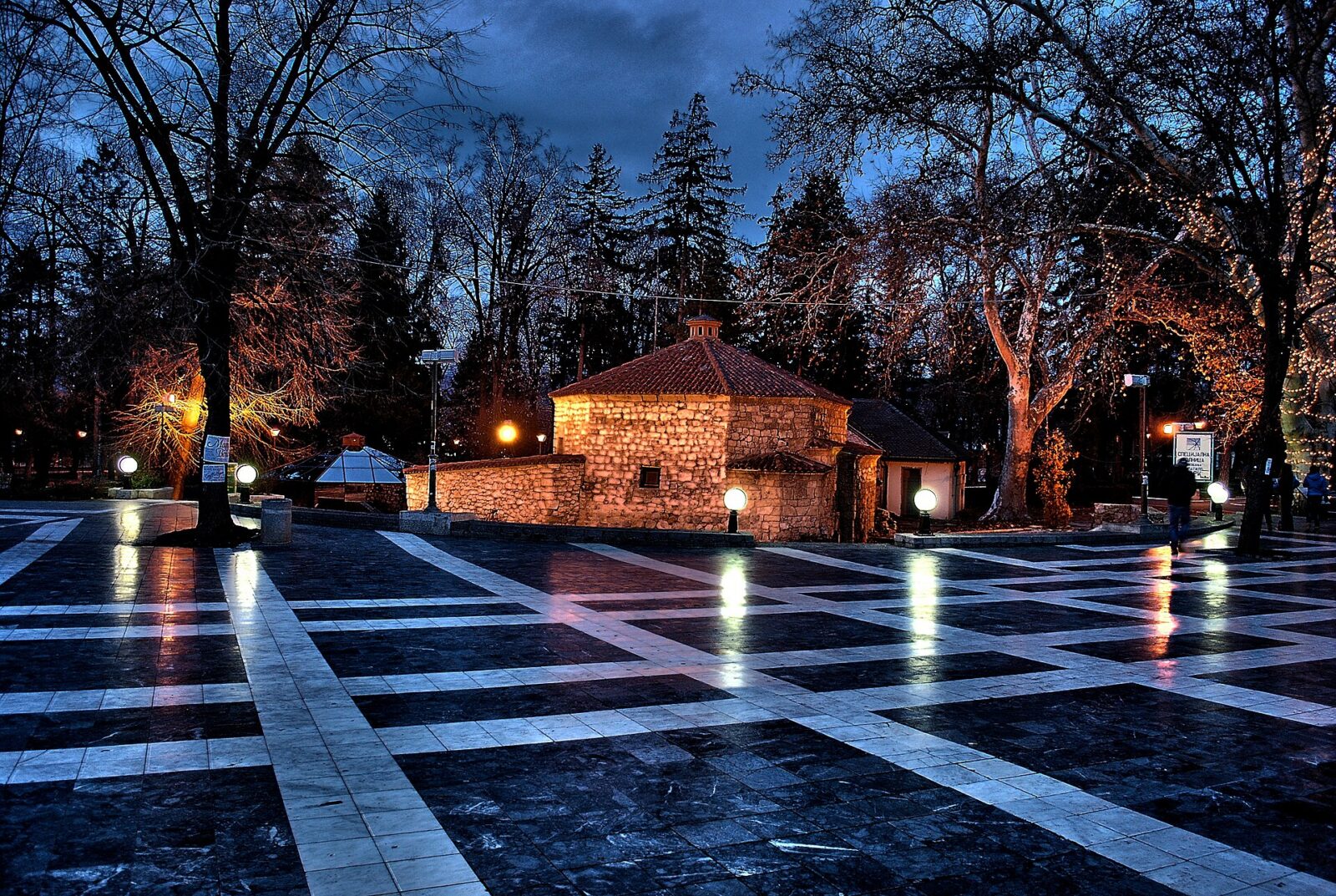
Getting to Sokobanja
The tourist office’s own page puts Sokobanja at 249 km from Belgrade, a drive it describes as taking under three hours thanks to the road connections along the way. Nis, the nearest larger city, is only 57 km away, which makes Sokobanja a realistic add-on if you’re already routing through eastern Serbia rather than a separate trip from Belgrade on its own.
Coming from Belgrade specifically, that three-hour estimate is the tourist office’s own framing rather than a fixed timing you should plan around to the minute; traffic through and around Nis is the stretch most likely to add time on a given day.
The same page names Nikola Tesla Airport in Belgrade as the nearest airport, at 250 km, essentially the same distance as the road trip to the capital, and the railway station at Zitkovac, 35 km away on the Belgrade-Bar line, as the nearest rail connection. None of these figures comes with a published fare or timetable for reaching Sokobanja itself, so check current transport options separately once you’ve decided how you’re arriving. A rental car covers the last stretch from either the airport or Zitkovac station more predictably than waiting on a connecting service that isn’t documented anywhere checked for this page, and it also makes getting to the baths themselves straightforward once you’ve arrived in town.
What’s actually in the water
The hospital’s own page on its “healing factors” describes the water in fairly technical terms: oligomineral, meaning a low overall mineral content, dominated by calcium, magnesium and hydrocarbonate ions, with small concentrations of carbon dioxide, radon and hydrogen sulphide gas. The hospital states its radioactivity levels comply with quality regulations for natural mineral water. None of that reads as marketing copy; it’s the same register a lab report would use, which fits the hospital’s broader approach to describing what it offers.
Two springs, two temperatures
The hospital names two springs specifically. The “Park” spring measures 43 degrees Celsius, in the hyperthermal category, with a pH of 6.76. “Banjica” runs cooler, at 31 degrees Celsius, classed as homeothermic, with a pH of 6.7. The water is used for balneological purposes as what the hospital calls an auxiliary medicinal agent, applied through the Amam Turkish bath, the Banjica bath, the New Institute pool, and the Park and Sokograd baths.
The two temperatures are also why the hospital treats the springs as two distinct sources on its own page rather than one shared supply, each feeding a different set of pools and baths described above.
What the water is said to help with
The hospital publishes six groups of indications for balneotherapy with its water, each carefully qualified rather than stated as a blanket claim. This is a medical statement from the treating institution, not a general health promise, so the qualifiers matter as much as the categories themselves. A visitor without one of these conditions isn’t excluded from the baths, since the walk-in rate above applies regardless of why you’re there.
| Category | What the hospital states, with its own qualifiers |
|---|---|
| Respiratory | Chronic bronchitis without exacerbation, COPD, asthma in a stable phase, chronic rhinitis, pharyngitis and sinusitis, and rehabilitation after respiratory infections |
| Rheumatological | Rheumatoid arthritis in remission, ankylosing spondylitis, osteoarthritis, spondylosis, periarthropathies, fibromyalgia, and chronic-phase conditions after rheumatic fever |
| Spine | Degenerative spine diseases without acute flare-up |
| Post-traumatic and post-operative | After fractures, joint or spine surgery, or prolonged immobility |
| Functional and stress-related | Milder insomnia and anxiety, chronic fatigue |
| Neurological | Peripheral neuropathies, neuralgias, post-stroke paresis, chronic pain syndromes |
Every category on the hospital’s list carries a qualifier: “stable phase”, “in remission”, “without acute exacerbation”. None of it reads as a claim that the water treats these conditions outright, and it’s worth reading it the same way here: as a description of what the treating institution states, not as medical advice. Anyone considering a longer balneotherapy programme for one of these conditions is better placed asking the hospital directly than relying on a summary written for travellers.
Common questions
Can I use the baths without a spa list or referral?
Yes, at the standard walk-in rate. A referral, called a banjska lista, gets you a subsidised price on some treatments, but nothing on the hospital’s site restricts access to referred patients only.
How do I find out the opening hours before I go?
Call the hospital directly. No page on its site publishes a working-hours table for the Banjica bath, the Amam or the Novi Zavod pool, so a phone call is the only way to confirm times for a specific day.
Is Sokobanja worth visiting if I’m not seeking treatment for a specific condition?
The baths themselves don’t require a medical reason to visit, since walk-in use at the standard rate is available to anyone. The therapeutic indications describe what the hospital treats through longer balneotherapy programmes, not a requirement for a single soak.
Will I be charged a tourist tax on top of my accommodation?
Possibly, but no source confirms Sokobanja’s current rate. Serbian municipalities set this tax individually, and Sokobanja’s own published pages don’t state a figure, so ask your accommodation directly.
What’s the difference between the Amam and the other pools?
The Amam is a Turkish-style bath, priced at 900 RSD without a referral or 650 RSD with one, higher than the 500 RSD flat rate at Banjica or Novi Zavod. The hospital’s price list treats all three as separate, individually priced facilities rather than variations on the same pool.
Can I combine Sokobanja with Nis in one trip?
Easily: the two are only 57 km apart, close enough for a day trip in either direction. Neither the hospital’s site nor the tourist office’s page states the bus or train options between them, so check current transport separately once you’ve settled on dates, or simply drive the short distance if you already have a car for the trip.
Nearby
For Serbia’s other major spa town, Vrnjacka Banja is the country’s largest and most-visited thermal destination, worth comparing against Sokobanja if wellness is the point of the trip. Nis in a day covers the nearest city, 57 km away. If you’re still deciding when to travel, when to visit Serbia covers the seasons that shape a trip more broadly.
None of these three pages assumes a single order: Sokobanja works as a spa-focused stop on a longer eastern Serbia route just as easily as a dedicated trip built around the baths alone, and the 57 km to Nis makes either direction a realistic add-on rather than a detour.