
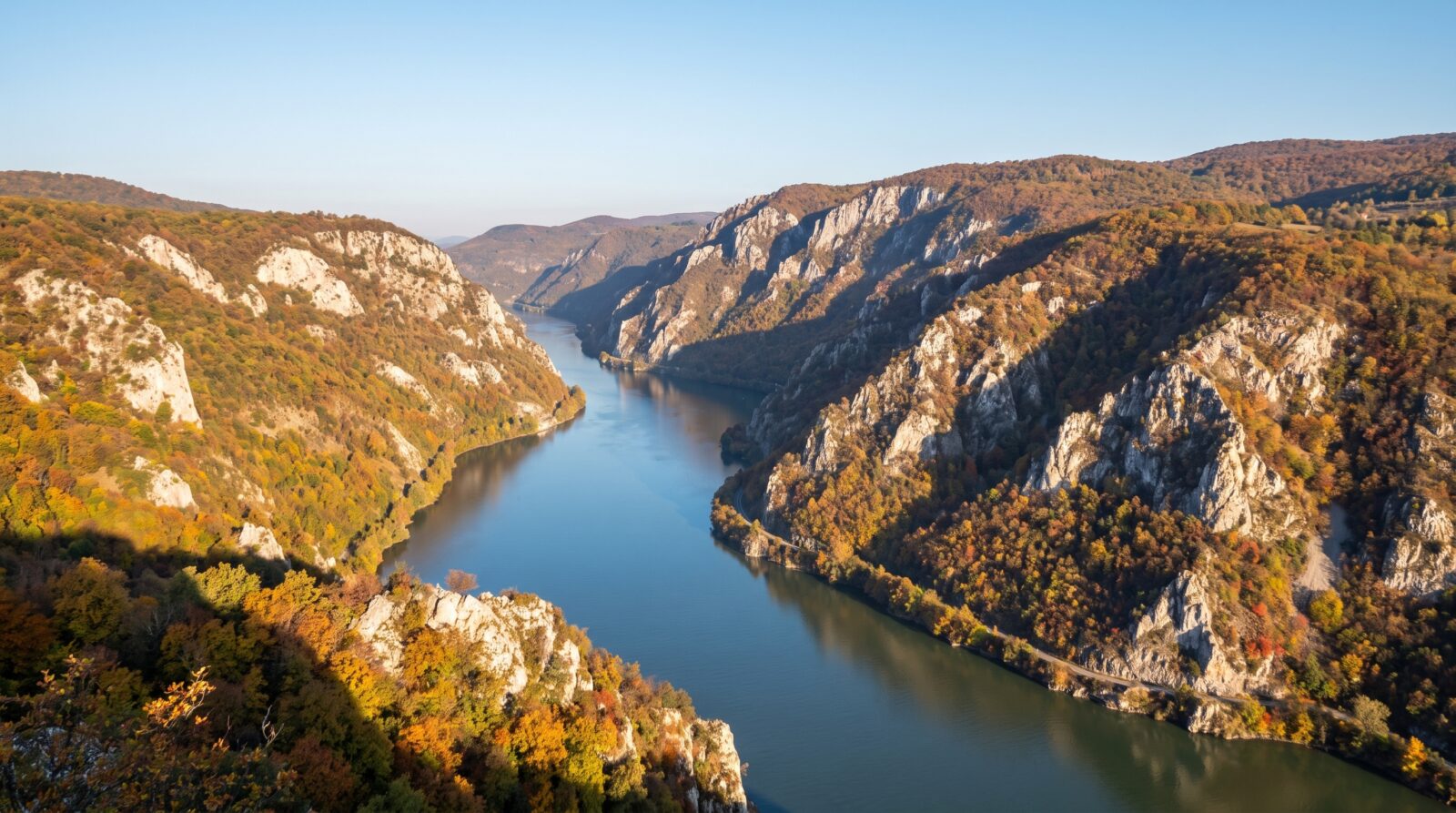
Djerdap National Park picks up where Golubac’s fortress leaves off, running for close to 100 km along the Danube’s right bank down to Diana Karatas near Kladovo. Between those two points the river narrows into the Iron Gates, Europe’s longest breakthrough gorge, with cliffs rising straight out of the water on the Serbian and the Romanian banks alike.
This page covers what the park itself charges at its own gates, separate from any Golubac fortress ticket, and which trails you can walk onto without calling ahead. It also sets out the camping rule the park does publish, and a handful of things its own visitor pages stay quiet on: drones, fire, fishing, swimming, and who runs a boat trip through the gorge if you want to see the Kazan narrows from the water rather than the road.
What follows starts with the numbers: what a ticket costs, how you get here, and which stretch of trail requires you to phone ahead. The history comes after, tracing how a park proclaimed in 1974 became, in 2020, one of Europe’s larger UNESCO geoparks.
The short version. Entering Djerdap National Park costs 290 RSD per person, or 170 RSD each in a group of more than ten, on prices the park last signed on 27 December 2024; a visitor-centre ticket adds 100 RSD (50 RSD under 18), and a guide for up to 25 people is 5,400 RSD. Every marked trail except the flat, 4 km Zlatno jezero loop needs advance notice, and ignoring that risks a fine. The park confirms boat trips run on the Danube but names no operator and no season, and its visitor pages say nothing at all about fire, drones, fishing or swimming. Whether a Golubac fortress ticket already covers this park fee, or the other way round, is not stated by either side.
On this page
What you pay at the park’s own gates
A ticket to enter Djerdap National Park costs 290 RSD per person, dropping to 170 RSD each if you are in a group of more than ten, on the price the park’s management last signed on 27 December 2024. A separate visitor-centre ticket costs 100 RSD if you are 18 or over and 50 RSD if you are younger, and a guide for a group of up to 25 people costs 5,400 RSD.
| Ticket | Price |
|---|---|
| Park entry, individual | 290 RSD |
| Park entry, group of 10 or more | 170 RSD per person |
| Visitor centre, 18 and over | 100 RSD |
| Visitor centre, under 18 | 50 RSD |
| Guide, up to 25 people | 5,400 RSD |
No 2026 price list has been published. The documents linked from the park’s own site are scanned PDFs without a text layer, so the December 2024 figures above are the newest we could actually read, not a confirmed current rate. Call ahead if the difference would change your budget.
Whether this overlaps with a Golubac fortress ticket is not stated. The park’s fee page ties its charge to sales points at Kovilovo and Ploce and to the visitor centres in Donji Milanovac and Tekija, and never mentions Golubac. Golubac’s own price list already folds in parking, a visitor centre and an archaeological park, with no separate line for a park fee. The two sites are run by separate companies, and neither one confirms or rules out the other’s charge, so ask on arrival rather than assume either way.
Getting into the gorge
You reach Djerdap by road, from one of three directions: the Djerdap highway heading east from Belgrade, the same highway coming from the Kladovo end, or a regional road from Nis via Zajecar, Bor and Miloseva kula. Two of the park’s three primary entrances sit on that highway, at Golubac fortress and at Diana Karatas near Kladovo; the third is further inland, on the Porecki most-Klokocevac road.
None of the park’s own pages names a bus route, an operator or a timetable serving any of the three. Its contacts page lists tourism-office and visitor-centre phone numbers for Golubac, Majdanpek and Kladovo, and nothing beyond that. If public transport into the gorge exists, the park does not say so on its own site, so driving yourself or booking an organised trip is what its own information assumes you will do. Renting a car in Serbia covers what that takes, and planning eastern Serbia from Belgrade weighs that against joining a tour.
Which trails need a phone call first
Zlatno jezero, the one you can walk without asking
One trail asks nothing of you in advance. Zlatno jezero runs 4 km with a gentle five percent gradient and twelve interpretation panels along the way, open daily without booking or a warden’s ticket.
Everything else sits in the strictest zone
Every other marked trail in the park lies inside protection zone I, the tightest of its three tiers, where a visit has to be organised and announced ahead of time under the park’s own internal rules, dated 26 November 2018. That is not a polite suggestion: ignoring a warden’s instruction on one of these trails carries a fine of 5,000 to 150,000 RSD under Serbia’s nature protection law.
Where the rules go quiet
Three of the park’s own visitor pages set out a code of conduct in some detail: respect the wildlife, leave the flowers alone, use the bins provided, keep to marked trails, park where you are told to. None of the three states a rule on open fire, drone flying, fishing or swimming.
That silence is not permission. A homepage appeal posted on 6 August 2026 asked visitors not to light open fires outdoors, but it reads as a dated response to that summer’s wildfire risk rather than a standing rule, and no fishing, drone or swimming policy appears anywhere on the park’s site. If any of the four matters to your plans, ask the park directly rather than assume either way.
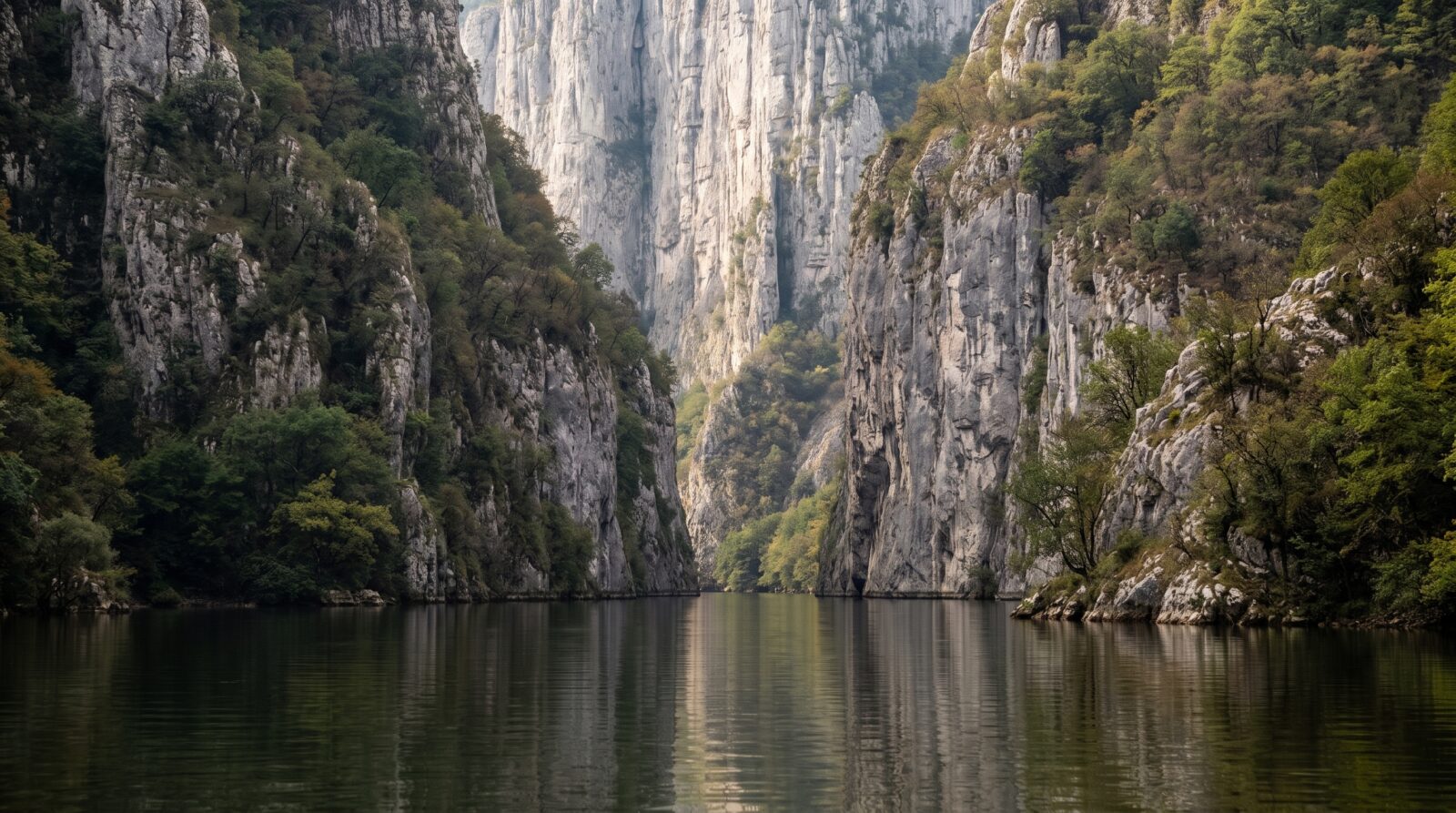
The park’s own visitor notice confirms the gorge can be toured by boat on the Danube, alongside the highway and its hiking and cycling trails, and Serbia’s national tourism organisation repeats the invitation. Neither names an operator, a route or a season. The park’s own list of priced services includes a guide and a 4×4 with driver, but no boat trip, so a company willing to take you onto the water is one the park itself does not name.
Camping and the park’s three zones
Djerdap is split into three protection zones. Zone I, the strictest, covers about 8.01 percent of the park; zone II covers roughly 21.50 percent; zone III, the least restricted, makes up the rest, though two of the park’s own pages round that remainder differently, 70.79 percent against 70.49 percent, a small inconsistency between pages of the same site.
Free bivouac is not allowed anywhere in the park. Camping is permitted only inside existing, designated camps. Pitching a tent or a camper trailer anywhere else needs the park management’s written consent beforehand, consent it can simply refuse, and doing it without asking draws a fine under the applicable law. Bring a booking, not a plan to find a spot.
Seeing the Kazan narrows and Trajan’s Tablet
Why we can’t give you a width or a depth
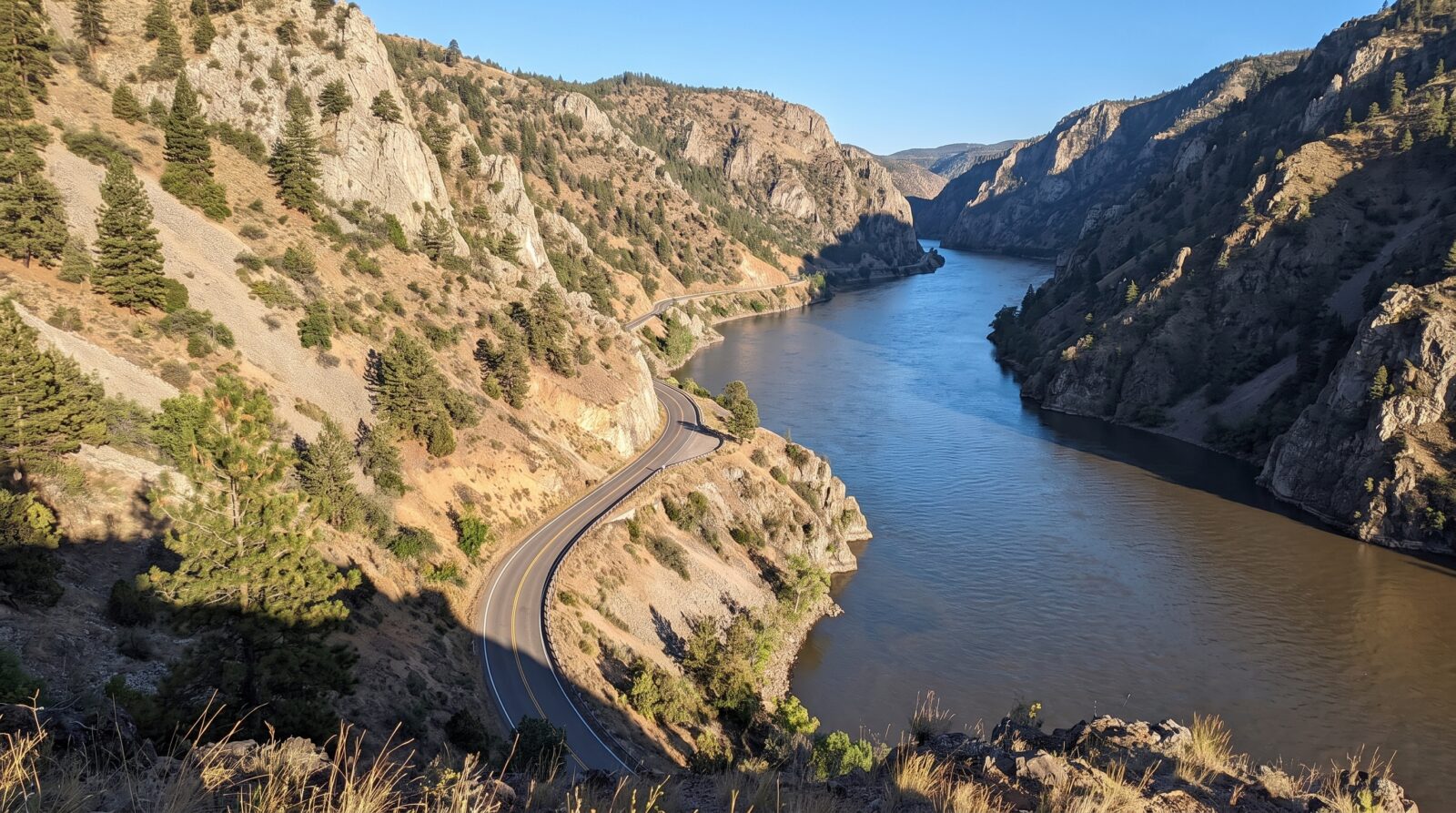
The Great and Little Kazan mark the gorge at its most dramatic, seen from viewpoints named Veliki Strbac, Mali Strbac, Ploce and Kovilovo. Every official page we checked describes the narrows in those terms, and none of them states a width at the narrowest point or a maximum depth. Figures for both circulate widely on travel sites, but we could not find them on a dated, official Serbian source, so we are not repeating them here.
An inscription raised to stay visible
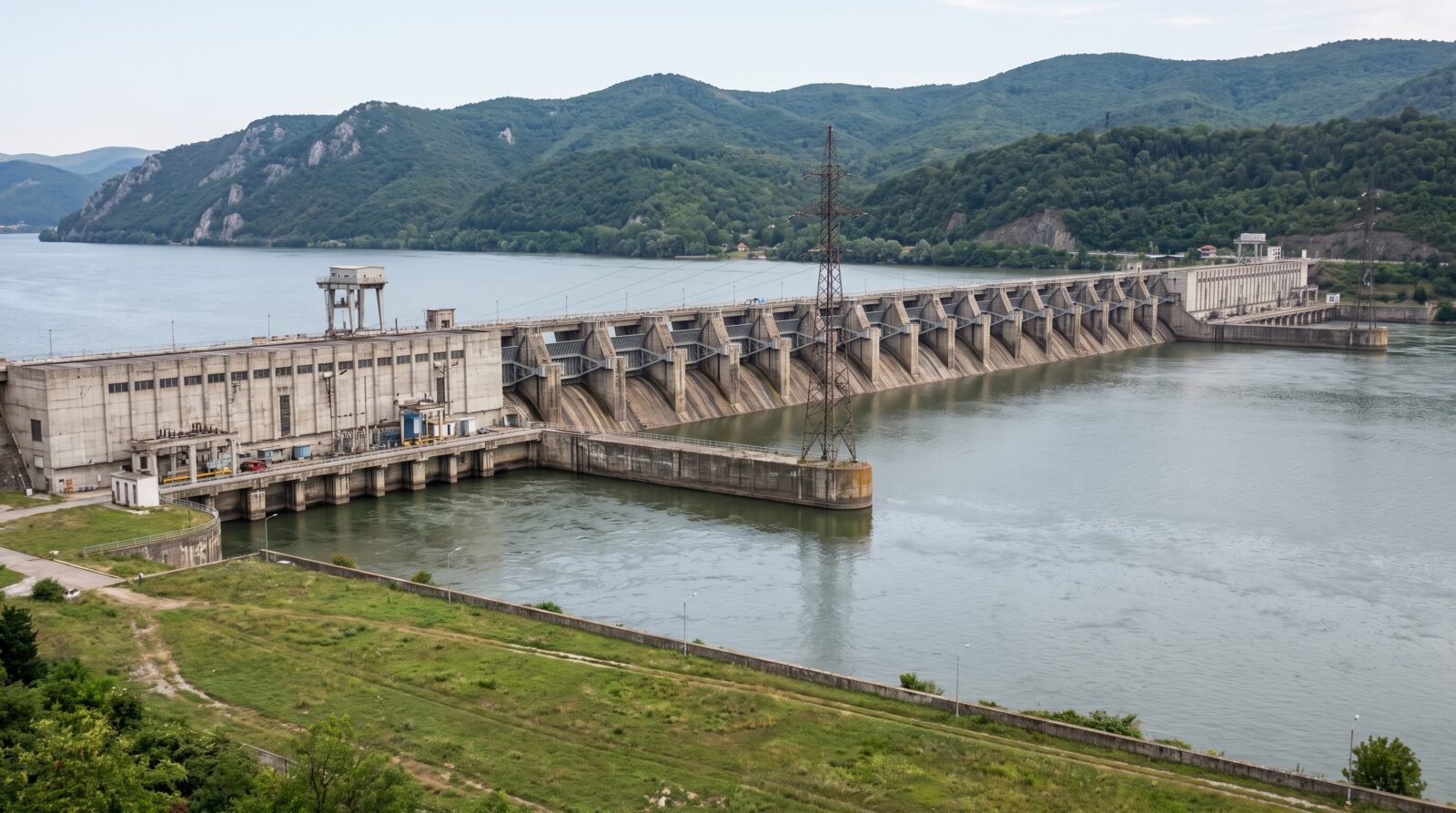
Trajan’s Tablet is a rock-cut inscription that once marked the completion of a Roman road and canal through the gorge, standing about 1.5 m above that road by the riverbank. Building the Djerdap hydroelectric plant between 1963 and 1972 was going to put it underwater, so it was cut out of the cliff and reset higher, specifically so it would still be visible from the river. Of an original six-line Latin inscription, only three lines remain clearly legible today.
A much larger rock-cut face, of the Dacian king Decebalus, sits on the opposite bank near Eselnita. That is Romanian territory and outside what this guide documents: the park’s own list of cultural monuments does not include it, and no Serbian source describes it, so this page has nothing further to tell you about it.
How Djerdap became a national park, then a geopark
Serbia’s national tourism organisation describes the Djerdap gorge as the longest breakthrough-type gorge in Europe, running for about 100 km along the border with Romania. The park’s own pages give roughly the same distance for the park itself, from Golubac to Diana Karatas, without separating the gorge from the park boundary, so treat the figure as a round approximation rather than a survey measurement.
The park was proclaimed in 1974, with no month or day given, and today covers 63,786.48 ha: 45,454.87 ha under state ownership and about 18,331.60 ha in private or other hands, spanning the municipalities of Golubac, Majdanpek and Kladovo. It describes itself as Serbia’s largest national park and, since much of it is the river itself, a “river national park”.
A few numbers worth keeping straight:
- National park established: 1974
- National park area: 63,786.48 ha, Serbia’s largest
- Gorge length: about 100 km along the Romanian border
- UNESCO Global Geopark since 2020: 133,000 ha, larger than the park itself
Since 2020, a larger area around the park, 133,000 ha, has carried a second and separate designation: Djerdap UNESCO Global Geopark, the first and so far only one in Serbia. It is not a biosphere reserve, a status held instead by Golija-Studenica and Backo Podunavlje elsewhere in the country, and it should not be confused with the park’s own entry on UNESCO’s World Heritage tentative list, dated 2002, whose figures now read as out of date.
Counting the park’s four protected monuments
Under Serbia’s heritage law, the park’s own 2013 Spatial Plan names exactly four monuments of exceptional significance inside its boundary: Golubac fortress, the archaeological site of Lepenski Vir, the Roman site of Trajan’s Tablet, and the Roman and early-Byzantine camp of Diana Karatas. The same inventory separately counts eight registered immovable cultural assets and eleven further recorded ones, a longer list sitting beneath these four headline sites.
Golubac’s fortress, at the park’s western entrance, already has its own page on this site. Lepenski Vir, the oldest and most argued-over of the four, sits further along the same road and gets a page of its own too, including a look at how three institutions still cannot agree on how old it is.
Common questions
Does the Golubac fortress ticket include entry to the national park?
Neither side says so. The park’s fee page is tied to other entry points and visitor centres and never mentions Golubac, and the fortress’s own ticket already bundles parking, a visitor centre and an archaeological park with no separate park-fee line. Ask at the gate rather than assume either way.
Can I walk any trail in the park without calling ahead?
Only Zlatno jezero, a flat 4 km loop open daily without notice. Every other marked trail sits in the park’s strictest protection zone and needs advance notice under its own internal rules, with fines for visitors who skip that step.
Is there a bus into the gorge?
Not one the park names. Its own pages give three road routes and a set of phone numbers, with no bus operator, route or timetable mentioned anywhere. Plan on a car or an organised trip.
Can I light a campfire or fly a drone in the park?
The park’s visitor pages do not say, one way or the other, for fire, drones, fishing or swimming. A dated 2026 appeal asked visitors not to light open fires that summer, but no year-round rule on any of the four is published. Ask before you assume.
How do I book a boat trip through the gorge?
The park confirms boat touring happens on the Danube but names no operator, route or season anywhere on its own site, and its list of paid services stops at a guide and a 4×4. Finding a boat means looking beyond what the park itself publishes.
Nearby
Djerdap runs the length of this stretch of the Danube, so its sites naturally string together into one trip. Golubac fortress marks its western entrance, and Lepenski Vir sits further along the same road, on the same list of four protected monuments as the gorge itself. Planning eastern Serbia from Belgrade weighs a self-driven route against an organised circuit, and renting a car in Serbia covers what driving here involves before you commit. For more of the region beyond the gorge, browse day trips from Belgrade.