
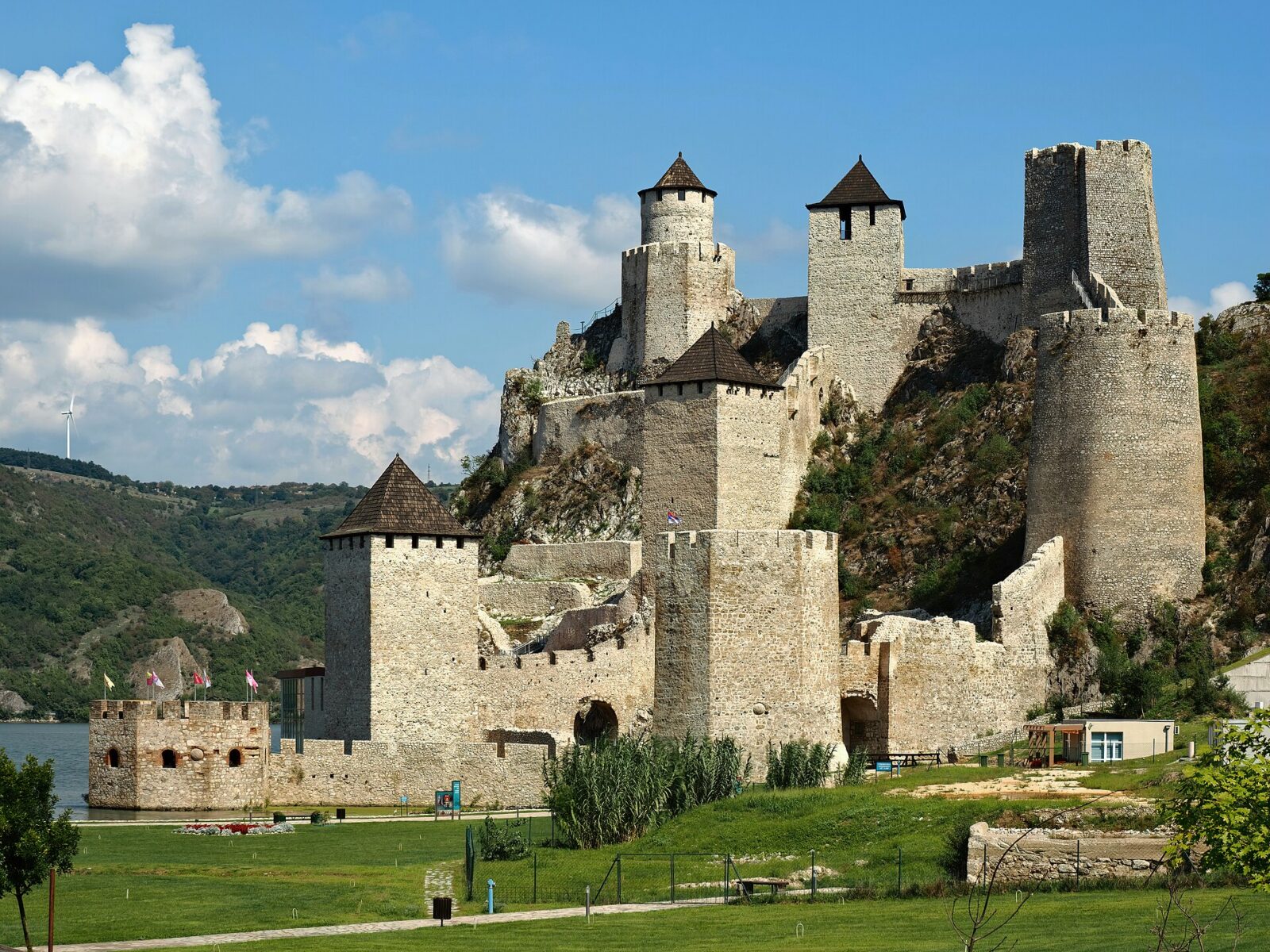
Golubac is where the Danube starts to narrow before the Iron Gates, and nine towers climb a bare hillside above the water to mark the spot. The fortress sits right on the road that follows the river east, at the point where Serbia’s flat interior gives way to the gorge country of Djerdap.
No bus reaches Golubac. Nothing in this guide is more decisive than that single fact, confirmed independently by the fortress operator and by the local tourist office: neither publishes a route, an operator or a timetable serving the site. Coming here means a car of your own or a seat on an organised excursion, and everything else below assumes one or the other.
What follows covers what a ticket buys you, which of the fortress’s higher towers you can and cannot walk into, when the gates are open by month, and the handful of things that can close them early on the day you show up.
The short version. There is no bus to Golubac: come by car or on an organised day trip. The green zone (Zone I), covering the Palace and three towers, costs 950 RSD for adults, 250 RSD for ages 7 to 18, 500 RSD for pensioners, and includes parking, the visitor centre and the archaeological park. Three higher zones add more towers under stricter conditions, adults only, capped numbers, weekends only, and one of them is currently closed. Hours run from a winter 10:00-14:00 up to a summer 10:00-18:00, closed every Monday, and the operator can suspend ticket sales for bad weather or crowding without notice.
On this page
Getting there
Golubac lies on the M25.1, the Djerdap trunk road that runs east from Belgrade along the Danube’s right bank, at a road distance the municipality itself puts at 130 km. An earlier figure of 129 km, published by the fortress operator, is close enough to be the same route measured slightly differently, though it predates the M7 expressway extension that opened in August 2026, so neither number should be read as a current drive time. The same municipal source gives 140 km to Belgrade’s Nikola Tesla airport, again without a route or a timetable attached, so treat it as a rough planning figure rather than a booked transfer distance.
What is not in doubt is the absence of an alternative. Golubac’s own tourist office publishes a list of local numbers, the municipality, the health centre, the pharmacy, the fire brigade, the Ram car ferry, the national park office, and it contains no bus station for the town itself, only the one in Pozarevac, roughly 40 km away. If you are not driving, you are booking a tour, and renting a car in Serbia is worth reading before you decide which. Planning eastern Serbia from Belgrade lays out how a day here compares with joining an organised circuit instead.
What you pay to enter
A single green-zone ticket, Zone I, covers the Palace and towers 5, 8 and 9, and it already includes the car park, the visitor centre and the archaeological park around the site. It also carries a guided talk on the hour, in Serbian and English, with an extra Romanian-language slot on weekends, alongside self-guided digital content and an exhibition on the fortress’s medieval garrisons.
| Ticket | Price | Who it is for |
|---|---|---|
| Zone I, adult | 950 RSD | General admission |
| Zone I, ages 7-18 | 250 RSD | Children and students |
| Zone I, pensioner | 500 RSD | Reduced rate |
One detail is worth flagging rather than papering over: the operator’s own price list gives free entry under the age of 7 in its table, then refers to under 12 in its own definitions section a little further down. The two do not agree, and we cannot tell you which one a ticket desk will apply, so budget for the child rate unless you confirm otherwise on arrival.
Climbing into the upper zones
Three further zones sit above the green zone, and they are not a simple upgrade. Zone II, at 1,600 RSD, adds towers 3 and 4 by a moderately hard path, adults only, with numbers capped at 20 people at a time. Zone IV, at 2,500 RSD, adds the Hat Tower, the fortress’s tallest keep, by what the operator itself calls an extremely difficult path, capped at two people at a time, with flat trainers and sandals explicitly banned. Zone III, which would add tower 7 under a dedicated escort with a maximum of five visitors, is currently closed.
Both open zones sign you up for a waiver, and only on certain days. Zones II and IV run Friday to Sunday only, 10:00 to 14:00, and a liability waiver is signed before you go up. Check the Serbian-language page rather than the English one if you are timing your visit: the English version currently states 10am to 1pm, an hour shorter, and where the two disagree the Serbian page is the one the operator actually updates.
When it’s open
Golubac’s hours change with the month rather than sitting on a single year-round timetable, and the swing between the shortest and the longest day is real: four hours in winter against eight in high summer.
| Months | Hours |
|---|---|
| January, February, November, December | 10:00-14:00 |
| March | 10:00-15:00 |
| April, October | 10:00-16:00 |
| May, June, September | 10:00-17:00 |
| July, August | 10:00-18:00 |
The fortress is closed every Monday, whatever the month. The last ticket for the green zone is sold 45 minutes before closing, and the upper zones stop selling at least an hour before, so arriving at the posted closing time buys you nothing but a locked gate.
What can close the ticket office
Bad weather or a full site can stop sales without warning. The operator states, identically under each of the four zones, that it reserves the right to limit or suspend ticket sales, for the fortress as a whole or for individual zones, in case of high visitor numbers or poor weather. No threshold is published, no wind speed or temperature, and no channel is named for finding out in advance. If you are driving three hours for a specific zone, especially the upper ones, that risk sits entirely on you.
Group visits carry a separate rule. Organised groups and tour operators must register at least five days ahead, through the operator’s own online booking system or by phone, and be ready to show proof of payment on arrival. Individual visitors are not held to that rule: nothing on the operator’s page conditions a solo or family visit on booking ahead, and you buy at the gate. Two numbers take questions daily except Monday: +381 12 7160 882 and 883.
What the centuries left behind
Nine towers, linked by ramparts, together with the Palace, make up the fortress as it stands today. They split into two parts: an older inner fortress on the high ground, the Upper Town, holding the tallest keep, known as the Hat Tower, and an outer fortress built around the Palace lower down the slope. Only one tower carries a name in the operator’s own numbering, the Cannon Tower, tower 9; the rest are known simply by number.
First mentioned in 1335, taken by the Ottomans in 1458
Golubac first appears in historical sources in 1335, described as a stronghold with a Hungarian garrison, and the fortress operator’s own account is explicit that the site is older than that record, without saying who built it or exactly when. Serbian despot Stefan Lazarevic, who ruled from 1377 to 1427, rebuilt and extended it earlier in the fifteenth century, adding the Palace that still gives the outer fortress its shape. The Ottomans under Mahmud Pasha took the fortress on 10 August 1458, a date the operator gives without qualification.
Rebuilt again, this time for visitors
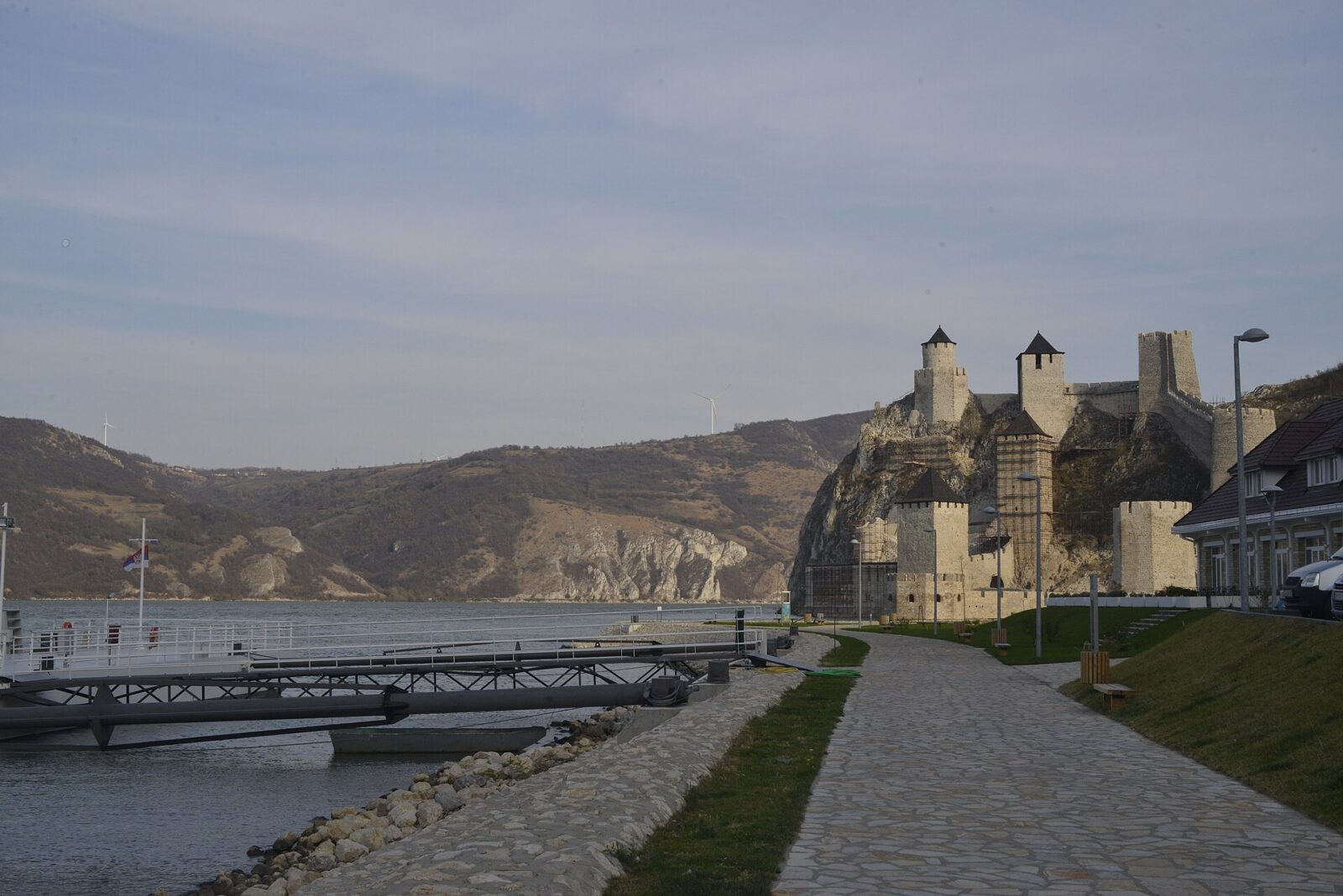
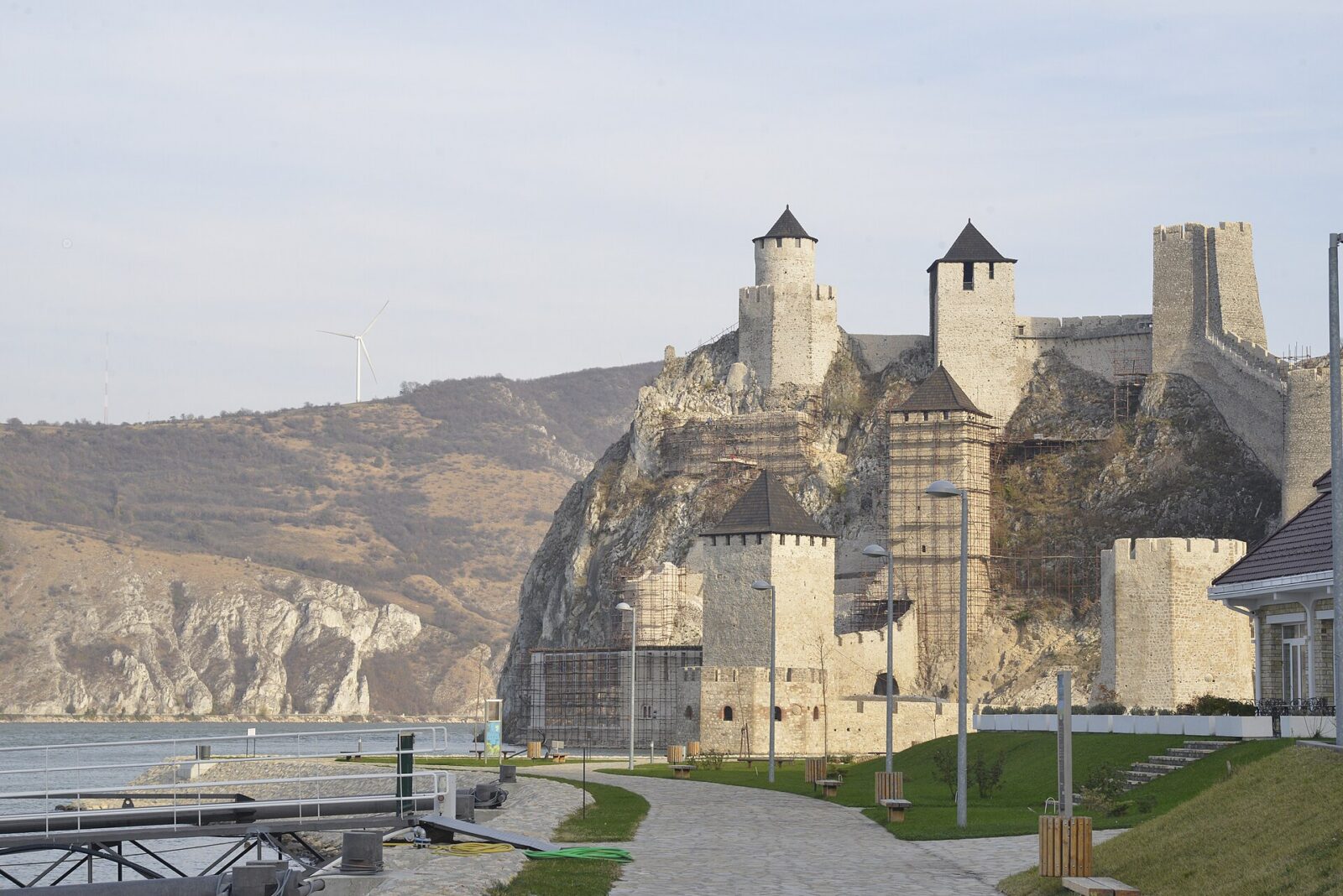
Serbia declared the site a protected Tourism Area in 2011, and a project called Revitalizacija Golubacke tvrdjave, financed through IPA funding rounds in 2011 and 2016, carried out a full reconstruction between 2014 and 2019. That work built the visitor centre, the archaeological park and the river-cruise pier you see today, and gave the fortress the operating shape described throughout this page: zoned tickets, a car park, and a single company running the whole site. Golubac also carries Serbia’s highest heritage protection tier, cultural property of exceptional importance, a status the municipality independently confirms under its own legal terminology.
How a road once cut through the fortress
During the 1930s, a state trunk road was driven straight through Golubac, via two tunnels bored through the fortress itself, damaging both of its gates in the process. That road carried traffic through the monument for decades, cutting the site in two for anyone passing along the riverbank. It was only during the 2014-2019 restoration that the road was relocated away from the fortress, part of the same project that added the visitor centre and the pier.
One thing worth knowing if you read around the subject: the municipality’s own website still argues, in the present tense, that a bypass is urgently needed. That page appears never to have been updated since the relocation was completed, and the sentence only makes sense as a description of the situation before 2014. Read it as an artefact of the fortress’s history rather than as a current problem: the road has already been moved.
Stepping into Djerdap National Park
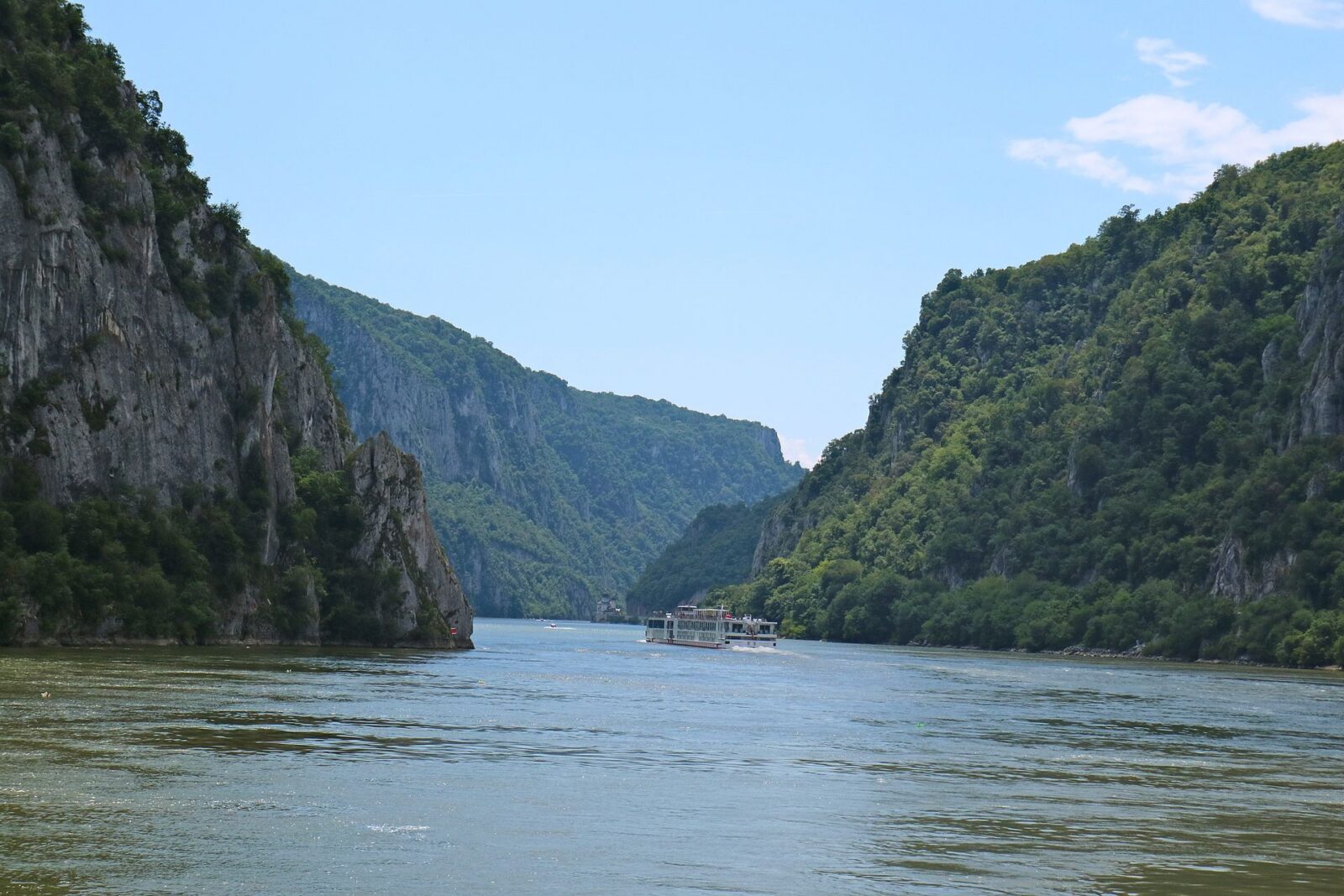
Golubac is one of only three primary entrances to Djerdap National Park, sitting at its upstream end, where the protected area begins a run of roughly 100 km along the Danube’s right bank down to Diana Karatas near Kladovo. The fortress itself is run by its own company, separate from the park administration, and the park’s own information about arrival names Golubac as one of its gateways rather than as a park facility.
Whether the park’s own protected-area charge is added on top of a fortress ticket is not something either side states. The park’s fee page ties its charge to sales points elsewhere along the Danube and to the visitor centres further downstream, without mentioning Golubac at all, and the fortress’s own price list already folds parking, the visitor centre and the archaeological park into the zone tickets, with no separate line for a park fee. Neither is proof of the other, so treat it as unresolved rather than assume the fortress ticket is all you will ever be asked for inside the wider park. Djerdap’s other sites and Lepenski Vir further along the same road are worth folding into the same trip.

Common questions
How long should I plan for a visit?
The green zone, with its hourly guided talk and the exhibition inside the Palace, fills an hour or two without rushing. Add the upper zones only if you are visiting on a Friday, Saturday or Sunday, since that is when they run, and add walking time on top: the paths to towers 3, 4 and the Hat Tower are described by the operator itself as moderately hard to extremely difficult.
Is there really no bus to Golubac?
Two independent official sources agree that there is none: the fortress operator’s own contact page names no route, and the local tourist office’s directory of useful numbers lists no bus station for Golubac itself, only the one in the town of Pozarevac, some 40 km away. Plan on a car or a booked excursion.
Do I need to book tickets in advance?
Not if you are visiting alone or as a family: you buy at the gate. The five-day advance registration applies to organised groups and tour operators, who book through the operator’s own system or by phone and must be ready to show proof of payment on the day.
Can children go up into the higher towers?
No. Zones II and IV, the only two of the upper zones currently open, are restricted to adults, with numbers capped at 20 and 2 people at a time. The green zone, Zone I, has no such restriction.
Is there a separate charge for Djerdap National Park?
Neither the park nor the fortress operator says so. The park’s published fee applies at sales points elsewhere in Djerdap, and the fortress ticket already includes parking, the visitor centre and the archaeological park with no mention of a park fee. That silence is not a guarantee, so it is worth asking on arrival rather than assuming.
Nearby
Golubac sits at the western end of Djerdap, so it is naturally the first or last stop on a run along the gorge. Djerdap National Park covers the sites further along the same road, and Lepenski Vir pairs well with it on the same day. Eastern Serbia from Belgrade weighs an organised circuit against driving yourself, and renting a car in Serbia covers what that involves before you commit to either. For more of the region beyond a single fortress, browse day trips from Belgrade.