
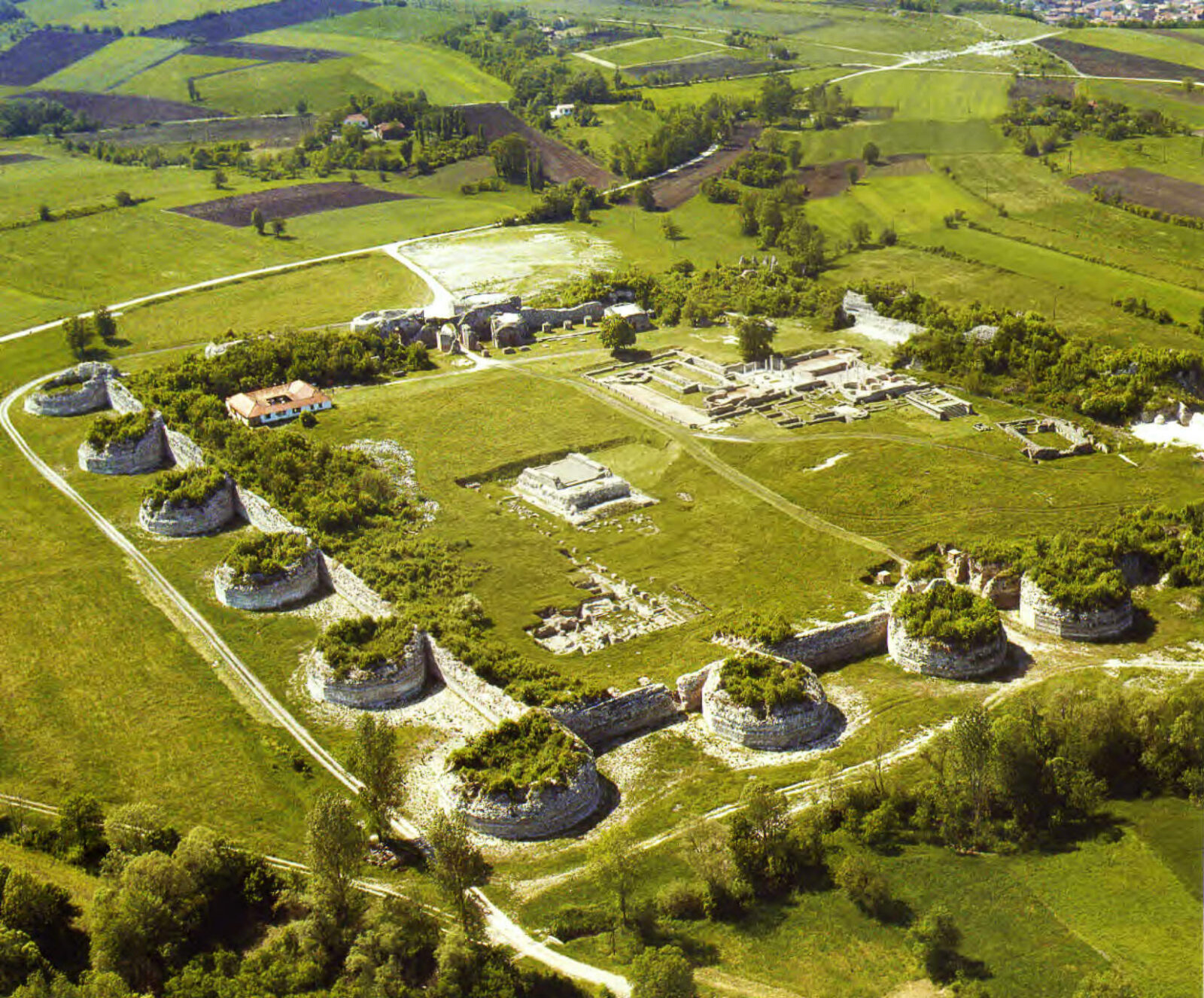
Felix Romuliana, also known locally as Gamzigrad after the neighbouring village, keeps its best pieces somewhere else. If you come expecting the finest mosaics and sculpture to be waiting inside the ruins, you will be looking at wall footings and gate foundations instead: what made archaeologists take notice of this place sits eleven kilometres away, in a museum building in the town of Zajecar. Planning a visit here means planning around that split from the start, not discovering it once you have already paid for a ticket.
The site carries UNESCO World Heritage status, inscribed in 2007, and its protection is managed at the national level by Serbia’s heritage institute, a separate matter from the museum that actually runs the ticket desk, the guiding and the day-to-day visit. Both facts shape what to expect on the ground: the protection is permanent and well documented, while the practical side of a visit sits with a regional museum rather than a large tourism operator with an English-language call centre.
No regular public transport reaches Gamzigrad, the village next to the ruins, so getting there takes some planning without a car. What follows covers what it costs, when it’s open, how to get there, and what is actually standing on the ground versus what has moved to a display case in town. None of these details are complicated on their own; they just need to be lined up before you set off, since there is no ticket office in Belgrade or a train timetable to lean on once you are already on the road.
The short version. A single-site ticket to Felix Romuliana costs 500 RSD; a combined ticket covering the palace, the National Museum building in Zajecar and Radul-begov konak costs 600 RSD. The site is open every day, 08:00 to 20:00 from April to November and 08:00 to 16:00 the rest of the year. No regular public transport reaches the site: it sits 11 km from Zajecar, reached by car or taxi. No official road distance from Belgrade is published, so route planning goes via Zajecar. Much of what draws visitors here in the first place, the finest sculpture and mosaics, is kept in the museum in town rather than at the palace.
On this page
What you pay
The Narodni muzej Zajecar, which runs visitor operations across all three of its venues, sells one shared price list rather than a separate one for each site. The categories below cover most travellers, from a solo visitor to a family group; ask at the desk if your situation does not fit neatly into one of them.
| Ticket | Price |
|---|---|
| Individual, single site | 500 RSD |
| Combined, all three venues | 600 RSD |
| Pensioner or student | 300 RSD |
| Group, over 15 people | 300 RSD |
| Group, combined ticket | 400 RSD |
| School excursion | 300 RSD |
| Family, at least three members | 1,200 RSD |
| Annual ticket | 1,200 RSD |
| Children under 7 | Free |
Two extras sit outside this table: an audio guide can be rented for 300 RSD, or a paid expert guide booked through the palace for 1,000 RSD, available between 12:00 and 16:00. Organised visits otherwise depart every 45 minutes, so the wait is rarely long even without booking anything in advance. Nothing on the museum’s page states that a guide is required to enter, unlike the rule at Viminacium further north, though the absence of that sentence is not itself proof that self-guided access is guaranteed either way.
What the ticket does and doesn’t cover
Worth confirming before you buy. The museum’s own price list introduces the combined ticket by saying it “covers the National Museum Zajecar, Radul-begov konak and Felix Romuliana”, which most plausibly means the 500 RSD individual ticket admits to one of the three venues while the 600 RSD combined ticket covers all of them. The page never spells this out for a visitor buying only the individual rate at Gamzigrad, so anyone whose day plan does not include the town museum should confirm at the ticket desk exactly what the individual ticket includes before paying for the combined one by default.
On site at Gamzigrad, an Info Centre offers a guide service alongside VR and interactive presentations, so there is something to see even if you decide against the extra guiding fee. Parking sits next to the site, and toilets near the car park are accessible to camper-van visitors as well, which is worth knowing if you are touring the region in one.
When it’s open
| Season | Hours |
|---|---|
| 1 April – 1 November | 08:00 – 20:00, every day |
| 1 November – 1 April | 08:00 – 16:00, every day |
Felix Romuliana runs the same hours seven days a week, which is more generous than the museum building in Zajecar itself. If you are planning to see both, note that the town-centre building keeps a different weekly pattern: Tuesday to Saturday 08:00 to 16:00, Monday 08:00 to 15:30, closed on Sunday. Buy a combined ticket on a Sunday and you can still walk the palace; you just cannot use the museum half of it until another day.
Getting there
By road
Felix Romuliana is about 11 km from Zajecar, near the village of Gamzigrad. No regular public transport is organised to the site itself, and the museum’s own advice is to arrive by private vehicle or a local taxi from Zajecar. You will not find a published road distance from Belgrade on the museum’s site, so the practical way to plan the trip is to route yourself to Zajecar first and treat the last 11 km as a short, separate hop rather than looking for a single figure from the capital.
Combining it with the rest of the region
Zajecar sits on regional roads that also reach Bor, Negotin, Sokobanja and Nis, according to the museum’s own directions page. That makes Felix Romuliana easier to fold into a route through eastern Serbia than to treat as a stand-alone day trip from Belgrade. If you are driving this direction anyway, pairing it with a stop in Sokobanja or building it into a longer loop towards Nis spreads the driving more sensibly than an out-and-back trip from the capital, and it gives the long stretch on regional roads a destination at either end rather than just one.
Walking the palace and the hill
Felix Romuliana was built as a fortified palace and memorial complex for the Roman emperor Galerius, and what survives splits into two distinct parts that you will walk as two separate stops rather than one continuous site: the walled palace itself, and a separate hill nearby where the memorial buildings stand apart from the fortifications. Give yourself time for both; skipping the hill because it looks like an afterthought on a map misses half of what the place was built for.
The fortified palace
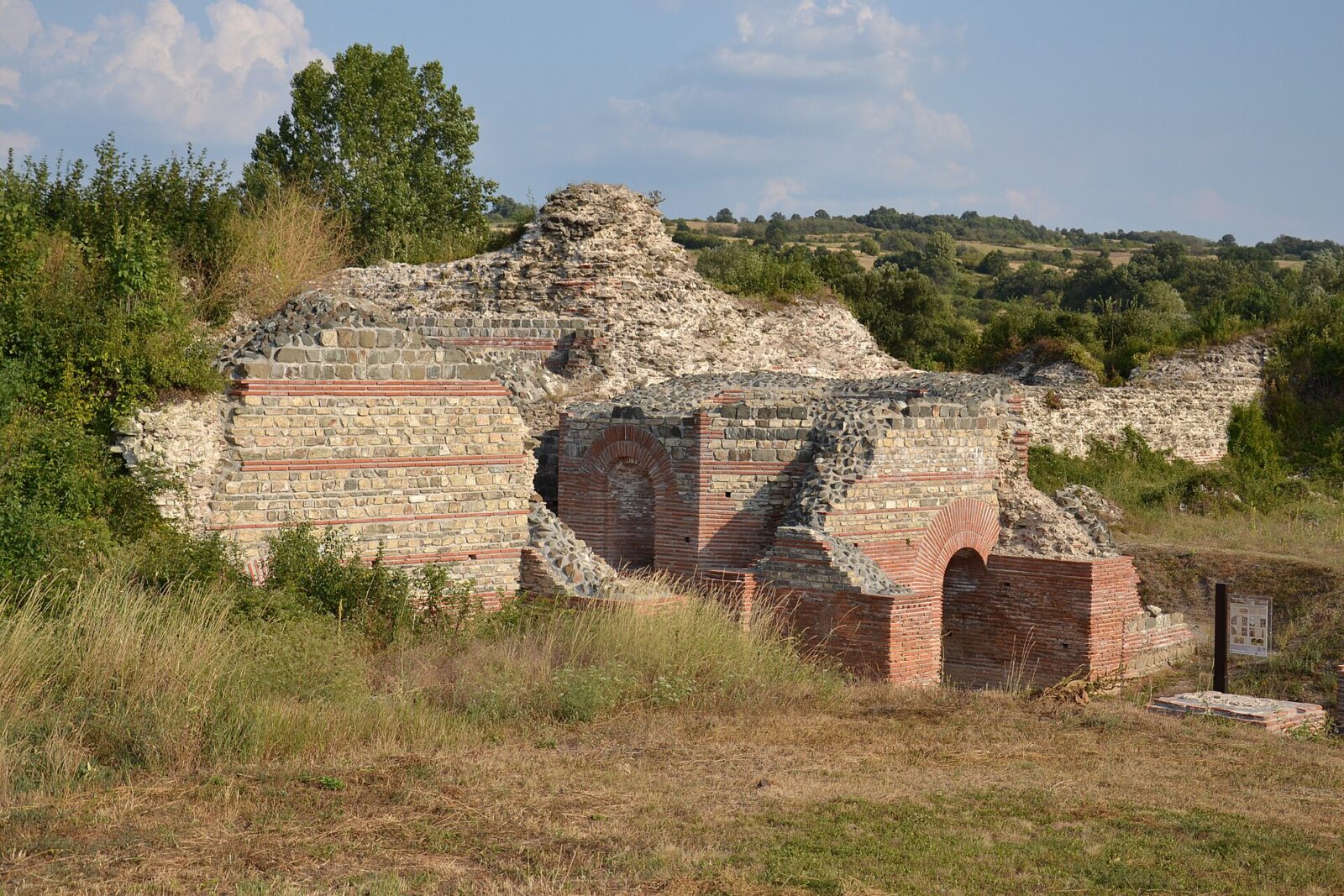
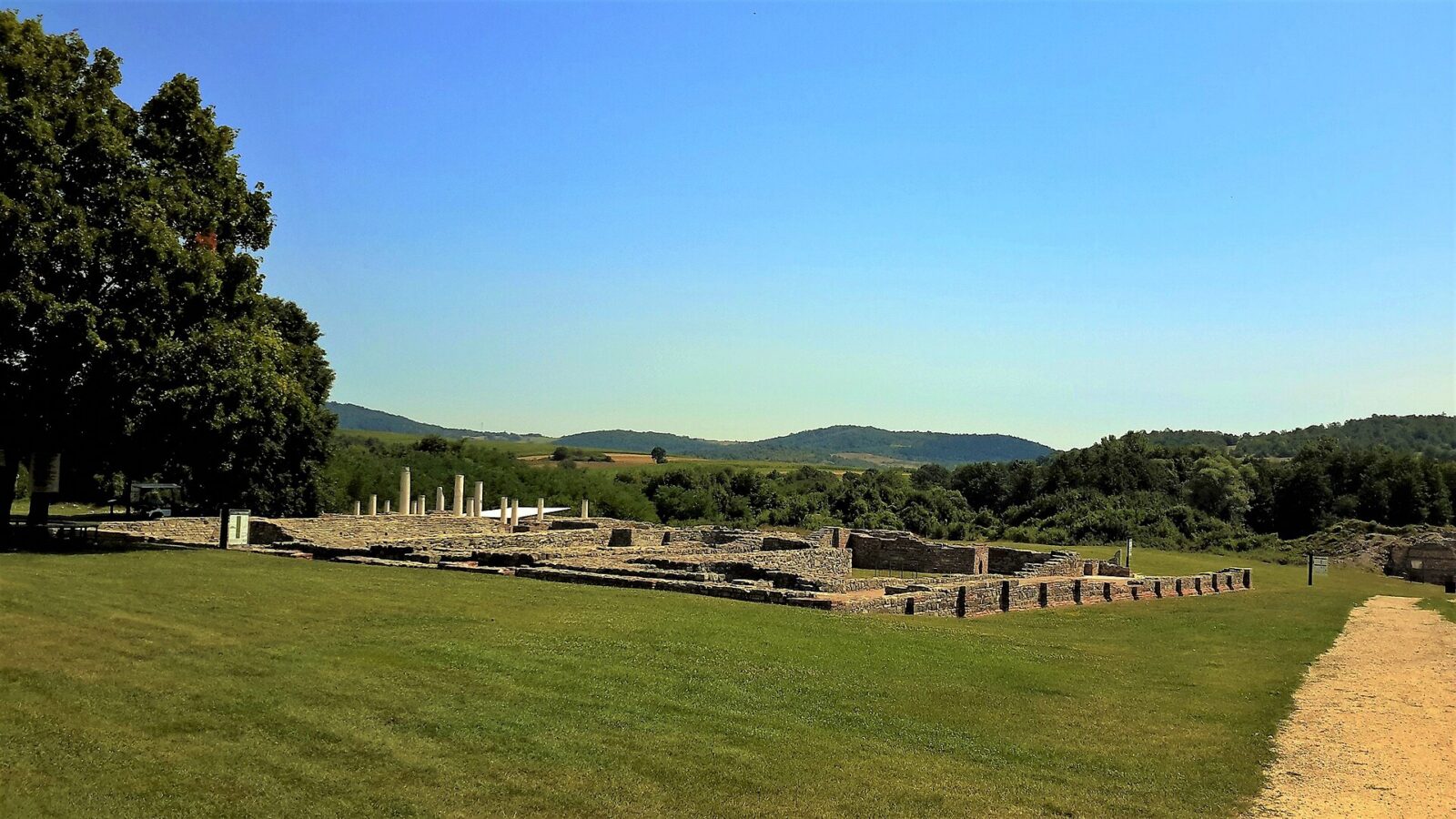
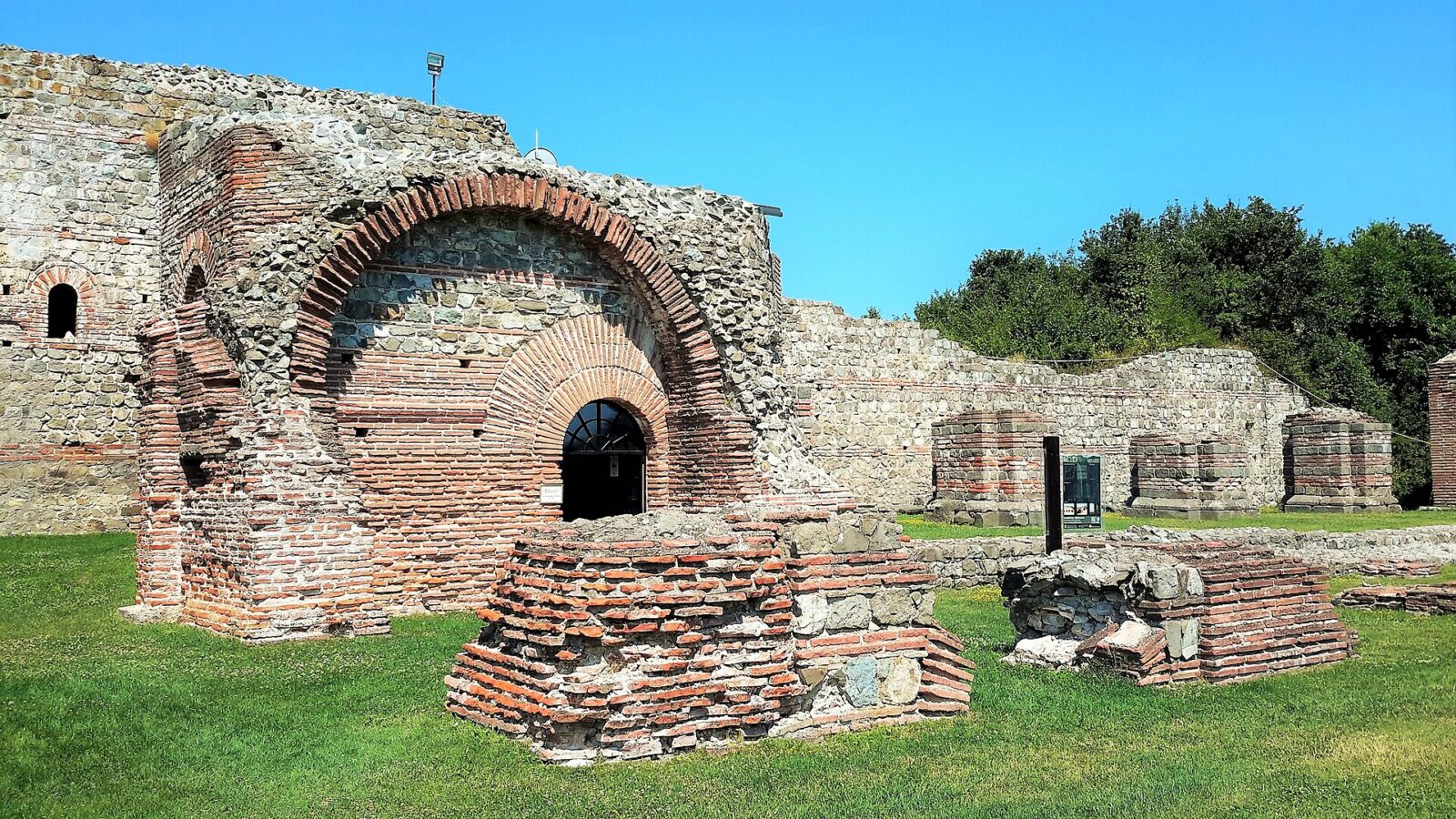
The palace occupies the north-western part of the complex, enclosed by a double rampart with monumental gates. Inside the walls stood basilicas, temples, thermae and a tetrapylon, a four-gated monument marking a crossing point. Most of what you will actually see today is foundation and wall footing rather than standing rooms, which is exactly why the museum’s own materials point out that the significant architectural decoration and sculpture pieces are kept off-site, in the National Museum in Zajecar, rather than displayed here. Come here for the layout and the scale of the walls; go to Zajecar for the objects those walls once held.
The memorial complex on Magura
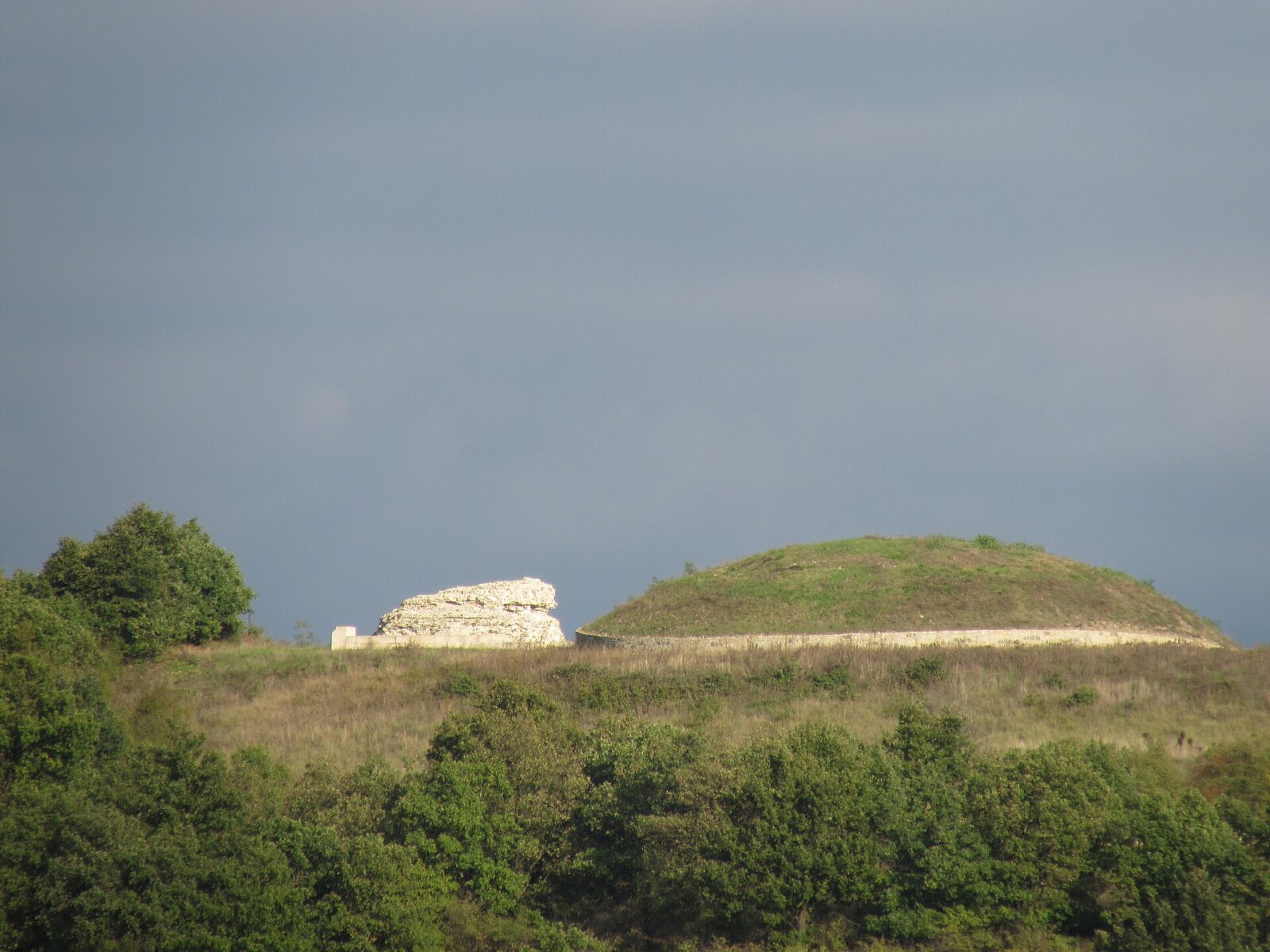
On the nearby hill of Magura sits a separate sacral complex: two mausoleums, one for Galerius and one for his mother, Romula, and two consecration monuments built in the form of giant tumuli. This part of the site reads less as a palace and more as a burial and commemoration ground, set deliberately apart from where the emperor actually lived and governed. If you only have time for one of the two areas, the palace is the more legible of the pair for a first-time visitor, but the hill is where the memorial purpose of the whole complex becomes clear.
Why the museum in Zajecar matters
The Narodni muzej Zajecar operates three venues under one roof of management: its own museum building in central Zajecar, Felix Romuliana, and Radul-begov konak. The combined ticket exists because of this arrangement, and it is the only way to see the site’s finest finds without booking a separate trip back into town: the museum’s own text is explicit that the most significant decorative elements and sculpture uncovered at Gamzigrad are kept in the town building, not at the palace itself. Visit only the ruins and you get the architecture and the layout; add the museum and you see what actually filled that architecture, which for many visitors is the more memorable half of the two.
Why it’s on the UNESCO list
Felix Romuliana was inscribed on the UNESCO World Heritage List in 2007, recognised for the completeness of its palace-and-memorial layout and its place among late Roman imperial residences. The listed property and its buffer zone are protected nationally as a Cultural Monument of Exceptional Importance, managed at the level of the Republic of Serbia by the Institute for the Protection of Cultural Monuments of Serbia. That institute handles the site’s legal protection; it is a different body from the Narodni muzej Zajecar, which is the one selling the ticket and running the tour on any given day. None of this changes what the visit actually costs or when the gates open, but it explains why a site with so few standing walls still carries the weight of a national heritage designation: the protection here is administered at the level of the Republic of Serbia, not left to a single local operator.
Common questions
Does the individual ticket include the museum in Zajecar?
Not clearly stated either way. The museum’s own wording suggests the 500 RSD individual ticket covers one of its three venues and the 600 RSD combined ticket covers all three, but this is not spelled out for someone buying only the individual rate at Gamzigrad. Ask at the desk before you pay if seeing the museum’s collection matters to your day, rather than assume the cheaper ticket includes it.
Do I need a guide to visit the palace?
Nothing on the museum’s site states that a guide is required, unlike the rule at Viminacium. An audio guide (300 RSD) and a paid expert guide (1,000 RSD, 12:00-16:00) are both available for anyone who wants one.
How do I get there without a car?
No regular public transport reaches the site. The museum recommends a private vehicle or a local taxi from Zajecar, 11 km away.
How far is it from Belgrade?
The museum does not publish a direct Belgrade-to-Gamzigrad road distance, and no other official source fills that gap either. The only figure you can rely on is the 11 km between Zajecar and the site, so plan your route in two legs, Belgrade to Zajecar and then the short hop to Gamzigrad, rather than looking for one number that covers the whole trip.
Is there a family rate?
Yes. A family ticket for at least three members costs 1,200 RSD, the same price as an annual individual ticket. Children under 7 are admitted free.
Are the hours the same all year?
No. The site runs 08:00 to 20:00 every day from 1 April to 1 November, then drops to 08:00 to 16:00 for the rest of the year. Both ranges apply seven days a week, so there is no weekday closure to plan around, unlike the museum building in Zajecar itself.
Nearby
Felix Romuliana pairs naturally with the rest of a swing through eastern Serbia: the eastern Serbia day trip guide covers the wider corridor, and Viminacium, further north on the Danube, is the other major Roman site in the region and worth comparing notes with, since the two sites handle guiding and ticketing quite differently. Zajecar’s own roads also lead towards Sokobanja and, further on, Nis, if the trip is heading south rather than back to Belgrade.