
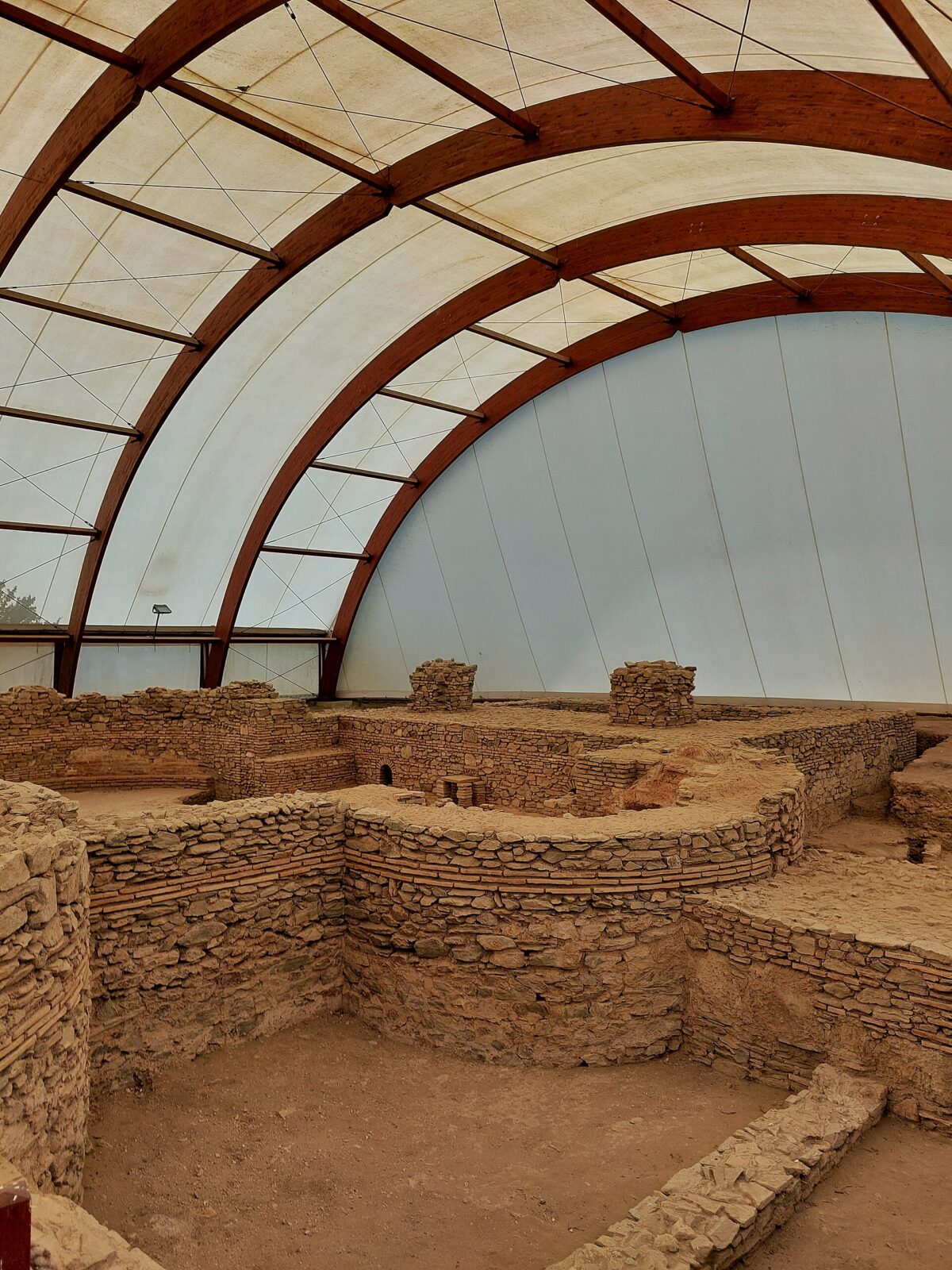
Viminacium does not allow wandering off alone. Every ticket here comes bundled with a guide, the tours leave on the hour, and that single rule changes how the stop should be planned more than almost anything else about the site. Most Roman ruins in Serbia leave visitors to set their own pace; this one sets it for them.
The park sits beside the Danube near Kostolac, on the same road that already leads towards Golubac and the Djerdap gorge, so it slots naturally into a day built around that corridor rather than standing as a destination of its own. Decades of excavation lie behind the fenced-off fields the guided route actually crosses, and the site is best known in Serbia for one particular find: a mammoth skeleton nicknamed Vika. Its display pavilion is currently closed for rebuilding work, with no date given for reopening, so the mammoth should not be the reason for the trip right now.
None of that makes Viminacium a hard place to visit. It makes it a place where the small print matters more than usual: what the ticket actually includes, when the guided tour runs, and how to get there from Belgrade without a car. Settle those three things before you leave, and the rest of the visit runs on the guide’s schedule rather than your own, which is a change of pace worth knowing about in advance.
The short version. Viminacium is guided only: self-guided access is not offered, tours leave every hour and run 1.5 to 2 hours. A site-only adult ticket costs 1,050 RSD, adding the museum brings it to 1,400 RSD, and the museum alone is 350 RSD. Children under 10 with a parent do not pay, unless they arrive as part of an organised school trip. The park is 95 km from Belgrade on the E-75, with no train and no direct bus. The mammoth pavilion is closed for rebuilding, and no reopening date has been published.
On this page
What you pay and what it covers
Viminacium sells three tiers of ticket, and the choice comes down to whether you want the archaeological park, the museum in Kostolac, or both. Prices are the same for individual visitors and organised groups in most categories, with a separate group discount above 30 people.
| Ticket | Adult | Pensioner | Child over 10 | Student |
|---|---|---|---|---|
| Archaeological site only | 1,050 RSD | 850 RSD | 850 RSD | 950 RSD |
| Site and museum combined | 1,400 RSD | 1,100 RSD | 950 RSD | 1,200 RSD |
| Museum only | 350 RSD | 250 RSD | 100 RSD | 250 RSD |
Children up to 10, travelling with a parent, do not pay for any of the three tickets. That rule has one exception: a child arriving as part of an organised school excursion pays the child rate instead, even if under 10. The museum-only ticket suits a short stop or a return visitor who has already toured similar Roman sites elsewhere in Serbia and mainly wants the finds; the two tickets that include the archaeological park are the ones that actually put a visitor on the ground where the city stood.
Why a guide comes with every ticket
The operator states this plainly: a visit to the site is only possible with a guide. There is no self-guided route through the excavations. Tours depart on the hour, every hour, and last an average of 1.5 to 2 hours. Guiding in Serbian and English is standard; if you need another language, contact the park’s tourist service by phone or email at least 10 days ahead.
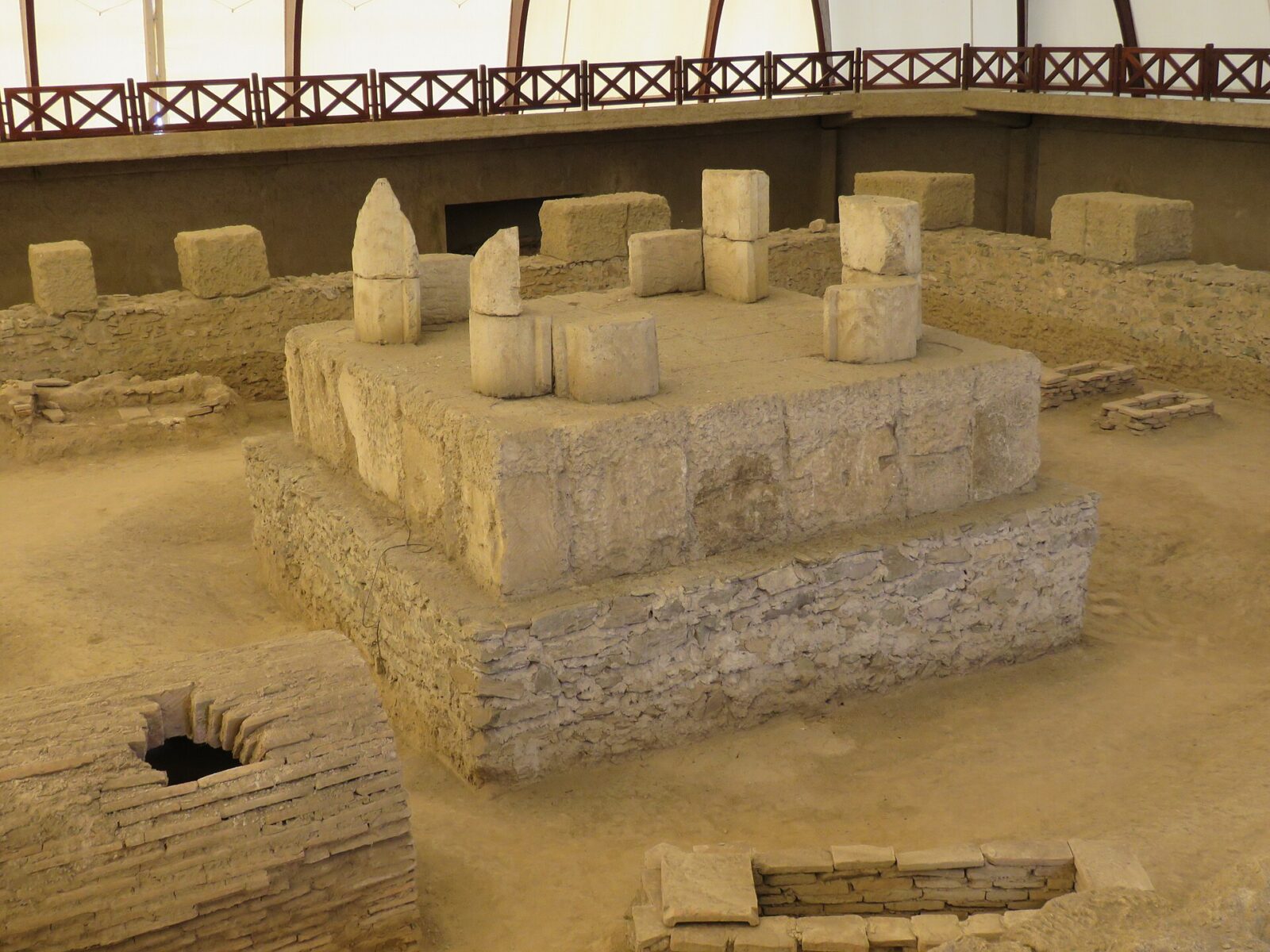
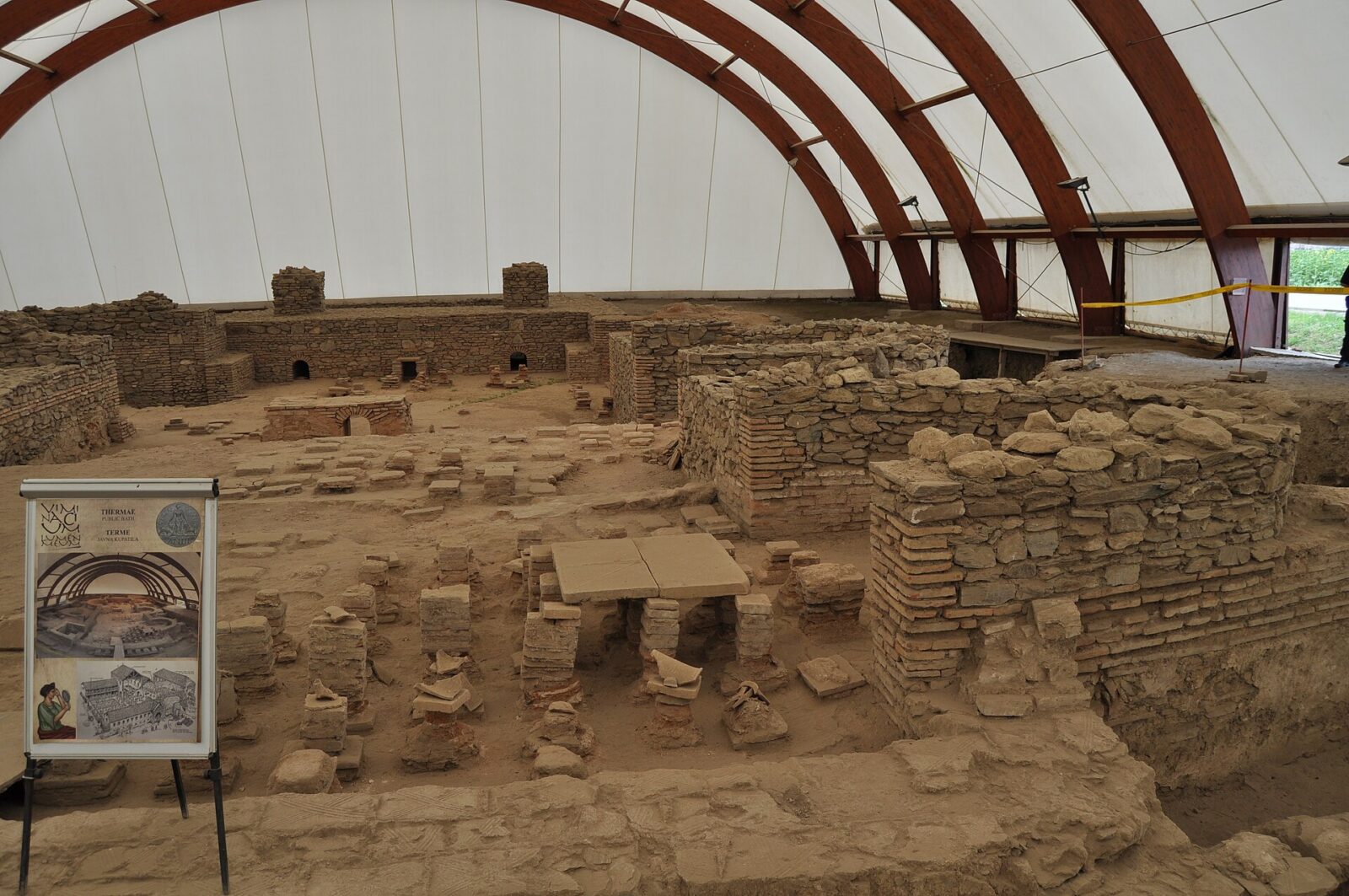
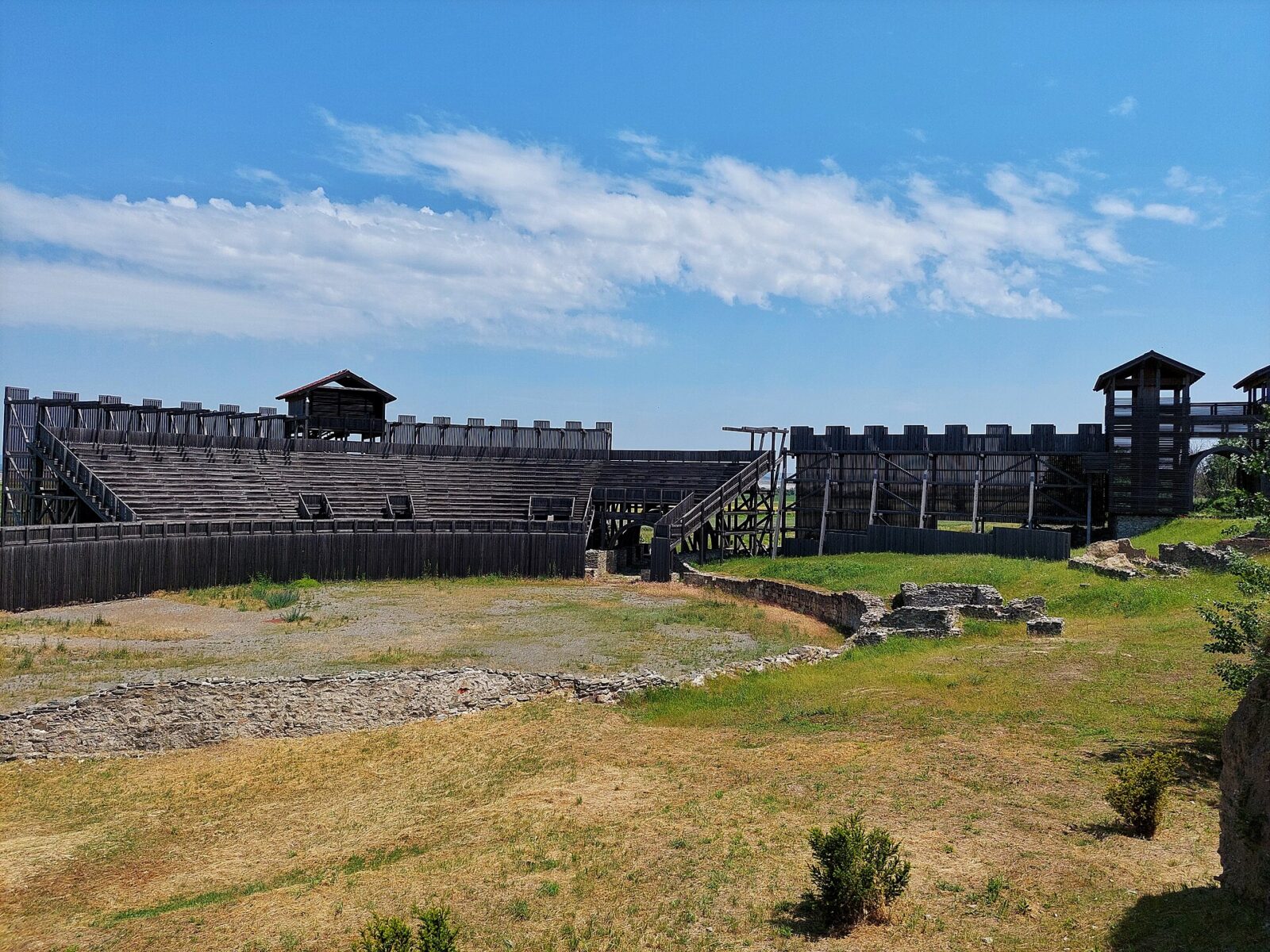
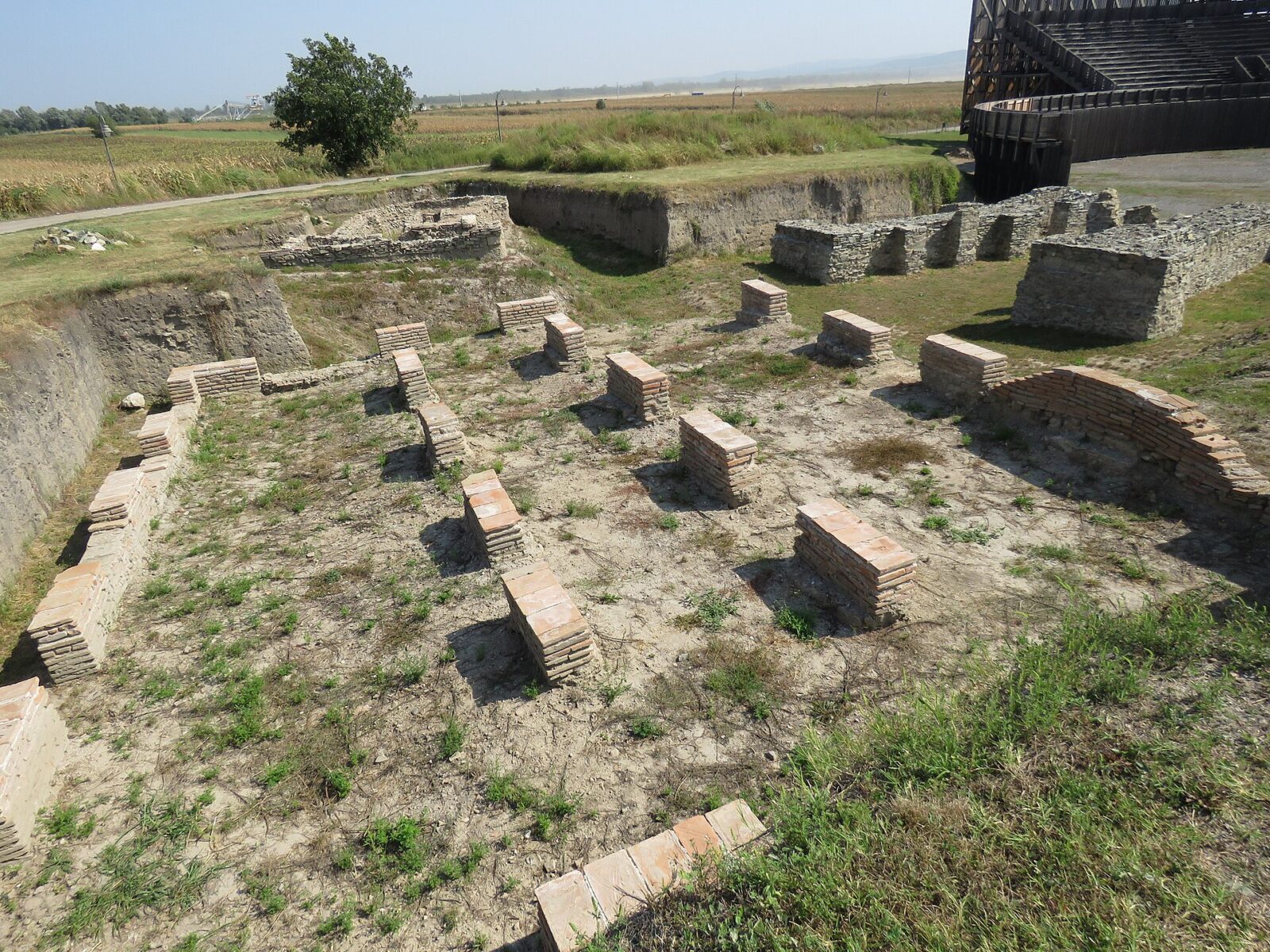
The standard tour takes in five stops: the Imperial Mausoleum, the Thermae, the Amphitheatre, Limes Park, and the central courtyard of Domus, the site’s research centre. That last point is worth reading twice. Because of ongoing works and exhibition preparation, the museum space inside Domus is not currently part of the tour, only its central courtyard is. A separate seasonal shuttle train links the Mausoleum and the Thermae in the summer months, running with a minimum of 10 and a maximum of 35 passengers, though it is not available to organised excursion groups.
Since tours leave every hour, an individual visitor has little reason to plan around a specific departure. The exception is language: Serbian and English guiding is the default, and anything else needs at least 10 days’ notice to the tourist service before you arrive.
What might catch you out. The mammoth pavilion has been closed for reconstruction since at least the start of 2026, with wording on the operator’s own site unchanged for eight months and no reopening date announced. Treat this as an open-ended closure rather than a brief works notice, and do not plan the visit around seeing the mammoth find. The combined site-and-museum ticket also deserves a second look: it is still sold at 1,400 RSD, yet the operator’s own description of the standard tour excludes the museum space inside Domus for the reasons above. What exactly the combined ticket currently grants access to beyond the archaeological park is not spelled out on the operator’s site, so if the museum content matters to your visit, call ahead and ask before you buy it.
One more thing worth knowing. The operator’s own pages disagree on which days of the year the site closes. One page states the park is closed only on New Year’s Day; another, elsewhere on the same site, adds Orthodox Christmas, 7 January, as a second closed day. Neither is obviously the more current of the two. If you are planning to visit around either date, call the on-site tourist service first (+381 62 232209) rather than assume either way.
Getting there from Belgrade
Viminacium is 95 km from Belgrade, reached by the E-75 motorway, 35 km past the Pozarevac turn-off. There is no train to the site and no direct public bus line. The operator’s own advice, stated plainly, is to come by private vehicle: the alternative is a bus to Pozarevac followed by local transport towards the Kostolac B power plant, which sits close to the park, but this is described as a workaround rather than a proper connection. If you do not have a car, renting one for the day or arranging a taxi from Belgrade or Pozarevac are the practical options; there is no rail alternative to fall back on.
The park’s postal address places it in Stari Kostolac, the older part of the town of Kostolac, rather than in a separate village of its own. If you are already in Kostolac town centre or near the power plant, you are, in practice, close to the entrance.
Arriving by boat
Viminacium has its own river connection: the international passenger port of Kostolac, on the Danube, 7 km from the site. If you are travelling by boat, the operator asks that you contact its tourist service in advance to arrange the details of the visit.
When it’s open
Viminacium runs every day of the year, with hours that shift by month rather than by a simple summer-winter split.
| Months | Hours |
|---|---|
| January – February | 09:00 – 16:00 |
| March | 09:00 – 17:00 |
| April | 09:00 – 18:00 |
| May – September | 09:00 – 19:00 |
| October | 09:00 – 18:00 |
| November | 09:00 – 17:00 |
| December | 09:00 – 16:00 |
The last guided tour of the day starts two hours before closing, and a visitor who arrives after that can still join a tour already in progress rather than being turned away outright. In heavy rain, parts of the site can close for the day; the amphitheatre is the one named as weather-restricted on the operator’s site.
Walking the Roman city
Viminacium began as a Roman legionary fortress on the Danube frontier and grew into a provincial capital, though the guided route covers only a small, curated slice of a much larger buried city. Excavation here has run for decades and continues today, which is also why parts of the site move in and out of the visit as work progresses. The guide sets the pace and the order, so no prior knowledge of which ruin belongs to which period is expected; the five stops below are what the tour currently covers, in roughly the order they come up.
The Imperial Mausoleum
The first stop on the standard tour, and the one that gives the site part of its reputation: a funerary structure built at a scale that reflects Viminacium’s importance to the Roman administration on this stretch of the Danube.
The Thermae
The remains of the city’s public baths, a clear surviving footprint of everyday Roman urban life on the site, and a useful counterpoint to the funerary and military stops that bookend the tour. It is also linked to the Mausoleum by the seasonal shuttle train in summer, for anyone who would rather ride than walk between them.
The Amphitheatre and Limes Park
The amphitheatre marks the city’s public and military life; Limes Park, next to it, sets out the wider system of Roman frontier defences along the Danube that Viminacium belonged to, giving the individual ruins a sense of the network they were once part of.
Domus, the research centre
The final stop, and the one to read the fine print on. The guided tour currently reaches only the central courtyard of Domus, the site’s scientific research centre; the museum space inside is not part of the visit while works and a new exhibition are under preparation. Anyone whose plans depend on seeing that collection should check with the tourist service beforehand, rather than assume the combined ticket covers it.
Where Viminacium sits on the Danube corridor
Viminacium is not part of Djerdap National Park, even though the two get lumped together in a traveller’s mind because both sit along the same river. Viminacium lies well upstream of the Djerdap gorge, closer to Belgrade than to Golubac, and it is administered separately, by the Institute of Archaeology in Belgrade rather than the public enterprise that runs the national park. In practice, that distinction matters less than the geography: the site sits directly on the road between Belgrade and Golubac, which makes it a natural stop on the way rather than a detour that costs you a separate trip.
If you are already planning a day along this stretch of the Danube, Viminacium fits at the start of it, before Golubac fortress and the Djerdap gorge further east, or as a standalone half-day if you are staying in Belgrade and not going further. Because the guided tour rarely runs past two hours, there is usually time left in the day to keep driving east, provided you leave Belgrade reasonably early.
Common questions
Can I visit Viminacium without a guide?
No. The operator states that a site visit is possible only with a guide, and self-guided access is not offered. Tours leave every hour, so the wait is never long.
How long does the guided tour take?
The average visit lasts 1.5 to 2 hours, covering the Imperial Mausoleum, the Thermae, the Amphitheatre, Limes Park and the central courtyard of Domus.
Is the mammoth skeleton on display?
Not at the moment. The mammoth pavilion is closed for reconstruction, and the operator has not published a date for reopening. Do not build your visit around seeing it.
Is there public transport from Belgrade?
No train reaches the site and there is no direct bus line. The operator recommends coming by private vehicle. A bus to Pozarevac followed by local transport towards the Kostolac B power plant is possible but is not a direct connection.
Does the combined ticket include the museum?
It is sold that way, but the operator’s own description of the standard guided tour currently excludes the museum space inside Domus, reaching only its central courtyard. Confirm with the tourist service before you buy the combined ticket if the museum content is the reason for your visit.
Nearby
Viminacium sits on the road that also leads to Golubac fortress and the Djerdap gorge, and a day trip east from Belgrade can fold it in without much of a detour. Closer to Belgrade, the Roman fortress at Smederevo covers a later chapter of the same corridor’s history.