
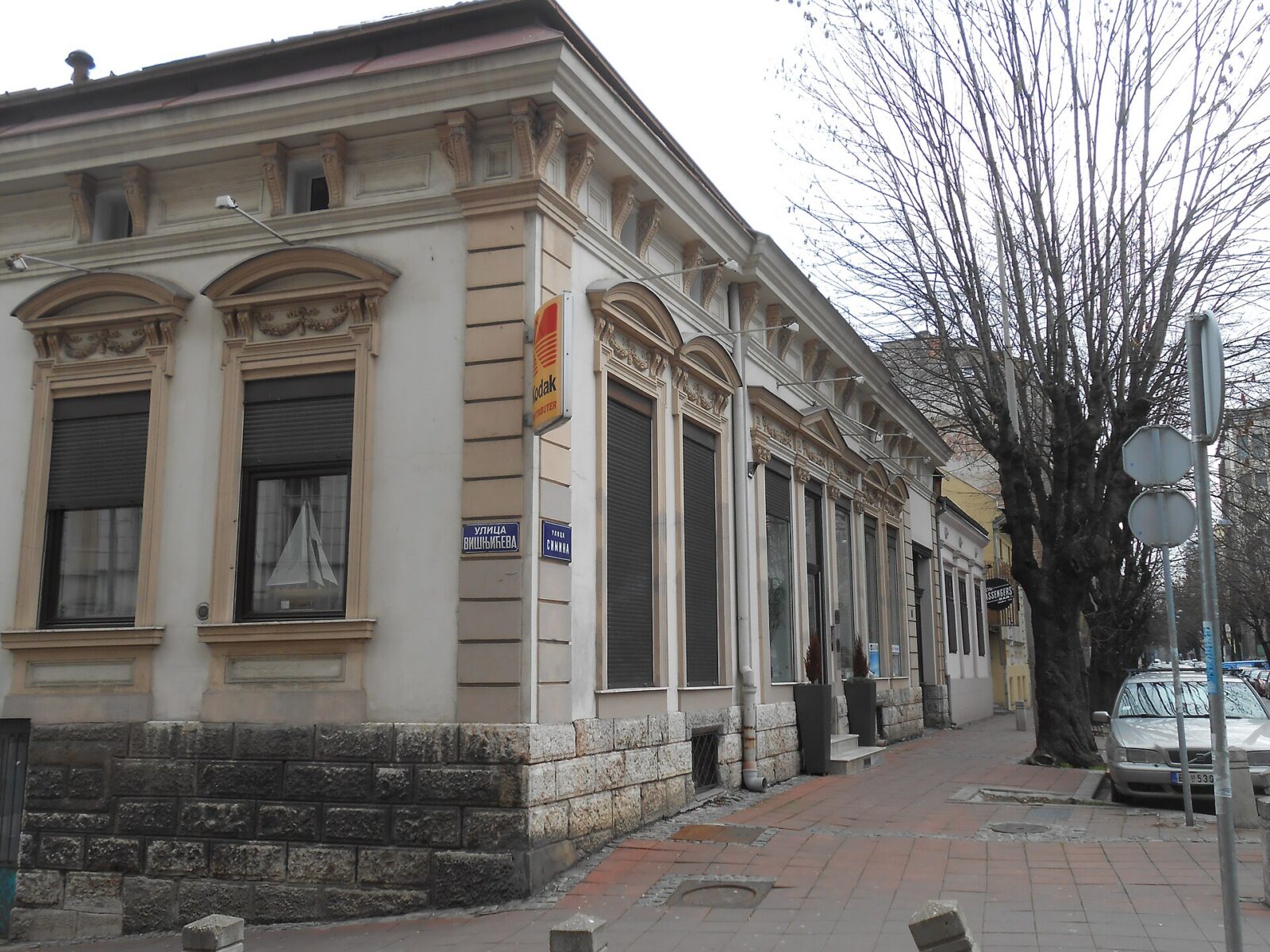
Ask someone in Belgrade which alphabet they read, Cyrillic or Latin, and the honest answer is usually both, often on the same street in the space of a few metres, without anyone finding that odd. Serbia runs two full scripts for one language, and neither one is a relic kept for show: the law protects both, road signs carry both on the routes that matter, and a shop window can switch from one to the other between its name and its opening hours.
None of that requires you to learn Serbian before you land. It helps to be able to read a sign rather than treat it as decoration, and a handful of working phrases go further here than in a country with one script and a closer relative to English. This page covers what the law actually says about the two scripts, where minority languages fit into that picture, and enough vocabulary and pronunciation to get through a menu or a ticket counter.
One thing this page does not have is a breakdown of how many people speak what, or which script wins in daily use outside official settings. Serbia’s most recent census results were not readable through the tools available for this collection, and rather than repeat a commonly cited figure this page cannot itself verify, it says so directly further down.
The short version. Serbian is the country’s official language, and the law names Cyrillic as the official script, with Latin permitted in official use under conditions the same law sets out. Where the two appear together officially, Latin is placed after Cyrillic, below or to its right. International and main-road traffic signs must show place names in both scripts; other roads and street signs may add Latin but are not required to. A national minority reaching 15 percent of a local area’s population gets its language into official use there; reaching 2 percent of the whole country’s population gives the right to correspond with national bodies in that language. The Institute for the Serbian Language, part of the Serbian Academy of Sciences and Arts, is the body behind the standard dictionaries. No reliable current figure exists here for how many people speak which language day to day.
On this page
Telling the two scripts apart at a glance
Serbian Cyrillic and Serbian Latin are not two languages, and they are not even really two spellings: every letter in one has exactly one counterpart in the other, worked out on purpose in the nineteenth century so that a text could move between them without ambiguity. What looks unfamiliar in Cyrillic is usually a letterform, not a different sound: и is simply i, П is p, Д is d written with a different stroke. A handful of Cyrillic letters resemble Latin letters that mean something else entirely, which is the part that trips people up fastest: Р is r, not p; Н is n, not h; С is s, not c; У is u, not y.
Surnames are a fast way to notice the pattern once you know it. The ending -ić, spelled -ић in Cyrillic, is one of the most common in the country, carried by names from Đoković to Nikolić to Milošević; once you can read six letters, you can read a lot of shopfronts and news tickers.
Matching Cyrillic letters to their Latin equivalents
Both alphabets have thirty letters, and the table below lines them up. A few of them are two Latin characters standing for one Cyrillic letter and one sound each, not two: lj, nj and dž behave as single letters in Serbian, alphabetised as such, even though Latin script has to spell each with a pair.
| Cyrillic | Latin | Cyrillic | Latin |
|---|---|---|---|
| А а | A a | Н н | N n |
| Б б | B b | Њ њ | Nj nj |
| В в | V v | О о | O o |
| Г г | G g | П п | P p |
| Д д | D d | Р р | R r |
| Ђ ђ | Đ đ | С с | S s |
| Е е | E e | Т т | T t |
| Ж ж | Ž ž | Ћ ћ | Ć ć |
| З з | Z z | У у | U u |
| И и | I i | Ф ф | F f |
| Ј ј | J j | Х х | H h |
| К к | K k | Ц ц | C c |
| Л л | L l | Ч ч | Č č |
| Љ љ | Lj lj | Џ џ | Dž dž |
| М м | M m | Ш ш | Š š |
What the law says about which script comes first
Serbia’s law on the official use of language and script is explicit rather than customary: Serbian is the official language of the Republic of Serbia, and Cyrillic is its official script. Latin may also be used in official contexts, but only in the manner the law itself sets out, which is not the same as treating the two as interchangeable by default.
That manner is spelled out plainly: where a text is also written in Latin script under the law, the Latin version goes after the Cyrillic one, placed below it or to its right, never ahead of it or standing alone on signage the law covers. It is a small rule with a visible effect once you know to look for it, on government buildings and official notices in particular.
Where the law requires both scripts on signs
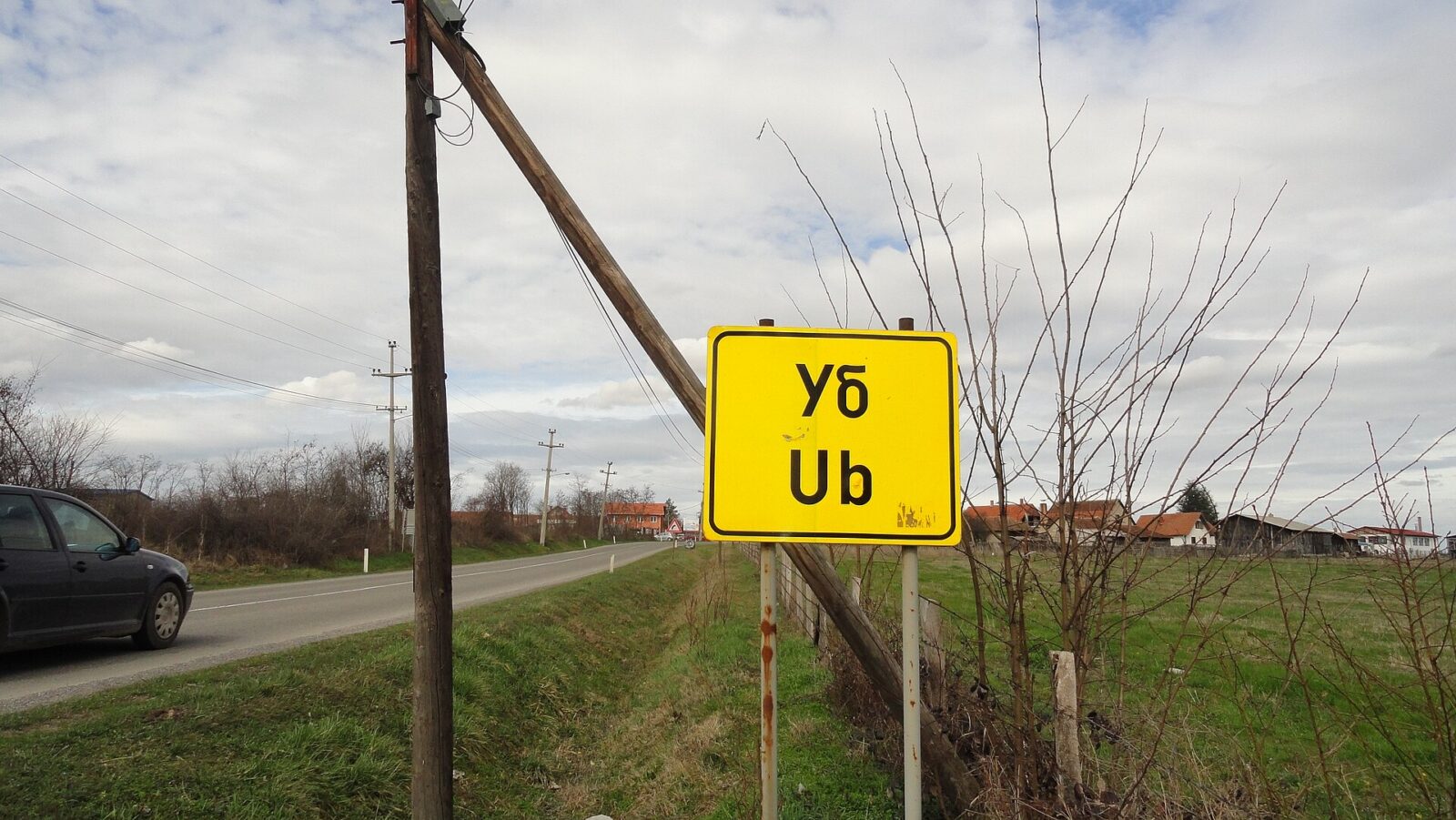
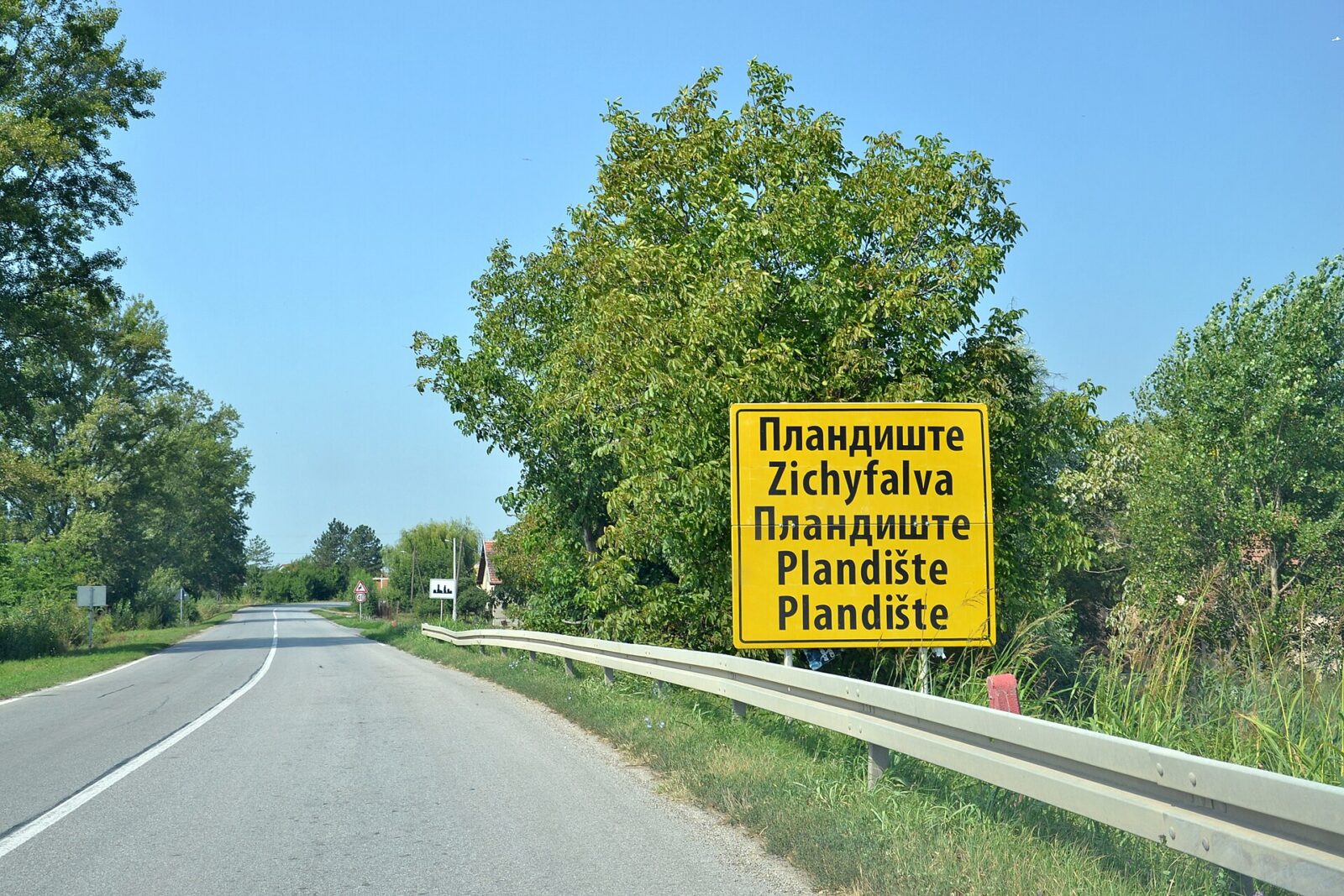
On international and main roads, the law requires traffic signs, route directions, place names and other geographic names to appear in both Cyrillic and Latin script. Drive one of those roads and you will see a place name written twice, one script under the other, rather than a choice made for you.
On other, lower-category roads, and for street and square names generally, the law allows Latin script to be added alongside the mandatory Cyrillic, but does not require it. That is why a side street in a smaller town may carry a Cyrillic-only sign while the main road into the same town shows both: the two situations sit under different rules, not different levels of enforcement of the same one.
Reading a few key phrases before you go
A short list gets you further here than the grammar would suggest, because the phrases themselves are short and the effort is visibly appreciated. The table gives each one in both scripts, since a menu, a sign or a receipt could hand you either.
| English | Latin script | Cyrillic script | Roughly said |
|---|---|---|---|
| Hello (informal) | Zdravo | Здраво | ZDRAH-voh |
| Good day (more formal) | Dobar dan | Добар дан | DOH-bar dahn |
| Please | Molim | Молим | MOH-leem |
| Thank you | Hvala | Хвала | HVAH-lah |
| Yes / No | Da / Ne | Да / Не | dah / neh |
| Excuse me | Izvinite | Извините | eez-VEE-nee-teh |
| Goodbye | Doviđenja | Довиђења | doh-vee-JEH-nya |
| Do you speak English? | Da li govorite engleski? | Да ли говорите енглески? | dah lee goh-VOH-ree-teh en-GLES-kee |
| Where is…? | Gde je…? | Где је…? | gdeh yeh |
| How much does this cost? | Koliko ovo košta? | Колико ово кошта? | KOH-lee-koh OH-voh KOSH-tah |
| Cheers! | Živeli! | Живели! | ZHEE-veh-lee |
Sounding out the letters
One rule carries you a long way: every letter keeps one sound, in either script, so there is no silent consonant waiting to catch you out. Four Latin pairs are worth fixing early, since English spelling assigns them differently: š sounds like the sh in “shoe”, č is a hard ch as in “church”, ć is a softer ch, closer to the t in British “tune”, and đ sits next to it as a softer j, closer to the d in “duke” than to the j in “jeep”. Ž is a soft zh, the sound in the middle of “measure”, and dž is the hard j you would expect from English, as in “jam”.
The letter r does something English speakers do not expect: it can stand between two consonants and act as the syllable’s vowel, with no written vowel anywhere nearby. The country’s own name is the clearest example: Srbija has no vowel between the S and the r, and the r itself carries that syllable. The same pattern shows up in ordinary words like trg, meaning a square, and vrt, a garden.
Where minority languages share official status
The law does not stop at Serbian. In areas where members of a national minority live, that minority’s language and script go into official use alongside Serbian, in a manner the law sets out rather than left to local custom. Two population thresholds decide how far that right reaches.
Locally, a self-government unit, an opština or a city, must bring a minority’s language and script into equal official use across its territory once that minority reaches 15 percent of the unit’s population according to the most recent census, and it has 90 days from the point the legal conditions are established to do it. Nationally, members of a minority whose share of Serbia’s total population reaches at least 2 percent can address national-level state bodies in their own language and are entitled to a reply in that language; below that threshold, the same right still exists, but it runs through the local self-government unit, which arranges and pays for the translation itself.
Where more than one minority language is in official use in the same place, the law also fixes the order: each minority-language text follows the Serbian text, placed below or to its right in the same font style and size, and where several apply together, they follow Serbian in alphabetical order among themselves.
What Vojvodina’s own statute leaves open
Vojvodina, the autonomous province in the north of the country, is a special case under the same law: the national statute does not itself name which national-minority languages are in official use within the province’s own working bodies. It hands that decision to Vojvodina’s own Statute instead, which is a separate legal document from the national law covered above.
We could not read that provincial list with confidence. The Vojvodina Assembly’s own page on the subject returned a working address but rendered no article text through the tools used for this collection, only its navigation. That page’s language switcher suggests several official-language versions of the site exist, which points to more than one minority language being in official use provincially, but naming them here from an unreadable page would be a guess dressed up as a fact. If the exact list matters to you, for research or for dealing with a provincial office, check the Assembly’s own site directly or ask the office in question.
Who studies and standardises Serbian
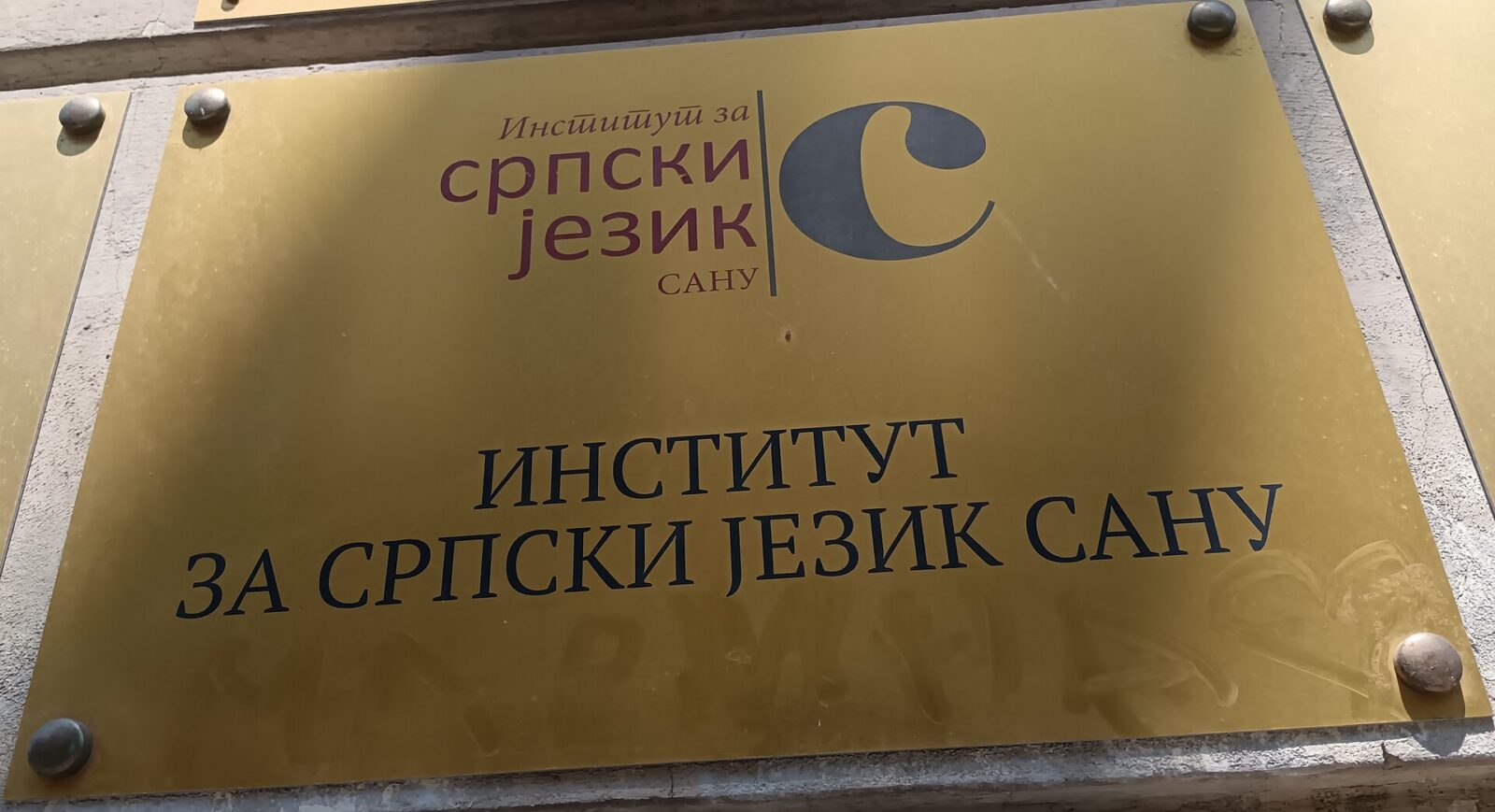
The Institute for the Serbian Language, part of the Serbian Academy of Sciences and Arts, is the country’s principal scholarly body for the systematic study of the language and its history. It was established in 1947, built on the foundations of a Lexicographic Department that dates back to 1893, and it produces the major reference dictionaries and linguistic atlases the standard language rests on. The Institute is also home to the Committee for the Standardization of the Serbian Language, the body responsible for the spelling and grammar rules taught in schools.
What the census does not tell us
This page deliberately leaves out any breakdown of how many people in Serbia speak which language, or which mother tongue is most common where. The Statistical Office of Serbia publishes a 2022 census with its own dashboards and downloadable tables, but the tools available for this collection could not render the results pages, which load as an interactive dashboard rather than static text, and a specific census publication that might carry the figures in narrative form was flagged for a future check rather than opened in this pass.
Numbers on this subject circulate widely online, and some of them may well trace back to that same census. This page has not verified any of them against the source directly, so none appear here. If the exact figures matter to your research, go to the Statistical Office’s own results portal rather than a secondary source repeating a number it may not have checked either.
Common questions
Do I need to learn Cyrillic to get around Serbia?
No. Latin script is legal in official use and common in daily life, and most tourist-facing signage, menus and apps default to it or offer it. Being able to sound out Cyrillic helps on official signs and in smaller towns, but it is not a requirement for a visit.
Which script should I expect on road signs?
On international and main roads, the law requires both Cyrillic and Latin. On smaller roads and local streets, Latin is optional alongside the mandatory Cyrillic, so a Cyrillic-only sign on a side street is normal rather than an oversight.
Are other languages officially recognised anywhere in Serbia?
Yes, locally. A national minority’s language and script become officially co-equal with Serbian in a local area once that minority reaches 15 percent of that area’s population, and speakers can correspond with national bodies in their own language once their group reaches 2 percent of the country’s total population.
Is Serbian the same language as Croatian or Bosnian?
That question sits outside what this page can answer from an official source: no fact collected for this page addresses the relationship between the standard languages of the region, so it is left open rather than settled here one way or the other.
What percentage of Serbians speak English?
We could not find an official figure for this. Treat any number you see elsewhere with the same caution this page applies to the census data above, and expect English to be more common in Belgrade, Novi Sad and tourist-facing businesses than in smaller towns.
Related guides
Serbia in 7 days sets a realistic pace for a first visit, and Belgrade in 2 or 3 days covers the capital where the two scripts appear most often side by side. Serbia travel essentials covers the formalities you will need regardless of which script they are printed in. If Vojvodina’s own minority languages interest you beyond what this page could confirm, Subotica sits in the province where that mix is most visible.