
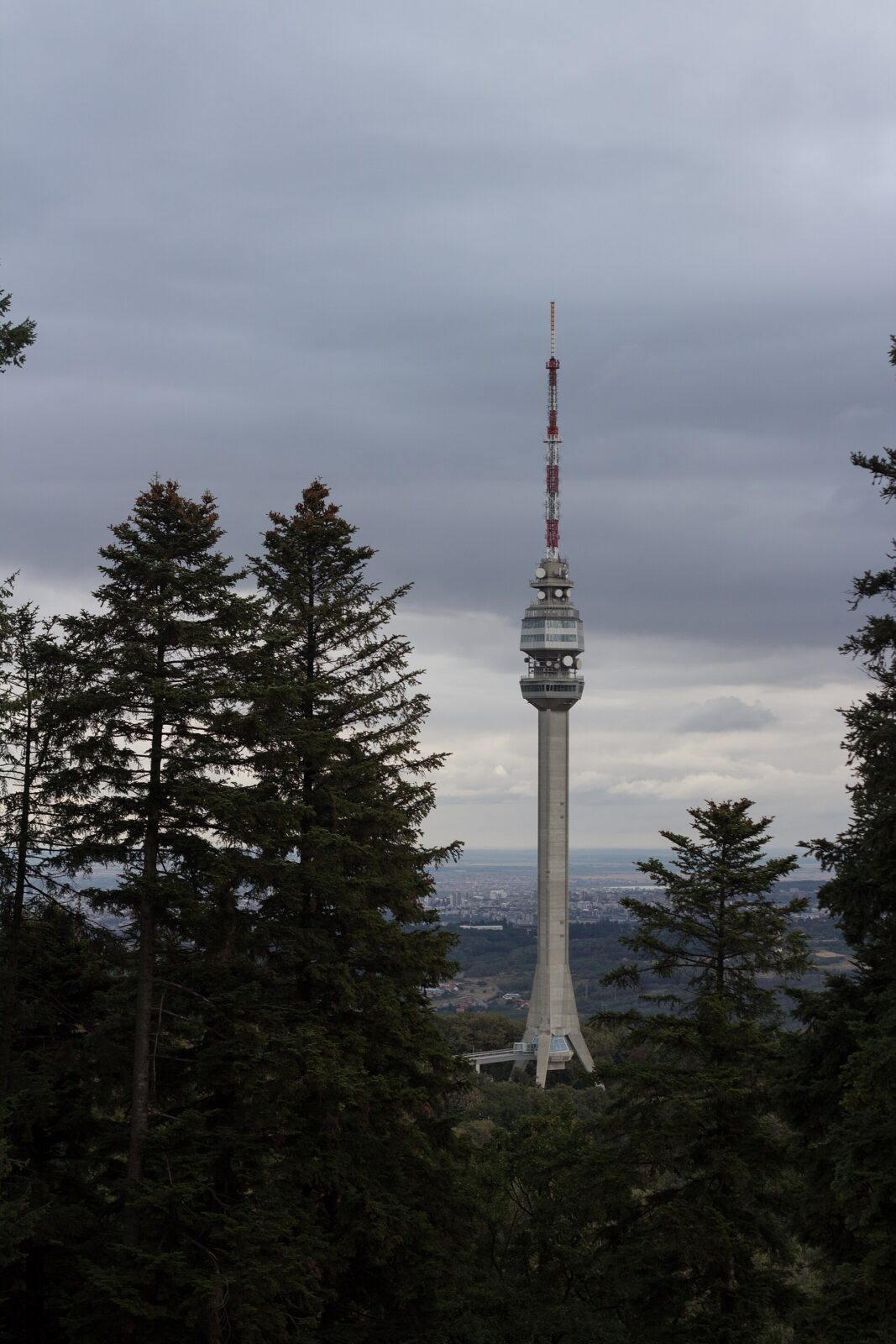
Avala rises just outside Belgrade, a hill with a concrete tower on top that you can pick out from much of the city on a clear day. The tower has not stood there continuously. It was destroyed once and rebuilt to look almost exactly as it had before, and both halves of that story are part of what you come to see.
You come here mainly for the view over the plain and its two rivers, but the hill carries more than a view. A monument to unknown soldiers of the First World War shares the same summit, a short walk from the tower itself, and neither one takes long to reach once you have made the trip out from the city.
The short version. The rebuilt tower stands 204.68 m tall, with an open-air viewing deck at 122 m. A standard ticket costs 400 RSD, 200 RSD reduced for pupils, students and pensioners, and a symbolic 1 RSD for children under 7, people with special needs and their companion, and licensed guides. The viewpoint opens 09:00-20:00 from April to October and 09:00-18:00 the rest of the year. Avala sits about 16 km from central Belgrade; parking is free, but no daytime public bus to the hill is confirmed, so most visitors drive or take a taxi. No booking is needed for an individual visit.
On this page
What it costs to go up
Every visitor pays one of three published prices, whichever day you come. The tower’s operator, Emisiona tehnika i veze (ETV), sells tickets only at the booth at the base of the tower, and the same three-tier price list is repeated word for word on both its general information page and its dedicated price page, so there is no discrepancy to catch here.
| Ticket | Price | Who it covers |
|---|---|---|
| Standard | 400 RSD | Adults |
| Reduced | 200 RSD | Primary and high-school pupils, students, pensioners |
| Symbolic | 1 RSD | Children under 7, people with special needs and one companion, licensed tour guides with ID |
The symbolic ticket is not free. It is priced at one dinar rather than waived, so budget for it even though the cost is nominal, and it covers three quite different groups: children under 7, people with special needs together with one companion, and licensed tour guides who can show their ID. No family rate and no combined ticket with another site are published, so a family of four pays the sum of whichever individual categories apply. You can pay in cash or by card, Dina, Visa and Mastercard are all accepted, and the operator does not mention buying online anywhere, so plan to pay at the booth itself.
You do not need to book ahead for an individual visit. Groups, whether a school trip, a travel agency or a company outing, are asked to contact the tower in advance so staff can arrange a time slot.
When the viewpoint opens
Hours follow a simple two-season pattern, published on both the tower’s information page and its price list. From 1 April to 31 October the viewpoint takes visitors from 09:00 to 20:00. From 1 November to 31 March that shortens to 09:00-18:00. Neither page names an exception for public holidays, so the same hours appear to stand through them.
Wind can close the deck without warning. The operator suspends the open-air viewpoint temporarily in extremely strong gusts, for visitor safety. No wind-speed threshold is published, so there is no way to predict a closure from a weather forecast. Check the tower’s website or social media before you set out, especially on a blustery day.
Getting to the tower
Avala sits about 16 km from central Belgrade. Free parking is provided close to the entrance for every visitor, which makes driving the simplest option if you have a car. If you would rather not drive yourself, a taxi from the city takes you straight to the same free car park, and the tower’s own contact number, (+381) 66 877 76 55, is there if you want to check conditions before you leave.
The operator’s own site does not describe how to reach the tower beyond giving its postal address, Avalski put BB in Beli Potok, so most visitors work from a GPS route or a taxi driver’s local knowledge rather than a set of directions published by ETV itself.
Why there is no simple bus answer
Look for a daytime bus line to Avala on GSP Beograd’s own list of regular routes and you will not find one: none of the tram, trolleybus or bus lines checked names Avala or its postal locality, Beli Potok. A night line, 401N, does run Dorcol to Beli Potok to Pinosava, and like the rest of Belgrade’s city and suburban network it carries no fare, but it is not established whether that stop sits close to the tower itself or only near the Beli Potok village centre, and no frequency is published either. Until that gap closes, treat a car or a taxi as the practical way up, and confirm any bus option directly with GSP Beograd before relying on it.
What waits at 122 metres
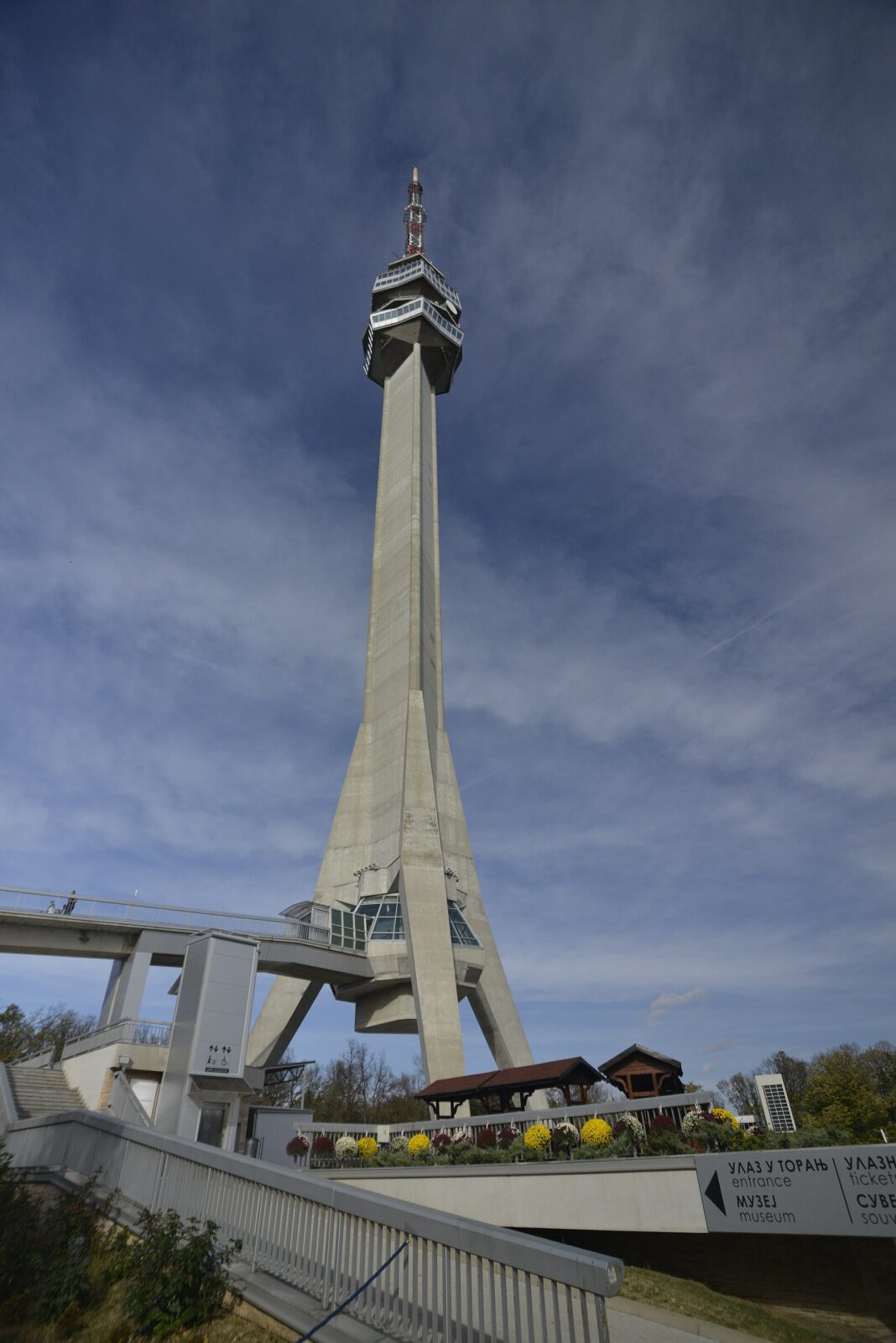
The open-air viewing deck sits 122 m above the ground, a platform of roughly 90 square metres running around the shaft. Four fixed binoculars are mounted there, and the operator describes the view on a clear day as reaching from the Sumadija hills to the tower at Vrsac, on the far side of the plain, a stretch of Serbia wide enough that the same platform doubles as an orientation point for anything else you plan to see from the ground later. A cafe bar operates a little lower, at 119 m, with its own view over the sunset. The two levels sit only three metres apart, cafe below, open-air deck above, so moving between them is a short step rather than a separate trip.
Two lifts carry you up, and here the operator’s own site disagrees with itself. One page states the ride takes 38 seconds, another says 40. Both figures are published by the same operator and neither has been corrected, so treat the trip as taking a little under a minute rather than pinning down the exact second.
Why there are two towers in this story
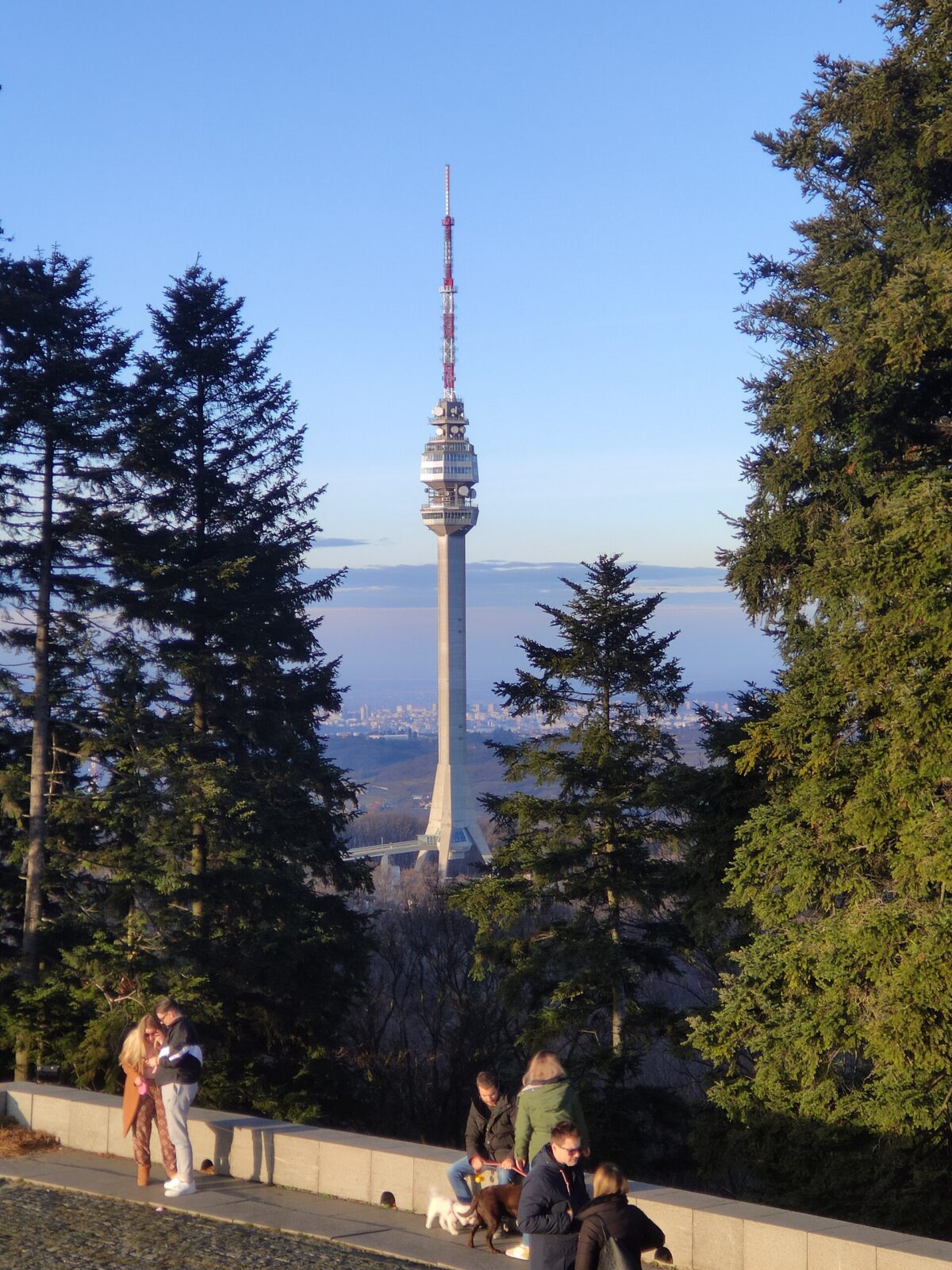
The tower you climb today is not the one that stood here for over three decades. It was destroyed once, then rebuilt to look almost exactly as it had before, so what you see from the ground is a copy, even though what you feel underfoot on the way up is entirely new engineering.
The tower that fell in 1999
The original tower opened on 14 May 1965 at a height of 202.87 m, then the tenth-tallest tower in the world and, its operator says, the only one built to its particular shape. A restaurant capsule called Panorama sat inside it at 118 m, and the structure also carried two Belgrade television channels and FM radio broadcasts through the following decades. On 29 April 1999, at 22:40, during NATO’s air campaign, laser-guided GBU-24 Paveway III bombs struck one of the tower’s three supporting legs. Losing that single point of support brought the whole structure down, and it collapsed vertically into its own base. That account comes from the operator’s own history page rather than an independent military record, which is worth keeping in mind as a framing detail even though the outcome, a tower gone overnight, is not in dispute.
Rebuilding it, heavier and stronger
A rebuilding effort followed within a few years. In 2005, a public fundraising drive called “Izgradimo toranj” (“Let’s build the tower”) drew contributions from more than a million citizens, including well-known figures such as Novak Djokovic and Ana Ivanovic, and the decision was made to reconstruct the tower visually identical to the original. Construction ran from 2006 to 2009, using a higher grade of reinforced concrete than before, and the new structure weighs about 6,000 tonnes, roughly half again the weight of the original. It was engineered to withstand a magnitude-9 earthquake on the Mercalli scale and wind gusts of 200 km/h, and it reopened in 2010, standing 204.68 m tall thanks to a more modern antenna mast. The concrete itself was upgraded too, class MB 50 against the original’s MB 40, a higher-strength mix throughout the new structure. ETV, which describes itself on its own site as a leader in Serbia’s digital infrastructure, has run the tower since November 2010.
Sharing the summit with a monument
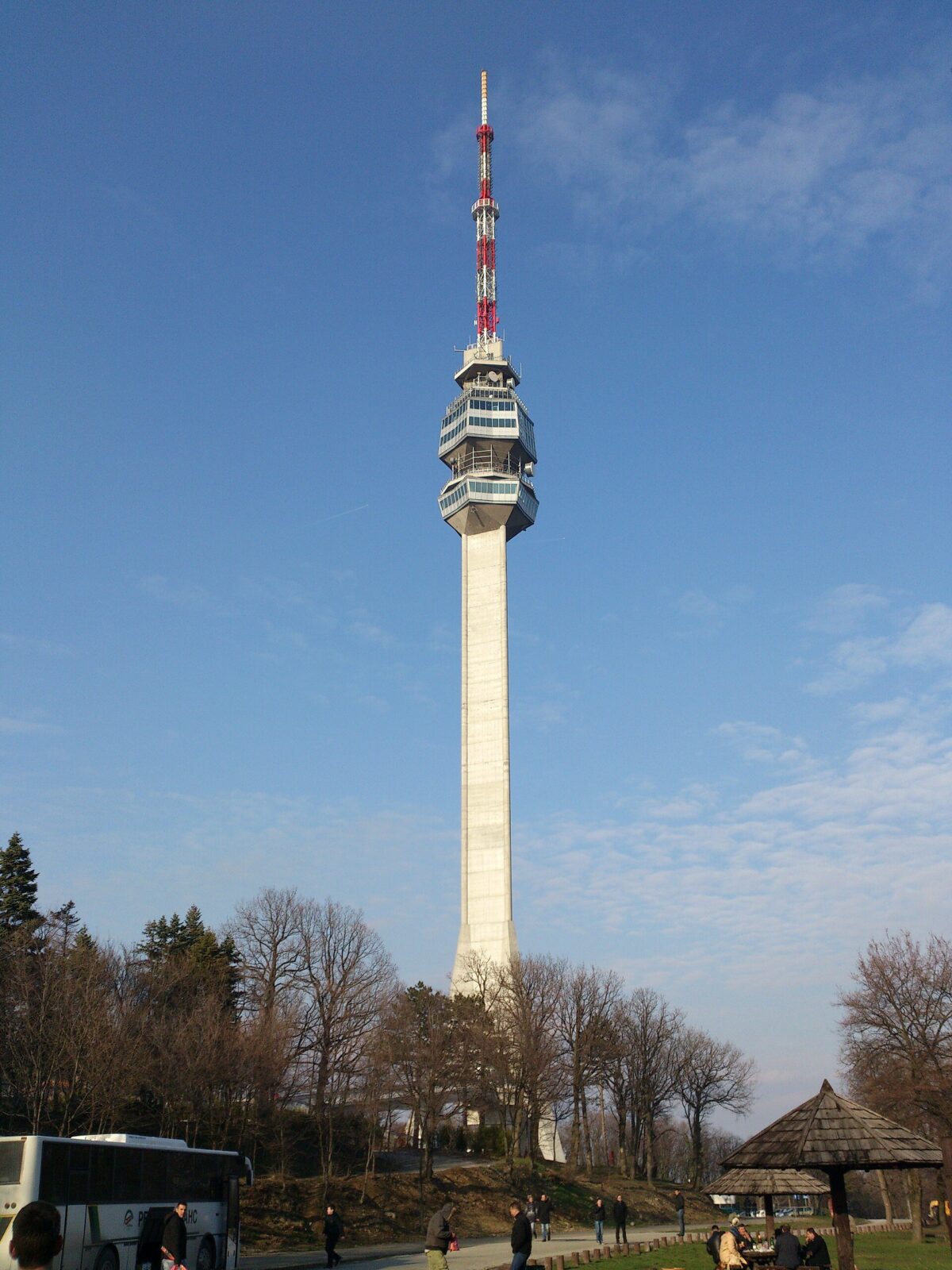
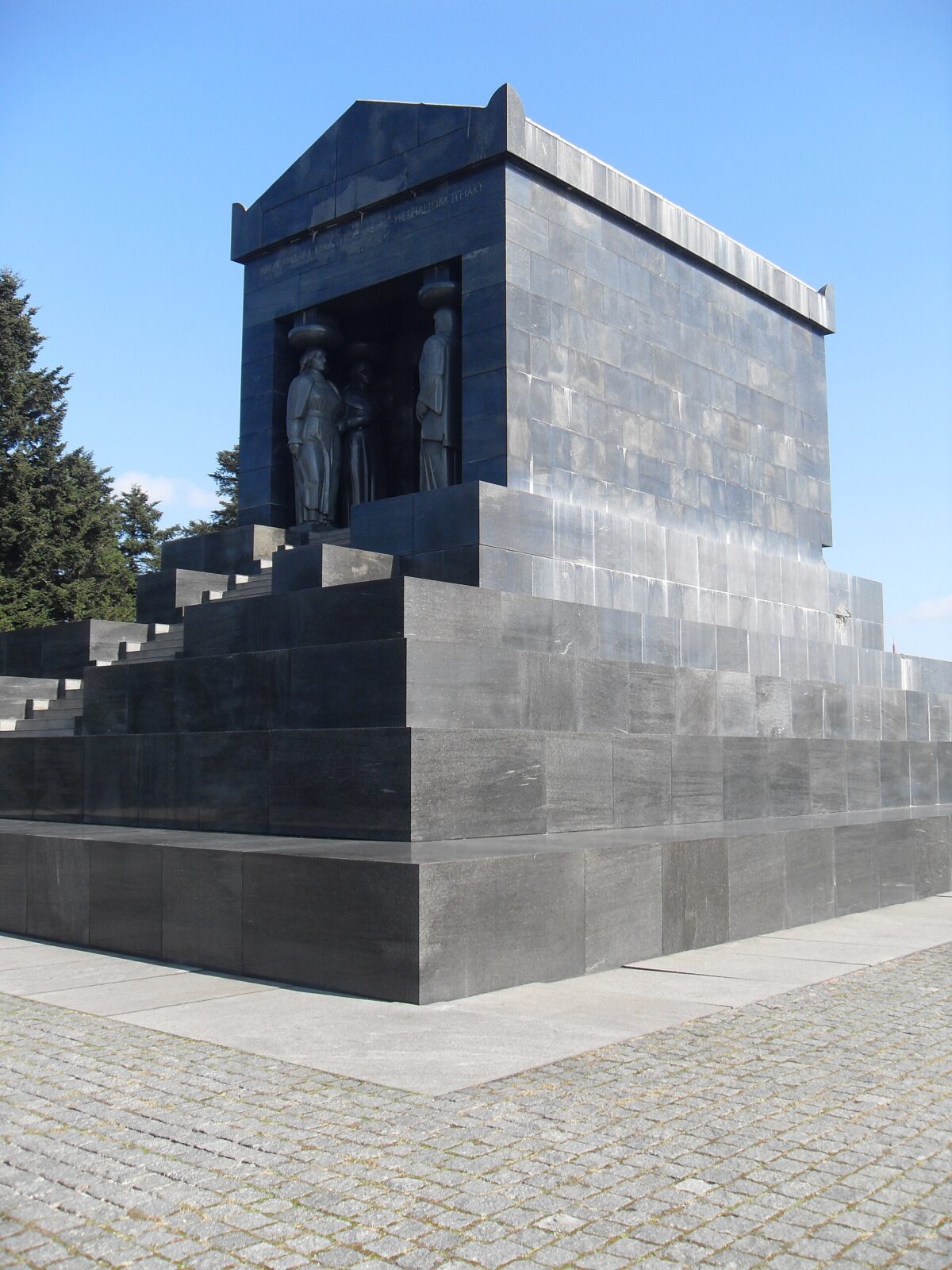
A separate landmark stands at the very top of Avala: a granite mausoleum honouring soldiers who fell for freedom in the First World War, known as the Monument to the Unknown Hero. Villagers from the surrounding area raised the first monument here in 1922, over the grave of an unidentified fallen soldier, a modest local gesture that predates the tower by more than four decades. The monument standing today replaced that original in 1938, designed by the sculptor Ivan Mestrovic, on the site of the medieval town of Zrnov. Where the tower marks a piece of twentieth-century engineering built twice, the monument marks an older layer of memory on the same hill, from a war fought decades before either version of the tower existed.
Travelling with kids, pets or a wheelchair
The operator describes the whole complex, including the approach to the tower, the lifts and the viewpoint itself, as fully accessible to people with disabilities and to parents with strollers. That is the operator’s own claim rather than an independently checked one, so if a wheelchair is part of your plan and accessibility matters to your trip, it is worth confirming directly before you travel, using the same contact details as for a group booking.
Pets are allowed at the base of the tower and on the nearby sports fields, but not in the lifts, on the viewpoint, or in the cafe bar, because of safety standards and limited space. If you are travelling with a dog, plan on someone staying with it at ground level while the rest of the group rides up.
Common questions
Do I need to book a ticket in advance?
Not for an individual visit. Groups, such as school trips, agencies or companies, are asked to contact the tower ahead of time so staff can arrange a slot.
How do I pay for the ticket?
At the booth at the base of the tower, in cash or by card (Dina, Visa, Mastercard). The operator does not mention an online option.
What happens if it is windy on the day I visit?
The operator temporarily suspends the open-air viewpoint in extremely strong gusts. No threshold is published, so check the tower’s website or social media before you set out rather than relying on a general forecast.
How long does the lift ride take?
The operator’s own pages give two different figures, 38 seconds on one and 40 on another. Both are published by the same source, so expect a ride of a little under a minute rather than an exact number.
Is there anything else to see on the hill?
Yes. The Monument to the Unknown Hero, a granite mausoleum from 1938 designed by Ivan Mestrovic, stands at the summit and is reached separately from the tower itself.
Can I see both the tower and the monument in one trip?
Yes, both sit on the same hill and neither takes long to reach once you are there. The tower keeps the published hours above; the monument is an open memorial site with no visitor schedule published by the tower’s operator.
Nearby
Avala pairs naturally with a short stay in Belgrade. Three days in Belgrade covers the city itself, and since public transport to the hill is not a simple option, renting a car in Serbia is worth reading if you would rather drive yourself than rely on a taxi. Back in the city, getting around Belgrade explains the free tram and bus network you will use everywhere except here, and Kalemegdan and Belgrade Fortress gives you a second hilltop view, this one over the rivers rather than the plain, on the same trip.